Introduction
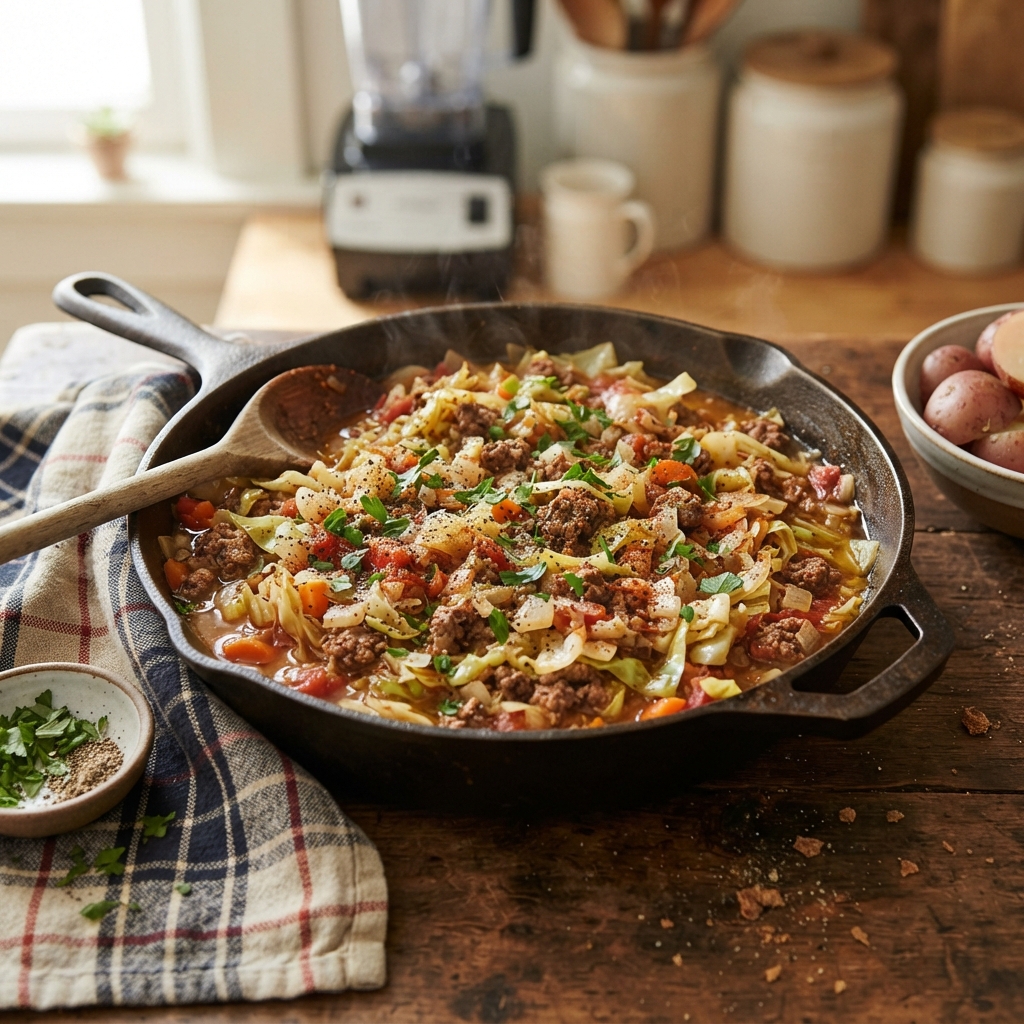
Welcome to the ultimate comfort food guide: the Hearty Ground Beef and Cabbage Skillet. In a world where culinary trends often chase complexity, there is a timeless beauty in dishes that rely on humble ingredients to create something extraordinary. This skillet meal is the definition of “rustic elegance.” It is a one-pan wonder that brings together the savory richness of browned ground beef with the sweet, earthy crunch of cabbage, all melded together in a savory, tomato-infused sauce. Whether you are a busy parent looking for a weeknight dinner that the whole family will devour, or a meal-prepper seeking a nutritious, low-carb option for the week ahead, this recipe is your answer.
Unlike its cousin, the traditional stuffed cabbage roll which requires hours of rolling and baking, this deconstructed version delivers all the same robust flavors in a fraction of the time. It is a dish that warms the soul, fills the kitchen with an aromatic scent of garlic and thyme, and proves that you don’t need expensive cuts of meat to eat like royalty. Get your cast-iron skillet ready, because we are about to turn simple staples into a masterpiece.
The History
The concept of cooking cabbage with meat is as old as agriculture itself, but the specific lineage of the “Cabbage Roll Skillet” or “Unstuffed Cabbage” is a fascinating blend of immigrant ingenuity and American practicality. Traditionally, dishes like Gołąbki (Polish) or Sarma (Eastern European/Balkan) involve wrapping seasoned meat and rice inside blanched cabbage leaves and simmering them in tomato sauce for hours. This was a way to stretch expensive meat across many servings and preserve vegetables through the winter.
As families immigrated to the United States, particularly during the waves of Eastern European and Irish migration in the 19th and 20th centuries, the labor-intensive process of rolling individual leaves often gave way to more efficient cooking methods. The “skillet” variation emerged as a practical adaptation for busy households. By chopping the cabbage and browning the beef together, cooks could achieve the same flavor profile—savory, tangy, and sweet—without the tedious assembly. It represents a shift from ceremonial Sunday cooking to efficient, hearty weekday sustenance, bridging the gap between Old World tradition and New World speed.
Ingredients Breakdown
To truly master this dish, one must understand the role each component plays in the flavor architecture. This isn’t just about throwing things in a pan; it’s about balancing textures and tastes.
The Protein: Ground Beef
We recommend using 85% lean ground beef. While 90% or 95% lean is healthier, the slightly higher fat content (15%) in 85% lean beef renders out during cooking, providing essential lubrication for the vegetables and carrying the fat-soluble flavors of the spices. If you use very lean beef, you may need to add a tablespoon of olive oil to prevent the cabbage from sticking and burning.
The Star: Green Cabbage
Green cabbage is the standard choice for its durability and mild sweetness. When sautéed, the natural sugars in the cabbage caramelize, countering the acidity of the tomatoes. Red cabbage can be used for a stunning visual contrast and a slightly peppery taste, though it will turn your sauce a deep purple. Savoy cabbage is another excellent option if you prefer a more delicate, leafy texture.
The Aromatics: Onion and Garlic
Yellow onions provide a robust, sulfurous base that sweetens as they cook down. Garlic is non-negotiable; it adds a pungent kick that cuts through the richness of the beef. For the best results, mince the garlic fresh rather than using jarred varieties, as the enzymatic reaction of fresh garlic provides a sharper, more authentic flavor profile.
The Liquid Gold: Beef Broth and Tomato Sauce
A high-quality beef broth adds depth and umami, ensuring the dish doesn’t taste dry. The tomato sauce (or crushed tomatoes) provides the necessary acidity to balance the fat. We also add a teaspoon of sugar or honey; this is a chef’s secret to neutralizing the metallic taste of canned tomatoes and enhancing the natural sweetness of the cabbage.
Step-by-Step Recipe
Follow this granular guide to ensure perfect texture and flavor distribution every time.
Phase 1: Preparation and Mise en Place
Before you turn on the heat, prepare your ingredients. Cooking moves fast once the beef hits the pan. Core the cabbage and chop it into rough, bite-sized squares—about 1 to 2 inches. You want pieces large enough to retain some crunch but small enough to cook through quickly. Dice your onion finely and mince your garlic. Measure out your spices (paprika, dried thyme, salt, and pepper) so they are ready to dump in.
Phase 2: The Maillard Reaction (Browning the Beef)
Heat a large, deep skillet or Dutch oven over medium-high heat. Add the ground beef. Do not crowd the pan if you are doubling the recipe; cook in batches if necessary. Use a wooden spoon to break the beef into small crumbles. Let it sit undisturbed for a minute or two to develop a brown crust (the Maillard reaction), which adds significant flavor. Cook until no pink remains. Drain excess grease if there is more than a tablespoon left in the pan, but keep a little for flavor.
Phase 3: Building the Aromatic Base
Push the beef to the side of the pan or remove it temporarily if your pan is small. Add the diced onions to the hot fat. Sauté for 3-4 minutes until translucent. Add the garlic and cook for just 30 seconds until fragrant—be careful not to burn it, as burnt garlic turns bitter instantly. Stir the onions and garlic into the beef.
Phase 4: The Simmer
Add the chopped cabbage to the skillet. It will look like a mountain of greens, but it will wilt down significantly. Pour in the beef broth and tomato sauce. Add your seasonings: paprika for smokiness, thyme for earthiness, and a pinch of sugar. Stir everything thoroughly to coat the cabbage in the sauce. Bring the mixture to a boil, then immediately reduce the heat to low.
Phase 5: The Finish
Cover the skillet with a lid. This traps the steam, which is crucial for tenderizing the cabbage fibers without making them mushy. Simmer for 15 to 20 minutes. Check the cabbage; it should be tender but still have a slight bite (al dente). If the liquid has evaporated too much, add a splash of water. Taste and adjust salt and pepper. Serve hot.
Tips for the Perfect Skillet
- Don’t Overcook the Cabbage: Cabbage releases a sulfurous smell if boiled for too long. Aim for tender-crisp. If you prefer it very soft, cook it longer, but be aware of the aroma.
- Deglaze the Pan: After browning the beef, you will see brown bits stuck to the bottom of the pan. This is flavor! When you add the broth, scrape these bits up vigorously.
- Cheese Topping: While not traditional, sprinkling shredded mozzarella or Parmesan cheese on top during the last 2 minutes of cooking (with the lid on) creates a delicious, melty crust.
- Acid Balance: If your tomatoes are too acidic, a splash of balsamic vinegar or a pinch more sugar can balance the dish perfectly.
- Resting Time: Like a stew, this dish often tastes better the next day after the flavors have had time to marry in the fridge.
Variations and Customizations
This recipe is a blank canvas. Here is how you can adapt it to different dietary needs or flavor preferences:
The Keto Adaptation
This dish is naturally low-carb, but to make it strictly Keto, ensure your tomato sauce has no added sugars. You can bulk up the volume by adding zucchini noodles or cauliflower rice along with the cabbage.
The “Stuffed Cabbage” Hybrid
To mimic the texture of traditional cabbage rolls more closely, add 1 cup of cooked white rice or quinoa during the simmering phase. This absorbs the sauce and makes the dish more filling.
Spicy Southwest Style
Swap the thyme and paprika for cumin, chili powder, and cayenne pepper. Add a can of black beans and corn along with the cabbage. Top with cilantro and lime juice before serving.
Italian Herb Infusion
Replace the beef broth with red wine (let it reduce first) and use Italian seasoning instead of thyme. Add sliced mushrooms and bell peppers for a “pizza skillet” vibe.
Health Considerations and Nutritional Value
From a nutritional standpoint, this skillet meal is a powerhouse. Cabbage is a cruciferous vegetable rich in Vitamin K, Vitamin C, and fiber, which aids in digestion and gut health. It is also low in calories, making this a high-volume meal that keeps you full without excessive caloric intake.
Ground beef provides high-quality protein and essential nutrients like iron, zinc, and Vitamin B12. By controlling the sodium in the broth and avoiding processed fillers, you keep the heart-health impact moderate. For those watching their glycemic index, this meal (without rice) has a very low impact on blood sugar levels, making it suitable for diabetics.
Ingredients
- 1.5 lbs Ground Beef (85% lean recommended)
- 1 medium head Green Cabbage, cored and chopped
- 1 large Yellow Onion, diced
- 3 cloves Garlic, minced
- 1 can (15 oz) Tomato Sauce or Crushed Tomatoes
- 1 cup Beef Broth
- 1 tsp Smoked Paprika
- 1 tsp Dried Thyme
- 1 tsp Sugar or Honey (optional, to balance acidity)
- Salt and Black Pepper to taste
- 2 tbsp Olive Oil (if needed)
- Fresh Parsley for garnish
Directions
- Prep: Core and chop the cabbage into 1-inch pieces. Dice the onion and mince the garlic.
- Brown Beef: In a large deep skillet over medium-high heat, cook the ground beef until browned and crumbly. Drain excess fat, leaving about 1 tablespoon.
- Sauté Aromatics: Add the onion to the beef and cook for 3-4 minutes until soft. Add garlic and cook for 30 seconds until fragrant.
- Combine: Add the chopped cabbage, tomato sauce, beef broth, paprika, thyme, sugar, salt, and pepper. Stir well to combine.
- Simmer: Bring to a boil, then reduce heat to low. Cover the skillet with a lid.
- Cook: Simmer for 15-20 minutes, stirring occasionally, until the cabbage is tender but not mushy.
- Serve: Taste and adjust seasoning. Garnish with fresh parsley and serve hot.
FAQ
Can I make this in a slow cooker?
Yes. Brown the beef and onions on the stove first, then transfer everything to a slow cooker. Cook on Low for 6-7 hours or High for 3-4 hours.
How long does this last in the fridge?
Stored in an airtight container, this dish stays fresh for 3-4 days. It actually tastes better on day two as the flavors deepen.
Can I freeze this meal?
Absolutely. Let it cool completely, then freeze in freezer-safe bags or containers for up to 3 months. Thaw in the fridge overnight before reheating.
What can I serve this with?
It is delicious on its own, but pairs wonderfully with crusty bread to soak up the sauce, mashed potatoes, or over a bed of buttered egg noodles.
Summary
This Hearty Ground Beef and Cabbage Skillet is a budget-friendly, one-pan meal that combines savory beef with sweet cabbage in a rich tomato broth. Ready in under 30 minutes, it offers a nutritious, low-carb comfort food experience perfect for busy weeknights.