Introduction
In the hustle and bustle of modern family life, the dinner hour often becomes a battleground between convenience and nutrition. Parents want to feed their children wholesome, nutrient-dense meals, but after a long day of work and school, the energy to cook elaborate dishes is often nonexistent. This is where the humble casserole steps in as the ultimate savior. Traditionally associated with heavy creams, processed soups, and calorie-dense carbohydrates, the casserole has undergone a remarkable transformation. Today, we are redefining this comfort food classic into a powerhouse of nutrition.
This guide focuses on creating easy, high-protein, low-calorie casserole dinners that satisfy the whole family. By swapping out refined grains for nutrient-dense alternatives, utilizing lean proteins, and incorporating volume-eating vegetables, you can create meals that are filling, delicious, and aligned with your health goals. Whether you are looking to lose weight, build muscle, or simply maintain a balanced diet for your children, these casserole strategies will revolutionize your weekly meal prep.
The History
The concept of the casserole is as old as cooking itself. Derived from the French word casse, meaning “pan,” the term originally referred to the vessel used for cooking rather than the food inside. Historically, casseroles were a practical solution for slow-cooking tough cuts of meat and available vegetables over a fire or in an oven, allowing flavors to meld over hours.
In the mid-20th century, particularly in post-WWII America, the casserole became a cultural icon. The invention of canned cream soups and the proliferation of processed foods led to the “casserole craze” of the 1950s and 60s. Dishes like Tuna Noodle Casserole and Green Bean Casserole became staples because they were cheap, shelf-stable, and easy to assemble. However, these mid-century classics were often laden with sodium, saturated fats, and refined carbohydrates.
Fast forward to the 21st century, and the health consciousness of the modern consumer has forced a reinvention of the dish. The “healthy casserole” movement is a direct response to the obesity epidemic and the growing understanding of macronutrients. We have moved away from the “cream of something” soups toward whole-food ingredients, recognizing that a casserole doesn’t need to be a calorie bomb to be comforting. It is a return to the dish’s roots: a one-pot meal that maximizes nutrition and minimizes waste.
Ingredients Breakdown
To transform a standard casserole into a high-protein, low-calorie masterpiece, you must understand the role of each component. Here is how we break down the anatomy of a healthy bake:
1. The Protein Foundation
Protein is the most satiating macronutrient, meaning it keeps you full longer. In traditional casseroles, protein is often an afterthought or consists of fatty ground beef. In our healthy versions, we prioritize:
- Lean Poultry: Skinless chicken breast or ground turkey provides massive protein volume with minimal fat.
- Legumes: Lentils and beans add fiber and plant-based protein, bulking up the dish without adding calories.
- Seafood: White fish or shrimp cook quickly and are incredibly lean.
2. The Smart Carbohydrate
The biggest calorie culprit in casseroles is usually the starch (pasta, white rice, potatoes). We replace these with high-fiber, nutrient-dense options:
- Quinoa: A complete protein grain that holds texture well.
- Cauliflower Rice: The ultimate low-calorie swap that mimics the texture of rice.
- Zucchini Noodles: Great for Italian-style bakes, adding volume and water content.
- Sweet Potatoes: While higher in carbs than cauliflower, they offer superior micronutrients and fiber compared to white potatoes.
3. The Volume Vegetables
“Volume eating” is the strategy of eating large portions of low-calorie food to feel full. Casseroles are the perfect vehicle for this.
- Cruciferous Veggies: Broccoli, cauliflower, and Brussels sprouts add crunch and fiber.
- Leafy Greens: Spinach and kale wilt down, allowing you to pack cups of nutrients into a single serving.
- Mushrooms: They provide a meaty texture and umami flavor with almost zero calories.
4. The Binder (Sauce)
This is where most calories hide. We avoid heavy cream and full-fat cheese sauces.
- Greek Yogurt: Provides creaminess and tang with a huge protein boost.
- Cottage Cheese: Blends smoothly into sauces for a high-protein base.
- Low-Sodium Broth: Keeps the dish moist without the fat of oil or butter.
- Pureed Vegetables: Blended butternut squash or carrots can create a creamy, sweet sauce base.
Step-by-Step Recipe Strategy
Creating a healthy casserole follows a logical flow to ensure texture and flavor are preserved. Unlike traditional recipes where everything is thrown in raw, high-protein low-calorie casseroles often require a bit of pre-cooking to manage moisture content.
Phase 1: Prep and Sear
Never boil your lean protein; it will become dry. Instead, sear your chicken or turkey in a non-stick pan with cooking spray. This creates the Maillard reaction (browning), which adds deep flavor without needing excess fat. Season heavily at this stage, as baking can mute flavors.
Phase 2: The Vegetable Sweat
Vegetables like zucchini and mushrooms release water when cooked. If you add them raw to the casserole, your dish will become a soggy soup. Sauté your vegetables first to release their moisture, then drain any excess liquid before adding them to the baking dish.
Phase 3: The Assembly
Layering matters. Put your hearty grains or root vegetables at the bottom to absorb the sauces. Place your protein and delicate greens in the middle. Save your cheese or crunchy toppings for the very end to prevent burning.
Phase 4: The Bake
Cover the dish with foil for the first two-thirds of the cooking time. This steams the ingredients, ensuring the lean protein doesn’t dry out. Remove the foil for the final 10-15 minutes to crisp up the top layer.
Tips for Success
- Hydrate Your Grains: If using quinoa or brown rice, cook them in broth instead of water before adding them to the casserole. This infuses flavor into every grain.
- The Cheese Trick: Use sharp cheddar or parmesan. Because the flavor is more intense, you can use half the amount of cheese and still get a satisfying cheesy taste, cutting calories significantly.
- Rest Before Serving: Let your casserole sit for 10 minutes after taking it out of the oven. This allows the starches to set and the sauce to thicken, making it easier to cut clean squares.
- Meal Prep Friendly: These casseroles taste better the next day as the flavors meld. Make a double batch on Sunday to cover dinners for the week.
- Freezing: Assemble the casserole in a disposable aluminum pan, wrap tightly, and freeze before baking. You can bake it straight from frozen, just adding 20 minutes to the cook time.
Variations and Customizations
One of the best things about casseroles is their versatility. Here is how to customize the base recipe for different dietary needs:
Dairy-Free / Vegan
Swap the Greek yogurt binder for a cashew cream (soaked cashews blended with water) or a silken tofu puree. Use nutritional yeast instead of cheese for a savory, cheesy flavor without the dairy.
Low-Carb / Keto
Eliminate the quinoa or rice entirely. Double the amount of cauliflower rice and add extra healthy fats like avocado oil or macadamia nuts on top. Ensure your protein source is fatty (like salmon or 85/15 ground beef) to meet keto macros.
Gluten-Free
Most of the ingredients in high-protein casseroles are naturally gluten-free. Just ensure your broth, spices, and oats (if used for topping) are certified gluten-free to avoid cross-contamination.
Kid-Friendly Tweaks
If your children are picky about visible vegetables, blend the spinach or cauliflower into the sauce so it turns green or creamy white without visible chunks. Use mild cheeses like Mozzarella which are generally more accepted by children than sharp cheddar.
Health Considerations and Nutritional Value
When shifting to high-protein, low-calorie meals, it is important to understand the impact on your body.
Satiety and Weight Management:
Protein requires more energy to digest than fats or carbs (the Thermic Effect of Food). By prioritizing protein in these casseroles, you naturally boost your metabolism slightly while staying fuller for longer, reducing the urge to snack late at night.
Blood Sugar Stability:
Traditional casseroles often cause blood sugar spikes due to refined pasta and white rice. By using fiber-rich vegetables and complex grains like quinoa, the glucose release is slowed, preventing the “afternoon crash” and keeping energy levels stable.
Micronutrient Density:
A standard serving of this healthy casserole can provide over 100% of your daily Vitamin C (from broccoli and peppers), significant Iron (from lean meats and greens), and Calcium (from dairy or fortified alternatives). It transforms dinner from a mere calorie source into a multivitamin.
Ingredients
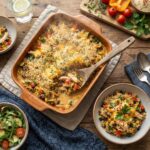
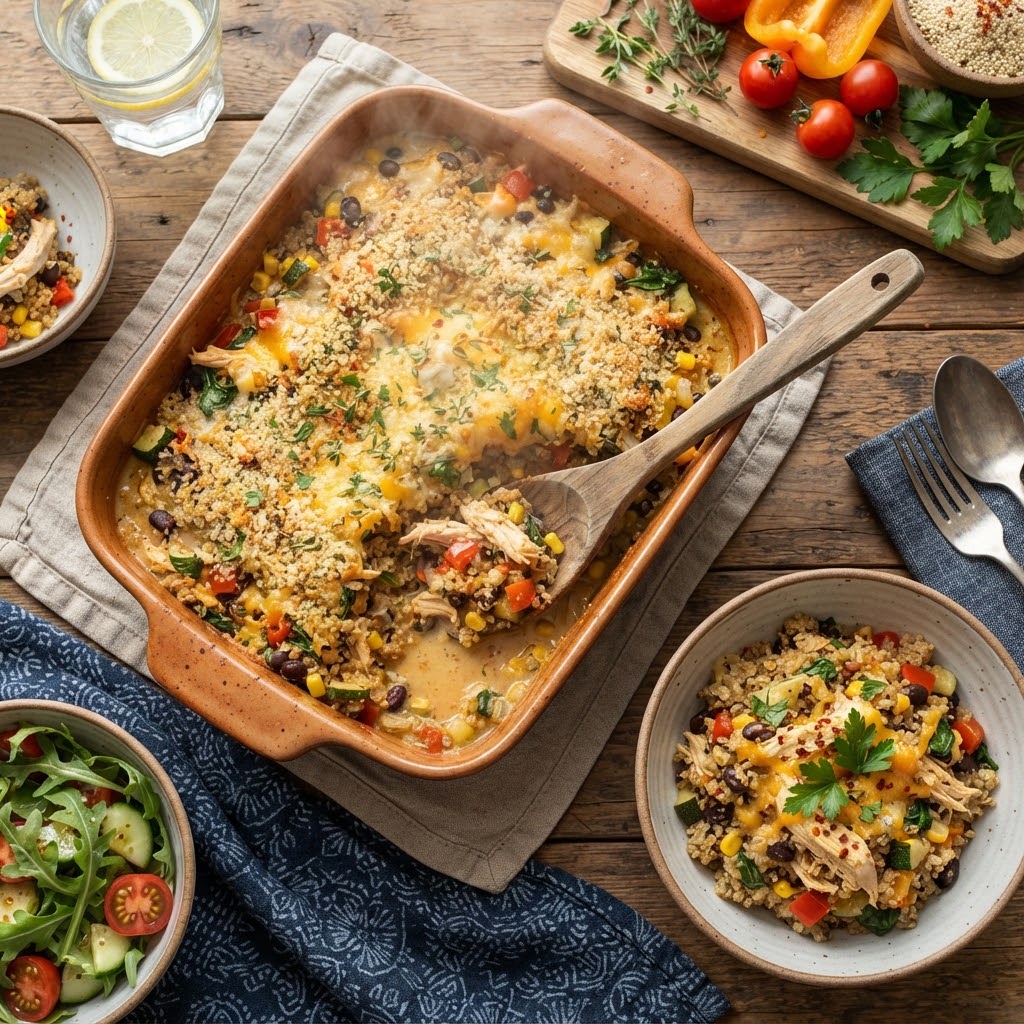
Recipe: Creamy Chicken, Broccoli, and Quinoa Power Bake
- Protein: 1.5 lbs (700g) boneless, skinless chicken breasts, cut into 1-inch cubes.
- Grain: 1 cup uncooked quinoa (rinsed thoroughly).
- Vegetables: 4 cups fresh broccoli florets (chopped small), 1 cup sliced cremini mushrooms, 1/2 cup diced red onion.
- The Binder: 1 cup plain non-fat Greek yogurt, 1/2 cup low-sodium chicken broth, 2 cloves garlic (minced).
- Seasonings: 1 tsp dried thyme, 1 tsp paprika, 1/2 tsp black pepper, 1/2 tsp salt (adjust to taste).
- Topping: 1/2 cup part-skim mozzarella cheese, shredded, and 2 tbsp whole wheat breadcrumbs (optional for crunch).
- Cooking Spray: Olive oil or avocado oil spray.
Directions
- Preheat and Prep: Preheat your oven to 375°F (190°C). Spray a 9×13 inch baking dish with cooking spray.
- Cook the Quinoa: In a small pot, combine the rinsed quinoa with 2 cups of water or low-sodium broth. Bring to a boil, reduce heat to low, cover, and simmer for 15 minutes until water is absorbed. Fluff with a fork and set aside.
- Sear the Chicken: While quinoa cooks, heat a large skillet over medium-high heat. Spray with oil. Add chicken cubes, thyme, paprika, salt, and pepper. Cook for 5-6 minutes until the outside is golden brown (it does not need to be cooked through yet). Remove chicken from pan.
- Sauté Vegetables: In the same skillet, add a splash of broth. Add onions and mushrooms. Cook for 3 minutes. Add the broccoli and cook for another 2 minutes until bright green. Remove from heat.
- Make the Sauce: In a large mixing bowl, whisk together the Greek yogurt, 1/2 cup chicken broth, and minced garlic until smooth.
- Combine: Add the cooked quinoa, seared chicken, and sautéed vegetables into the bowl with the sauce. Gently fold everything together until evenly coated.
- Assemble: Pour the mixture into the prepared baking dish. Spread it out evenly.
- Topping: Sprinkle the shredded mozzarella cheese and breadcrumbs over the top.
- Bake: Cover the dish with aluminum foil. Bake for 20 minutes. Remove the foil and bake for an additional 10-15 minutes until the cheese is bubbly and golden, and the chicken is cooked through (internal temp of 165°F).
- Serve: Let rest for 5 minutes before slicing. Garnish with fresh parsley if desired.
FAQ
Q: Can I use frozen broccoli instead of fresh?
A: Yes, you can. However, frozen broccoli holds more water. Do not sauté it; simply thaw it, pat it very dry with paper towels, and mix it in. If you don’t dry it, the casserole may become watery.
Q: How many calories are in one serving?
A: Based on the recipe above, divided into 6 generous servings, each serving is approximately 320 calories, with roughly 35g of protein and 25g of carbohydrates.
Q: Can I make this in a slow cooker?
A: Absolutely. Sear the chicken and sauté the veggies first (do not skip this step for flavor). Combine all ingredients in the slow cooker. Cook on Low for 4-5 hours. Add the cheese topping in the last 15 minutes.
Q: My Greek yogurt sauce looks curdled. Is it ruined?
A: Not necessarily. Sometimes high heat can cause yogurt to separate. To prevent this, ensure your yogurt is at room temperature before mixing, and try not to boil the sauce vigorously. Even if it separates slightly, the taste will remain delicious.
Q: How long does this keep in the fridge?
A: Stored in an airtight container, this casserole will stay fresh for up to 4 days. It is an excellent meal-prep option for lunches.
Summary
Transforming family dinner into a high-protein, low-calorie event is easy with smart ingredient swaps like quinoa, lean poultry, and Greek yogurt binders. This creamy chicken and broccoli casserole delivers maximum nutrition and flavor while keeping calories in check for the whole family.