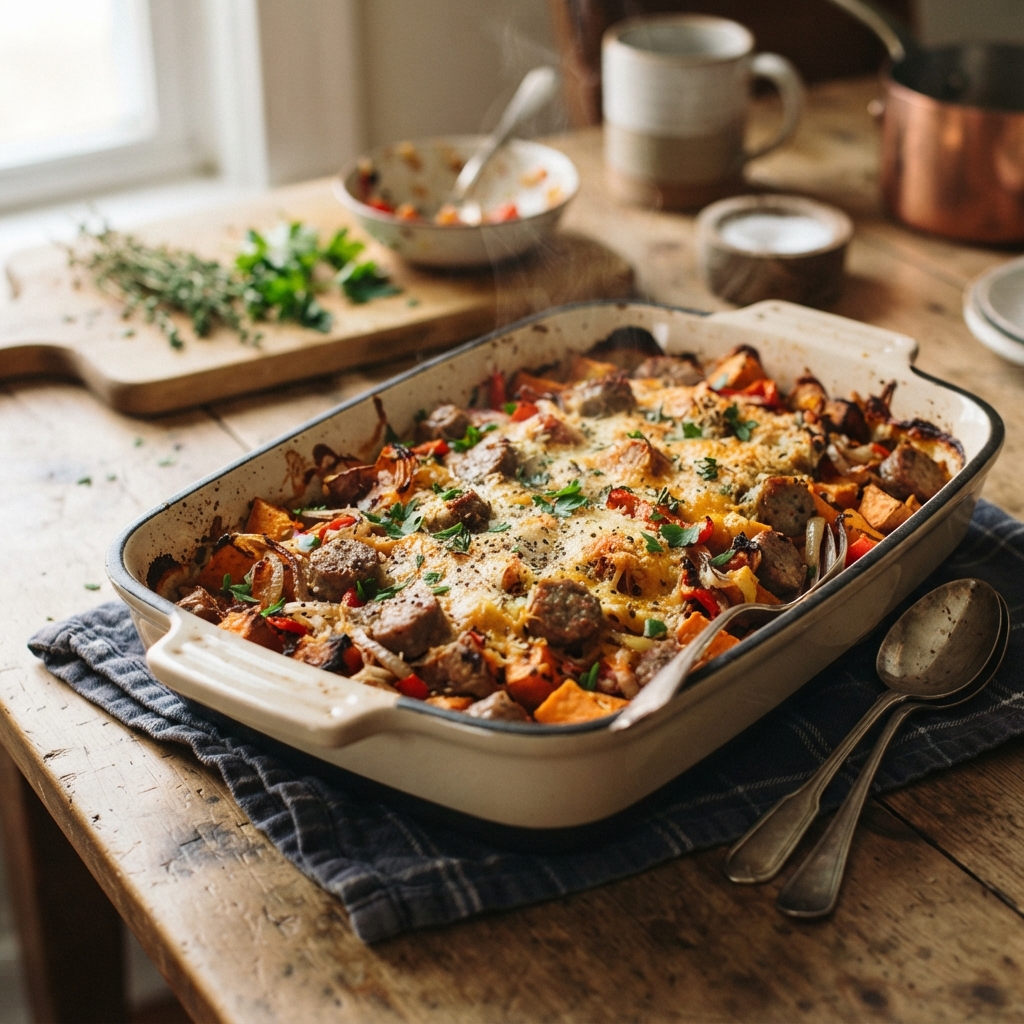
Delicious Sweet Potato & Sausage Casserole: The Ultimate Comfort Food Guide
Introduction
There is something profoundly comforting about a casserole that emerges from the oven bubbling, golden, and aromatic, filling the entire kitchen with the promise of a hearty meal. The Delicious Sweet Potato & Sausage Casserole stands at the intersection of rustic charm and modern culinary satisfaction, offering a perfect balance of savory depth and natural sweetness. This dish is not merely a combination of ingredients; it is a celebration of textures and flavors that harmonize to create a symphony on the plate. The earthy sweetness of roasted sweet potatoes contrasts beautifully with the rich, spiced intensity of seasoned sausage, all bound together by a creamy, cheesy sauce that ties every element into a cohesive whole.
Whether you are hosting a family gathering on a chilly autumn evening, preparing a make-ahead meal for a busy weeknight, or looking for a dish to bring to a community potluck, this casserole delivers on all fronts. It is robust enough to stand as the main course yet versatile enough to accommodate various dietary preferences and flavor profiles. The beauty of this recipe lies in its simplicity; it requires no advanced culinary techniques, yet the result tastes as though it was simmered with care for hours. The natural sugars in the sweet potatoes caramelize during baking, creating a depth of flavor that complements the salty, umami-rich notes of the sausage.
Beyond the taste, this dish represents a wholesome approach to comfort food. It incorporates nutrient-dense vegetables alongside protein, ensuring that every bite is as nourishing as it is satisfying. The aroma alone is enough to gather loved ones around the table, sparking conversations and creating memories. As you embark on making this casserole, you are not just cooking dinner; you are crafting an experience that warms the soul and satisfies the appetite. Let us dive deep into the origins, the science, and the art of creating the perfect Sweet Potato & Sausage Casserole.
The History
To truly appreciate this dish, one must understand the culinary lineage that brought these ingredients together. The concept of the casserole itself dates back centuries, originating from the French word “casserole,” which refers to a saucepan used for cooking. However, the American iteration of the casserole, particularly the baked variety we know today, gained immense popularity during the mid-20th century. This era celebrated convenience and community, with one-dish meals becoming a staple in households across the nation. The ability to combine proteins, starches, and vegetables into a single vessel allowed for efficient cooking and easier cleanup, cementing the casserole’s place in culinary history.
Sweet potatoes have a rich history that predates modern cuisine by thousands of years. Native to Central and South America, they were domesticated over 5,000 years ago and became a crucial staple for indigenous civilizations. When explorers brought them to Europe and later to North America, they found a permanent home in the Southern United States, where the climate was ideal for cultivation. Over time, the sweet potato evolved from a survival crop to a celebrated ingredient in holiday feasts and everyday cooking, prized for its versatility and nutritional profile.
Sausage, too, has an ancient pedigree, originating as a method of preserving meat before the advent of refrigeration. By mixing ground meat with fats, salts, and spices, cultures around the world created durable food sources that could be stored for long periods. In the context of this casserole, the sausage brings a tradition of flavoring that enhances the mildness of the potato. The marriage of these two historical ingredients—the ancient root vegetable and the preserved meat—within the framework of the mid-century casserole tradition creates a dish that is both timeless and contemporary.
Ingredients Breakdown
Understanding the role of each component in this casserole is crucial for achieving the best possible result. Each ingredient contributes specific textures, flavors, and chemical properties that affect the final outcome.
The Sweet Potatoes
The star of the show, sweet potatoes, provides the structural base and the primary source of natural sweetness. When selecting sweet potatoes, look for varieties like Beauregard or Jewel, which have moist, orange flesh that holds its shape well during baking. The starch content in sweet potatoes is different from regular potatoes; it converts to sugar when heated, leading to caramelization. This natural sweetness counteracts the saltiness of the sausage and cheese. It is important to cut them uniformly to ensure even cooking; if pieces are varying sizes, some may turn mushy while others remain undercooked.
The Sausage
The sausage introduces savory depth, fat, and seasoning. Italian sausage is a popular choice due to its fennel and garlic notes, but breakfast sausage works well for a sweeter, sage-infused profile. The fat content in the sausage is essential; it renders out during the initial browning process, coating the potatoes and preventing them from drying out in the oven. This rendered fat also carries the fat-soluble flavors of the spices, distributing them throughout the dish. For a leaner option, turkey sausage can be used, though you may need to add a touch of olive oil to compensate for the reduced fat content.
The Aromatics
Onions and garlic are the foundational aromatics that build the flavor profile. Sautéing these until translucent releases their sugars and mitigates their raw pungency. The onions add a subtle sweetness that bridges the gap between the sweet potatoes and the savory sausage. Garlic provides a sharp, aromatic kick that cuts through the richness of the cheese and meat. Do not rush this step; properly softened aromatics are the secret to a complex flavor base.
The Binding Agents
To transform these ingredients into a casserole, a binding agent is necessary. This usually involves a combination of eggs, cream, or a creamy soup base. Eggs provide structure and protein, helping the casserole set so it can be sliced neatly. Cream or milk adds richness and moisture, ensuring the interior remains tender. Cheese, often cheddar or mozzarella, adds a salty umami flavor and creates a desirable golden crust on top. The choice of cheese affects the meltability and the stretch of the final dish.
Step-by-Step Recipe
Creating this casserole is a process of layering flavors and managing textures. Follow this detailed narrative to ensure success.
Preparation Phase: Begin by preheating your oven to ensure it reaches the optimal temperature before the dish goes in. While the oven heats, wash and peel your sweet potatoes. Use a sharp chef’s knife to dice them into cubes that are approximately half an inch in size. Consistency is key here. Place the diced potatoes in a bowl of cold water to prevent oxidation until you are ready to use them.
Browning the Meat: In a large skillet over medium-high heat, add the sausage. If using links, remove the casing. Break the meat apart with a wooden spoon as it cooks. You want to achieve a deep brown color, not just a grey cook-through. This Maillard reaction creates complex flavor compounds. Once browned, drain excess grease if necessary, but leave a tablespoon or two to sauté the vegetables.
Sautéing Aromatics: Add the diced onions to the skillet with the sausage. Cook until they are soft and translucent. Add minced garlic in the last minute of cooking to prevent burning. Garlic burns quickly and becomes bitter, so timing is essential. Stir in any dry spices at this stage to toast them slightly, which awakens their essential oils.
Assembly: In a large mixing bowl, combine the drained sweet potatoes, the sausage mixture, and your binding agents (eggs, cream, cheese). Toss gently to ensure every cube of potato is coated in the mixture. Pour this into a greased casserole dish. Spread it evenly to promote uniform baking. Top with an extra layer of cheese for that coveted golden crust.
Baking: Place the dish in the center of the oven. Bake until the potatoes are tender when pierced with a fork and the top is bubbling and golden. This usually takes between 45 to 60 minutes depending on the depth of your dish. If the top browns too quickly, cover loosely with foil.
Tips
- Uniform Cutting: Ensure all sweet potato cubes are the same size. This prevents a situation where some pieces are mushy while others are hard.
- Pre-Cooking Potatoes: For a softer texture, you can par-boil the sweet potatoes for 5 minutes before assembling. This reduces the overall baking time and ensures tenderness.
- Resting Time: Let the casserole rest for 10 minutes after removing it from the oven. This allows the binding agents to set, making it easier to serve clean slices.
- Greasing the Dish: thoroughly grease your casserole dish with butter or cooking spray. The sugary content in sweet potatoes can cause sticking if the dish is not properly prepared.
- Flavor Boosting: Add a splash of maple syrup or a pinch of cinnamon to enhance the natural sweetness of the potatoes if you prefer a sweeter profile.
- Crispy Top: For an extra crispy topping, mix breadcrumbs with melted butter and sprinkle over the cheese before baking.
- Storage: This casserole reheats well. Store leftovers in an airtight container in the refrigerator for up to four days.
Variations and Customizations
One of the greatest strengths of this recipe is its adaptability. You can modify it to suit different tastes, dietary requirements, or what you have available in your pantry.
Spicy Kick: If you enjoy heat, use hot Italian sausage or add red pepper flakes and diced jalapeños to the mixture. The sweetness of the potato pairs exceptionally well with spicy elements.
Vegetarian Version: Replace the sausage with plant-based sausage crumbles or seasoned black beans. You can also add mushrooms for a meaty texture and umami flavor without the meat.
Gluten-Free: This recipe is naturally gluten-free if you ensure your sausage and any added thickeners or breadcrumbs are certified gluten-free. It is a safe option for those with celiac disease.
Dairy-Free: Substitute the cheese with nutritional yeast or a high-quality vegan cheese alternative. Use coconut milk or almond milk instead of dairy cream to maintain richness.
Added Greens: To increase the nutritional density, stir in chopped kale or spinach during the assembly phase. The greens will wilt during baking and add a pop of color and nutrients.
Breakfast Style: Transform this into a breakfast casserole by adding hash browns and using breakfast sausage. Serve with eggs on the side for a complete morning meal.
Health Considerations and Nutritional Value
While casseroles are often viewed as indulgent, this specific combination offers significant nutritional benefits when prepared with care. Sweet potatoes are a powerhouse of vitamins, particularly Vitamin A in the form of beta-carotene, which is essential for eye health and immune function. They are also high in dietary fiber, which aids in digestion and promotes satiety, helping you feel full longer.
The sausage provides a substantial source of protein, which is necessary for muscle repair and energy. However, it is important to be mindful of sodium content, as processed meats can be high in salt. Opting for low-sodium sausage or making your own seasoned ground pork can mitigate this. The fats in the dish, primarily from the sausage and cheese, provide energy and help absorb fat-soluble vitamins from the vegetables.
To make this dish healthier, consider increasing the ratio of vegetables to meat. Adding bell peppers, zucchini, or broccoli can bulk up the dish without adding significant calories. Using reduced-fat cheese or limiting the amount of cheese on top can also lower the saturated fat content. Overall, this casserole represents a balanced meal containing carbohydrates, proteins, and fats, making it a suitable option for a main dinner course.
Ingredients
- 3 large sweet potatoes, peeled and diced into 1/2-inch cubes
- 1 pound Italian sausage (mild or hot), casings removed
- 1 medium yellow onion, finely diced
- 3 cloves garlic, minced
- 2 cups shredded cheddar cheese, divided
- 4 large eggs, beaten
- 1/2 cup heavy cream or whole milk
- 1 teaspoon dried thyme
- 1 teaspoon smoked paprika
- Salt and black pepper to taste
- 2 tablespoons olive oil or butter
- Fresh parsley for garnish (optional)
Directions
- Preheat your oven to 375°F (190°C). Grease a 9×13 inch casserole dish with butter or cooking spray.
- Place the diced sweet potatoes in a pot of salted water and boil for 5 minutes to par-cook them. Drain and set aside.
- In a large skillet, heat the olive oil over medium-high heat. Add the sausage and cook, breaking it apart with a spoon, until browned and cooked through.
- Add the diced onion to the skillet with the sausage. Sauté for 5 minutes until softened. Add the garlic, thyme, and paprika, cooking for another minute until fragrant.
- In a large mixing bowl, combine the par-cooked sweet potatoes, the sausage mixture, 1.5 cups of the shredded cheese, beaten eggs, and heavy cream. Stir until well combined.
- Season the mixture with salt and pepper. Keep in mind the sausage and cheese are already salty, so taste before adding extra salt.
- Pour the mixture into the prepared casserole dish and spread it out evenly. Sprinkle the remaining 1/2 cup of cheese over the top.
- Cover the dish with aluminum foil and bake for 30 minutes. Remove the foil and bake for an additional 15 to 20 minutes until the top is golden and the potatoes are tender.
- Remove from the oven and let it rest for 10 minutes before serving. Garnish with fresh parsley if desired.
FAQ
Can I freeze this casserole?
Yes, this casserole freezes well. You can assemble it completely and freeze it before baking, or freeze leftovers after baking. If freezing before baking, thaw in the refrigerator overnight before cooking. If freezing leftovers, store in airtight containers for up to 3 months.
Can I use yams instead of sweet potatoes?
In many grocery stores, yams and sweet potatoes are labeled interchangeably, though they are botanically different. True yams are starchier and less sweet. For this recipe, orange-fleshed sweet potatoes are recommended for the best flavor and texture balance.
How do I know when it is done?
Insert a fork into the center of the casserole. If it slides into the sweet potato cubes easily without resistance, the dish is done. The internal temperature should reach at least 165°F to ensure the eggs and meat are safely cooked.
Can I make this ahead of time?
Absolutely. You can assemble the casserole up to 24 hours in advance. Keep it covered in the refrigerator until you are ready to bake. You may need to add a few extra minutes to the baking time since the dish will be starting cold.
What side dishes pair well with this?
Since this is a hearty main dish, light sides work best. A crisp green salad with a vinaigrette dressing balances the richness. Steamed green beans or roasted Brussels sprouts also complement the flavors nicely.
Summary
This Sweet Potato & Sausage Casserole combines savory spiced meat with caramelized vegetables for a hearty, comforting meal.
Perfect for family gatherings, it offers a balanced mix of protein and nutrients with versatile customization options.