Introduction
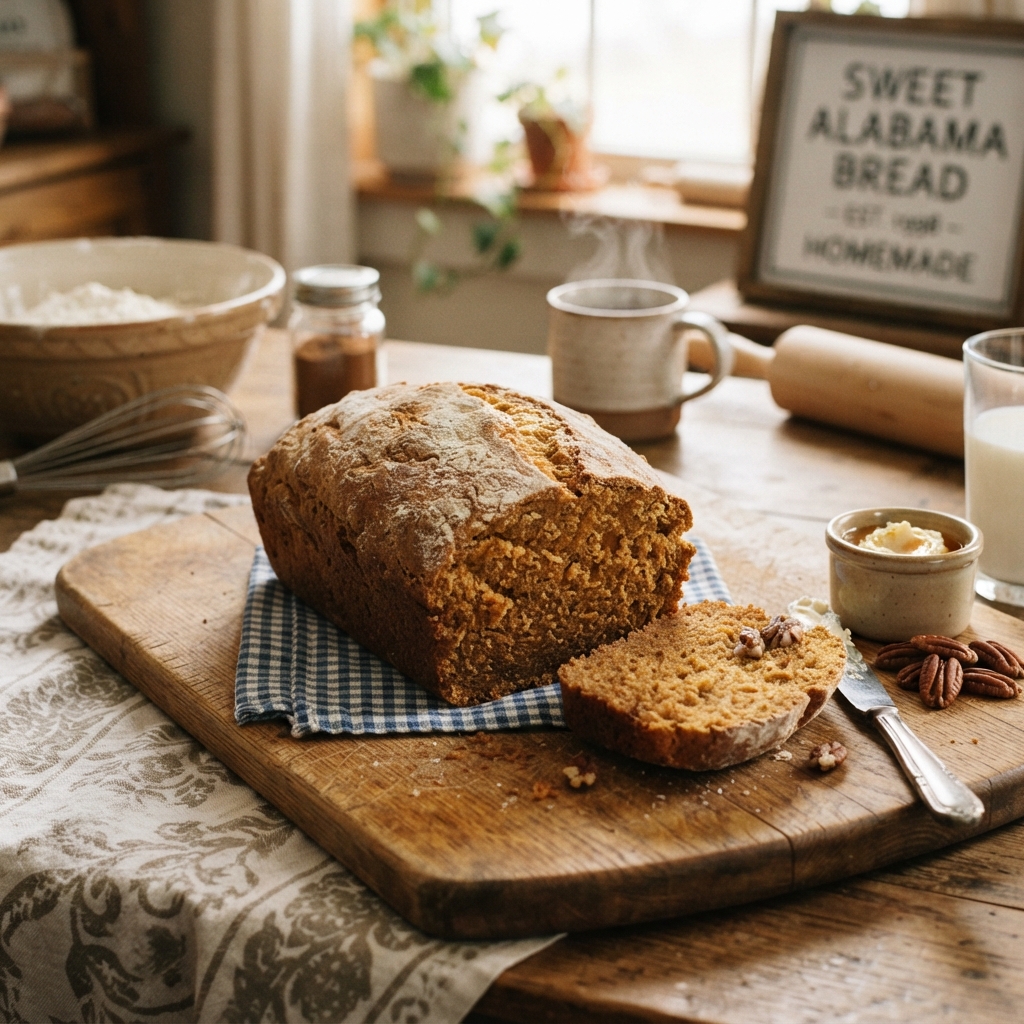
There is something profoundly comforting about the aroma of fresh bread baking in the oven, but when that bread hails from the heart of the South, it carries with it a legacy of warmth, hospitality, and generations of culinary tradition. Sweet Alabama Bread is not merely a loaf; it is an experience that encapsulates the rich, buttery, and slightly nutty flavors that define Southern baking. This distinctive quick bread strikes a perfect balance between the dense moisture of a pound cake and the tender crumb of a classic breakfast loaf, making it versatile enough for morning toast, afternoon tea, or a decadent dessert base.
Often enjoyed warm with a slather of salted butter or a drizzle of honey, this bread is a staple at family gatherings, church potlucks, and holiday tables across the state. Its sweetness is subtle yet present, derived from brown sugar and molasses rather than overwhelming white sugar, allowing the natural flavors of high-quality flour and toasted pecans to shine. Whether you are a seasoned baker or a novice looking to explore Southern cuisine, mastering Sweet Alabama Bread offers a delightful journey into the soul of American baking.
The History
The origins of Sweet Alabama Bread are deeply rooted in the agricultural and cultural history of the Deep South. While specific recipes vary from household to household, the concept evolved from the necessity of creating filling, energy-dense foods using locally available ingredients. Alabama, known historically as the “Heart of Dixie,” has long been a producer of pecans, which were officially designated as the state nut in 1982. Consequently, many traditional breads from the region incorporate pecans not just as a garnish, but as a fundamental component of the batter.
In the 19th and early 20th centuries, bread baking was a daily chore. However, “sweet breads” were reserved for special occasions, Sundays, or when guests were expected. The inclusion of more expensive ingredients like butter, eggs, and sugar signaled hospitality and abundance. Over time, as commercial baking powder became available, these yeast-based sweet breads transitioned into quicker, chemically leavened versions that retained the rich flavor profile without the lengthy rise time. Today, Sweet Alabama Bread stands as a testament to this evolution, preserving the taste of heritage baking while fitting into the modern kitchen’s schedule.
Regional variations often reflect the specific county or family lineage. Some versions lean closer to cornbread with a hint of sweetness, while others are virtually indistinguishable from a spice loaf. The common thread, however, is the emphasis on moisture and tenderness, achieved through techniques passed down from grandmothers to grandchildren, ensuring that every slice remains soft days after baking.
Ingredients Breakdown
Understanding the role of each component in Sweet Alabama Bread is crucial for achieving the perfect texture and flavor profile. This is not a recipe where substitutions can be made lightly; each ingredient serves a specific chemical purpose in the baking process.
- All-Purpose Flour: The structure of the bread relies on the protein content in all-purpose flour. It provides enough gluten to hold the loaf together without making it tough or chewy like bread flour would. Sifting the flour ensures aeration, leading to a lighter crumb.
- Brown Sugar: Unlike white sugar, brown sugar contains molasses. This adds moisture to the batter and imparts a caramel-like depth that white sugar cannot achieve. It is the primary source of the bread’s signature “sweet” identity.
- Unsalted Butter: Fat coats the flour proteins, inhibiting gluten formation and ensuring tenderness. Using unsalted butter allows you to control the sodium level precisely. The butter should be softened to room temperature to cream properly with the sugar.
- Eggs: Eggs act as an emulsifier, binding the fat and water components together. They also provide structure and richness. Large eggs are standard for this recipe to ensure consistent liquid ratios.
- Buttermilk: The acidity in buttermilk reacts with the baking soda to create carbon dioxide bubbles, which helps the bread rise. It also tenderizes the gluten strands and adds a subtle tang that balances the sweetness.
- Pecans: As a nod to Alabama’s heritage, toasted pecans add crunch and earthy flavor. Toasting them beforehand releases their essential oils, intensifying their taste within the baked loaf.
- Vanilla Extract: Pure vanilla extract enhances the perception of sweetness and rounds out the flavor profile. Artificial vanilla can leave a chemical aftertaste, so pure extract is recommended for high-quality results.
- Leavening Agents: A combination of baking powder and baking soda ensures a reliable rise. The soda reacts with the buttermilk, while the powder provides additional lift during the heating process.
Step-by-Step Recipe
Baking Sweet Alabama Bread requires attention to detail, particularly regarding mixing techniques to avoid a dense loaf. Follow these expanded steps to ensure success.
Phase 1: Preparation
Begin by preheating your oven to 350°F (175°C). Consistency in oven temperature is key; use an oven thermometer if you suspect your dial is inaccurate. Grease a standard 9×5 inch loaf pan thoroughly with butter or non-stick spray, and consider lining the bottom with parchment paper for easy removal. Prepare your pecans by spreading them on a baking sheet and toasting them in the oven for 5-7 minutes until fragrant. Allow them to cool completely before chopping.
Phase 2: Creaming the Base
In a large mixing bowl, combine the softened butter and brown sugar. Using a stand mixer or hand mixer, beat these ingredients on medium speed for approximately 3 to 5 minutes. You are looking for a mixture that is pale in color and fluffy in texture. This process incorporates air into the fat, which is essential for the bread’s lift. Scrape down the sides of the bowl frequently to ensure even mixing.
Phase 3: Incorporating Wet Ingredients
Add the eggs one at a time, beating well after each addition. This prevents the batter from curdling. Once the eggs are fully incorporated, stir in the vanilla extract. In a separate small container, mix the buttermilk with a pinch of baking soda to allow the chemical reaction to begin before it hits the flour.
Phase 4: Combining Dry Ingredients
In a separate bowl, whisk together the flour, remaining baking powder, salt, and any spices such as cinnamon or nutmeg if you are choosing to add them. Whisking aerates the dry ingredients and distributes the leavening agents evenly, preventing large holes or dense spots in the final loaf.
Phase 5: Folding and Mixing
Alternate adding the dry ingredients and the buttermilk mixture to the butter-sugar base. Start and end with the dry ingredients. Mix on low speed just until the flour disappears. Overmixing at this stage will develop too much gluten, resulting in a tough bread. Gently fold in the chopped pecans by hand using a spatula.
Phase 6: Baking and Cooling
Pour the batter into the prepared loaf pan and smooth the top. Bake for 55 to 65 minutes. Do not open the oven door during the first 40 minutes, as this can cause the bread to collapse. The bread is done when a toothpick inserted into the center comes out clean or with a few moist crumbs. Allow the bread to cool in the pan for 10 minutes before transferring it to a wire rack to cool completely.
Tips
To elevate your Sweet Alabama Bread from good to exceptional, consider these professional baking tips designed to troubleshoot common issues and enhance quality.
- Room Temperature Ingredients: Ensure your eggs, butter, and buttermilk are at room temperature before mixing. Cold ingredients can shock the butter, causing the batter to separate and resulting in an uneven texture.
- Measuring Flour Correctly: Do not scoop flour directly from the bag with your measuring cup, as this packs it down and leads to too much flour. Instead, spoon the flour into the measuring cup and level it off with a knife.
- Preventing Dryness: If you live in a dry climate, you may need to add an extra tablespoon of buttermilk. Conversely, in humid climates, you might need a tablespoon more flour to absorb excess moisture from the air.
- Tenting the Loaf: If the top of your bread is browning too quickly before the center is cooked, loosely tent a piece of aluminum foil over the pan for the last 15 minutes of baking.
- Storage: This bread stays moist for up to 3 days at room temperature if wrapped tightly in plastic wrap. For longer storage, slice and freeze the loaf for up to 3 months.
- Serving Suggestion: For the ultimate experience, warm a slice in the toaster and top with a compound butter made from honey and cinnamon.
Variations and Customizations
One of the beauties of Sweet Alabama Bread is its adaptability. While the traditional recipe is beloved, there are numerous ways to customize the loaf to suit different tastes or dietary needs.
- Glazed Finish: Create a simple glaze using powdered sugar and milk or bourbon. Drizzle this over the cooled loaf for a sweeter, dessert-like presentation.
- Chocolate Chip Twist: Add semi-sweet chocolate chips along with the pecans for a rich, decadent variation that appeals to children and adults alike.
- Apple Cinnamon: Fold in diced apples tossed in cinnamon sugar for a fall-inspired version that complements the existing spice profile.
- Gluten-Free Option: Substitute the all-purpose flour with a high-quality 1:1 gluten-free baking blend. Ensure the blend contains xanthan gum to mimic the elasticity of gluten.
- Vegan Adaptation: Replace the butter with coconut oil or vegan butter, use a flax egg substitute for the eggs, and swap buttermilk for almond milk mixed with lemon juice.
- Alcohol Infusion: For an adult-oriented version, soak the pecans in bourbon or rum for 24 hours before baking to infuse the nuts with deep, complex flavors.
Health Considerations and Nutritional Value
While Sweet Alabama Bread is a treat meant for enjoyment, understanding its nutritional profile helps in maintaining a balanced diet. As a quick bread, it is higher in carbohydrates and fats compared to whole grain yeast breads.
Caloric Content: A standard slice contains approximately 250-300 calories, depending on the size of the cut and the amount of sugar used. Fats: The majority of the fat comes from butter and pecans. While butter contains saturated fat, pecans provide heart-healthy monounsaturated fats. Sugars: The brown sugar contributes to the carbohydrate count, so those monitoring blood sugar levels should consume this bread in moderation. Protein: Eggs and flour provide a modest amount of protein, making it a reasonably filling snack.
To make the bread healthier, consider reducing the sugar by 25% without affecting the texture significantly, or substitute half of the all-purpose flour with whole wheat pastry flour to increase fiber content. Portion control is key; enjoying a thin slice alongside protein-rich foods like yogurt or eggs can help balance the glycemic impact of the meal.
Ingredients
- 2 cups all-purpose flour, sifted
- 1 cup packed light brown sugar
- 1/2 cup unsalted butter, softened to room temperature
- 2 large eggs, room temperature
- 3/4 cup buttermilk, room temperature
- 1 teaspoon baking powder
- 1/2 teaspoon baking soda
- 1/2 teaspoon salt
- 1 teaspoon pure vanilla extract
- 1 cup pecans, toasted and chopped
- 1/2 teaspoon ground cinnamon (optional)
Directions
- Preheat your oven to 350°F (175°C) and grease a 9×5 inch loaf pan.
- Toast the pecans in the oven for 5 minutes, then let them cool and chop them roughly.
- In a large bowl, cream together the softened butter and brown sugar until light and fluffy (about 4 minutes).
- Beat in the eggs one at a time, then stir in the vanilla extract.
- In a separate bowl, whisk together the flour, baking powder, baking soda, salt, and cinnamon.
- Alternately add the dry ingredients and buttermilk to the butter mixture, beginning and ending with the flour mixture. Mix until just combined.
- Gently fold in the chopped pecans by hand.
- Pour the batter into the prepared loaf pan and smooth the top.
- Bake for 55 to 65 minutes, or until a toothpick inserted in the center comes out clean.
- Cool in the pan for 10 minutes, then remove to a wire rack to cool completely before slicing.
FAQ
Can I make this bread ahead of time?
Yes, this bread actually tastes better the next day as the flavors have time to meld. You can bake it up to two days in advance if stored properly.
Why did my bread sink in the middle?
This usually happens if the bread is underbaked or if the oven door was opened too early. Ensure your leavening agents are fresh and not expired.
Can I use milk instead of buttermilk?
You can make a substitute by adding one tablespoon of lemon juice or vinegar to a cup of milk and letting it sit for 5 minutes. However, real buttermilk provides the best tang and texture.
How do I know if my oven temperature is accurate?
Oven dials are often inaccurate. Invest in an inexpensive oven thermometer to place inside while baking to ensure you are hitting the target 350°F.
Can I freeze the batter?
It is not recommended to freeze the raw batter as the leavening agents may activate prematurely. It is better to bake the loaf and freeze the finished product.
Sweet Alabama Bread is a moist, pecan-studded quick loaf rooted in Southern hospitality and tradition.
Perfect for breakfast or dessert, it combines brown sugar and butter for a rich, comforting flavor profile.