Introduction
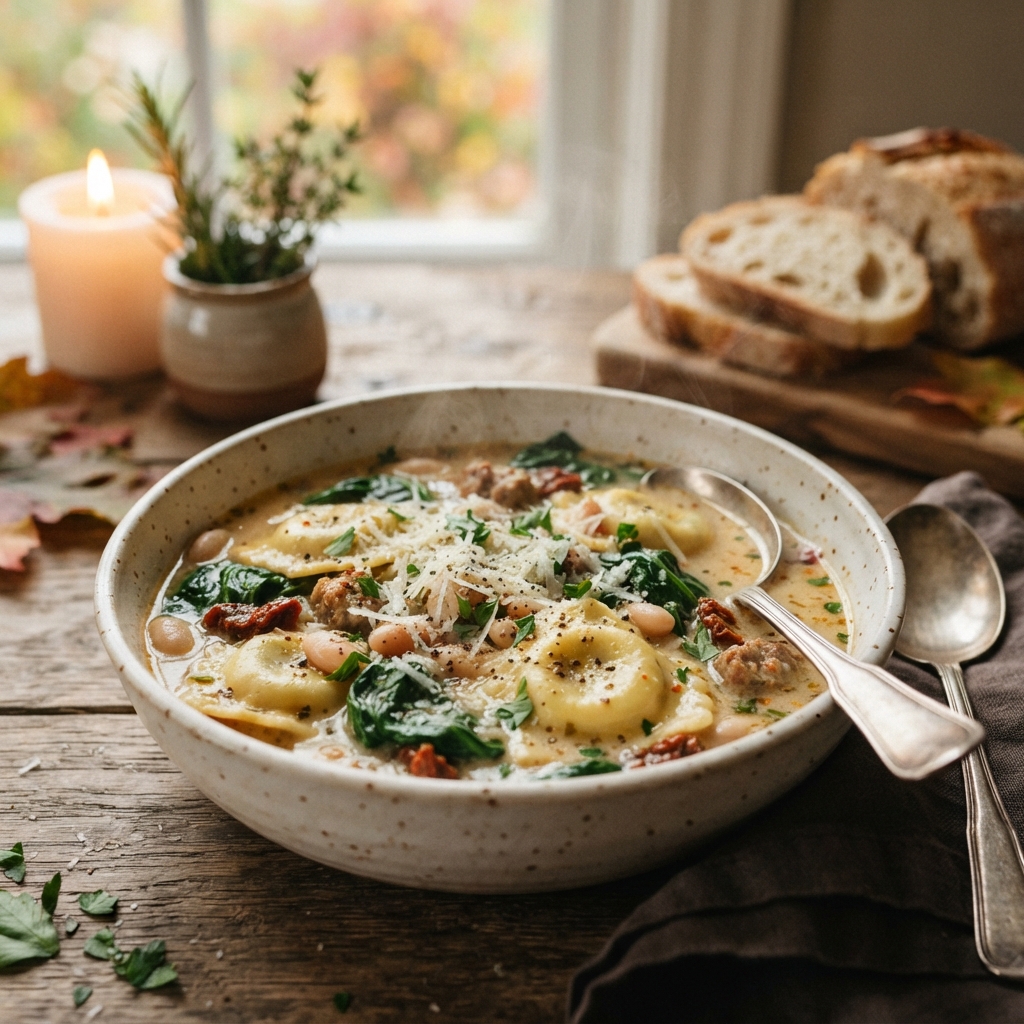
There is a specific kind of magic that happens in the kitchen when the leaves turn amber and the air grows crisp. It is the season of slow simmers, hearty broths, and the undeniable need for a bowl of warmth that feels like a hug from the inside out. Tuscan Ravioli Soup is the quintessential embodiment of this seasonal comfort. It is a dish that bridges the gap between a rustic Italian countryside tradition and the modern need for a quick, yet deeply satisfying, weeknight dinner.
This soup is not merely a mixture of ingredients; it is a symphony of textures and flavors. The pillowy softness of cheese-filled ravioli contrasts beautifully with the slight bite of fresh spinach and the robust, savory depth of a tomato-infused broth. Whether you are battling a chilly winter evening or simply craving the nostalgic tastes of autumn, this Tuscan-inspired creation delivers a culinary experience that is both sophisticated in flavor and simple in execution. It stands as a testament to the Italian philosophy that the best food is often the simplest, relying on high-quality staples to create something extraordinary.
The History
To understand Tuscan Ravioli Soup, one must first understand the heart of Tuscany itself. Tuscan cuisine, often referred to as cucina povera or “peasant cooking,” is rooted in the history of making the most of humble, locally available ingredients. Historically, Tuscany was a region where meat was a luxury reserved for special occasions, leading cooks to rely heavily on beans, grains, vegetables, and bread.
The concept of soup in Tuscany is sacred. Dishes like Ribollita (a bread and vegetable soup) and Pappa al Pomodoro (tomato and bread soup) have centuries of history. However, the addition of pasta, specifically ravioli, to a broth represents a later evolution in Italian culinary history. Ravioli itself dates back to the Middle Ages, originally created as a way to preserve meat and cheese by encasing it in dough.
While traditional Tuscan soups were often thick and bread-based, the modern iteration of “Tuscan Ravioli Soup” found in American-Italian kitchens is a fusion of these ancient broth traditions with the convenience of fresh pasta. It mimics the flavor profile of a classic Minestrone but elevates it with the richness of cheese-filled pockets. It captures the spirit of the Renaissance table—where feasts were abundant—while maintaining the soul of the peasant kitchen—where nothing was wasted, and every spoonful counted.
Ingredients Breakdown
The success of this soup relies entirely on the quality and interaction of its core components. Here is a deep dive into what makes each ingredient essential:
The Broth Base
Chicken or Vegetable Stock: This is the canvas of your painting. A low-sodium stock is preferred so you can control the salt levels. For a deeper, richer flavor, a homemade bone broth adds collagen and a velvety mouthfeel that store-bought cubes cannot replicate. If using vegetable stock, ensure it is robust, perhaps roasted beforehand, to stand up to the acidity of the tomatoes.
San Marzano Tomatoes: Grown in the volcanic soil near Mount Vesuvius, these tomatoes are sweeter, less acidic, and have fewer seeds than standard plum tomatoes. When crushed by hand, they provide the perfect texture for the soup base without becoming too watery.
The Aromatics
The Holy Trinity (Onion, Carrot, Celery): Known in Italy as soffritto, this mixture is sautéed slowly to release natural sugars. The onion provides sweetness, the carrot adds earthiness, and the celery offers a necessary herbal backbone that prevents the soup from tasting too heavy.
Garlic: Fresh garlic is non-negotiable. It should be minced finely and added just before the liquids to prevent burning, ensuring a pungent, aromatic kick that defines the Tuscan profile.
The Star: Ravioli
Cheese Ravioli: While you can use meat-filled ravioli, cheese ravioli (typically filled with ricotta, parmesan, and egg) offers the best textural contrast. Fresh refrigerated ravioli cooks faster and has a more delicate dough than frozen varieties, though frozen works well in a pinch. The cheese inside melts slightly into the broth, naturally thickening the soup.
The Greens and Finish
Fresh Spinach or Kale: Tuscan cuisine loves dark leafy greens. Spinach wilts quickly, adding a pop of bright green color and iron. For a heartier, more rustic version, Lacinato kale (Dino kale) holds its structure better and adds a pleasant chew.
Heavy Cream or Half-and-Half: This is the secret to the “creamy” aspect of the soup. It balances the acidity of the tomatoes and creates a luxurious, opaque broth that coats the spoon.
Parmesan Rind: Never throw away the hard rind of a Parmigiano-Reggiano wheel. Simmering this in the soup acts as a natural flavor bomb, releasing umami and saltiness that powdered cheese cannot achieve.
Step-by-Step Recipe
Creating this soup is a process of layering flavors. Rushing the steps will result in a flat taste, so take your time with the sautéing and simmering phases.
- Prep the Aromatics: Begin by dicing your onion, carrots, and celery into uniform small pieces. This ensures they cook evenly. Mince the garlic and set it aside separately.
- The Soffritto: In a large Dutch oven or heavy-bottomed pot, heat olive oil over medium heat. Add the onion, carrot, and celery. Cook this mixture for about 8 to 10 minutes. You are looking for the onions to become translucent and the carrots to soften slightly. Do not rush this; browning the vegetables slightly adds depth.
- Bloom the Garlic and Herbs: Add the minced garlic, dried oregano, and dried basil (if using dried). Stir constantly for 1 minute until fragrant. If the garlic burns, it will turn bitter, so keep the heat moderate.
- Deglaze and Build the Broth: Pour in the crushed tomatoes and the chicken or vegetable stock. If you have a Parmesan rind, drop it in now. Scrape the bottom of the pot with a wooden spoon to lift any browned bits (fond) stuck to the surface; this is pure flavor.
- The Simmer: Bring the liquid to a boil, then immediately reduce the heat to low. Cover the pot partially and let it simmer for at least 20 minutes. This allows the flavors of the vegetables and herbs to meld into the tomato base.
- Add the Ravioli: Increase the heat to a gentle boil. Add the ravioli directly to the soup. Cook according to the package instructions (usually 3-5 minutes for fresh, 6-8 for frozen). Do not overcook, or the pasta will become mushy.
- The Creamy Finish: Once the ravioli is tender, stir in the heavy cream and the fresh spinach. The residual heat will wilt the spinach in about 1 minute. Taste the soup now.
- Season and Serve: Remove the Parmesan rind. Season with salt and freshly cracked black pepper. Ladle into bowls and top with fresh grated Parmesan and fresh basil.
Tips
- The Acid Balance: Tomatoes can sometimes be too acidic. If your soup tastes too sharp, add a pinch of sugar or a tiny splash of balsamic vinegar to round out the flavor profile.
- Pasta Water: If the soup becomes too thick after the ravioli releases its starch, add a splash of reserved pasta water or extra broth to loosen the consistency.
- Don’t Boil the Cream: Once you add the heavy cream, try not to let the soup come to a rolling boil again, as this can cause the dairy to curdle or separate. A gentle simmer is sufficient.
- Resting Time: Like most stews, this soup tastes even better the next day after the flavors have had time to marry in the refrigerator. However, be aware that the ravioli will absorb more broth overnight, so you may need to add liquid when reheating.
- Oil Quality: Use a high-quality extra virgin olive oil for the initial sauté and a final drizzle over the bowl before serving. The fruity notes of good olive oil cut through the richness of the cream.
Variations and Customizations
This recipe is a versatile template that can be adapted to suit various dietary needs and flavor preferences.
Protein Boost
While the cheese ravioli provides protein, you can make this a heartier meal by adding Italian sausage. Brown crumbled sweet or spicy Italian sausage in the pot before adding the vegetables. Alternatively, shredded rotisserie chicken or white beans (cannellini) can be added during the simmering stage for a leaner protein option.
Vegetarian and Vegan
To make this vegetarian, simply use vegetable stock. For a vegan version, swap the cheese ravioli for a spinach or mushroom-filled vegan ravioli. Replace the heavy cream with full-fat coconut milk or a cashew-based cream, and use nutritional yeast instead of Parmesan cheese for that savory, cheesy kick.
Gluten-Free
The soup base is naturally gluten-free, but the ravioli is not. Substitute with your favorite brand of gluten-free cheese ravioli. Note that gluten-free pasta can become gummy if overcooked, so add it at the very last minute and serve immediately.
Spicy Tuscan
For those who like heat, add red pepper flakes during the garlic sauté step. You can also use a spicy arrabbiata sauce instead of plain crushed tomatoes to give the broth a fiery backbone.
Health Considerations and Nutritional Value
Tuscan Ravioli Soup is a balanced meal, but portion control is key due to the carbohydrate content in the pasta and the fat content in the cream.
Caloric Density: A standard bowl can range from 400 to 600 calories depending on the amount of cream and the type of ravioli used. To lighten it, use half-and-half instead of heavy cream or stir in a dollop of Greek yogurt at the end for creaminess with added protein.
Sodium Watch: Canned tomatoes, broths, and cheeses are all high in sodium. To make this heart-healthy, use “No Salt Added” canned tomatoes and low-sodium broth. Rely on fresh herbs like basil, oregano, and thyme to boost flavor without the salt shaker.
Nutrient Profile: The spinach provides a significant dose of Vitamin K and Iron. The tomatoes offer Lycopene, an antioxidant linked to heart health. The dairy in the ravioli and cream provides Calcium, essential for bone health.
Ingredients
- 2 tablespoons extra virgin olive oil
- 1 medium yellow onion, diced
- 2 medium carrots, peeled and diced
- 2 stalks celery, diced
- 4 cloves garlic, minced
- 1 teaspoon dried oregano
- 1 teaspoon dried basil (or 1 tablespoon fresh)
- 1 can (28 oz) crushed San Marzano tomatoes
- 6 cups chicken or vegetable stock (low sodium preferred)
- 1 Parmesan cheese rind (optional but recommended)
- 1 package (9-10 oz) fresh cheese ravioli
- 3 cups fresh baby spinach, packed
- 1/2 cup heavy cream or half-and-half
- Salt and black pepper to taste
- Fresh basil and grated Parmesan for garnish
Directions
- Heat olive oil in a large pot over medium heat. Add onion, carrots, and celery; cook for 8-10 minutes until softened.
- Add garlic, oregano, and dried basil; cook for 1 minute until fragrant.
- Stir in crushed tomatoes, stock, and the Parmesan rind. Bring to a boil, then reduce heat and simmer for 20 minutes.
- Remove the Parmesan rind. Increase heat to medium-high and add the ravioli. Cook according to package directions (usually 3-5 minutes).
- Stir in the spinach and heavy cream. Cook for 1-2 minutes until spinach is wilted and soup is heated through.
- Season with salt and pepper. Serve hot, garnished with fresh basil and extra Parmesan cheese.
FAQ
Can I freeze Tuscan Ravioli Soup?
You can freeze the soup base, but it is not recommended to freeze it with the ravioli already inside. Pasta tends to become mushy and disintegrate upon thawing and reheating. Freeze the broth and vegetable mixture, then cook fresh ravioli when you are ready to serve.
What kind of cheese is best for garnish?
Parmigiano-Reggiano is the gold standard. However, Pecorino Romano offers a sharper, saltier bite that pairs wonderfully with the tomato base. Avoid pre-grated cheese in the green can, as it contains anti-caking agents that prevent it from melting smoothly.
My soup is too thin, how do I thicken it?
You can make a slurry by mixing 1 tablespoon of cornstarch with 2 tablespoons of cold water and stirring it into the simmering soup. Alternatively, mash a few of the cooked carrots against the side of the pot to release their natural starch.
Can I use dried pasta instead of ravioli?
Yes, small pasta shapes like ditalini, orzo, or small shells work well. However, adjust the cooking time, as dried pasta takes longer to cook than fresh ravioli.
Summary
Tuscan Ravioli Soup is a creamy, tomato-based comfort dish featuring cheese-filled pasta and fresh spinach, perfect for cold weather. It combines rustic Italian flavors with simple preparation for a hearty, family-friendly meal.