Introduction
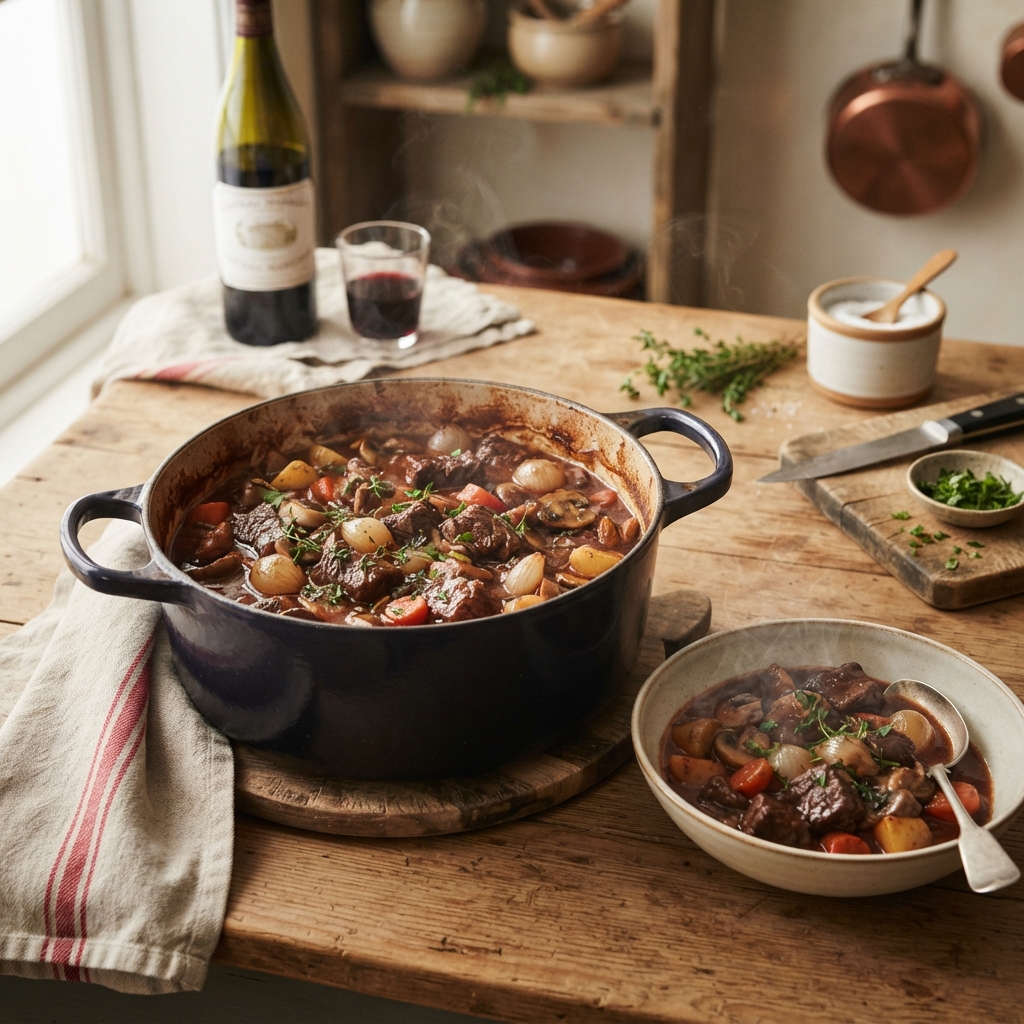
There is a specific kind of magic that happens in a kitchen when a heavy pot sits on the stove for hours, filling the air with the intoxicating aroma of red wine, caramelized onions, and slow-cooked beef. This French Style Beef Stew with Red Wine is not merely a meal; it is an experience. It is the culinary equivalent of a warm embrace on a cold winter evening, a dish that demands patience but rewards you with melt-in-your-mouth tenderness and a depth of flavor that only time can create.
Often referred to as Boeuf Bourguignon, this classic French dish transforms humble cuts of beef into a luxurious feast. The secret lies in the braising liquid—a robust red wine that breaks down the tough connective tissues of the meat while infusing it with earthy, fruity notes. Paired with pearl onions, earthy mushrooms, and crispy lardons, this stew is the ultimate comfort food. Whether you are hosting a dinner party or simply looking to elevate your Tuesday night dinner, this recipe delivers a rustic elegance that pairs perfectly with crusty baguettes, creamy mashed potatoes, or buttered egg noodles.
The History
To understand this stew, one must look back to the Burgundy region of eastern France. The origins of Boeuf Bourguignon are deeply rooted in peasant cuisine. Historically, this was a dish born of necessity rather than luxury. Tough, inexpensive cuts of beef that were otherwise inedible were slow-cooked in wine to make them tender enough to eat. The wine served a dual purpose: it acted as a tenderizing agent due to its acidity, and it provided a rich, complex sauce that masked the lack of quality in the meat.
For centuries, this was a regional specialty, rarely seen outside of Burgundy farmhouses. However, the dish gained international fame in the 20th century, largely thanks to the legendary chef Auguste Escoffier, who codified the recipe in his guide to modern French cuisine. Later, it was immortalized in the English-speaking world by Julia Child. In her seminal cookbook, Mastering the Art of French Cooking, Child dedicated significant attention to the dish, teaching American home cooks that French cuisine was accessible and that a humble beef stew could be the centerpiece of a sophisticated meal. Today, it stands as a testament to the French philosophy of cooking: taking simple, high-quality ingredients and treating them with respect and time to create something extraordinary.
Ingredients Breakdown
The success of a French beef stew relies entirely on the quality and selection of its components. Unlike a quick stir-fry, you cannot rush the chemistry of these ingredients.
The Beef: Chuck is King
You might be tempted to buy pre-cut “stew meat” from the grocery store, but for the best results, you should buy a whole chuck roast and cut it yourself. Chuck comes from the shoulder of the cow, a muscle that works hard. This means it is full of collagen and connective tissue. When braised slowly, that collagen breaks down into gelatin, giving the sauce a velvety texture and the meat a succulent, fall-apart quality. Lean cuts like sirloin will simply dry out and become tough over the long cooking time required for this recipe.
The Wine: Dry and Robust
The rule of thumb for cooking with wine is simple: if you wouldn’t drink it, don’t cook with it. You need a dry, full-bodied red wine. A Pinot Noir from Burgundy is the traditional choice, offering earthy and cherry notes. However, a Cabernet Sauvignon or a Merlot works beautifully as well. Avoid “cooking wines” found in the vinegar aisle, as they are loaded with salt and preservatives that can ruin the flavor profile of your stew.
The Aromatics: Mirepoix and Beyond
The flavor base of this stew is the classic French mirepoix: a combination of onions, carrots, and celery. These vegetables are sautéed until soft, releasing their sugars and savory notes into the fat. Additionally, garlic is essential for that pungent, aromatic kick. Fresh thyme and bay leaves are the herbal backbone, providing a woody, floral scent that cuts through the richness of the beef and wine.
The Garnish: Lardons, Onions, and Mushrooms
Traditional Boeuf Bourguignon is finished with three distinct elements added near the end of cooking. Lardons (thick-cut bacon) provide a salty, smoky crunch. Pearl onions offer a sweet, mild onion flavor that holds its shape better than chopped yellow onions. Finally, button or cremini mushrooms add an earthy umami flavor and a meaty texture that complements the beef perfectly.
Step-by-Step Recipe
Creating this masterpiece is a journey. Do not rush the steps, particularly the browning of the meat. This process, known as the Maillard reaction, creates the complex flavors that define the dish.
Phase 1: Preparation
Begin by patting your beef cubes completely dry with paper towels. Moisture is the enemy of browning; if the meat is wet, it will steam instead of sear. Season the beef generously with salt and freshly cracked black pepper. While the meat sits, chop your carrots, celery, and onions. Mince your garlic and strip the leaves from your fresh thyme sprigs.
Phase 2: The Sear
In a large Dutch oven or heavy-bottomed pot, heat a tablespoon of oil over medium-high heat. Working in batches, sear the beef cubes on all sides until they are deeply browned and crusty. Do not crowd the pan, or the temperature will drop, and the meat will boil in its own juices. Remove the browned meat and set it aside on a plate. This step is crucial for building the flavor foundation.
Phase 3: Building the Base
In the same pot, with the rendered beef fat and oil, add your chopped bacon (lardons). Cook until crispy, then remove. Add your mirepoix (onions, carrots, celery) to the pot. Sauté them until the onions are translucent and the carrots begin to soften. Add the garlic and tomato paste, cooking for just a minute until fragrant. The tomato paste adds acidity and richness to the sauce.
Phase 4: The Deglaze and Braise
Pour in the red wine. Use a wooden spoon to scrape up the fond—those delicious browned bits stuck to the bottom of the pot. This is pure flavor. Add the beef broth, the seared beef, the bacon, thyme, and bay leaves. Bring the liquid to a simmer, then reduce the heat to low. Cover the pot with a tight-fitting lid.
Phase 5: The Long Wait
Allow the stew to simmer gently for 2.5 to 3 hours. You can also transfer the pot to a 325°F (160°C) oven for even, consistent heat. The stew is done when the beef is fork-tender and the sauce has thickened slightly.
Phase 6: The Finish
In the last 30 minutes of cooking, sauté your pearl onions and mushrooms in a separate skillet with butter until golden. Stir them into the stew. If the sauce is too thin, mix a little flour with butter (a beurre manié) and whisk it into the simmering stew to thicken it. Taste and adjust seasoning with salt and pepper before serving.
Tips
- Don’t Skip the Marinade: For an even deeper flavor, marinate the beef in the wine, herbs, and vegetables overnight in the refrigerator before cooking. This allows the wine to penetrate the meat fibers.
- The Freezer Trick: If you find the sauce is too greasy after cooking, place the pot in the freezer for 15 minutes. The fat will rise to the top and solidify, making it easy to skim off with a spoon.
- Make it Ahead: Like most stews, this dish tastes even better the next day. The flavors have time to meld and mature. Prepare it a day in advance and reheat gently before serving.
- Uniform Cuts: Try to cut your beef into uniform 1.5-inch cubes. This ensures that every piece cooks at the same rate, preventing some from being dry while others are undercooked.
- Low and Slow: Never boil the stew vigorously. A gentle simmer is required to break down the collagen without toughening the muscle fibers.
Variations and Customizations
While the traditional recipe is perfection, there is room for creativity in the kitchen.
- Slow Cooker Version: This recipe adapts beautifully to a slow cooker. Sear the meat and sauté the vegetables on the stove first to develop flavor, then transfer everything to the slow cooker. Cook on Low for 8 hours or High for 4 hours.
- Gluten-Free: To make this stew gluten-free, ensure your beef broth and wine are certified GF. Instead of using flour to thicken the sauce at the end, use a cornstarch slurry or simply reduce the sauce longer to concentrate it naturally.
- Venison or Lamb: Swap the beef for venison or lamb shoulder for a gamey, rich twist. These meats pair exceptionally well with red wine and juniper berries.
- Vegetarian Adaptation: Use hearty portobello mushrooms and walnuts in place of the beef, and use a rich vegetable stock. The braising technique remains the same, creating a deeply savory plant-based stew.
- Spicy Kick: Add a pinch of red pepper flakes or a dash of cayenne pepper when sautéing the aromatics to add a subtle warmth that contrasts with the rich wine.
Health Considerations and Nutritional Value
This French Style Beef Stew is a nutrient-dense meal, though it is rich in calories due to the fat content and alcohol. Beef is an excellent source of high-quality protein, essential for muscle repair and growth. It is also packed with iron, zinc, and Vitamin B12, which are vital for energy levels and immune function.
The vegetables contribute fiber, Vitamin A (from the carrots), and antioxidants. The red wine, when cooked, loses most of its alcohol content but retains resveratrol, an antioxidant linked to heart health. However, because this dish uses chuck roast and bacon, it is high in saturated fats. To make it lighter, you can trim more visible fat from the beef before cooking and reduce the amount of bacon used. Portion control is key; a hearty bowl served with a side of steamed green beans or a fresh salad balances the richness of the stew.
Ingredients
- 3 lbs (1.4 kg) beef chuck roast, cut into 1.5-inch cubes
- 6 oz (170g) thick-cut bacon or lardons, chopped
- 1 large yellow onion, chopped
- 3 large carrots, peeled and sliced into rounds
- 2 stalks celery, chopped
- 4 cloves garlic, minced
- 2 tbsp tomato paste
- 1 bottle (750ml) dry red wine (Pinot Noir or Cabernet Sauvignon)
- 2 cups beef broth (low sodium preferred)
- 1 lb (450g) cremini or button mushrooms, quartered
- 1 lb (450g) pearl onions, peeled
- 3 sprigs fresh thyme
- 2 bay leaves
- 3 tbsp all-purpose flour (for dredging or thickening)
- 3 tbsp olive oil
- Salt and freshly ground black pepper to taste
- Fresh parsley, chopped (for garnish)
Directions
- Prep the Meat: Pat the beef cubes dry with paper towels. Season generously with salt and pepper. If desired, toss lightly in flour for a better crust.
- Cook the Bacon: In a large Dutch oven over medium heat, cook the bacon until crispy. Remove with a slotted spoon and set aside, leaving the fat in the pot.
- Sear the Beef: Increase heat to medium-high. Add olive oil if needed. Sear the beef in batches until deeply browned on all sides. Do not overcrowd the pan. Remove beef and set aside.
- Sauté Vegetables: In the same pot, add the chopped onion, carrots, and celery. Cook for 5-7 minutes until softened. Add garlic and tomato paste; cook for 1 minute until fragrant.
- Deglaze: Pour in the red wine, scraping the bottom of the pot to release browned bits. Bring to a simmer and let reduce by about one-third (approx. 10 minutes).
- Combine and Braise: Return the beef and bacon to the pot. Add beef broth, thyme sprigs, and bay leaves. Liquid should just cover the meat. Bring to a simmer, cover, and reduce heat to low. Simmer for 2.5 to 3 hours until beef is tender.
- Cook Garnishes: While the stew simmers, sauté the pearl onions and mushrooms in a separate skillet with butter until golden brown.
- Finish: Once the beef is tender, stir in the cooked mushrooms and pearl onions. Simmer for another 15 minutes. If the sauce is too thin, mix 1 tbsp flour with 1 tbsp softened butter and whisk into the stew to thicken.
- Serve: Remove bay leaves and thyme stems. Taste and adjust salt and pepper. Garnish with fresh parsley and serve hot with crusty bread or mashed potatoes.
FAQ
Can I make this without alcohol?
Yes. You can substitute the red wine with an equal amount of beef broth mixed with 2 tablespoons of red wine vinegar or balsamic vinegar to mimic the acidity and depth of the wine.
Why is my stew tough?
Tough beef usually means it hasn’t cooked long enough. The collagen needs time to break down into gelatin. If the meat is chewy, continue simmering for another 30-45 minutes.
Can I freeze this stew?
Absolutely. This stew freezes exceptionally well. Let it cool completely, then store in airtight containers for up to 3 months. Thaw in the refrigerator overnight before reheating.
What is the best side dish?
Classic pairings include buttered egg noodles, creamy mashed potatoes, or polenta. For a lighter option, serve with a crisp green salad and a baguette to soak up the sauce.
Summary
This French Style Beef Stew transforms tough chuck roast into tender perfection through a slow braise in robust red wine and aromatic herbs. It is a timeless, hearty dish that offers rich flavors and comfort, ideal for cozy winter dinners.