Introduction
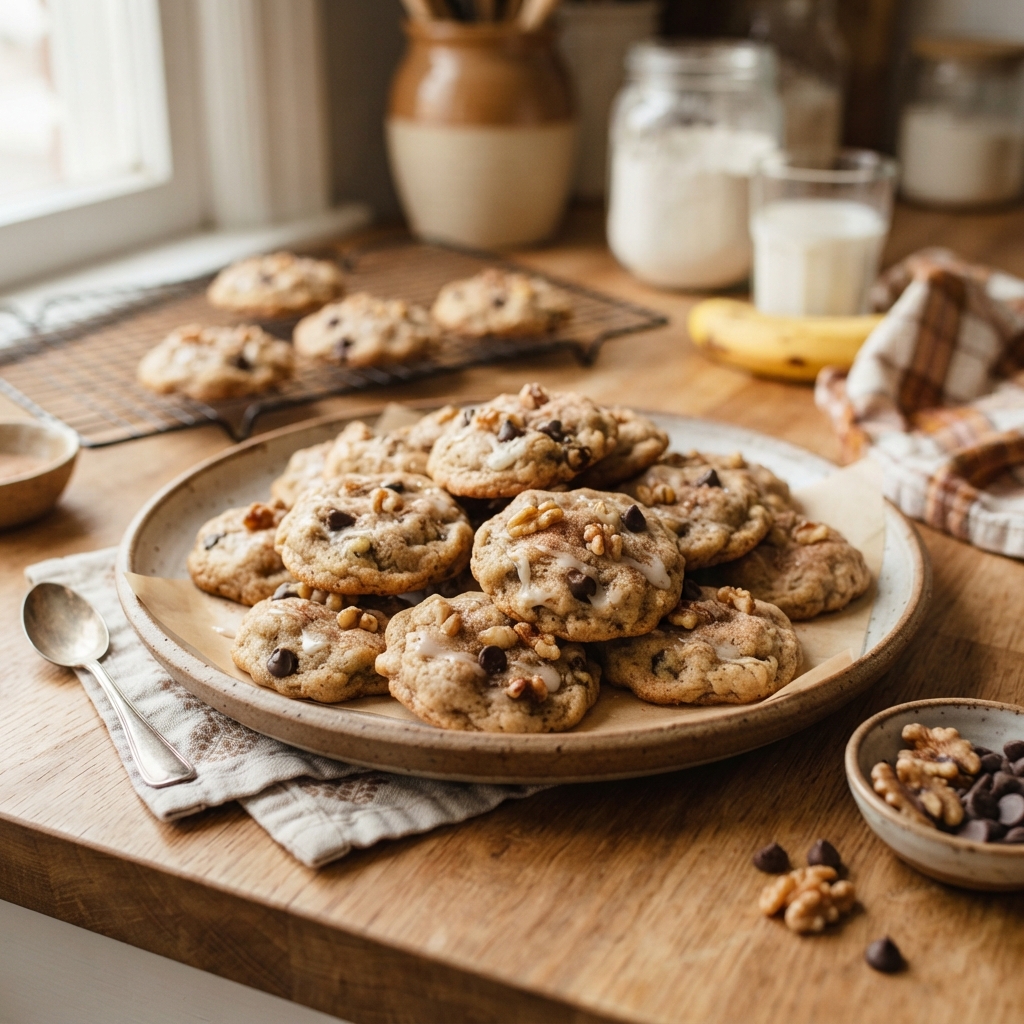
Welcome to the ultimate culinary fusion that combines the nostalgic warmth of homemade banana bread with the portable convenience of a soft-baked cookie. Banana Bread Cookies represent the perfect marriage of textures and flavors, offering the moist, dense crumb of traditional quick bread encapsulated in a hand-held treat that fits perfectly in a lunchbox or alongside a morning cup of coffee. This recipe is designed for bakers who crave the rich, caramelized sweetness of overripe bananas but desire a treat that requires no loaf pan and offers a slightly crisp edge with a chewy center. Whether you are looking to utilize a bunch of browned bananas sitting on your counter or simply wish to explore a new dimension of dessert baking, these cookies provide a comforting experience that appeals to all ages. The aroma that fills your kitchen during the baking process is reminiscent of holiday mornings and family gatherings, yet the execution is simple enough for a weekday afternoon indulgence. By adjusting the ratio of wet to dry ingredients and modifying the baking time, we achieve a hybrid dessert that defies categorization, standing proudly between the worlds of cakes and cookies.
The History
To understand the genesis of Banana Bread Cookies, one must first delve into the separate histories of their parent recipes. Banana bread itself is a quintessential American invention that gained widespread popularity during the Great Depression in the 1930s. During this era of economic hardship, housewives sought ways to minimize food waste, and overripe bananas, which were often discarded, became a key ingredient for adding moisture and sweetness to bread without requiring expensive sugar or butter. Food companies promoted banana recipes to boost sales, cementing the loaf’s place in culinary history. Conversely, cookies have a lineage that traces back to 7th century Persia, shortly after sugar became relatively common in the region, eventually spreading to Europe and the Americas through trade routes. The concept of merging these two distinct baked goods is a modern innovation, arising from the contemporary trend of hybrid desserts that gained momentum in the early 21st century. As bakers began experimenting with flavor profiles on social media platforms and food blogs, the idea of compressing the voluminous batter of banana bread into a smaller, cookie-sized portion emerged. This evolution reflects a shift in modern eating habits towards portion-controlled indulgences that retain the emotional comfort of traditional recipes while offering the convenience of finger foods. The Banana Bread Cookie is thus a testament to culinary adaptation, honoring the frugality of the past while embracing the innovation of the present.
Ingredients Breakdown
Understanding the chemistry behind each component is crucial for mastering this recipe. Overripe Bananas are the star ingredient; as bananas ripen, their starches convert into simple sugars, providing natural sweetness and a liquid consistency that replaces some of the need for added fats. All-Purpose Flour provides the structural framework through gluten formation, though care must be taken not to overmix to avoid toughness. Unsalted Butter, softened to room temperature, contributes to the creaming method which traps air pockets for lift, while also providing richness and flavor depth that oil cannot replicate. Granulated Sugar aids in caramelization during baking, creating those desirable crisp edges, while Brown Sugar introduces molasses notes that complement the banana flavor and retain moisture for a chewy texture. Eggs act as the primary binding agent, coagulating during heating to set the structure of the cookie. Baking Soda is the leavening agent that reacts with the acidity of the bananas to produce carbon dioxide, ensuring the cookies rise properly without becoming dense bricks. Vanilla Extract enhances the overall flavor profile by rounding out the sharpness of the sugar and the earthiness of the flour. Finally, a pinch of Salt is essential to balance the sweetness and amplify the perception of other flavors, preventing the cookie from tasting one-dimensional.
Step-by-Step Recipe
Preparing these cookies begins with meticulous preparation of your workspace and ingredients. First, preheat your oven to ensure an even baking environment from the moment the tray is inserted. While the oven heats, focus on the bananas; they should be mashed thoroughly until no large chunks remain, as consistency is key for uniform cookie texture. In a separate bowl, whisk your dry ingredients together to distribute the leavening agents and salt evenly, preventing bitter spots in the final product. The creaming stage is vital; beat the butter and sugars together until the mixture pales in color and increases in volume, indicating sufficient air incorporation. Add the eggs one at a time, ensuring each is fully emulsified before adding the next to prevent the batter from breaking. Gradually introduce the dry mixture to the wet ingredients, mixing only until the flour streaks disappear to avoid developing excess gluten. Fold in the mashed bananas gently to maintain the air bubbles you worked hard to create. Scoop the dough onto lined baking sheets, leaving ample space for spreading. Bake until the edges are golden but the centers still appear slightly soft, as they will continue to set while cooling on the hot tray. Allow them to cool completely to achieve the perfect structural integrity before serving.
Tips
- Banana Ripeness: For the best flavor, use bananas that are completely black on the outside; if yours are yellow, you can bake them in their skins at 300°F for 15 minutes to artificially ripen them.
- Butter Temperature: Ensure your butter is softened but not melted; melted butter will cause the cookies to spread too thin and lose their chewy texture.
- Chilling the Dough: While not strictly necessary, chilling the dough for 30 minutes can help solidify the fats, resulting in a thicker cookie with less spreading.
- Measuring Flour: Spoon flour into your measuring cup and level it off with a knife rather than scooping directly from the bag to avoid packing too much flour into the recipe.
- Cooling Process: Let the cookies rest on the baking sheet for at least five minutes before transferring them to a wire rack; this allows them to firm up enough to handle without breaking.
- Uniformity: Use a cookie scoop to ensure all dough portions are the same size, which guarantees even baking times across the entire batch.
Variations and Customizations
The base recipe for Banana Bread Cookies is highly adaptable to suit various dietary needs and flavor preferences. For a Chocolate Lover’s Twist, fold in semi-sweet chocolate chips or chunks after mixing the dough, allowing them to melt slightly during baking for gooey pockets. Nut enthusiasts can incorporate Walnuts or Pecans, toasted beforehand to enhance their oils and crunch, adding a sophisticated textural contrast to the soft cookie. To create a Gluten-Free Version, substitute the all-purpose flour with a high-quality 1-to-1 gluten-free baking blend that includes xanthan gum for binding. For a Vegan Adaptation, replace the butter with coconut oil or vegan butter sticks and use flax eggs instead of chicken eggs. You can also introduce warm spices like Cinnamon, Nutmeg, or Cardamom to deepen the autumnal flavor profile, or add Oats for a heartier, more fibrous texture. For a decorative touch, consider drizzling a simple cream cheese glaze over the cooled cookies to mimic the frosting often found on banana bread cakes.
Health Considerations and Nutritional Value
While these cookies are a treat, they do offer some nutritional benefits derived from their primary ingredient. Bananas are a rich source of Potassium, which supports heart health and muscle function, and they provide Dietary Fiber which aids in digestion and promotes satiety. Compared to standard sugar cookies, Banana Bread Cookies often require less added sugar due to the natural sweetness of the fruit. However, they do contain calories from carbohydrates and fats, so portion control is advised for those monitoring energy intake. To increase the health profile, you can substitute half of the all-purpose flour with Whole Wheat Flour for added nutrients and fiber, or reduce the granulated sugar by twenty percent without significantly impacting the texture. Using Coconut Oil instead of butter can introduce medium-chain triglycerides, though this will alter the flavor slightly. It is important to note that while bananas are healthy, the addition of sugar and butter classifies this as a dessert, best enjoyed in moderation as part of a balanced diet.
Ingredients
- 2 cups all-purpose flour
- 1 teaspoon baking soda
- 1/4 teaspoon salt
- 1/2 teaspoon ground cinnamon
- 1/2 cup unsalted butter, softened
- 1/2 cup granulated sugar
- 1/2 cup packed brown sugar
- 1 large egg, room temperature
- 1 teaspoon vanilla extract
- 1 cup mashed overripe bananas (about 2 to 3 medium bananas)
- 1/2 cup chopped walnuts or chocolate chips (optional)
Directions
- Preheat your oven to 350°F (175°C) and line two large baking sheets with parchment paper or silicone baking mats.
- In a medium bowl, whisk together the flour, baking soda, salt, and cinnamon until well combined and set aside.
- In a large bowl, cream together the softened butter, granulated sugar, and brown sugar until the mixture is light and fluffy, approximately 3 minutes.
- Beat in the egg and vanilla extract until fully incorporated and the mixture is smooth.
- Stir in the mashed bananas until the mixture is uniform, noting that it may look slightly curdled due to the acidity.
- Gradually add the dry flour mixture to the wet ingredients, mixing on low speed or by hand just until no flour streaks remain.
- Fold in the walnuts or chocolate chips if using, distributing them evenly throughout the dough.
- Scoop rounded tablespoons of dough onto the prepared baking sheets, spacing them about 2 inches apart to allow for spreading.
- Bake for 10 to 12 minutes, or until the edges are lightly golden and the centers look set but still soft.
- Remove from the oven and let cool on the baking sheet for 5 minutes before transferring to a wire rack to cool completely.
FAQ
Why did my cookies spread too much?
This usually happens if the butter was too warm or melted before mixing, or if the baking sheet was greased instead of lined with parchment paper. Ensure your butter is softened but still holds its shape, and always use parchment paper.
Can I freeze the dough?
Yes, you can scoop the dough into balls and freeze them on a tray before transferring to a freezer bag. Bake from frozen, adding an extra minute or two to the baking time.
How do I store these cookies?
Store cooled cookies in an airtight container at room temperature for up to 3 days, or in the refrigerator for up to a week to maintain freshness due to the moisture content from the bananas.
Can I use honey instead of sugar?
You can substitute some sugar with honey, but reduce the other liquids slightly as honey adds moisture. The flavor will be distinctively different and the cookies may brown faster.
Why are my cookies cakey?
Too much flour or overmixing the batter can lead to a cakey texture. Measure your flour carefully and stop mixing as soon as the ingredients are combined.
Summary
Banana Bread Cookies offer a delightful fusion of moist banana bread flavor and portable cookie convenience using simple pantry staples.
Perfect for utilizing overripe fruit, this recipe yields soft, chewy treats that are easily customizable with nuts, chocolate, or dietary adaptations.