Introduction
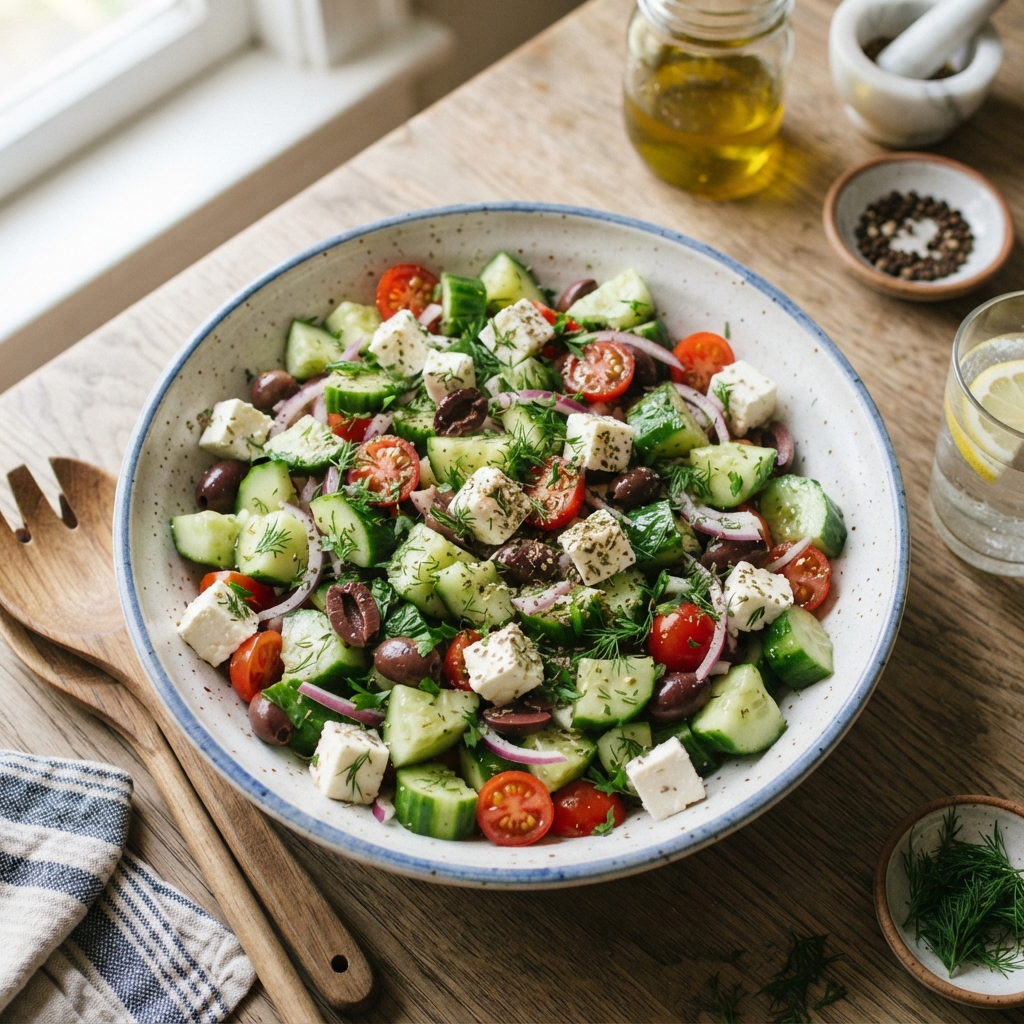
There is a specific kind of magic that happens when simple, high-quality ingredients converge to create something greater than the sum of their parts. The best salad with feta, cucumbers, and dill is not merely a side dish; it is a celebration of freshness, a crunch of hydration, and a burst of Mediterranean sunshine on a plate. In the height of summer, when the heat is oppressive and the appetite wanes, this salad stands as a beacon of culinary relief. It offers a symphony of textures: the crisp snap of cold cucumber, the creamy saltiness of authentic feta cheese, and the feathery, aromatic whisper of fresh dill. Bound together by a zesty lemon-olive oil dressing, this dish transcends its simplicity to become a staple for health-conscious foodies, busy parents, and gourmet chefs alike. Whether served alongside grilled lamb, stuffed into a pita, or enjoyed on its own as a light lunch, this salad promises to refresh the palate and nourish the body with every bite.
The History
To understand the depth of this salad, one must look back to the sun-drenched hills of the Mediterranean. The combination of cucumbers and cheese dates back to ancient Greece, where cucumbers were highly prized for their cooling properties during hot summers. The ancient Greeks believed that cucumbers could balance the body’s internal heat, a concept that aligns surprisingly well with modern nutritional science regarding hydration. Feta cheese, the crown jewel of this dish, has a protected designation of origin (PDO) in Europe, meaning true Feta must be produced in specific regions of Greece using traditional methods involving sheep and goat milk. Its history spans over 3,000 years, mentioned in Homer’s Odyssey and preserved in barrels of brine to survive long voyages.
Dill, too, has a storied past. Known to the Romans as a symbol of wealth and used by ancient Greeks as a medicinal herb for digestion, dill was often woven into wreaths for athletes. The convergence of these three ingredients represents the essence of the “Mediterranean Diet,” a lifestyle pattern recognized by UNESCO as an Intangible Cultural Heritage of Humanity. While the modern iteration of this salad often resembles a deconstructed Greek salad (Horiatiki), the specific focus on dill adds a Northern European or Scandinavian influence, showcasing how global trade and culinary evolution have refined this classic pairing into the versatile dish we enjoy today.
Ingredients Breakdown
Choosing the right components is the secret to elevating this salad from ordinary to extraordinary. Each element plays a critical role in the overall balance of flavor and texture.
The Cucumbers
Not all cucumbers are created equal. For this salad, English or Persian cucumbers are preferred over standard slicing cucumbers. English cucumbers have thinner skins that do not require peeling, reducing preparation time and retaining valuable nutrients found in the skin. They also contain fewer seeds and have a denser flesh, which means they release less water into the salad, preventing the dreaded soggy bottom. The crunch factor is non-negotiable; the cucumber must provide a refreshing snap that contrasts with the soft cheese.
The Feta Cheese
Authenticity matters immensely here. Block feta preserved in brine is superior to pre-crumbled feta found in shakers. Pre-crumbled feta is often coated with anti-caking agents like cellulose, which can alter the texture and mouthfeel. A block of true Greek feta allows you to crumble it by hand, creating uneven pieces that offer varying degrees of saltiness and creaminess in every bite. The tanginess of the feta cuts through the mildness of the cucumber, acting as the flavor anchor of the dish.
The Fresh Dill
Dried dill simply cannot replicate the vibrant, grassy, and slightly anise-like flavor of fresh dill weed. The essential oils in fresh dill are volatile and diminish quickly after harvesting, so it should be added just before serving to maintain its aromatic potency. The fronds should be bright green and perky, not wilted or yellowed. Dill also aids in digestion, making it a functional ingredient that complements the richness of the cheese and oil.
The Dressing
The liaison that binds these ingredients is a simple vinaigrette. Extra virgin olive oil provides a fruity, peppery base rich in monounsaturated fats. Fresh lemon juice adds the necessary acidity to brighten the flavors and prevent the cucumbers from tasting flat. A touch of garlic and dried oregano bridges the gap between the fresh herbs and the aged cheese, creating a cohesive flavor profile.
Step-by-Step Recipe
Creating the perfect salad is about technique as much as it is about ingredients. Follow this narrative guide to ensure every element is treated with care.
Preparation Phase: Begin by washing your cucumbers thoroughly. Even if you are using organic English cucumbers, a good rinse removes any field dust. Pat them completely dry with a clean kitchen towel; excess water on the skin will dilute your dressing later. Slice the cucumbers into half-moons or quarters lengthwise, depending on their thickness. You want substantial pieces, not thin chips, to maintain a satisfying crunch.
The Salting Technique: For an extra crisp texture, place the sliced cucumbers in a colander and sprinkle them lightly with sea salt. Let them sit for 10 minutes. This draws out excess moisture through osmosis. After 10 minutes, rinse them quickly to remove excess salt and pat them dry again. This step ensures your salad remains crunchy even after sitting for an hour.
Cheese Handling: Take your block of feta out of the brine. Do not rinse it, as you want to retain some of that salty character. Using your fingers, crumble the feta into large, rustic chunks. Avoid using a knife to cube it perfectly; the irregular shapes create nooks and crannies that hold the dressing better.
Dressing Emulsion: In a small jar or bowl, combine the olive oil, lemon juice, minced garlic, oregano, salt, and pepper. Whisk vigorously or shake the jar until the mixture emulsifies and becomes slightly cloudy. This ensures the acid and oil don’t separate immediately when poured over the salad.
Assembly: In a large serving bowl, combine the dried cucumbers and the fresh dill. Toss them gently with half of the dressing first. This coats the vegetables without overwhelming them. Add the crumbled feta last. If you toss the feta too vigorously, it will break down into a paste. Gently fold it in, drizzle the remaining dressing over the top, and serve immediately for the best texture.
Tips
- Avoid Watery Salad: The enemy of this dish is excess liquid. Always dry your cucumbers thoroughly after washing and consider the salting technique mentioned above to draw out moisture before assembly.
- Temperature Matters: Serve this salad chilled. Keep your cucumbers in the refrigerator until the very last moment. Warm cucumbers can taste bland and lose their refreshing quality.
- Zest for Flavor: Add a teaspoon of fresh lemon zest to the dressing. The oils in the zest contain intense citrus aromatics that juice alone cannot provide.
- Garlic Management: If you find raw garlic too pungent, let the minced garlic sit in the lemon juice for 10 minutes before adding the oil. The acid mellows the harsh bite of the allium.
- Herb Preservation: If you have leftover fresh dill, wrap it in a damp paper towel and store it in a sealed bag in the fridge. It will stay fresh for up to a week.
- Olive Oil Quality: Since there are so few ingredients, the quality of your olive oil is tasted distinctly. Use a high-quality, cold-pressed extra virgin olive oil for the best results.
Variations and Customizations
While the classic trio is perfect, this salad serves as a versatile canvas for culinary creativity. Here are several ways to customize the dish to fit different dietary needs or flavor preferences:
Adding Protein
To transform this side salad into a hearty main course, consider adding grilled chicken breast, seared shrimp, or chickpeas. Chickpeas add a nutty flavor and additional fiber, making the salad vegan-friendly if the feta is omitted or substituted.
Grain Bowl Style
For a more filling option, serve the cucumber, feta, and dill mixture over a bed of cooked quinoa, farro, or couscous. The grains will absorb the lemon-olive oil dressing, creating a flavorful grain bowl perfect for meal prep.
Vegan Adaptation
For those avoiding dairy, substitute the feta with a high-quality almond-based or tofu-based feta alternative. Many brands now offer marinated tofu cubes that mimic the saltiness and texture of traditional sheep’s milk feta.
Spicy Kick
If you enjoy heat, add a pinch of red pepper flakes to the dressing or slice some fresh jalapeños into the salad. The spice contrasts beautifully with the cooling cucumber and creamy cheese.
Additional Vegetables
Feel free to incorporate cherry tomatoes, thinly sliced red onions, or Kalamata olives. These are traditional Greek salad components that complement the existing flavor profile without overpowering the dill.
Health Considerations and Nutritional Value
This salad is not only delicious but also a powerhouse of nutrition, aligning well with various health goals.
Hydration and Weight Management
Cucumbers are composed of approximately 95% water, making them an excellent food for hydration. They are very low in calories but high in volume, which promotes satiety without excessive calorie intake. This makes the salad an ideal choice for weight management plans.
Heart Health
Extra virgin olive oil is rich in heart-healthy monounsaturated fats and antioxidants known as polyphenols. These compounds help reduce inflammation and protect blood vessels from damage. Feta cheese, while containing saturated fat, is also a source of conjugated linoleic acid (CLA), which has been associated with improved body composition.
Bone Health
Feta cheese is an excellent source of calcium and phosphorus, two minerals essential for maintaining strong bones and teeth. Regular consumption of dairy products like feta can help prevent osteoporosis later in life.
Digestive Aid
Dill has been used traditionally to treat digestive issues. It contains compounds that can help reduce bloating and gas. Combined with the fiber from the cucumber skins, this salad supports a healthy digestive tract.
Dietary Compatibility
This recipe is naturally gluten-free and keto-friendly. The carbohydrate count is low, primarily coming from the cucumbers, while the fat content from the olive oil and feta keeps you in ketosis. It is also vegetarian, though not vegan unless modified.
Ingredients
- 2 large English cucumbers, washed and dried
- 200g block of authentic Greek Feta cheese
- 1/2 cup fresh dill, finely chopped (packed)
- 1/4 cup extra virgin olive oil
- 2 tablespoons fresh lemon juice (about 1 lemon)
- 1 clove garlic, minced finely
- 1/2 teaspoon dried oregano
- 1/4 teaspoon sea salt (adjust to taste)
- 1/4 teaspoon freshly cracked black pepper
- Optional: 1 teaspoon lemon zest
- Optional: 2 tablespoons Kalamata olives, pitted
Directions
- Prepare the cucumbers by slicing them into half-moons or quarters lengthwise. Place them in a colander, sprinkle lightly with salt, and let sit for 10 minutes to draw out moisture. Rinse and pat dry thoroughly.
- While the cucumbers rest, prepare the dressing. In a small bowl or jar, combine the olive oil, lemon juice, minced garlic, dried oregano, pepper, and lemon zest if using.
- Whisk or shake the dressing vigorously until it is well emulsified and slightly thickened. Set aside to allow the garlic flavors to infuse.
- Take the block of feta cheese and crumble it by hand into large, rustic chunks. Avoid crumbling it too finely to maintain texture.
- Chop the fresh dill just before assembly to prevent wilting and loss of aromatic oils.
- In a large serving bowl, combine the dried cucumber slices and the chopped fresh dill.
- Pour half of the dressing over the cucumber and dill mixture and toss gently to coat evenly.
- Add the crumbled feta cheese (and olives if using) to the bowl. Drizzle the remaining dressing over the top.
- Gently fold the ingredients together, being careful not to break down the feta cheese too much.
- Taste and adjust seasoning with additional salt or lemon juice if necessary. Serve immediately chilled.
FAQ
Can I make this salad ahead of time?
It is best served fresh. However, you can prep the ingredients separately up to 24 hours in advance. Store the cucumbers, dressing, and feta in separate containers. Combine them just before serving to prevent the cucumbers from becoming watery and the dill from wilting.
Why is my salad watery?
This usually happens if the cucumbers were not dried properly after washing or if salt was not used to draw out moisture before assembly. Always pat cucumbers dry and consider the salting technique for the crispest results.
Can I use dried dill instead of fresh?
While you can use dried dill in an emergency, it is not recommended. Dried dill lacks the vibrant flavor and aromatic qualities of fresh dill. If you must use dried, use one-third of the amount called for fresh, as dried herbs are more potent.
Is this salad suitable for meal prep?
Yes, but with modifications. Keep the dressing separate until you are ready to eat. If you mix everything together on Sunday for Friday’s lunch, the cucumbers will lose their crunch. Store components in divided containers.
How long does leftover salad last?
Once dressed, the salad is best consumed within 24 hours. After that, the cucumbers release too much water, and the texture becomes soggy. Undressed ingredients can last 2-3 days in the refrigerator.
Can I freeze this salad?
No. Cucumbers have a high water content and will become mushy and unappetizing when thawed. Feta cheese also changes texture when frozen. This salad should always be kept fresh and refrigerated, never frozen.
Summary (in two lines)
This refreshing cucumber, feta, and dill salad combines crisp hydration with creamy saltiness for a perfect Mediterranean dish.
Simple to prepare and nutrient-dense, it is an ideal healthy option for summer meals or light lunches.