Introduction
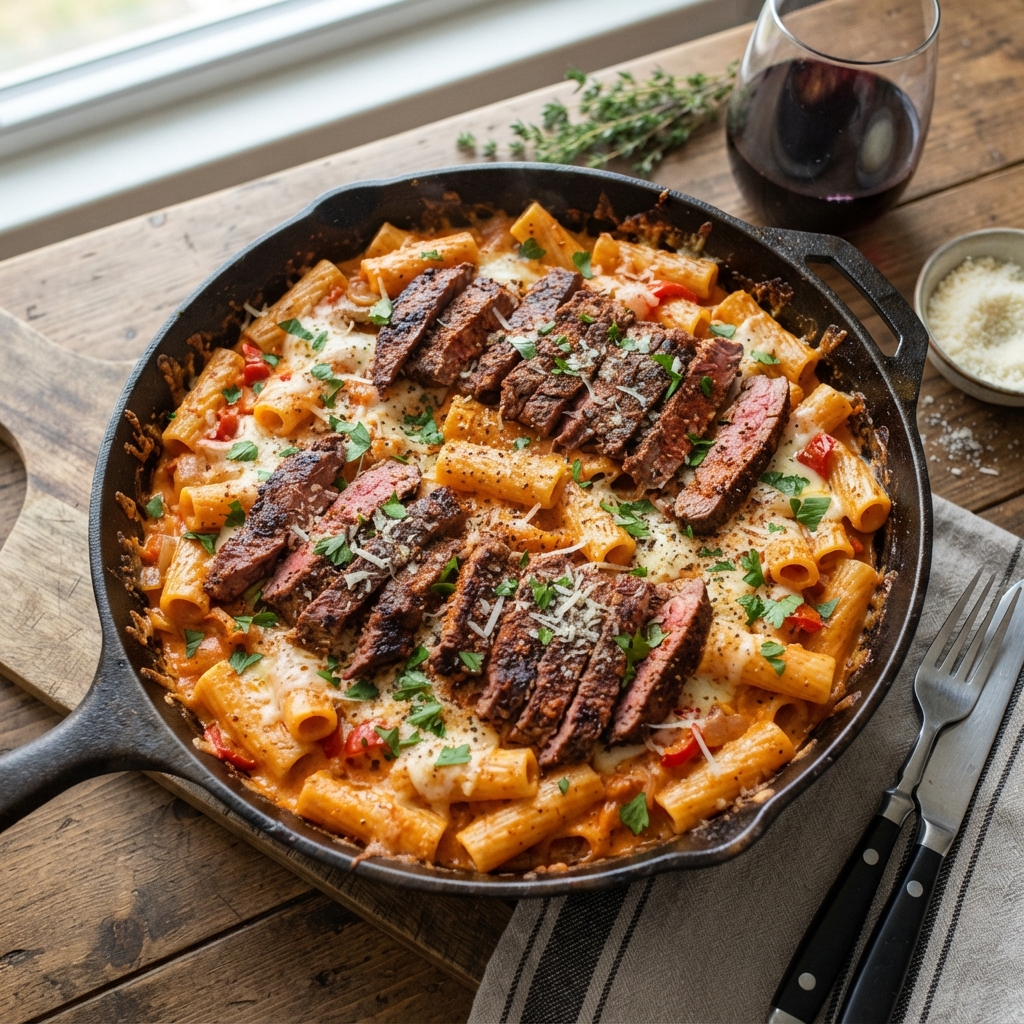
There are few culinary experiences that rival the comforting embrace of a hot pasta dish fused with the bold, fiery spirit of Cajun cuisine. The Cajun Steak Cheesy Rigatoni Parmesan is not merely a meal; it is a symphony of textures and flavors designed to satisfy the deepest cravings. Imagine tender, seared strips of beef seasoned with a robust blend of spicy herbs, nestled atop al dente rigatoni tubes that trap every bit of a velvety, cheese-laden sauce. This dish represents the pinnacle of modern comfort food, bridging the gap between the rustic kitchens of Louisiana and the classic Italian-American dinner table.
When you take the first bite, you are greeted by the sharp, salty kick of aged Parmesan, followed immediately by the creamy richness of a reduced cream sauce. Then, the heat arrives—a gentle warmth from the Cajun seasoning that lingers without overwhelming the palate. The steak provides a hearty, umami-packed foundation, ensuring that this dish is substantial enough for a hungry family yet elegant enough for a dinner party. Whether you are looking to spice up your weekly dinner rotation or seeking a show-stopping recipe for guests, this Cajun Steak Cheesy Rigatoni Parmesan delivers complexity, depth, and pure indulgence in every forkful.
The History
To truly appreciate this dish, one must understand the cultural convergence that makes it possible. The roots of the flavor profile lie in Cajun cuisine, which originated from the French Acadian immigrants who were expelled from Canada and settled in the bayous of Louisiana in the 18th century. Isolated and resourceful, the Acadians developed a style of cooking that relied on local ingredients, heavy seasoning, and one-pot meals. The hallmark of this cuisine is the “Holy Trinity” of onions, bell peppers, and celery, along with a heavy hand with spices like cayenne, paprika, and black pepper to preserve food and stimulate the appetite in the humid climate.
On the other side of the culinary spectrum lies the Italian tradition of pasta and cheese. Parmigiano-Reggiano, often called the “King of Cheeses,” has been produced in the Parma-Reggio region of Italy for over 800 years. Its hard, granular texture and nutty flavor make it ideal for melting into sauces or grating over finished dishes. Rigatoni, a tube-shaped pasta from Southern Italy, was designed specifically to hold onto thick, hearty sauces. The fusion of these two distinct culinary histories is a testament to the American melting pot, where immigrant traditions blend to create new classics. This specific recipe is a modern evolution, likely emerging in the late 20th or early 21st century as chefs began experimenting with cross-cultural flavor profiles, combining the heat of the South with the creaminess of Italian-American red sauce joints.
Ingredients Breakdown
Understanding the role of each component is crucial for mastering this recipe. Here is a deep dive into why we choose specific ingredients:
- The Steak: We recommend using Sirloin or Ribeye. Sirloin offers a leaner profile with robust beef flavor, while Ribeye provides superior marbling that melts into the meat during searing, adding richness to the sauce. The key is slicing against the grain to ensure tenderness.
- Cajun Seasoning: This is the soul of the dish. A good blend includes paprika for color, cayenne for heat, garlic powder, onion powder, dried oregano, and thyme. Store-bought versions are convenient, but a homemade blend allows you to control the sodium and spice levels.
- Rigatoni Pasta: The ridges on rigatoni (rigate) are essential. They grab onto the creamy cheese sauce better than smooth pasta. The hollow center also captures bits of steak and seasoning, ensuring a balanced bite every time.
- The Cheese Blend: We use a combination of Mozzarella and Parmesan. Mozzarella provides the “stretch” and creamy melt, while Parmesan offers the sharp, salty punch that cuts through the richness of the cream. Using freshly grated cheese is vital; pre-shredded cheese contains anti-caking agents that prevent smooth melting.
- Heavy Cream: This forms the base of the sauce. The high fat content prevents the sauce from breaking or curdling when heated, creating a luxurious velvet texture that coats the pasta evenly.
- Aromatics: Garlic and onions are sautéed to build the flavor foundation. Fresh garlic is preferred over jarred for its pungent, aromatic oils that activate during cooking.
Step-by-Step Recipe
Creating this masterpiece requires attention to timing and heat management. Follow this narrative guide to understand the flow of the cooking process.
Phase 1: Preparation and Mise en Place
Before you turn on the stove, ensure all your ingredients are prepped. This dish comes together quickly, so you won’t have time to chop garlic while the cream is simmering. Slice your steak into thin strips against the grain. Measure out your spices and mix them if making homemade Cajun seasoning. Grate your cheeses finely. Fill a large pot with salted water and set it to boil. Having everything within arm’s reach ensures a stress-free cooking experience.
Phase 2: Searing the Protein
Heat a large skillet over medium-high heat. Add a high-smoke point oil like canola or avocado oil. Once the pan is smoking slightly, add the steak strips in a single layer. Do not overcrowd the pan, or the meat will steam instead of sear. You are looking for a deep brown crust, known as the Maillard reaction, which develops complex flavors. Once seared, remove the steak and let it rest on a plate. This prevents the juices from escaping when you slice it later.
Phase 3: Building the Sauce
In the same pan, do not wipe out the browned bits (fond); this is pure flavor. Add butter and sauté your onions and garlic until fragrant. Pour in the heavy cream and bring it to a gentle simmer. Stir in the Parmesan cheese gradually, allowing it to melt into the cream. Add the Cajun seasoning now to bloom the spices in the fat. If the sauce is too thick, reserve some pasta water to thin it out later.
Phase 4: Combining and Finishing
Cook the rigatoni until it is just shy of al dente, as it will finish cooking in the sauce. Drain the pasta and add it directly to the skillet with the sauce. Toss to coat. Return the rested steak and any accumulated juices to the pan. Sprinkle the Mozzarella on top and cover the pan briefly to let it melt. Garnish with fresh parsley for color and serve immediately while hot.
Tips
To elevate this dish from good to exceptional, consider these professional culinary tips:
- Save the Pasta Water: Before draining your rigatoni, reserve at least one cup of the starchy cooking water. This liquid gold helps emulsify the cheese sauce, making it silkier and helping it cling to the pasta.
- Room Temperature Meat: Let your steak sit out for 20 minutes before cooking. Cold meat hitting a hot pan lowers the pan’s temperature, leading to a gray, steamed exterior rather than a crispy sear.
- Low and Slow for Cheese: When melting the Parmesan into the cream, keep the heat low. High heat can cause the proteins in the cheese to seize up, resulting in a grainy or oily sauce.
- Resting is Crucial: Do not skip resting the steak. If you cut into it immediately, the internal juices will run out onto the cutting board, leaving you with dry meat. Resting allows the fibers to relax and reabsorb the moisture.
- Freshly Grated Only: Avoid pre-shredded cheese in bags. They are coated in cellulose powder to prevent clumping, which unfortunately prevents them from melting smoothly into a sauce.
Variations and Customizations
One of the beauties of this recipe is its versatility. Here are several ways to customize it to fit your dietary needs or flavor preferences:
- Protein Swap: If beef isn’t your preference, this sauce pairs beautifully with blackened chicken thighs or even large shrimp. For a vegetarian version, use portobello mushrooms or firm tofu pressed and seared.
- Spice Level: For those who love heat, add diced jalapeños to the sauce or sprinkle red pepper flakes on top. For a milder version, reduce the cayenne pepper in the Cajun seasoning blend.
- Pasta Alternatives: While rigatoni is ideal, penne, fusilli, or even fettuccine work well. For a low-carb option, substitute the pasta with zucchini noodles (zoodles) or chickpea pasta, adding them at the very end to prevent mushiness.
- Cream Substitutes: To lighten the dish, you can substitute half-and-half for heavy cream, though the sauce will be less thick. For a dairy-free version, use cashew cream or a high-quality oat-based cooking cream.
- Vegetable Add-ins: Boost the nutritional profile by tossing in spinach, bell peppers, or broccoli florets during the last few minutes of the sauce simmering time.
Health Considerations and Nutritional Value
While this dish is indulgent, understanding its nutritional profile helps you enjoy it mindfully. The steak provides a significant source of high-quality protein and essential nutrients like iron, zinc, and Vitamin B12. However, the heavy cream and cheese contribute to a higher calorie and saturated fat count. A standard serving may contain upwards of 800 calories, depending on portion size.
To make this dish healthier, consider reducing the amount of cream and using milk thickened with a little flour or cornstarch. Increasing the ratio of vegetables to pasta can lower the carbohydrate load while increasing fiber intake. Choosing a leaner cut of beef, such as top sirloin, reduces fat content without sacrificing too much flavor. Additionally, watching the sodium content is important, as Cajun seasoning, Parmesan cheese, and salted pasta water all contribute to the total salt intake. Using low-sodium broth or unsalted butter can help balance this out.
Ingredients
- 1 lb Rigatoni pasta
- 1.5 lbs Sirloin or Ribeye steak, sliced into strips
- 2 tablespoons Cajun seasoning (divided)
- 2 tablespoons Olive oil
- 4 tablespoons Unsalted butter
- 1 medium Onion, diced
- 4 cloves Garlic, minced
- 2 cups Heavy cream
- 1 cup Parmesan cheese, freshly grated
- 1 cup Mozzarella cheese, shredded
- 1/2 cup Chicken or beef broth
- Fresh parsley, chopped (for garnish)
- Salt and black pepper to taste
Directions
- Bring a large pot of salted water to a boil. Cook rigatoni according to package directions until al dente. Reserve 1 cup of pasta water before draining.
- While water boils, toss steak strips with 1 tablespoon of Cajun seasoning, salt, and pepper.
- Heat olive oil in a large skillet over medium-high heat. Sear steak strips for 2-3 minutes per side until browned. Remove steak and set aside.
- In the same skillet, melt butter over medium heat. Add onions and cook until soft (5 minutes). Add garlic and cook for 1 minute until fragrant.
- Pour in the broth to deglaze the pan, scraping up browned bits. Stir in heavy cream and remaining Cajun seasoning.
- Simmer sauce for 5 minutes until slightly thickened. Reduce heat to low and stir in Parmesan cheese until melted.
- Add cooked pasta to the skillet. Toss to coat, adding reserved pasta water if needed to reach desired consistency.
- Return steak to the pan. Top with Mozzarella cheese and cover for 2 minutes to melt.
- Garnish with fresh parsley and serve immediately.
FAQ
Can I make this dish ahead of time?
While best served fresh, you can prep the ingredients beforehand. Store the cooked sauce and steak separately from the pasta. Reheat the sauce gently on the stove, adding a splash of milk to loosen it, then combine with freshly cooked pasta.
Why is my cheese sauce grainy?
This usually happens if the heat is too high when adding the cheese. Always remove the pan from direct heat or turn it to low before stirring in Parmesan. Also, ensure you are using freshly grated cheese.
How do I store leftovers?
Store leftovers in an airtight container in the refrigerator for up to 3 days. Reheat in a skillet with a little milk or cream to restore the sauce’s consistency, as microwaving can separate the oils.
Can I freeze this recipe?
Freezing creamy pasta dishes is not recommended as the dairy sauce may separate and become grainy upon thawing. It is best to enjoy this dish fresh or refrigerated.
Summary
Spicy seared steak meets creamy Parmesan rigatoni in this bold fusion dish.
Perfect for a hearty dinner, it combines Cajun heat with Italian comfort in every bite.