Introduction
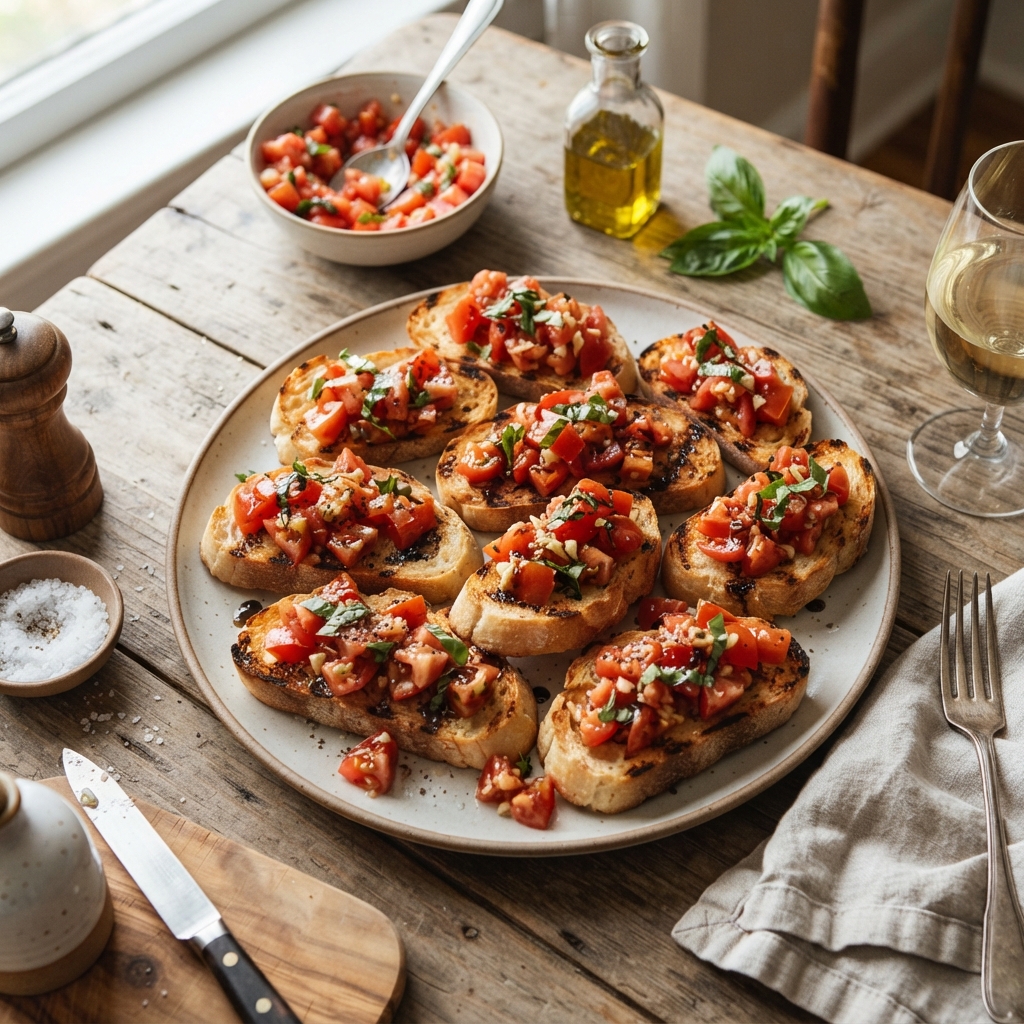
There are few culinary experiences that capture the essence of summer quite like a plate of fresh bruschetta topped with ripe tomatoes and fragrant basil. This iconic Italian appetizer is a celebration of simplicity, proving that the highest quality dishes often require the fewest ingredients. When prepared correctly, bruschetta is a symphony of textures and flavors: the crunch of toasted bread giving way to the juicy sweetness of marinated tomatoes, all bound together by the peppery punch of extra virgin olive oil and the aromatic freshness of basil leaves. It is a dish that invites conversation, perfect for sharing among friends over a glass of wine as the sun sets, or for kicking off a lavish dinner party with a touch of rustic elegance.
Beyond its taste, bruschetta represents a philosophy of cooking that prioritizes seasonality and respect for ingredients. It is not merely a recipe; it is a tradition passed down through generations, evolving from a method of testing olive oil to a global staple of Mediterranean cuisine. Whether you are a seasoned chef or a beginner in the kitchen, mastering the art of fresh bruschetta allows you to connect with the heart of Italian food culture. In this comprehensive guide, we will explore every facet of this beloved dish, from its ancient roots to the nutritional benefits it offers, ensuring you have all the knowledge required to create the perfect bite every single time.
The History
The origins of bruschetta are deeply rooted in the agricultural history of central Italy, specifically tracing back to the Etruscan civilization and later the Roman Empire. The word itself derives from the Roman dialect verb bruscare, which means “to roast over coals” or “to burn.” Originally, bruschetta was not conceived as a gourmet appetizer but rather as a practical solution for peasant farmers. During the olive harvest season, farmers needed a way to test the quality of their freshly pressed olive oil. They would take slices of stale bread, grill them over an open fire to revive them, rub them with raw garlic, and drench them in the new oil to taste its flavor profile without the interference of other strong ingredients.
As centuries passed, the dish evolved from a utilitarian tool into a cherished culinary tradition. In the regions of Tuscany and Lazio, it became a standard antipasto, served before the main course to stimulate the appetite. The addition of tomatoes came much later, following the Columbian Exchange when tomatoes were brought from the Americas to Europe. Initially feared as poisonous due to their relation to the nightshade family, tomatoes eventually became accepted and integrated into Italian cuisine by the late 18th century. The combination of tomato, basil, and olive oil on toasted bread eventually became the classic version we recognize today, often associated with the colors of the Italian flag: red, white, and green.
Throughout the 20th century, as Italian immigration spread across the globe, bruschetta traveled with them, adapting to local tastes while maintaining its core identity. In the United States, it gained massive popularity in the 1990s as Italian-American cuisine surged in popularity, becoming a ubiquitous item on restaurant menus. Despite its global fame, purists in Italy maintain that true bruschetta must adhere to specific standards regarding the bread type and the quality of the olive oil, preserving the integrity of its historical significance. Today, it stands as a testament to the enduring power of simple, high-quality ingredients to transcend time and borders.
Ingredients Breakdown
To achieve the perfect bruschetta, one must understand the role each component plays in the final flavor profile. This is not a dish where low-quality substitutes will yield satisfactory results; every element must be chosen with care.
The Tomatoes
The star of the show is undoubtedly the tomato. For the best results, you should seek out vine-ripened tomatoes during the summer months when they are at their peak sweetness and acidity. Varieties such as Roma, Plum, or heirloom tomatoes are excellent choices because they tend to have fewer seeds and less water content, preventing the bread from becoming soggy. Cherry tomatoes can also be used for a burst of concentrated sweetness, though they require different chopping techniques. Avoid greenhouse tomatoes in the winter if possible, as they often lack the necessary flavor intensity and texture.
The Basil
Fresh basil is non-negotiable; dried basil simply cannot replicate the aromatic oils found in the fresh leaves. Sweet Genovese basil is the traditional choice, known for its large, tender leaves and potent fragrance. When handling basil, it is crucial to tear or chop it just before serving to prevent oxidation, which can turn the leaves black and diminish their flavor. The essential oils in basil complement the acidity of the tomatoes, creating a balanced and refreshing taste.
The Bread
The foundation of bruschetta is the bread. It needs to be sturdy enough to hold the topping without falling apart, yet porous enough to absorb the olive oil and garlic flavors. A rustic Italian loaf, ciabatta, or a sourdough baguette works best. The crust should be thick enough to provide a satisfying crunch when toasted, while the interior should remain slightly chewy. Avoid soft, pre-sliced sandwich bread as it will become too hard when toasted or too soggy when topped.
Extra Virgin Olive Oil
Since the olive oil is not cooked in this recipe, its flavor is front and center. A high-quality Extra Virgin Olive Oil (EVOO) with a low acidity level is essential. Look for oils that are cold-pressed and harvested early for a peppery finish that cuts through the sweetness of the tomatoes. The oil acts as the binding agent, carrying the flavors of the garlic and salt across the palate.
Garlic and Seasoning
A single clove of fresh garlic is typically enough to infuse the bread with aroma without overpowering the other ingredients. The traditional method involves rubbing the raw clove directly onto the toasted bread. Sea salt or kosher salt is preferred over fine table salt for its texture and clean taste, while freshly cracked black pepper adds a subtle heat that enhances the overall complexity.
Step-by-Step Recipe
Creating the ultimate bruschetta requires attention to timing and technique. Follow this detailed process to ensure every component is prepared to perfection.
Phase 1: Preparation of the Tomatoes
Begin by washing your tomatoes thoroughly under cold water. Remove the core from each tomato and proceed to dice them into uniform cubes, approximately half an inch in size. Uniformity is key here, as it ensures every bite contains a balanced ratio of tomato to bread. Place the diced tomatoes into a mixing bowl. If your tomatoes are particularly juicy, you may wish to remove some of the seeds and gel to prevent excess moisture. Add a pinch of sea salt to the tomatoes immediately; this helps draw out excess liquid and intensifies their natural flavor. Allow them to sit for a few minutes while you prepare the other ingredients.
Phase 2: Infusing the Oil and Basil
While the tomatoes are resting, stack your fresh basil leaves, roll them tightly into a cigar shape, and slice them thinly into ribbons, a technique known as chiffonade. Alternatively, you can tear them by hand for a more rustic appearance. Add the basil to the bowl with the tomatoes. Pour a generous amount of extra virgin olive oil over the mixture, ensuring all pieces are coated. Add freshly cracked black pepper to taste. Some recipes suggest adding a splash of balsamic vinegar, but for a traditional approach, rely on the quality of your tomatoes and oil. Gently toss the mixture to combine without crushing the tomatoes.
Phase 3: Toasting the Bread
Preheat your oven broiler or prepare a charcoal grill for the authentic smoky flavor. Slice your bread loaf diagonally into pieces about half an inch thick. Diagonal slicing increases the surface area for toppings. Arrange the bread slices on a baking sheet. Brush both sides of the bread lightly with olive oil to promote even browning and crispiness. Place the bread under the broiler or on the grill, watching closely to prevent burning. Toast until the edges are golden brown and the surface is crisp, usually taking 2 to 3 minutes per side.
Phase 4: Assembly and Serving
Once the bread is toasted and still warm, take a peeled clove of raw garlic and rub it vigorously across the surface of each slice. The heat of the bread will melt the garlic slightly, releasing its oils without leaving large chunks. Immediately spoon the tomato and basil mixture onto each slice of bread. Try to use a slotted spoon to avoid transferring too much liquid onto the bread, which could cause sogginess. Serve immediately while the bread is still crisp and the tomatoes are at room temperature.
Tips
To elevate your bruschetta from good to exceptional, consider these professional tips and tricks gathered from experienced Italian cooks.
- Drain the Tomatoes: After salting the diced tomatoes, let them sit in a colander for 15 minutes to drain excess juice. This liquid can be saved for salad dressings or cocktails, ensuring your bread stays crunchy.
- Room Temperature Ingredients: Never serve bruschetta with cold tomatoes straight from the refrigerator. Cold temperatures mute the flavor of the tomatoes and solidify the olive oil. Let all ingredients come to room temperature before assembling.
- Garlic Control: If you find raw garlic too pungent, you can roast the clove lightly before rubbing it on the bread, or simply rub the bread less vigorously for a milder flavor.
- Bread Timing: Do not top the bread until the very last moment before serving. If the tomato mixture sits on the bread for too long, the acidity and moisture will soften the crust, ruining the texture contrast.
- Oil Quality Check: Taste your olive oil before using it. If it tastes rancid or flat, it will ruin the dish. A good EVOO should smell grassy and taste slightly peppery at the back of the throat.
- Acidity Balance: If your tomatoes are too sweet, add a few drops of red wine vinegar or lemon juice to the mixture to balance the flavor profile.
Variations and Customizations
While the classic tomato and basil combination is timeless, bruschetta is highly versatile and can be customized to suit different palates and occasions.
Cheese Additions
For a creamier texture, consider adding fresh mozzarella pearls (bocconcini) or shaved Parmigiano-Reggiano. Ricotta cheese spread onto the toast before adding the tomatoes creates a rich, decadent version often found in modern Italian-American restaurants.
Protein Enhancements
To make the appetizer more substantial, top the bruschetta with prosciutto di Parma, crispy pancetta, or anchovy fillets. Grilled chicken or shrimp can also be added to transform the dish into a light main course.
Vegetable Twists
Expand the vegetable profile by adding finely diced red onions, capers, or roasted red peppers. Avocado can be mashed and spread on the bread for a creamy, modern twist, while olives add a salty brine that complements the tomatoes.
Sauce Variations
A drizzle of balsamic glaze reduces the acidity and adds a sweet viscosity to the dish. Pesto can be used instead of fresh basil for a more intense herbal flavor, and a touch of chili flakes can introduce a pleasant heat for those who enjoy spicy food.
Health Considerations and Nutritional Value
Bruschetta is generally considered a healthy option within the Mediterranean diet, provided portion sizes are managed. The primary health benefits stem from the high quality of the raw ingredients used in the preparation.
Heart Health
Extra virgin olive oil is rich in monounsaturated fats and antioxidants, which are known to support heart health and reduce inflammation. The tomatoes provide lycopene, a powerful antioxidant linked to reduced risk of certain cancers and improved heart health, especially when consumed with fat like olive oil which aids absorption.
Vitamins and Minerals
Fresh tomatoes are an excellent source of Vitamin C, potassium, folate, and Vitamin K. Basil adds additional Vitamin K and manganese, along with essential oils that have antibacterial properties. Garlic is renowned for its immune-boosting properties and potential to help regulate blood pressure.
Caloric Considerations
The main source of calories in bruschetta comes from the bread and the olive oil. A standard slice of rustic bread contains approximately 80 to 100 calories, while a tablespoon of olive oil adds around 120 calories. To keep the dish lighter, use thinner slices of bread and measure the oil carefully. For those with gluten sensitivities, gluten-free bread can be substituted without significantly altering the flavor profile.
Ingredients
- 4 large ripe Roma tomatoes, diced
- 1/2 cup fresh basil leaves, chopped or torn
- 1 baguette or rustic Italian loaf, sliced diagonally
- 3 cloves garlic (1 for rubbing, 2 minced optional)
- 1/4 cup high-quality Extra Virgin Olive Oil, plus more for brushing
- 1 teaspoon sea salt, or to taste
- 1/2 teaspoon freshly cracked black pepper
- 1 tablespoon balsamic vinegar (optional)
Directions
- Prepare the tomatoes by washing, coring, and dicing them into small, uniform cubes. Place them in a bowl and sprinkle with sea salt to draw out moisture.
- Add the fresh basil, extra virgin olive oil, black pepper, and minced garlic (if using) to the tomatoes. Toss gently to combine and let the mixture marinate at room temperature for 15 minutes.
- Preheat your oven broiler or prepare a grill to medium-high heat. Arrange the bread slices on a baking sheet and brush both sides lightly with olive oil.
- Toast the bread until golden brown and crisp, approximately 2 to 3 minutes per side. Watch closely to prevent burning.
- While the bread is still warm, take a whole clove of garlic and rub it firmly over the surface of each toast slice.
- Using a slotted spoon, top each slice of bread with the tomato and basil mixture, allowing excess liquid to drain off.
- Drizzle a tiny amount of fresh olive oil over the top if desired, and serve immediately while the bread is crisp.
FAQ
Can I make bruschetta ahead of time?
It is best to prepare the tomato mixture up to 2 hours in advance, but you should toast the bread and assemble the bruschetta just before serving to maintain the crunch of the bread.
Why is my bruschetta soggy?
Sogginess usually occurs from excess tomato juice or assembling too early. Ensure you drain the tomatoes after salting and use a slotted spoon when topping the bread.
Can I freeze bruschetta?
Freezing is not recommended. The tomatoes will become mushy upon thawing, and the bread will lose its texture. It is best enjoyed fresh.
Is bruschetta vegan?
Yes, the classic tomato and basil bruschetta recipe is naturally vegan, as it contains no animal products. However, check your bread ingredients to ensure no dairy or eggs were used in the loaf.
What wine pairs well with bruschetta?
A crisp white wine like Pinot Grigio or a light red wine like Chianti complements the acidity of the tomatoes and the richness of the olive oil perfectly.
How do I store leftover tomato mixture?
Store any leftover tomato topping in an airtight container in the refrigerator for up to 2 days. It can be used on pasta or salads later.
Summary
Fresh bruschetta with tomato and basil is a timeless Italian appetizer that celebrates simple, high-quality ingredients and rustic preparation techniques.
By following proper draining methods and serving immediately, you ensure a perfect balance of crunchy bread and juicy, flavorful toppings.