Introduction
There is a specific kind of comfort that only a hot, bubbling casserole can provide, especially on those chilly evenings when the wind blows against the windowpane and the desire for warmth permeates the entire household. The French Onion Chicken Orzo Casserole stands as a pinnacle of this culinary comfort, merging the deep, savory-sweet complexities of classic French onion soup with the hearty, satisfying nature of a baked chicken pasta dish. This recipe is not merely about combining ingredients; it is about orchestrating a symphony of flavors where caramelized onions provide a rich umami base, tender chicken offers substantial protein, and orzo pasta absorbs the luxurious beef broth to create a cohesive, spoonable masterpiece. Whether you are a seasoned home cook looking to elevate your weeknight dinner rotation or a beginner seeking a forgiving yet impressive dish to serve guests, this casserole delivers on all fronts. It bridges the gap between rustic European bistro dining and American home-style convenience, resulting in a meal that feels both sophisticated and deeply nurturing.
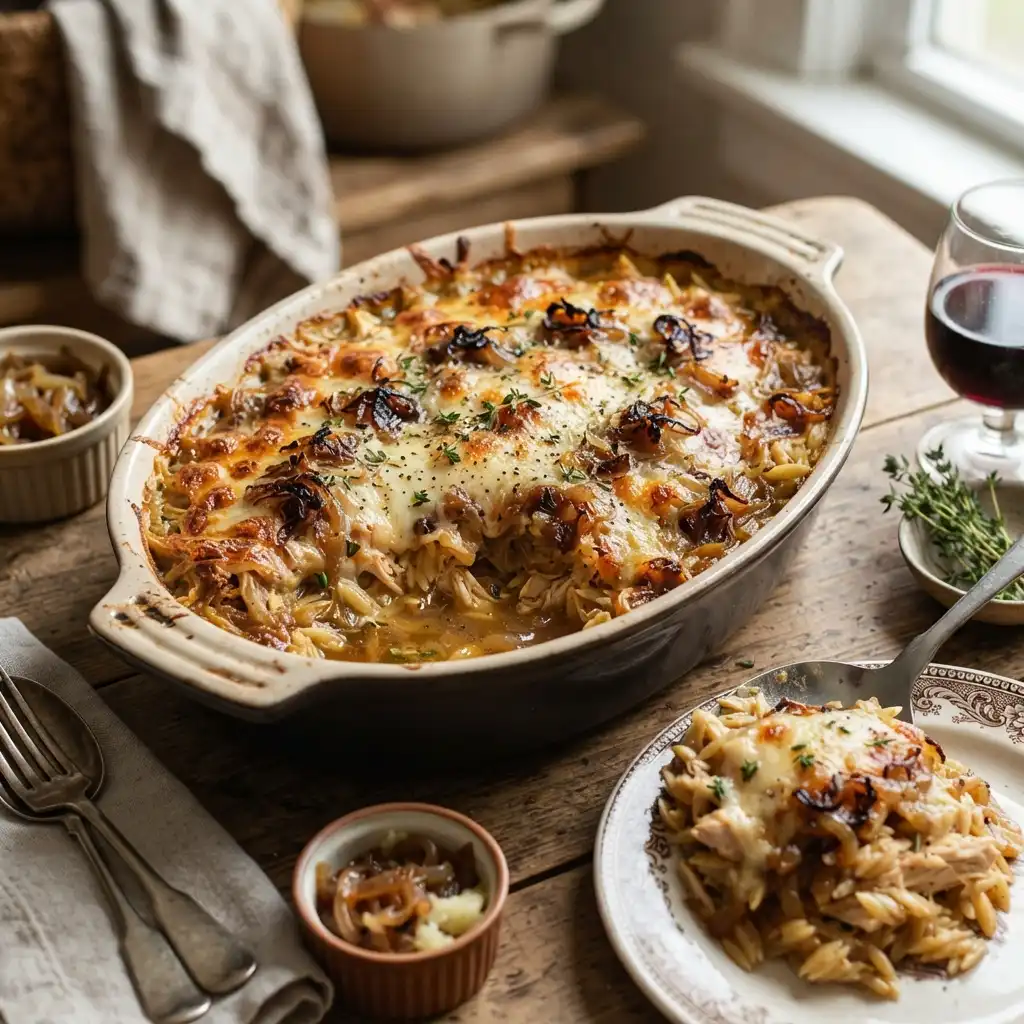
The beauty of this dish lies in its versatility and its ability to fill the kitchen with an aroma that promises satisfaction before the first bite is even taken. The golden crust of melted Gruyère and Mozzarella cheese that crowns the casserole provides a textural contrast to the soft, broth-infused orzo beneath. It is a dish that encourages gathering, perfect for family-style serving where everyone digs into a communal baking dish. Furthermore, the preparation process allows for a meditative cooking experience, particularly during the onion caramelization phase, which rewards patience with unparalleled depth of flavor. By choosing this recipe, you are opting for a meal that prioritizes quality, depth, and heartiness without requiring professional chef skills to execute. It is a testament to the idea that the best meals are often the ones that take time to develop, transforming simple pantry staples into something extraordinary.
The History
To truly appreciate the French Onion Chicken Orzo Casserole, one must understand the lineage of its primary components, which stretch back centuries across different culinary traditions. The concept of onion soup dates back to Roman times, where onions were valued for their perceived health benefits and ability to sustain laborers. However, the modern iteration of French Onion Soup is widely believed to have originated in the markets of Paris during the 18th century. It was known as a sustenance food for porters and night workers who needed a warm, restorative meal in the early hours of the morning. The addition of crusty bread and melted cheese turned a simple broth into a filling dish that could ward off the cold and hunger simultaneously. This historical context of resilience and comfort is embedded in every spoonful of the casserole version we prepare today.
The casserole format, on the other hand, finds its roots in American mid-century cooking, where the invention of the deep baking dish and the widespread availability of canned soups and convenience foods revolutionized home dining. The term “casserole” refers both to the vessel and the food cooked within it, symbolizing a method of cooking that allows flavors to meld together over slow, consistent heat. When we combine the French technique of caramelizing onions with the American tradition of the one-dish meal, we create a fusion that honors both histories. The inclusion of orzo, a pasta shape that resembles large grains of rice, adds a Mediterranean touch that highlights the global nature of modern comfort food. This dish is a historical collage, bringing together Roman agriculture, Parisian street food culture, and American suburban ingenuity into a single baking dish.
Over the years, the evolution of this dish reflects changes in dietary preferences and ingredient availability. While the original French onion soup was strictly beef broth and onions, modern variations frequently incorporate chicken for a lighter protein option, as seen in this recipe. The shift from heavy cream-based sauces to broth-based pasta absorptions also reflects a contemporary desire for meals that are rich in flavor but not overly heavy in dairy fats. Understanding this history allows the cook to appreciate the flexibility of the recipe; it is not a rigid set of rules but a living tradition that adapts to the cook’s needs while maintaining the core soul of the dish: sweet onions, savory broth, and melted cheese.
Ingredients Breakdown
Yellow Onions: The cornerstone of this dish is the onion, specifically large yellow onions. Unlike white or red onions, yellow onions possess a high sulfur content that, when broken down through slow cooking, transforms into natural sugars. This process, known as caramelization, is non-negotiable for achieving the signature dark brown color and sweet-savory flavor profile. Rushing this step with high heat will burn the onions rather than caramelize them, leading to a bitter taste. You need a substantial quantity, typically four to five large onions, because they reduce significantly in volume as their water content evaporates. The quality of the onion directly dictates the depth of the entire casserole.
Chicken Breasts or Thighs: For the protein component, you have the choice between lean chicken breasts or juicier chicken thighs. Breasts offer a lower fat content and a clean canvas for the broth flavors, but they require careful cooking to prevent drying out. Thighs, being dark meat, contain more connective tissue and fat, which renders down during baking to keep the meat moist and tender. Regardless of the cut, the chicken should be cut into bite-sized pieces to ensure even cooking and easy serving. The chicken acts as the hearty anchor of the dish, providing the necessary sustenance to make this a complete meal.
Orzo Pasta: Orzo is a rice-shaped pasta made from semolina flour that is perfect for casseroles because of its surface area. It absorbs liquid beautifully without becoming mushy as quickly as larger pasta shapes might. When baked in broth, the starches released by the orzo help to slightly thicken the surrounding liquid, creating a sauce-like consistency that coats every ingredient. It is important to use dry, uncooked orzo for this recipe so that it can absorb the flavorful beef and chicken broth during the baking process. If you pre-cook the orzo, it will become bloated and lose its ability to soak up the savory juices.
Beef and Chicken Broth: A combination of broths is used to create a complex flavor profile. Beef broth provides the deep, dark umami notes associated with traditional French onion soup, while chicken broth lightens the mixture and complements the chicken meat. Using low-sodium versions is crucial because the cheese and the reduction process will concentrate the saltiness. The quality of the broth matters immensely; a bone broth or a high-quality stock will yield a richer mouthfeel compared to watered-down commercial cubes. This liquid is the lifeblood of the casserole, turning dry pasta into a cohesive dish.
Gruyère and Mozzarella Cheese: The topping is what defines the visual appeal and textural contrast of the casserole. Gruyère is the traditional choice for French onion soup due to its excellent melting properties and nutty, slightly salty flavor. Mozzarella is added to provide stretchiness and a mild creaminess that balances the strong flavor of the Gruyère. Together, they create a golden-brown crust that seals in the moisture below. Shredding the cheese yourself from a block is recommended over using pre-shredded bags, as the anti-caking agents in pre-shredded cheese can prevent smooth melting.
Butter and Olive Oil: Fat is essential for the initial sautéing process. Butter provides a rich, creamy flavor that aids in the browning of the onions, while olive oil raises the smoke point to prevent the butter from burning during the long caramelization process. This combination ensures that the onions cook evenly and develop a glossy sheen. The fat also helps to carry the fat-soluble flavor compounds of the herbs and aromatics throughout the dish, ensuring every bite is seasoned properly.
Garlic and Thyme: Aromatics are what lift the dish from simple to sophisticated. Fresh garlic adds a pungent kick that mellows into sweetness during baking, while fresh thyme offers an earthy, floral note that pairs historically well with onions and beef. Dried thyme can be used in a pinch, but fresh sprigs released into the baking dish infuse a more vibrant essence. These herbs should be added after the onions have softened to prevent the garlic from burning, ensuring their flavors remain bright and distinct.
Worcestershire Sauce: This fermented condiment is a secret weapon for adding depth. It contains anchovies, tamarind, and vinegar, which contribute acidity and savory umami notes that mimic the complexity of a long-simmered stock. A few dashes are enough to enhance the meatiness of the dish without making it taste fishy. It acts as a flavor enhancer that ties the beef broth and the chicken together harmoniously.
Baguette Croutons (Optional): While the orzo serves as the starch, adding cubes of toasted baguette on top before the cheese adds an additional layer of texture reminiscent of the traditional soup served with toast. These croutons absorb the cheese and broth, creating crispy pockets within the soft casserole. They are optional but highly recommended for those who want to maximize the French onion soup experience within the casserole format.
Step-by-Step Recipe
The journey to creating the perfect French Onion Chicken Orzo Casserole begins with patience, specifically during the preparation of the onions. You will start by slicing your yellow onions uniformly, ensuring that they cook at the same rate. In a large, heavy-bottomed skillet or Dutch oven, melt your butter with olive oil over medium heat. Add the onions and a pinch of salt, which helps draw out moisture. Here is where the magic happens: you must cook the onions slowly, stirring occasionally, for about 30 to 45 minutes. They will go from white to translucent, then to golden, and finally to a deep, rich brown. Do not rush this step by turning up the heat, as this will burn the sugars and ruin the flavor profile. Once caramelized, add the garlic and thyme for the last minute of cooking to release their aromas without scorching.
While the onions are working their magic, you can prepare the chicken and the baking dish. Cut your chicken into uniform cubes and season them generously with salt and pepper. In the same skillet used for the onions (to capture the fond, or browned bits, left behind), sear the chicken pieces until they are golden on the outside but not necessarily cooked through, as they will finish in the oven. Deglaze the pan with a splash of white wine or broth, scraping up any stuck bits to incorporate that flavor into the mixture. Combine the caramelized onions, seared chicken, dry orzo, broths, and Worcestershire sauce in a large mixing bowl or directly into your casserole dish. Stir well to ensure the orzo is submerged in the liquid, as it needs to be fully surrounded by broth to cook properly.
The final stage involves baking and finishing. Cover the casserole dish tightly with aluminum foil to trap the steam, which is necessary to cook the pasta and chicken through without drying out. Bake this in a preheated oven for approximately 30 minutes. After this initial bake, remove the foil and check the liquid levels; if it looks too dry, add a splash more broth. Then, sprinkle your generous layer of shredded Gruyère and Mozzarella cheese over the top. Return the dish to the oven, uncovered, for another 10 to 15 minutes until the cheese is bubbly and spotted with brown. If you desire a deeper crust, you can switch the oven to broil for the last two minutes, watching closely to prevent burning. Let the casserole rest for ten minutes before serving to allow the sauces to thicken slightly.
Tips
- Patience with Onions: The most critical tip for this recipe is to never rush the caramelization of the onions. This process cannot be hurried. If you find yourself short on time, you can caramelize a large batch of onions on the weekend and freeze them for use in this dish later, but fresh is always superior. The deep brown color is where the sweetness lies.
- Liquid Ratios: Pasta absorbs liquid at different rates depending on the brand and the altitude. Keep an extra cup of broth warm on the stove. If you open the oven after 30 minutes and the mixture looks dry or the pasta is still hard, add the warm broth gradually. It is better to have it slightly soupy before the final cheese bake than dry and undercooked.
- Cheese Selection: For the best melt, buy blocks of cheese and shred them yourself using a box grater. Pre-shredded cheese contains cellulose powder to prevent clumping, which unfortunately prevents the cheese from melting into a smooth, cohesive layer. A combination of Gruyère for flavor and Mozzarella for stretch is the ideal balance.
- Resting Time: It is tempting to dig in immediately upon removing the casserole from the oven, but resisting this urge is vital. Letting the dish rest for 10 to 15 minutes allows the starches in the orzo to set and the liquids to redistribute. This prevents the casserole from sliding off the spoon and ensures a better texture.
- Seasoning Layers: Season your chicken before searing, season the onions while they cook, and taste the broth mixture before baking. Layering your salt and pepper throughout the cooking process ensures that every component is flavorful, rather than just the surface of the dish.
Variations and Customizations
- Vegetarian Adaptation: To make this dish meat-free, simply omit the chicken and substitute the chicken broth with additional vegetable or mushroom broth. You can add sliced cremini mushrooms along with the onions to provide a meaty texture and umami depth that compensates for the lack of poultry. Lentils can also be added for protein.
- Gluten-Free Option: This casserole is easily made gluten-free by swapping the standard semolina orzo for a brown rice or corn-based gluten-free pasta. Be sure to check the cooking times on the gluten-free pasta package, as they may require slightly more or less liquid and baking time than traditional wheat orzo.
- Wine Infusion: For a more adult-oriented version, deglaze the pan with a dry white wine such as Sauvignon Blanc or a dry Vermouth after caramelizing the onions. The alcohol will evaporate during baking, leaving behind a sophisticated acidity that cuts through the richness of the cheese and broth.
- Vegetable Boost: Increase the nutritional density by adding spinach, kale, or roasted red peppers into the mixture before baking. Leafy greens should be stirred in during the last 5 minutes of the covered baking time so they wilt but retain their vibrant color and nutrients.
- Spicy Kick: If you enjoy heat, add red pepper flakes or a dash of cayenne pepper to the onion mixture. You can also incorporate diced jalapeños for a fresher spice profile that contrasts nicely with the sweet caramelized onions.
Health Considerations and Nutritional Value
While this dish is undeniably a comfort food, it can be balanced to fit within a healthy diet when portion control and ingredient choices are managed wisely. The chicken provides a high-quality source of lean protein, which is essential for muscle repair and satiety. Onions are rich in antioxidants and compounds that support heart health and immune function. By using low-sodium broths and controlling the amount of added salt, you can manage the sodium content, which is often the highest concern in casserole dishes. The orzo provides carbohydrates for energy, though those watching their carb intake could substitute half the orzo with cauliflower rice or additional vegetables.
The cheese topping is the most calorie-dense component, contributing saturated fats and calcium. To lighten this, you can use a reduced-fat cheese blend or simply reduce the quantity slightly without sacrificing the visual appeal. The use of olive oil instead of all butter introduces heart-healthy monounsaturated fats. Overall, a serving of this casserole offers a balanced macronutrient profile of protein, carbohydrates, and fats, making it a complete meal that does not necessarily require heavy side dishes. It is nutrient-dense due to the variety of ingredients, offering vitamins from the onions and herbs, minerals from the broth, and protein from the chicken.
For those with specific dietary restrictions, this recipe is highly adaptable. As mentioned in the variations, gluten-free pasta makes it safe for Celiac sufferers, and omitting the chicken makes it suitable for vegetarians. The dish is also naturally nut-free, making it safe for school lunches or gatherings with allergy concerns. However, individuals monitoring their histamine intake should be aware that aged cheeses like Gruyère and fermented sauces like Worcestershire can be high in histamines. In such cases, substituting with fresh Mozzarella and omitting the Worcestershire sauce can mitigate potential reactions.
Ingredients
- 4 large yellow onions, thinly sliced
- 3 tablespoons unsalted butter
- 2 tablespoons olive oil
- 1.5 pounds boneless, skinless chicken breasts or thighs, cut into 1-inch cubes
- 4 cloves garlic, minced
- 1 teaspoon fresh thyme leaves (or 1/2 teaspoon dried thyme)
- 1 1/2 cups dry orzo pasta
- 3 cups beef broth (low sodium)
- 2 cups chicken broth (low sodium)
- 1 tablespoon Worcestershire sauce
- 1/2 cup dry white wine (optional)
- 2 cups shredded Gruyère cheese
- 1 cup shredded Mozzarella cheese
- Salt and black pepper to taste
- Fresh parsley, chopped (for garnish)
Directions
- Preheat your oven to 375°F (190°C) and lightly grease a 9×13 inch casserole dish.
- In a large skillet or Dutch oven, melt the butter and olive oil over medium heat. Add the sliced onions and a pinch of salt.
- Cook the onions, stirring occasionally, for 30 to 40 minutes until they are deeply caramelized and dark brown. Add the garlic and thyme during the last 2 minutes of cooking.
- Remove the onions from the skillet and set aside. In the same skillet, sear the chicken cubes over medium-high heat until golden brown on all sides (about 5 minutes). Season with salt and pepper.
- If using wine, pour it into the skillet to deglaze, scraping up any browned bits from the bottom. Let it simmer for 1 minute.
- In the prepared casserole dish, combine the dry orzo, caramelized onions, seared chicken, beef broth, chicken broth, and Worcestershire sauce. Stir well to distribute ingredients evenly.
- Cover the dish tightly with aluminum foil and bake in the preheated oven for 30 minutes.
- Remove the foil and check the liquid level. If the pasta is still hard or the dish is dry, add a splash of warm broth.
- Sprinkle the shredded Gruyère and Mozzarella cheese evenly over the top of the casserole.
- Return to the oven, uncovered, and bake for an additional 10 to 15 minutes until the cheese is melted and bubbly.
- Optional: Broil for 2 minutes to brown the cheese, watching closely to prevent burning.
- Remove from the oven and let rest for 10 minutes. Garnish with fresh parsley before serving.
FAQ
Can I make this casserole ahead of time?
Yes, this dish is an excellent candidate for meal prep. You can assemble the casserole completely up to the point of adding the cheese. Cover it tightly and refrigerate for up to 24 hours. When ready to cook, let it sit at room temperature for 20 minutes, then bake as directed, potentially adding 5-10 minutes to the covered baking time since the dish will be cold.
How do I store leftovers?
Leftovers should be stored in an airtight container in the refrigerator. They will keep well for up to 3-4 days. Note that the orzo will continue to absorb liquid as it sits, so the leftovers may appear thicker. You can add a splash of broth when reheating to restore the creamy consistency.
Can I freeze this casserole?
Yes, you can freeze the casserole before baking. Assemble the dish without the cheese, wrap it tightly in plastic wrap and then foil, and freeze for up to 3 months. Thaw in the refrigerator overnight before baking. It is not recommended to freeze the dish after baking as the texture of the pasta and cheese may become grainy upon reheating.
What can I use if I don’t have Gruyère cheese?
If Gruyère is unavailable or too expensive, Swiss cheese is the closest substitute in terms of flavor profile. You can also use Fontina or Provolone, which melt well and have a mild nuttiness. Avoid hard cheeses like Parmesan as the sole topping, as they do not melt into a smooth layer.
Why is my orzo still crunchy after baking?
This usually indicates that the pasta did not have enough liquid or heat to cook through. Ensure the orzo is fully submerged in the broth before covering. If you find crunchy pasta near the end of cooking, add more hot broth, cover tightly, and return to the oven for another 10 minutes.
Summary
This French Onion Chicken Orzo Casserole combines caramelized onions, tender chicken, and savory broths into a comforting one-dish meal topped with melted cheese.
Perfect for family dinners, it offers a rich blend of flavors and textures that celebrate the best elements of French onion soup in a hearty baked format.