Sticky Garlic Chicken Noodles: The Ultimate Easy Weeknight Dinner
Introduction
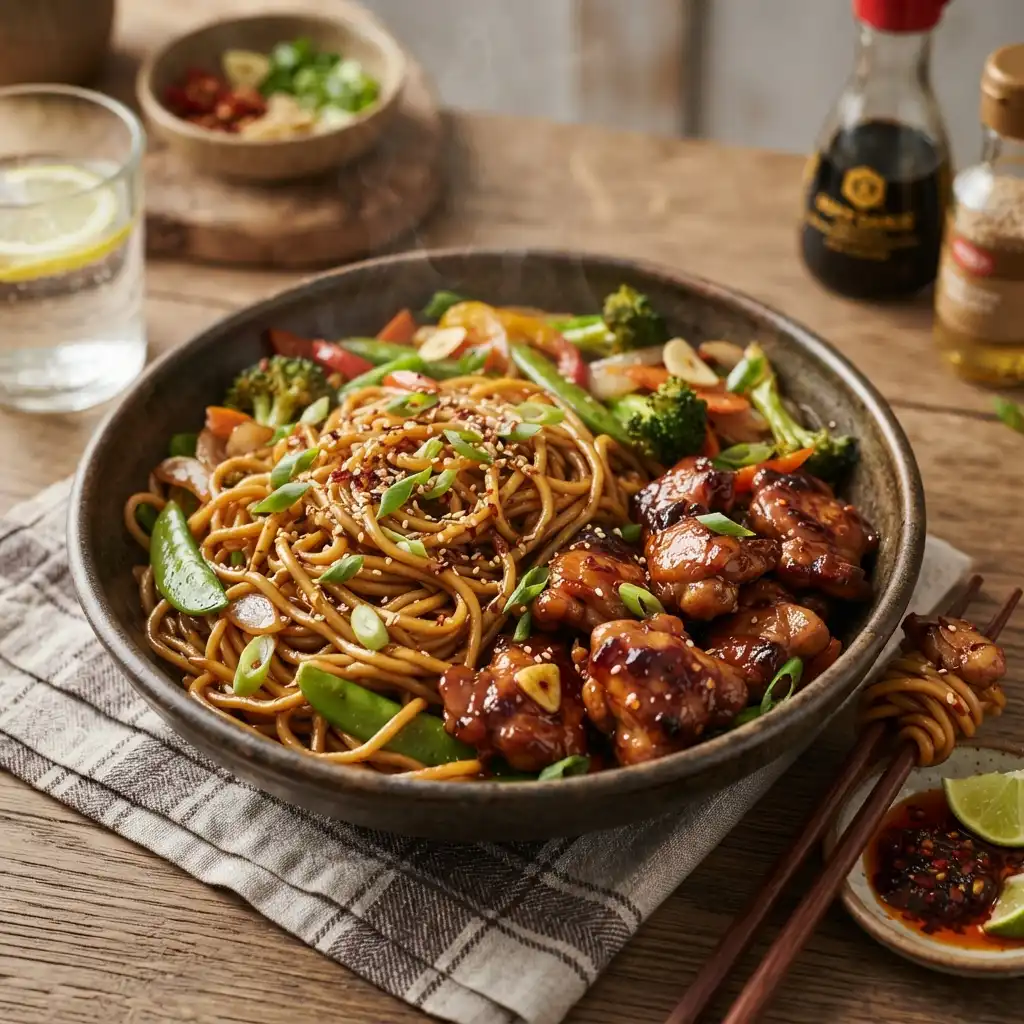
There is a specific kind of magic that happens in the kitchen when the workday ends, the energy levels are low, but the hunger is high. In these moments, the ideal meal is not just about sustenance; it is about comfort, speed, and an explosion of flavor that revitalizes the senses. Sticky Garlic Chicken Noodles represent the pinnacle of this culinary balancing act. This dish combines the tender, succulent texture of velveted chicken with the satisfying chew of perfectly cooked noodles, all coated in a glossy, umami-rich sauce that clings to every bite. The aroma of toasted garlic and ginger fills the home, signaling that a restaurant-quality meal is ready in a fraction of the time and cost of takeout.
What makes this recipe a standout for weeknight dinners is its forgiving nature and its adaptability. Whether you are a seasoned home cook looking to refine your stir-fry technique or a beginner seeking a reliable go-to meal, this dish delivers consistent results. The “sticky” element comes from a careful reduction of sugars and soy-based liquids, creating a glaze that caramelizes slightly upon contact with the hot wok or skillet. This guide will take you through every aspect of creating this masterpiece, from the historical roots of garlic chicken to the nutritional breakdown, ensuring you understand not just how to cook it, but why each step matters.
The History
To truly appreciate Sticky Garlic Chicken Noodles, one must understand the culinary lineage that brought this dish to existence. It is a modern fusion that draws heavily from Chinese-American cuisine, though its roots stretch back much further along the Silk Road.
The Origins of Garlic Chicken
Garlic has been a staple in medicinal and culinary practices across Asia for thousands of years. In traditional Chinese cooking, garlic is rarely used alone; it is part of the “holy trinity” of aromatics alongside ginger and scallions. The concept of cooking chicken with garlic likely originated in Sichuan and Hunan provinces, where bold flavors are prized. However, the specific iteration of “Garlic Chicken” known in the West is largely a product of Chinese immigration to the United States in the 19th and 20th centuries. Restaurateurs adapted traditional recipes to suit local palates, often increasing the sweetness and reducing the spice levels, leading to the sticky, savory glazes we recognize today.
The Evolution of Noodle Culture
Noodles themselves have a contentious history, with claims ranging from ancient China to Italy. However, in the context of this dish, we look to the wheat-based noodles of Northern China. These noodles were durable, easy to store, and provided high energy for laborers. When combined with the stir-fry technique (chao), which was developed to conserve fuel by cooking food quickly over high heat, the result was a efficient meal system. The modern weeknight version merges these ancient techniques with contemporary convenience foods, such as pre-made noodle packs and bottled sauces, though this recipe advocates for making the sauce from scratch to achieve authentic depth.
The Rise of Weeknight Stir-Fry
In the late 20th century, as dual-income households became the norm in Western societies, the demand for quick dinners surged. Stir-fry emerged as the perfect solution because it utilizes high heat to cook ingredients in minutes. The “sticky” sauce trend gained popularity in the 2010s, driven by social media food culture where glossy, photogenic dishes became viral sensations. Sticky Garlic Chicken Noodles are the culmination of this history: ancient aromatics, efficient cooking methods, and modern flavor profiles designed for the busy home cook.
Ingredients Breakdown
Understanding the function of each ingredient is the key to mastering this recipe. Below is a detailed analysis of the components that build the flavor profile.
The Protein: Chicken Thighs vs. Breasts
While chicken breast is leaner, chicken thighs are highly recommended for this dish. Thighs contain a higher fat content and more connective tissue, which breaks down during cooking to keep the meat moist. When subjected to the high heat of a stir-fry, breasts can easily dry out and become stringy. Thighs remain tender and absorb the marinade more effectively due to their texture. If you must use breasts, consider velveting them with baking soda to alter the pH and retain moisture.
The Aromatics: Garlic and Ginger
Garlic is the star of this show. It should be fresh, not jarred, as fresh garlic contains allicin, which provides the pungent kick that mellows into sweetness when cooked. Ginger adds a warm, spicy undertone that cuts through the sweetness of the sauce. Fresh ginger root should be grated or minced finely to ensure it distributes evenly without creating large, fibrous chunks.
The Sauce Components
- Soy Sauce: Provides saltiness and umami. Light soy sauce is best for flavor, while dark soy sauce adds color.
- Brown Sugar or Honey: Essential for the “sticky” factor. These sugars caramelize under heat, creating the glaze. Honey adds a floral note, while brown sugar offers a molasses depth.
- Rice Vinegar: Acid is crucial to balance the salt and sugar. It brightens the dish and prevents the sauce from tasting too heavy.
- Sesame Oil: Used as a finishing oil, this adds a nutty aroma that is volatile and disappears if cooked too long.
- Cornstarch: The thickening agent. When mixed with water and heated, the starch granules swell and gelatinize, turning the liquid sauce into a coating that adheres to the noodles.
The Noodles
You have flexibility here. Ramen noodles, udon, lo mein, or even spaghetti can work. The key is surface texture. Noodles with a slightly rougher surface hold sauce better than smooth, glossy pasta. Fresh noodles are preferred over dried for their chewiness, but dried noodles are perfectly acceptable if cooked al dente.
Step-by-Step Recipe
This narrative guide walks you through the cooking process with a focus on technique and timing.
Phase 1: Preparation and Marination
Before you turn on the heat, everything must be ready. Stir-frying happens fast, and there is no time to chop garlic once the pan is hot. Slice your chicken into bite-sized uniform pieces to ensure even cooking. Place the chicken in a bowl and add your marinade components: a splash of soy sauce, a teaspoon of cornstarch, and a dash of white pepper. Mix this vigorously by hand until the liquid is absorbed. This process, known as velveting, creates a protective barrier around the protein. Let this sit for at least 15 minutes while you prepare the vegetables and sauce.
Phase 2: Sauce Construction
In a small jar or bowl, combine your soy sauces, vinegar, sugar, and stock. Whisk in the cornstarch slurry separately to ensure there are no lumps. Having the sauce pre-mixed prevents the dreaded moment of burning garlic while you search for the sugar container.
Phase 3: The Sear
Heat your wok or large skillet over high heat until it is smoking slightly. Add a high-smoke-point oil like canola or vegetable oil. Add the chicken in a single layer. Do not overcrowd the pan, or the chicken will steam instead of sear. Let it sit undisturbed for two minutes to develop a golden crust. Flip and cook until just done, then remove the chicken from the pan. This prevents overcooking while you build the sauce.
Phase 4: Aromatics and Assembly
Add a bit more oil to the hot pan and toss in the garlic and ginger. Stir constantly for 30 seconds until fragrant but not browned. Pour in your sauce mixture. It will bubble violently; this is the reduction process. Allow it to thicken until it coats the back of a spoon. Return the chicken to the pan, followed by the cooked, drained noodles. Toss everything together using tongs, ensuring every strand is coated in the glossy glaze. Finish with green onions and sesame seeds.
Tips
To elevate your Sticky Garlic Chicken Noodles from good to exceptional, consider these professional insights.
- Mise en Place is Mandatory: Because the cooking time is short, have all ingredients chopped, measured, and within arm’s reach before heating the pan.
- High Heat is Your Friend: Do not be afraid of high heat. It creates the Maillard reaction, which provides complex flavors. If your pan is too cool, the food will stew in its own juices.
- Undercook the Noodles: Drain your noodles one minute before the package instructions say they are done. They will finish cooking in the hot sauce, absorbing flavor without becoming mushy.
- Rest the Garlic: If you find raw garlic too pungent, let chopped garlic sit for 10 minutes before cooking. This allows the enzymes to develop fully, enhancing the health benefits and flavor.
- Use a Wide Pan: A large skillet or wok allows moisture to evaporate quickly. A small pot will trap steam, resulting in a soggy dish rather than a sticky one.
Variations and Customizations
This recipe is a template that welcomes creativity. Here are several ways to customize the dish to fit dietary needs or flavor preferences.
Spicy Kick
For those who enjoy heat, add dried red chili flakes or a tablespoon of chili garlic sauce (Sambal Oelek) to the sauce mixture. Fresh jalapeños can also be stir-fried with the aromatics for a fresher heat profile.
Vegetable Add-Ins
Increase the nutritional density by adding vegetables. Broccoli florets, snap peas, bell peppers, and baby corn all work well. Blanch harder vegetables like broccoli in boiling water for two minutes before adding them to the stir-fry to ensure they are tender-crisp.
Protein Swaps
Chicken is traditional, but beef flank steak, shrimp, or tofu are excellent alternatives. For tofu, use extra-firm varieties and press out the water before frying to achieve a crispy exterior that holds the sauce.
Low-Carb Options
To reduce carbohydrates, substitute wheat noodles with zucchini noodles (zoodles) or shirataki noodles. Be aware that these release more water, so you may need to increase the cornstarch in the sauce to maintain the sticky consistency.
Health Considerations and Nutritional Value
While takeout versions of this dish can be laden with sodium and sugar, the homemade version allows for complete control over nutritional content.
Sodium Management
Soy sauce is the primary source of sodium. To reduce this, use low-sodium soy sauce or coconut aminos. You can also dilute the soy sauce with a bit of water and increase the garlic and ginger to maintain flavor intensity without the salt load.
Sugar Content
The sticky glaze relies on sugar. However, you can reduce the amount by half without losing the glazing effect, as the cornstarch does the heavy lifting for texture. Alternatively, use natural sweeteners like honey or maple syrup, which have a lower glycemic index than refined white sugar.
Macronutrient Balance
This dish offers a balanced profile. The chicken provides high-quality protein essential for muscle repair. The noodles offer carbohydrates for energy. By adding a generous portion of vegetables, you introduce fiber, vitamins A and C, and antioxidants. The use of sesame oil provides healthy monounsaturated fats.
Ingredients
- Chicken: 1.5 lbs boneless, skinless chicken thighs, cut into bite-sized pieces
- Noodles: 1 lb fresh lo mein, ramen, or dried spaghetti
- Garlic: 6 cloves, minced finely
- Ginger: 1 tablespoon fresh ginger, grated
- Soy Sauce: 1/3 cup low-sodium soy sauce
- Brown Sugar: 1/4 cup packed
- Rice Vinegar: 2 tablespoons
- Chicken Broth: 1/4 cup
- Cornstarch: 1 tablespoon for sauce, 1 tablespoon for chicken marinade
- Sesame Oil: 1 teaspoon (toasted)
- Vegetable Oil: 2 tablespoons for cooking
- Garnish: Sliced green onions, sesame seeds, red pepper flakes
Directions
- Prepare the Chicken: In a medium bowl, toss the chicken pieces with 1 tablespoon of cornstarch and a pinch of pepper. Set aside to marinate for 15 minutes.
- Cook the Noodles: Boil the noodles in salted water according to package directions until al dente. Drain and rinse with cold water to stop cooking. Toss with a drop of oil to prevent sticking.
- Make the Sauce: In a small bowl, whisk together soy sauce, brown sugar, rice vinegar, chicken broth, and 1 tablespoon of cornstarch until smooth. Set aside.
- Sear the Chicken: Heat vegetable oil in a large wok or skillet over high heat. Add chicken in a single layer. Cook for 3-4 minutes per side until golden brown and cooked through. Remove chicken from the pan and set aside.
- Sauté Aromatics: In the same pan, add a little more oil if needed. Add minced garlic and ginger. Stir constantly for 30 seconds until fragrant.
- Thicken the Sauce: Pour in the sauce mixture. Bring to a simmer, stirring constantly. Cook for 2-3 minutes until the sauce thickens and becomes glossy.
- Combine: Add the cooked noodles and chicken back into the pan. Toss gently to coat everything evenly in the sauce.
- Finish: Remove from heat. Drizzle with toasted sesame oil. Garnish with green onions and sesame seeds before serving.
FAQ
Can I freeze Sticky Garlic Chicken Noodles?
Yes, but the texture of the noodles may change upon thawing. It is best to freeze the chicken and sauce separately from the noodles. Store in an airtight container for up to 3 months.
Why is my sauce not sticky?
This usually happens if the heat is too low or there isn’t enough cornstarch. Ensure the sauce comes to a vigorous simmer to activate the starch. You can add a slurry of cornstarch and water to thicken it further.
Can I make this gluten-free?
Absolutely. Substitute regular soy sauce with Tamari or Coconut Aminos, and use rice noodles or certified gluten-free pasta instead of wheat noodles.
How do I prevent the garlic from burning?
Garlic burns quickly over high heat. Add it after you have removed the chicken, and keep it moving constantly. If the pan is too hot, remove it from the burner momentarily while adding the aromatics.
What vegetables pair best with this dish?
Broccoli, bell peppers, snap peas, and bok choy are excellent choices. Add them to the pan during the sauce reduction phase if you want them tender, or sear them separately for a crunchier texture.
Summary
Sticky Garlic Chicken Noodles offer a perfect blend of savory, sweet, and umami flavors ideal for a quick weeknight meal.
Master the high-heat technique and balance your sauce for a restaurant-quality dish made easily at home.