Introduction
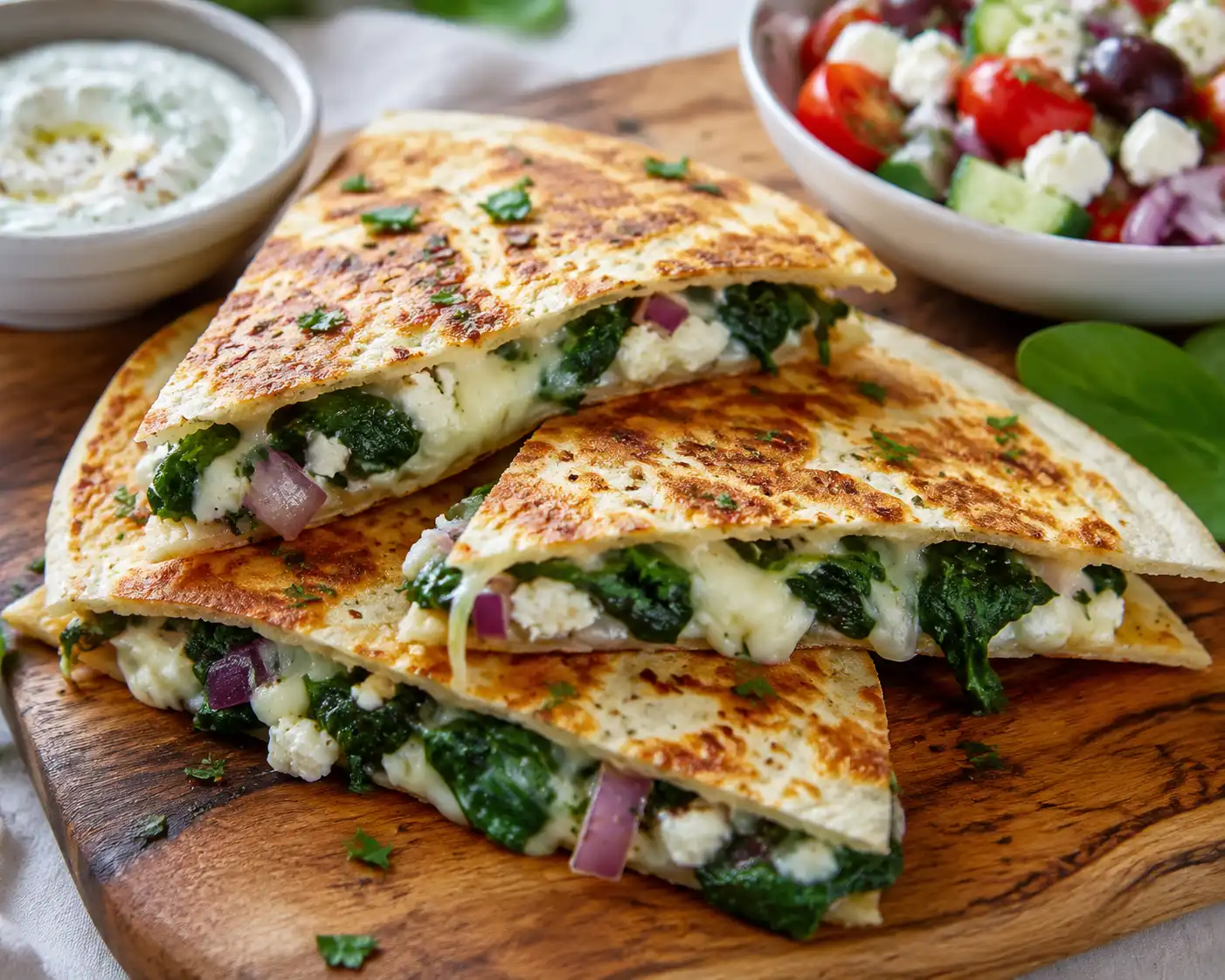
Mediterranean Quesadillas with Spinach, Feta, Mozzarella, and Red Onion are a vibrant, nutrient-dense fusion dish that bridges the comforting familiarity of the classic Mexican quesadilla with the bold, sun-kissed flavors of the Mediterranean basin. Far from a mere crossover gimmick, this recipe is a thoughtfully balanced celebration of freshness, texture, and umami depth—featuring creamy feta’s tangy punch, mild mozzarella’s gentle melt, earthy baby spinach, and the bright, crisp bite of thinly sliced red onion—all enveloped in a golden, lightly toasted whole-wheat or artisanal flatbread. Whether served as a weeknight dinner, a protein-packed lunch, a crowd-pleasing appetizer at a summer gathering, or even a sophisticated vegetarian option for brunch, these quesadillas deliver restaurant-quality flavor with pantry-friendly ingredients and minimal prep time. Their versatility, visual appeal, and deeply satisfying mouthfeel make them an instant staple for health-conscious home cooks seeking both nourishment and joy on a plate.
The History
While the traditional quesadilla traces its origins to 16th-century central Mexico—where indigenous Mesoamerican maize tortillas were filled with native cheeses like queso fresco or goat cheese and cooked on comales—the modern evolution of the quesadilla is a testament to culinary globalization. As Mexican cuisine spread across North America and beyond, chefs and home cooks alike began experimenting with non-traditional fillings, embracing local ingredients and global flavor profiles. The rise of “gourmet” or “fusion” quesadillas gained momentum in the 1980s–1990s, particularly in California and the Southwest, where Mediterranean influences—from Greek salads and Lebanese mezze to Italian antipasti—were increasingly integrated into everyday cooking. The inclusion of feta cheese (a staple of Greek and Balkan cuisines), fresh spinach (ubiquitous across Levantine and Southern European tables), and red onion (a cornerstone of tabbouleh, fattoush, and meze platters) reflects this intentional cross-cultural dialogue. This Mediterranean iteration doesn’t appropriate—it honors: it respects the structural integrity of the quesadilla (a warm, folded, griddled flatbread encasing melty cheese and seasonal vegetables) while thoughtfully substituting regional dairy, herbs, and aromatics to evoke the herb gardens of Santorini, the olive groves of Crete, and the sun-drenched markets of Tel Aviv—all without compromising authenticity of technique or integrity of ingredient quality.
Ingredients Breakdown
Every element in this Mediterranean Quesadilla plays a distinct and essential role—both functionally and sensorially:
- Whole-Wheat or Artisan Flatbread (e.g., Lavash, Pita, or Whole-Grain Tortillas): Provides structure, fiber, and nutty complexity. Unlike standard flour tortillas, whole-grain options contribute B vitamins, magnesium, and prebiotic fiber—slowing glucose absorption and enhancing satiety. Lavash adds delicate crispness; pocketless pita offers sturdiness; and whole-wheat tortillas deliver pliability and mild sweetness.
- Fresh Baby Spinach: Not just a filler—this leafy green is a nutritional powerhouse rich in iron (non-heme, best absorbed with vitamin C), folate, lutein, and nitrates linked to improved vascular function. Its tender leaves wilt quickly without turning slimy, preserving brightness and color. Opt for organic when possible to minimize pesticide load.
- Feta Cheese (Traditional Greek, PDO-certified preferred): Made from sheep’s or sheep/goat milk, authentic feta delivers a complex interplay of salt, acidity, and savory umami. Its crumbly texture ensures even distribution and prevents excessive greasiness. The lactic tang cuts through richness and enhances other flavors—acting as both seasoning and star. Avoid pre-crumbled feta packed in vinegar or brine substitutes; block feta preserved in whey or brine retains superior moisture and flavor integrity.
- Low-Moisture Mozzarella (Part-Skim or Whole-Milk): Serves as the “melting engine”—its high casein content and ideal pH create long, elastic strands when heated, binding the filling and lending luxurious creaminess. Part-skim offers lighter calories without sacrificing stretch; whole-milk delivers richer mouthfeel. Shredding it yourself (not pre-shredded, which contains anti-caking starches) guarantees optimal melt and flavor release.
- Thinly Sliced Red Onion: Adds aromatic sharpness, subtle sweetness when lightly caramelized, and vibrant magenta hue. Rich in quercetin (a potent anti-inflammatory flavonoid) and sulfur compounds linked to cardiovascular support. Soaking slices in cold lemon water or red wine vinegar for 5–10 minutes tames pungency while amplifying brightness and color retention.
- Extra-Virgin Olive Oil (EVOO): Used both for brushing the exterior and optional finishing drizzle. High-phenolic EVOO contributes heart-healthy monounsaturated fats, oleocanthal (a natural COX inhibitor), and grassy, peppery top notes. Never substitute with refined olive oil or vegetable oils—the thermal stability and flavor profile are irreplaceable.
- Fresh Herbs (Oregano, Dill, or Mint): Added post-cooking for aromatic lift and phytonutrient diversity. Greek oregano offers thymol-rich antimicrobial properties; dill contributes apigenin (linked to calm focus); mint adds cooling menthol and digestive aid. These are not garnishes—they’re functional flavor catalysts.
- Lemon Zest & Juice (Optional but Recommended): Brightens the entire profile, balances feta’s salt, and boosts bioavailability of plant-based iron in spinach. Citrus also acts as a natural preservative and antioxidant enhancer.
- Garlic Powder or Fresh Minced Garlic (Optional): Adds depth and alliin-derived allicin upon heating—supporting immune modulation and nitric oxide production. Use sparingly to avoid overpowering the delicate balance.
Step-by-Step Recipe
- Prep the Vegetables: Wash and thoroughly spin-dry 2 cups of baby spinach. Thinly slice ¼ medium red onion (about ⅓ cup) and soak in ¼ cup cold water + 1 tsp fresh lemon juice for 8 minutes. Drain and pat dry. Optional: finely mince 1 small garlic clove.
- Grate & Combine Cheeses: Using a box grater, shred ¾ cup low-moisture mozzarella. Crumble ⅓ cup feta cheese (about 1.5 oz). In a medium bowl, gently combine cheeses, spinach, drained red onion, garlic (if using), ½ tsp dried oregano, ¼ tsp freshly ground black pepper, and a pinch of flaky sea salt (go easy—feta is salty!). Do not overmix; preserve spinach integrity.
- Prepare the Bread: Lay out 2 (8–10 inch) whole-wheat tortillas or soft flatbreads on a clean surface. Lightly brush the top side of each with extra-virgin olive oil using a pastry brush—this promotes browning, prevents sticking, and adds richness.
- Assemble: Divide the filling evenly between the two tortillas, spreading it in a thin, even layer, leaving a ½-inch border around the edge. Avoid overstuffing—this ensures even cooking and clean folding.
- Fold & Seal: Carefully fold each tortilla in half over the filling to form a half-moon shape. Press edges gently with fingers or a fork to help seal (though full sealing isn’t necessary—the cheese will bind during cooking).
- Heat the Skillet: Preheat a heavy-bottomed stainless steel or cast-iron skillet over medium-low heat for 3 minutes. Add ½ tsp EVOO and swirl to coat the base. Test heat by sprinkling a drop of water—if it sizzles softly and evaporates in 3 seconds, it’s ready.
- Cook First Side: Place one folded quesadilla in the skillet. Cook undisturbed for 2.5–3.5 minutes, until the underside is deep golden brown with visible lacy crispness and the cheese begins to visibly melt at the edges. Resist pressing or flipping early—patience yields superior texture.
- Flip & Finish: Slide a wide, flexible spatula fully underneath, lift confidently, and flip. Cook second side for 2.5–3 minutes until equally golden and the interior feels warm and yielding when gently pressed with the spatula. For extra crispness, reduce heat to low for final 30 seconds and cover with a lid to gently steam-melt the center without burning.
- Rest & Slice: Transfer cooked quesadilla to a wire rack (not a plate—to prevent steaming and soggy bottoms). Let rest for 90 seconds—this allows residual heat to finish melting, redistributes moisture, and sets the cheese for clean slicing. Cut into 3–4 wedges using a sharp chef’s knife.
- Finish & Serve: Drizzle with a touch of high-quality EVOO, a light sprinkle of lemon zest, a few fresh oregano or dill leaves, and a final crack of black pepper. Serve immediately while hot and crisp.
Tips
- Dry Is Key: Excess moisture is the #1 enemy of crisp quesadillas. Always spin-dry spinach thoroughly—and never skip soaking *then draining* red onion. Wet ingredients create steam instead of sear, leading to limp, gummy results.
- Cheese Temperature Matters: Grate mozzarella straight from the fridge—not room temp. Cold cheese melts more evenly and slowly, preventing oil separation and promoting stringy, cohesive texture.
- Low-and-Slow Wins: Cooking over medium-low (not medium-high) allows the interior to heat gradually while the exterior achieves deep Maillard browning. Rushing leads to burnt outsides and cold, unmelted centers.
- Skip the Butter, Embrace EVOO: Butter burns easily and masks Mediterranean flavors. Extra-virgin olive oil has a higher smoke point than many assume (especially high-quality, fresh EVOO) and imparts unmistakable terroir-driven nuance.
- Don’t Overcrowd the Pan: Cook one quesadilla at a time—even in a large skillet. Crowding drops pan temperature, causes steaming, and inhibits caramelization.
- Invest in a Good Spatula: A thin, flexible, heat-resistant silicone-edged spatula provides maximum lift and control—critical for flipping without spillage or breakage.
- Toast Your Tortillas First (Optional Pro Tip): Lightly dry-toast each tortilla for 20 seconds per side before assembling. This firms the structure, reduces moisture absorption, and adds subtle nuttiness—especially impactful with whole-grain varieties.
- Use a Lid Strategically: Covering for the last 45 seconds traps ambient heat, encouraging full cheese melt without overheating the crust. Remove lid for final crisping if needed.
- Season Thoughtfully: Salt only *after* combining cheeses and veggies—not before. Salting spinach prematurely draws out water. Let feta’s inherent salinity do the work, then adjust at the end.
- Rest Before Cutting: That 90-second rest isn’t optional—it’s where textural magic happens. Cutting too soon releases trapped steam and molten cheese, causing structural collapse and uneven presentation.
Variations and Customizations
This recipe is gloriously adaptable—designed to reflect your pantry, dietary needs, seasonal bounty, and cultural preferences:
- Gluten-Free: Substitute certified GF almond-flour tortillas, coconut wraps, or large collard green leaves (blanched for 10 seconds in boiling water to soften). Ensure all packaged ingredients (e.g., spice blends) are GF-certified.
- Vegan: Replace feta with house-made almond-feta (blended almonds, lemon juice, nutritional yeast, miso, and capers) and mozzarella with cashew-based shreds or Miyoko’s Creamery mozzarella. Boost umami with sun-dried tomato paste or white miso.
- Protein-Boosted: Add ⅓ cup cooked, cooled chickpeas (mashed slightly), shredded rotisserie chicken, flaked grilled salmon, or marinated tempeh cubes. For vegetarians, pan-seared halloumi adds delightful squeak and saltiness.
- Herb Swaps: Try chopped fresh mint (for a Lebanese twist), basil (Italian-Mediterranean hybrid), or parsley + chives (French-Provençal). Dried za’atar makes an excellent rub on the exterior before cooking.
- Vegetable Enhancements: Fold in roasted red peppers (drained and patted dry), artichoke hearts (marinated, rinsed, chopped), kalamata olives (pitted and halved), or sautéed mushrooms (cooled completely). Avoid watery veggies like zucchini or tomato unless roasted and deseeded first.
- Spice It Up: Add a pinch of crushed red pepper flakes, Aleppo pepper, or a swipe of harissa paste inside before folding for subtle heat and smokiness.
- Breakfast Version: Add a thin layer of beaten egg (½ large egg per quesadilla) to the skillet before placing the folded tortilla—cook like a Spanish-style folded omelet for a hearty morning meal.
- Flatbread Alternatives: Use grilled naan, baked lavash crackers broken into pieces and layered, or even thin slices of rustic sourdough (lightly buttered and griddled).
- Sauce Pairings: Serve alongside tzatziki, lemon-dill yogurt sauce, roasted garlic hummus, herbed tahini, or a simple lemon-olive oil vinaigrette for dipping.
- Kid-Friendly Tweaks: Omit red onion or use sweet yellow onion; swap feta for milder ricotta salata; add a thin layer of sun-dried tomato paste for natural sweetness and color appeal.
Health Considerations and Nutritional Value
A single serving (one 8-inch Mediterranean Quesadilla, made with whole-wheat tortilla, ½ cup spinach, ¼ cup feta, ⅓ cup mozzarella, 2 tbsp red onion, and 1 tsp EVOO) delivers approximately:
- Calories: ~340–380 kcal
- Protein: 18–22 g (high-quality complete protein from dairy + complementary plant amino acids in spinach and whole grains)
- Fat: 19–22 g (predominantly monounsaturated from EVOO and dairy; ~6–7 g saturated—within recommended limits for heart health when consumed as part of a balanced diet)
- Carbohydrates: 26–30 g (mostly complex, fiber-rich carbs—6–8 g dietary fiber from whole grains and spinach)
- Vitamins & Minerals: Exceptionally high in calcium (35% DV), vitamin K (240% DV from spinach), vitamin A (110% DV as beta-carotene), folate (45% DV), iron (20% DV, enhanced by vitamin C from lemon/onion), and magnesium (25% DV). Also rich in antioxidants: lutein, zeaxanthin, quercetin, oleuropein, and glutathione precursors.
Dietary Notes: Naturally vegetarian and easily adaptable to vegan, gluten-free, and dairy-sensitive diets (see Variations). Low in added sugars (<1 g/serving) and free of artificial preservatives or emulsifiers. The combination of fiber, protein, and healthy fat promotes sustained satiety, stable blood sugar response, and gut microbiome diversity. Feta’s lower lactose content (compared to fresh cheeses) makes it more digestible for many with mild lactose sensitivity. Note: Individuals managing hypertension should monitor sodium intake—opt for reduced-sodium feta or rinse briefly before use, and avoid additional salt.
Ingredients
- 2 (8–10 inch) whole-wheat tortillas, lavash sheets, or pocketless whole-grain pita
- 2 cups fresh baby spinach, washed and thoroughly dried
- ¼ medium red onion, very thinly sliced (about ⅓ cup)
- ¾ cup low-moisture part-skim mozzarella, freshly shredded
- ⅓ cup crumbled authentic Greek feta cheese (block, not pre-crumbled)
- 1 tsp extra-virgin olive oil (plus more for brushing)
- ½ tsp dried Greek oregano (or 1 tsp fresh, chopped)
- ¼ tsp freshly ground black pepper
- Pinch of flaky sea salt (optional—taste before adding)
- 1 tsp fresh lemon juice (for soaking onion)
- Finishing touches: Lemon zest, fresh dill or oregano, additional EVOO drizzle
Directions
- In a small bowl, combine red onion slices with cold water and lemon juice. Soak 8 minutes. Drain thoroughly and pat completely dry with paper towels.
- In a medium mixing bowl, gently toss together shredded mozzarella, crumbled feta, baby spinach, soaked red onion, oregano, black pepper, and optional pinch of salt.
- Brush one side of each tortilla lightly but evenly with olive oil.
- Spoon half the filling onto the oiled side of each tortilla, spreading in an even layer, leaving a ½-inch border.
- Fold each tortilla in half over the filling to form a half-moon. Press edges gently to encourage adherence.
- Heat a heavy skillet over medium-low heat 3 minutes. Add ½ tsp olive oil and swirl.
- Place one folded quesadilla in skillet. Cook undisturbed 3 minutes, until deeply golden and crisp underneath.
- Flip carefully using a wide spatula. Cook second side 3 minutes, until golden and cheese is fully melted and bubbling at edges.
- For optimal melt, cover skillet with lid for final 45 seconds, then uncover and crisp 15 seconds more if desired.
- Transfer to wire rack. Rest 90 seconds. Slice into wedges. Finish with lemon zest, herbs, and a final drizzle of EVOO. Serve immediately.
FAQ
- Can I make these ahead of time?
- Yes—with caveats. Assemble uncooked quesadillas up to 1 day ahead and refrigerate between parchment-lined plates. Cook just before serving for best texture. Fully cooked quesadillas can be refrigerated up to 3 days—reheat in a dry skillet over low heat (no oil needed) for 2–3 minutes per side to restore crispness. Avoid microwaving—it makes tortillas rubbery and cheese greasy.
- Why does my quesadilla fall apart when I flip it?
- Common causes: (1) Filling too wet → always dry spinach and red onion thoroughly; (2) Skillet too hot → causes instant exterior set before interior bonds; (3) Flipping too early → wait for deep golden crust and visible cheese melt at edges; (4) Tortilla too thin or dry → use fresh, pliable flatbreads; (5) Not using enough cheese as binder → ensure proper mozzarella-to-feta ratio (2:1 by volume).
- Can I freeze Mediterranean Quesadillas?
- Absolutely. Assemble uncooked quesadillas, wrap individually in parchment paper, then place in a freezer bag. Freeze up to 3 months. Cook from frozen—add 1–2 minutes per side and cover with lid for first minute to thaw and melt core.
- What’s the best cheese substitute for feta if I don’t like its tang?
- Ricotta salata offers similar crumbliness with milder salt and less acidity. Goat cheese (chèvre) provides earthy tang without feta’s sharpness. For vegan, try almond-feta or fermented tofu crumbles seasoned with lemon and seaweed.
- Is spinach safe to eat raw in this application?
- Yes—baby spinach is tender, low in oxalates compared to mature spinach, and widely regarded as safe raw. Its nutrients (vitamin C, folate, nitrates) are best preserved uncooked. If concerned about food safety, choose organic and wash thoroughly in vinegar-water solution (1 part vinegar to 3 parts water), followed by cold rinse and spin-dry.
- Can I cook these on a grill?
- Yes! Preheat grill to medium. Brush grates lightly with oil. Place assembled quesadillas directly on grates. Grill 2–3 minutes per side, rotating 90° halfway for crosshatch marks. Close lid between flips. Ideal for outdoor summer cooking—adds subtle smokiness.
- My mozzarella isn’t melting well—what’s wrong?
- Most likely cause: pre-shredded cheese containing cellulose or potato starch (anti-caking agents inhibit melt). Always shred from block. Also check expiration—aged mozzarella loses moisture and meltability. Store cheese wrapped in parchment (not plastic) in fridge.
- How do I prevent the tortilla from becoming tough or chewy?
- Avoid overcooking. Medium-low heat + adequate resting time = tender yet crisp. Also, don’t press down while cooking—traps steam. Use tortillas with <35% moisture content—look for “soft” or “fresh” labels, not “shelf-stable.”
- Are there any allergen concerns I should know?
- Yes—contains wheat (gluten), dairy (casein, whey), and potential sulfites (in some feta brines). Always verify labels for shared equipment warnings if severe allergy exists. Nut-free, soy-free, egg-free, and shellfish-free as written.
- Can I add tomatoes?
- Fresh tomato adds excess water. Instead, use 1 tbsp sun-dried tomatoes (oil-packed, drained and finely chopped) or 1 tsp tomato paste whisked into filling for concentrated flavor without moisture.
Summary
Mediterranean Quesadillas with Spinach, Feta, Mozzarella, and Red Onion are a masterclass in balanced fusion—honoring the humble quesadilla’s comforting warmth while elevating it with antioxidant-rich vegetables, probiotic-supportive fermented cheese, heart-healthy fats, and vibrant, garden-fresh herbs.
They require minimal equipment, under 20 minutes active time, deliver exceptional nutrition without sacrifice, and adapt effortlessly to dietary lifestyles—making them not just a recipe, but a versatile, joyful, and deeply nourishing cornerstone of modern Mediterranean-inspired cooking.