Introduction
There is something inherently comforting about a warm bowl of pasta paired with savory, herb-infused meatballs, but when you elevate that concept with the bright, zesty flavors of the Mediterranean, you create a dish that is both nourishing and exhilarating. Greek Chicken Meatballs with Lemon Orzo is not just a dinner; it is a celebration of fresh ingredients, balanced macros, and the timeless culinary traditions of Greece. This dish combines the lean protein of ground chicken with a robust blend of fresh herbs like mint, dill, and oregano, all bound together with breadcrumbs and feta cheese for a creamy interior. Serving these tender meatballs over buttery, lemon-kissed orzo creates a harmony of textures and flavors that feels luxurious yet remains simple enough for a busy weeknight.
The appeal of this recipe lies in its versatility and its adherence to the principles of the Mediterranean diet, which is renowned for promoting heart health and longevity. The acidity of the lemon cuts through the richness of the olive oil and cheese, while the orzo provides a satisfying carbohydrate base that absorbs the savory juices from the chicken. Whether you are cooking for a family of four or preparing meal prep for the week ahead, this recipe scales beautifully and maintains its quality upon reheating. The aroma alone, filling your kitchen with notes of garlic, lemon zest, and warm oregano, is enough to gather everyone around the table.
In this comprehensive guide, we will explore every facet of creating the perfect Greek Chicken Meatballs with Lemon Orzo. From the historical roots of Greek keftedes to the scientific reasoning behind certain cooking techniques, you will gain a deep understanding of how to master this dish. We will break down each ingredient to explain its role, offer extensive tips for troubleshooting, and provide variations to suit dietary needs. By the end of this article, you will not only have a delicious dinner ready to serve but also the knowledge to adapt this recipe into a staple of your personal cookbook.
The History
To truly appreciate Greek Chicken Meatballs with Lemon Orzo, one must understand the cultural lineage of its components. Meatballs, known in Greece as keftedes, have a history that dates back centuries, influenced by various cultures that traversed the Mediterranean region. While many associate meatballs with Italian cuisine, the Greek version is distinct in its seasoning profile. Traditional Greek keftedes are often made with beef or lamb and are heavily seasoned with fresh herbs like mint and parsley, reflecting the abundance of aromatic greens available in the Greek landscape. They are typically served as meze (appetizers) with tzatziki or as a main course with potatoes and salad.
The use of chicken in meatballs is a modern adaptation that aligns with contemporary health consciousness while maintaining traditional flavor profiles. Historically, poultry was reserved for special occasions, but today, ground chicken offers a lighter alternative that allows the herbs and lemon to shine without the heaviness of red meat. This shift mirrors the evolution of Greek home cooking, which has always prioritized fresh, seasonal ingredients over rigid adherence to tradition.
Orzo, the pasta component of this dish, has its own fascinating history. Despite its rice-like appearance, orzo is actually pasta. In Italy, it is known as riso, but in Greece, it is called kritharaki, meaning “little barley,” due to its shape resembling barley grains. Kritharaki has been a staple in Greek kitchens for generations, often used in soups like giouvarlakia (meatball soup) or baked with tomatoes and cheese. Combining keftedes with kritharaki is a natural pairing in Greek cuisine, merging protein and carbohydrate into a cohesive one-pot style meal that maximizes flavor and minimizes cleanup.
The addition of lemon is quintessentially Mediterranean. The lemon tree is ubiquitous in Greece, and its juice and zest are used to preserve food, tenderize meat, and brighten sauces. The concept of lemonato (cooked with lemon) is a common preparation method for chicken and fish in Greek households. By integrating lemon into both the meatballs and the orzo, this recipe creates a unified flavor profile that honors the historical use of citrus in the region while providing a modern, easy dinner solution.
Ingredients Breakdown
Understanding the function of each ingredient is crucial for mastering this recipe. It is not merely about combining items; it is about how they interact chemically and texturally during the cooking process. Below is a detailed analysis of the key components.
Ground Chicken
The foundation of your meatballs is the protein. Ground chicken is preferred here for its lean profile, but the fat content matters. Look for ground chicken that includes dark meat or has a fat content of around 10-15%. Pure breast meat can become dry and rubbery when cooked at high temperatures. The fat renders during cooking, keeping the interior moist and helping to carry the fat-soluble flavors of the herbs and garlic. If you can only find lean ground breast, you may need to add a bit more olive oil to the mixture to compensate.
Fresh Herbs (Mint, Dill, Parsley)
Herbs are the soul of Greek cooking. Fresh mint provides a cool, sweet contrast to the savory meat, while dill adds a grassy, anise-like note that pairs perfectly with lemon. Parsley offers a neutral, fresh backbone that balances the stronger flavors. Dried herbs can be used in emergencies, but fresh herbs contain essential oils that are released upon chopping, providing a vibrancy that dried versions cannot match. The stems of parsley and dill can be finely chopped and included for extra flavor, but mint stems should be removed as they can be woody.
Feta Cheese
Adding crumbled feta directly into the meatball mixture serves two purposes. First, it introduces salinity, reducing the need for added table salt. Second, as the feta melts slightly during cooking, it creates pockets of creaminess within the meatball, preventing dryness. Authentic Greek feta is made from sheep’s or goat’s milk and has a tangier, creamier profile than cow’s milk alternatives. For the best results, buy a block of feta and crumble it yourself rather than using pre-crumbled varieties, which often contain anti-caking agents that affect texture.
Breadcrumbs and Binder
Breadcrumbs act as a sponge, absorbing the juices released by the chicken and herbs during cooking. This ensures the meatballs remain tender rather than shrinking into hard pellets. Panko breadcrumbs provide a lighter texture, while traditional dry breadcrumbs offer a denser bind. An egg is typically added to coagulate the proteins and hold the structure together. For a gluten-free option, almond flour or crushed gluten-free crackers can substitute effectively, though the texture will be slightly denser.
Lemon and Garlic
Garlic provides the aromatic base, best used fresh and minced rather than powdered. Lemon zest is added to the meatballs for a concentrated citrus oil flavor that doesn’t add excess moisture, while lemon juice is reserved for the orzo and finishing sauce. The acid in the lemon juice also helps to tenderize the proteins slightly. Be sure to use fresh lemons; bottled lemon juice contains preservatives and lacks the bright volatile compounds necessary for this dish.
Orzo Pasta
Orzo is a durum wheat semolina pasta. It cooks quickly and has a high surface area to absorb sauce. When cooking the orzo, it is important to salt the water generously, as this is your only chance to season the pasta itself before it absorbs the flavors of the lemon and olive oil. Rinsing the orzo after cooking is generally not recommended for hot dishes, as the starch helps the sauce adhere, but in this specific recipe, a light toss with oil prevents clumping before mixing with the meatballs.
Step-by-Step Recipe
Creating this dish is a process that rewards patience and attention to detail. Follow this narrative guide to understand the flow of cooking before referring to the concise recipe card later in this post.
Phase 1: Preparation and Mise en Place
Begin by gathering all your ingredients. Cooking Mediterranean dishes often involves many small components, so having everything chopped and measured before you start heating pans is essential. Zest and juice your lemons separately. Mince the garlic finely to ensure it distributes evenly without creating large bitter chunks. Chop your herbs uniformly. Grate any cheese if not using crumbles. Having a clean workspace allows you to focus on the texture of the meat mixture without interruption.
Phase 2: Mixing the Meatballs
In a large mixing bowl, combine the ground chicken, breadcrumbs, egg, herbs, feta, garlic, lemon zest, salt, and pepper. Here is the critical technique: mix with your hands, but do not overwork the meat. Overmixing develops the proteins too much, resulting in a tough, dense texture similar to sausage rather than a tender meatball. Mix just until the ingredients are evenly distributed. Once mixed, cover the bowl and refrigerate the mixture for at least 20 minutes. Chilling firms up the fat, making the mixture easier to shape and helping the meatballs hold their form during cooking.
Phase 3: Shaping and Searing
Remove the meat mixture from the fridge. Wet your hands slightly with water or olive oil to prevent sticking. Scoop about two tablespoons of mixture and roll them into uniform balls. Uniformity is key for even cooking. Heat a large skillet with a generous amount of olive oil over medium-high heat. Carefully place the meatballs in the pan, ensuring they are not touching. Crowding the pan lowers the temperature and causes the meatballs to steam rather than sear. You want a deep golden-brown crust. Sear on all sides, then reduce heat to medium-low to finish cooking through, or transfer them to the oven to bake gently.
Phase 4: Cooking the Orzo
While the meatballs are cooking, bring a large pot of salted water to a boil. Add the orzo and cook according to package directions until al dente. Al dente means the pasta is tender but still has a slight bite. Since the orzo will sit with the meatballs and absorb some sauce, slightly undercooking it by one minute prevents it from becoming mushy. Reserve a cup of pasta water before draining, as this starchy liquid is gold for creating a silky sauce.
Phase 5: Combining and Finishing
In a large serving bowl or the skillet used for the meatballs (if large enough), combine the cooked orzo and the meatballs. Drizzle with fresh lemon juice and a high-quality extra virgin olive oil. Toss gently to combine. If the mixture seems dry, add a splash of the reserved pasta water to create a light emulsion. Taste and adjust seasoning with more salt, pepper, or lemon as needed. Garnish with additional fresh herbs and crumbled feta before serving immediately while hot.
Tips
- Prevent Sticking: When shaping meatballs, keep a small bowl of water nearby to dip your hands in. This prevents the ground chicken from sticking to your skin and helps you create smoother spheres.
- The Chill Factor: Never skip the chilling step for the meat mixture. Warm fat smears easily, leading to misshapen meatballs. Cold fat holds its shape until the heat sets the protein.
- Browning vs. Baking: For the best flavor, sear the meatballs in a pan to get the Maillard reaction (browning). However, for easier cleanup and lower fat, you can bake them at 400°F (200°C) for 20 minutes on a parchment-lined sheet pan.
- Pasta Water: Always save some pasta water. The starch helps bind the lemon juice and olive oil to the orzo, creating a light sauce rather than oily puddles at the bottom of the bowl.
- Zest Carefully: When zesting the lemon, avoid the white pith underneath the yellow skin. The pith is bitter and can ruin the delicate flavor of the meatballs. Use a microplane for fine, fluffy zest.
- Oil Quality: Since olive oil is a primary flavor component here, use a high-quality extra virgin olive oil for the finishing drizzle. Save the cheaper cooking oil for the initial searing.
- Resting Meat: Let the meatballs rest for 5 minutes after cooking before mixing them with the pasta. This allows the juices to redistribute throughout the meat rather than leaking out immediately upon cutting or tossing.
Variations and Customizations
One of the greatest strengths of this recipe is its adaptability. Whether you have dietary restrictions or simply want to experiment with different flavor profiles, there are numerous ways to customize this dish.
Dietary Modifications
Gluten-Free: Substitute regular breadcrumbs with gluten-free breadcrumbs, almond flour, or crushed gluten-free crackers. Ensure the orzo is replaced with a gluten-free alternative, such as brown rice orzo or quinoa blend pasta, which are widely available now.
Dairy-Free: Omit the feta cheese from the meatball mixture. To compensate for the loss of salt and creaminess, add a tablespoon of nutritional yeast or increase the seasoning with salt and capers. Serve with a dairy-free tzatziki on the side.
Low-Carb/Keto: Replace the orzo with cauliflower rice or zucchini noodles (zoodles). Increase the fat content in the meatballs by using a higher ratio of dark meat chicken or adding chopped olives. Skip the breadcrumbs entirely or use crushed pork rinds.
Flavor Twists
Spicy Kick: Add red pepper flakes or a finely minced fresh chili pepper to the meatball mixture. You can also infuse the olive oil with chili flakes before tossing with the orzo.
Meat Blend: For a richer flavor, use a 50/50 blend of ground chicken and ground lamb. This brings the dish closer to traditional Greek keftedes while keeping it lighter than all-beef.
Vegetable Boost: Finely grate zucchini or carrots and squeeze out the excess moisture before mixing them into the meatballs. This adds hidden vegetables and extra moisture, great for picky eaters.
Sauce Variations: Instead of a lemon-oil toss, serve the meatballs and orzo with a warm tomato sauce or a creamy avgolemono (egg-lemon) sauce for a more decadent experience.
Health Considerations and Nutritional Value
This dish is a powerhouse of nutrition, aligning well with heart-healthy dietary patterns. Ground chicken is an excellent source of lean protein, essential for muscle repair and satiety. By choosing chicken over beef or pork, you reduce the intake of saturated fats while still enjoying a hearty meal. The inclusion of olive oil provides monounsaturated fats, which are known to support cardiovascular health and reduce inflammation.
The herbs used in this recipe are not just for flavor; they are nutrient-dense. Parsley is rich in Vitamin K and Vitamin C, while mint aids in digestion. Garlic contains allicin, a compound with immune-boosting properties. Lemon provides a significant dose of Vitamin C and antioxidants. The fiber content comes primarily from the orzo; choosing whole wheat orzo can further increase the fiber content, promoting better digestive health and stabilizing blood sugar levels.
Portion control is key with pasta dishes. A standard serving size of orzo is about 2 ounces dry per person. By bulking up the meal with vegetables on the side, such as a Greek salad or roasted broccoli, you can create a balanced plate that adheres to the Mediterranean diet pyramid. The sodium content can be managed by using low-sodium feta and controlling the amount of added salt, relying instead on the acidity of the lemon to enhance flavor perception.
Ingredients
- For the Meatballs:
- 1 lb (450g) ground chicken (preferably with some dark meat)
- 1/2 cup breadcrumbs (regular or Panko)
- 1 large egg, beaten
- 1/2 cup feta cheese, crumbled
- 1/4 cup fresh parsley, finely chopped
- 2 tablespoons fresh mint, finely chopped
- 2 tablespoons fresh dill, finely chopped
- 3 cloves garlic, minced
- 1 tablespoon lemon zest
- 1 teaspoon dried oregano
- 1/2 teaspoon salt (adjust to taste)
- 1/2 teaspoon black pepper
- 2 tablespoons olive oil (for cooking)
- For the Lemon Orzo:
- 12 oz (340g) orzo pasta
- 3 tablespoons extra virgin olive oil
- 3 tablespoons fresh lemon juice
- 1/4 cup chicken broth or reserved pasta water
- Salt and pepper to taste
- Additional feta and herbs for garnish
Directions
- Prepare the Meatball Mixture: In a large bowl, combine ground chicken, breadcrumbs, egg, feta, parsley, mint, dill, garlic, lemon zest, oregano, salt, and pepper. Mix gently with hands until just combined. Cover and refrigerate for 20 minutes.
- Shape the Meatballs: Preheat your oven to 400°F (200°C) if baking, or prepare a large skillet. Wet your hands and roll the mixture into 1.5-inch balls. You should get about 20-24 meatballs.
- Cook the Meatballs: Heat olive oil in a large skillet over medium-high heat. Sear meatballs in batches until golden brown on all sides (about 2-3 minutes per side). Transfer to a baking sheet and finish in the oven for 10-12 minutes until cooked through (internal temperature of 165°F). Alternatively, bake entirely for 20-25 minutes.
- Cook the Orzo: While meatballs cook, bring a large pot of salted water to a boil. Add orzo and cook until al dente according to package instructions. Reserve 1/4 cup of pasta water before draining.
- Make the Sauce: In a small bowl, whisk together the 3 tablespoons olive oil, lemon juice, and reserved pasta water. Season with salt and pepper.
- Combine: In a large serving bowl, toss the drained orzo with the lemon-oil sauce. Gently fold in the cooked meatballs.
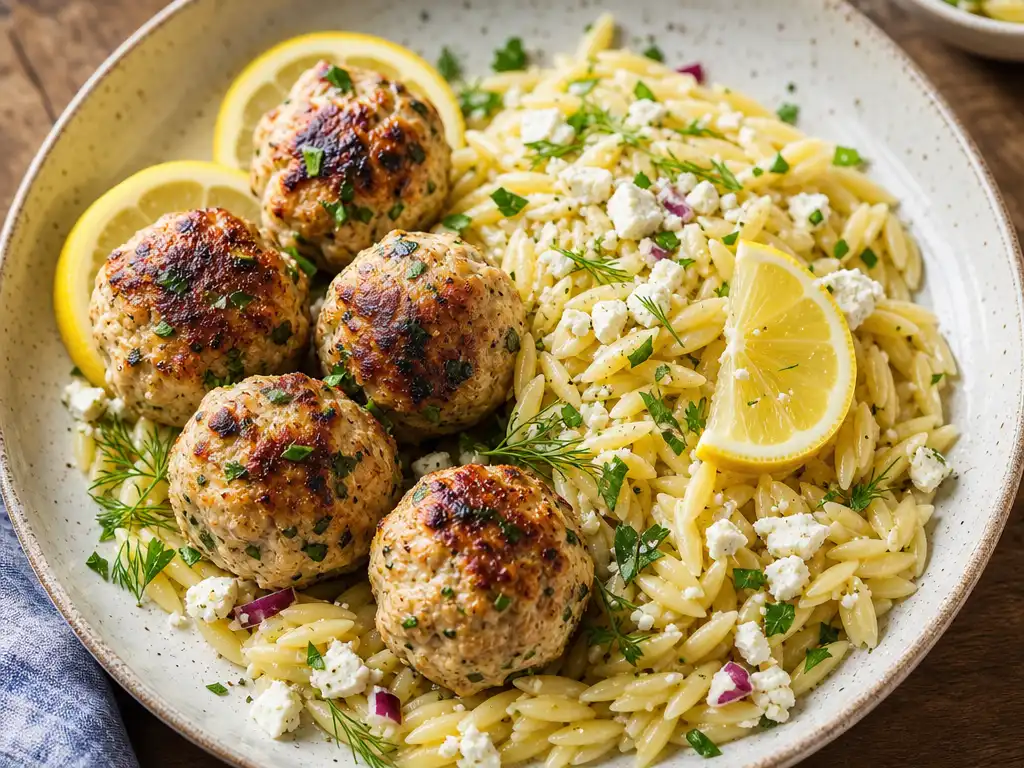
- Serve: Garnish with additional crumbled feta, fresh herbs, and lemon wedges. Serve warm.
FAQ
Can I freeze these meatballs?
Yes, these meatballs freeze exceptionally well. You can freeze them raw or cooked. If freezing raw, place the shaped meatballs on a baking sheet until solid, then transfer to a freezer bag. If freezing cooked, let them cool completely before bagging. They will keep for up to 3 months. Thaw in the refrigerator overnight before reheating.
How do I prevent the meatballs from falling apart?
The most common cause is overmixing or not chilling the mixture. Ensure you mix gently and let the breadcrumbs absorb the moisture during the chilling phase. Also, make sure your pan is hot enough before adding the meatballs so they sear quickly and form a crust.
Can I make this dish ahead of time?
Absolutely. This dish reheats well. Store the meatballs and orzo separately in the refrigerator for up to 3 days. When reheating, add a splash of water or broth to the orzo to refresh the texture, and warm the meatballs gently in the oven or microwave.
What can I use instead of chicken?
Ground turkey is the closest substitute and works nearly identically. Ground pork or a lamb blend will offer a richer, more traditional Greek flavor but will be higher in fat. Adjust cooking times slightly if using red meats to ensure they are fully cooked.
Is there a way to make this without pasta?
Yes, for a lower carbohydrate option, serve the meatballs over a bed of Greek salad, roasted vegetables, or cauliflower rice. The lemon-herb flavor profile pairs beautifully with almost any vegetable side.
Why is my orzo sticky?
Orzo releases a lot of starch. To prevent sticking, stir it frequently during boiling and toss it with a little olive oil immediately after draining if you aren’t adding the sauce right away. Using plenty of water in the pot also helps dilute the starch.
Summary
This Greek Chicken Meatballs with Lemon Orzo recipe delivers a healthy, flavorful Mediterranean dinner packed with fresh herbs and lean protein. Perfect for weeknights, it combines tender seared meatballs with zesty pasta for a satisfying meal everyone will love.