Introduction
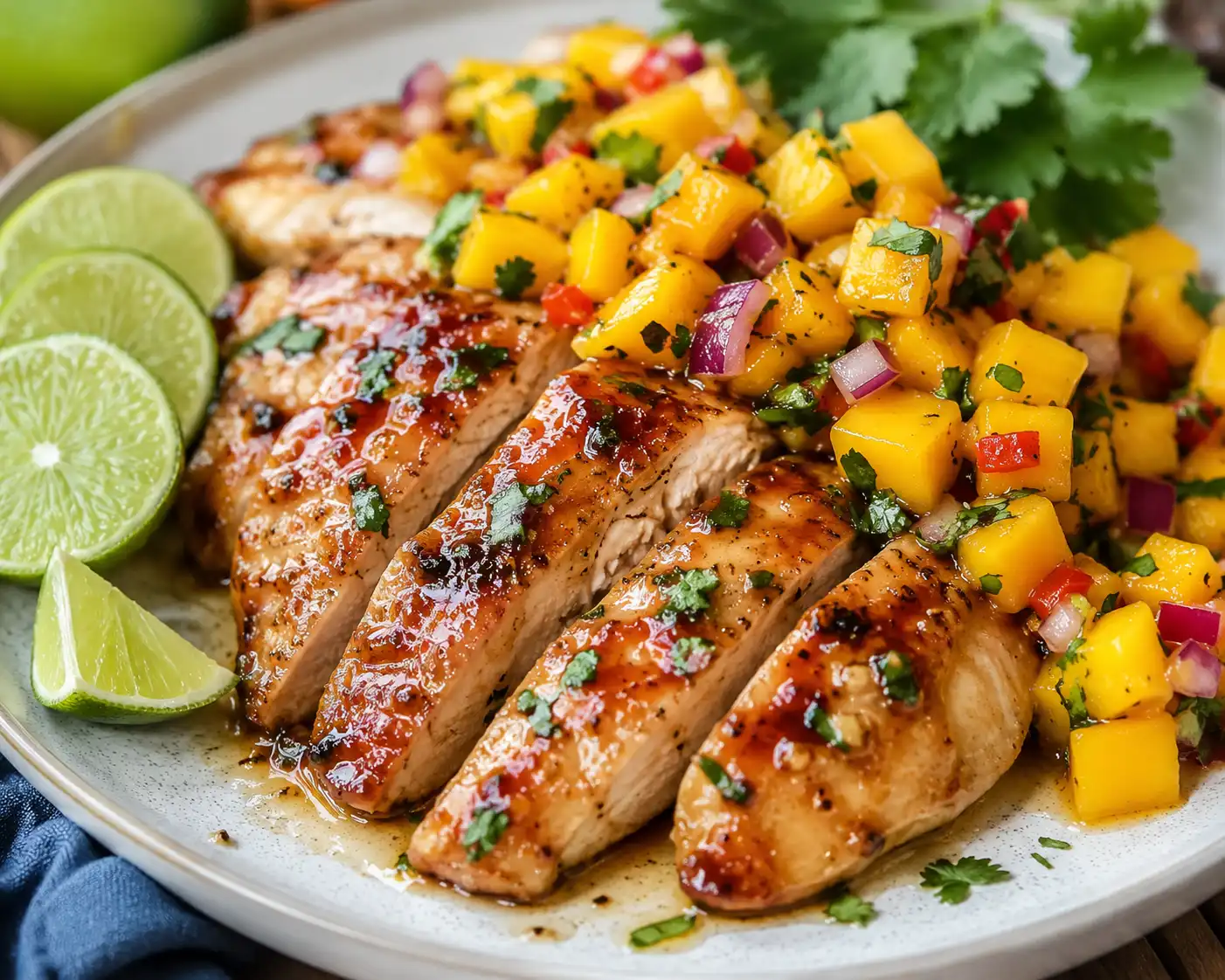
Honey Lime Chicken with Mango Salsa is a vibrant, restaurant-worthy dish that effortlessly bridges bold tropical flavors with comforting savory-sweet appeal. Bright and zesty lime cuts through the rich umami of grilled or pan-seared chicken, while honey lends a delicate caramelized sweetness that enhances—never overwhelms—the natural savoriness of the protein. Topped with a fresh, chunky mango salsa bursting with juicy ripe mango, red onion, cilantro, jalapeño, and more lime juice, this dish delivers an exhilarating interplay of textures and temperatures: tender, slightly charred chicken meets cool, crisp, aromatic salsa in every bite. Whether served as a weeknight dinner, a weekend grill special, or an elegant appetizer for entertaining, Honey Lime Chicken with Mango Salsa celebrates freshness, balance, and global-inspired simplicity—all without requiring advanced culinary skills.
The History
While no single documented origin story exists for Honey Lime Chicken with Mango Salsa, its roots are deeply embedded in the convergence of several culinary traditions. The use of citrus-marinated poultry traces back centuries across Latin America, Southeast Asia, and the Mediterranean—where acidic ingredients like lime, lemon, or vinegar were historically used not only for flavor but also for tenderizing and preserving meat. In Mexico and Central America, lime-marinated chicken (such as in pollo al limón) has long been a staple, often grilled over charcoal for smoky depth. Meanwhile, mango salsa emerged from the fusion kitchens of South Florida and California in the late 20th century, where chefs began pairing the fruit’s lush sweetness with heat and acidity to complement seafood and grilled meats. The addition of honey—a globally beloved sweetener with ancient culinary and medicinal significance—elevates the marinade into a glossy, sticky glaze reminiscent of Southeast Asian gai yang (Thai grilled chicken) or Hawaiian-style teriyaki. As food media exploded online in the 2010s, this combination gained massive traction on platforms like Pinterest, Instagram, and food blogs, evolving into a modern American classic that embodies the “bright, healthy, flavorful” ethos of contemporary home cooking.
Ingredients Breakdown
Every element in this dish plays a precise role—not just for taste, but for function and harmony:
- Chicken Breasts or Thighs: Boneless, skinless chicken breasts offer lean tenderness and quick cooking; thighs provide richer flavor, juicier texture, and greater forgiveness against overcooking. Both benefit from light pounding to ensure even thickness and consistent doneness.
- Fresh Lime Juice: The backbone of acidity—bright, clean, and volatile. Bottled lime juice lacks the nuanced floral notes and volatile oils essential for depth. Always zest before juicing to capture aromatic citrus oils for both marinade and salsa.
- Raw Honey: Preferably local, unfiltered honey adds complex floral notes and superior viscosity for glazing. Its natural enzymes and sugars promote gentle caramelization without burning—unlike refined sugar, which can scorch at high heat. Maple syrup or agave may substitute, but they alter flavor profile and browning behavior.
- Garlic & Ginger: Freshly minced (not powdered) garlic delivers pungent, savory depth; grated fresh ginger contributes warm, peppery brightness and subtle enzymatic tenderizing action—especially helpful for leaner cuts.
- Neutral Oil (Avocado or Grapeseed): High smoke point ensures stable searing or grilling without bitter off-flavors. Olive oil is acceptable for low-heat cooking but may smoke during high-temp searing.
- Mango: Use fully ripe, fragrant Ataulfo (Champagne) or Kent mangoes—they’re sweeter, smoother, and less fibrous than green or underripe varieties. Unripe mango brings harsh tannins and fails to meld with the honey-lime balance.
- Red Onion: Soaked briefly in cold lime water to mellow its sharp bite while retaining crunch and vibrant color—critical for textural contrast and visual appeal.
- Fresh Cilantro: Adds a bright, citrusy herbal lift. For those with cilantro aversion (genetically linked), flat-leaf parsley offers a milder but still fresh alternative—though it lacks the same aromatic synergy.
- Jalapeño: Seeds and membranes removed for controlled heat. For extra dimension, consider charring the jalapeño lightly before dicing to add subtle smokiness.
- Sea Salt & Black Pepper: Fine sea salt dissolves evenly in marinades; freshly cracked black pepper provides volatile aromatic compounds that bloom upon contact with heat.
Step-by-Step Recipe
- Prep the Chicken: Place chicken breasts between two sheets of parchment paper or plastic wrap. Using a meat mallet or heavy skillet, gently pound to an even ½-inch thickness. This ensures rapid, uniform cooking and maximizes surface area for marinade absorption.
- Make the Marinade: In a medium bowl, whisk together ¼ cup fresh lime juice, ⅓ cup raw honey, 3 minced garlic cloves, 1 tbsp grated fresh ginger, 2 tbsp neutral oil, 1 tsp fine sea salt, and ½ tsp freshly cracked black pepper until fully emulsified. Taste and adjust—marinade should be balanced: tangy, sweet, savory, and aromatic—not overly salty or sour.
- Marinate: Place chicken in a shallow glass or ceramic dish (avoid reactive metals like aluminum or copper). Pour marinade over, turning to coat. Cover and refrigerate for 30 minutes minimum—or up to 2 hours. Do not exceed 2 hours; prolonged acid exposure can begin to “cook” the surface, leading to mushy texture.
- Prepare the Salsa: While chicken marinates, dice 1½ cups ripe mango, ½ small red onion (soaked 5 min in lime juice + cold water, then drained), 1–2 tbsp finely diced jalapeño (seeds removed), ¼ cup chopped fresh cilantro, and 2 tbsp fresh lime juice. Gently fold together with a pinch of salt. Refrigerate covered—this allows flavors to meld without softening the mango.
- Cook the Chicken: Heat a heavy-bottomed stainless steel or cast-iron skillet over medium-high heat until shimmering. Remove chicken from marinade (reserve marinade), letting excess drip off. Pat dry with paper towels—this step is non-negotiable for achieving a golden sear instead of steaming. Season lightly with additional salt. Sear undisturbed for 4–5 minutes per side, until deeply golden and internal temperature reaches 160°F (71°C) for breasts or 165°F (74°C) for thighs. Transfer to a plate and rest 5 minutes.
- Make the Glaze: Pour reserved marinade into the hot skillet. Bring to a simmer over medium heat, stirring constantly. Reduce by half (about 3–4 minutes), until thickened to a glossy, coat-the-back-of-a-spoon consistency. Watch closely—honey burns easily. Optional: stir in 1 tsp cold butter for extra sheen and richness.
- Glaze & Serve: Spoon warm glaze over rested chicken. Let sit 1 minute to set. Slice chicken against the grain into ½-inch strips. Spoon generous portions of chilled mango salsa over each serving. Garnish with extra cilantro leaves, lime wedges, and a light sprinkle of flaky sea salt.
Tips
- Rest Before Slicing: Allowing chicken to rest after cooking retains juices—cutting too soon releases moisture, resulting in drier meat.
- Dry Chicken = Better Sear: Moisture is the enemy of browning. Always pat chicken thoroughly before cooking—even if marinated.
- Reserve Marinade Safely: Never reuse raw marinade unless boiled vigorously for at least 2 minutes to kill bacteria. That’s why we reserve it *before* adding chicken—or boil it separately post-marination.
- Control Salsa Texture: Dice all salsa ingredients to nearly identical size (¼-inch cubes) for cohesive mouthfeel and visual polish.
- Timing Matters: Make salsa no more than 1 hour before serving—mango softens quickly, especially in acid. Stir gently just before serving to recombine juices.
- Sear Temperature Test: Flick a drop of water into the pan—if it skitters and evaporates instantly, your pan is ready.
- Grill Alternative: Preheat gas grill to medium-high (400°F/200°C). Oil grates well. Grill chicken 4–5 minutes per side, basting with glaze only in the last 2 minutes to prevent charring.
- Batch Cooking Tip: Double the marinade and glaze—freeze half in ice cube trays for future use. Thaw and reheat gently.
Variations and Customizations
This recipe is inherently adaptable—ideal for dietary preferences, seasonal produce, pantry swaps, and global twists:
- Protein Swaps: Try shrimp (marinate 15 min max), firm tofu (pressed & cubed), salmon fillets (skin-on, reduce cook time), or even pork tenderloin medallions.
- Vegetarian/Vegan Version: Replace chicken with grilled halloumi, tempeh, or chickpea “cutlets.” Use maple syrup or coconut nectar instead of honey, and add 1 tsp tamari for umami depth.
- Tropical Twist: Add 2 tbsp finely diced pineapple and 1 tbsp toasted coconut flakes to the salsa. A splash of coconut milk in the glaze adds creamy richness.
- Smoky Depth: Add ½ tsp smoked paprika or chipotle powder to the marinade—or char the mango and red onion on the grill before dicing for salsa.
- Herb Variations: Swap cilantro for mint (for Middle Eastern flair) or Thai basil (for Southeast Asian nuance). Add a few torn mint leaves to the finished salsa for brightness.
- Heat Adjustments: Mild? Skip jalapeño entirely and add a pinch of cayenne to the glaze. Extra heat? Include jalapeño seeds, add serrano, or finish with pickled jalapeño brine.
- Low-Carb/Keto-Friendly: Reduce honey to 1 tbsp and supplement with 1 tbsp erythritol or allulose. Increase oil slightly to maintain moisture. Serve over cauliflower rice or zucchini noodles.
- Meal Prep Friendly: Marinate chicken and prep salsa components separately (store mango and onion/jalapeño/cilantro separately; combine 15 minutes before serving). Cook chicken fresh for best texture.
- Breakfast or Brunch Version: Serve sliced chicken and salsa over a soft-scrambled egg scramble with avocado slices and warm corn tortillas.
- Grain Bowl Integration: Layer over quinoa, farro, or brown rice with black beans, roasted sweet potatoes, and a lime-cilantro vinaigrette.
Health Considerations and Nutritional Value
A single 5-oz serving (chicken + ¾ cup salsa) offers a nutrient-dense, balanced profile:
- Calories: ~380 kcal (varies by cut and oil use)
- Protein: 34g (excellent source—supports muscle repair, satiety, and metabolic health)
- Carbohydrates: 32g (primarily from natural fruit sugars and honey; low glycemic impact when paired with protein/fat)
- Fiber: 3g (from mango and red onion—supports gut microbiome and digestive regularity)
- Healthy Fats: 12g (mostly monounsaturated from oil and trace omega-3s in lime zest)
- Vitamins & Minerals: Exceptionally high in Vitamin C (120% DV from lime + mango), Vitamin A (65% DV from mango beta-carotene), potassium (25% DV), folate, and magnesium. Lime zest contributes bioactive limonene—studied for antioxidant and anti-inflammatory properties.
Dietary Notes:
- Gluten-Free: Naturally compliant—verify honey and spices are certified GF if needed.
- Dairy-Free & Nut-Free: Contains neither—ideal for common allergen-sensitive diets.
- Sugar-Conscious Consideration: While honey is a natural sweetener, it remains concentrated fructose. Those managing insulin resistance or diabetes may reduce honey to 2 tbsp and increase lime juice + ginger for flavor complexity without added sugar.
- Sodium Awareness: Total sodium ~420mg/serving—well within daily recommendations (<2,300mg). Use low-sodium tamari in variations if adding soy-based elements.
- Pregnancy-Safe: Fully cooked chicken and pasteurized honey make this safe; avoid raw sprouts or unpasteurized dairy if customizing.
Ingredients
For the Honey Lime Chicken:
- 2 boneless, skinless chicken breasts (about 1 lb / 450g) or 4 boneless, skinless chicken thighs
- ¼ cup freshly squeezed lime juice (about 2–3 limes) + zest of 1 lime
- ⅓ cup raw, unfiltered honey
- 3 garlic cloves, finely minced
- 1 tbsp fresh ginger, peeled and grated
- 2 tbsp neutral high-smoke-point oil (avocado, grapeseed, or refined coconut)
- 1 tsp fine sea salt
- ½ tsp freshly cracked black pepper
For the Mango Salsa:
- 1½ cups ripe mango, peeled and finely diced (about 1 large mango)
- ½ small red onion, finely diced (about ½ cup)
- 1–2 tbsp jalapeño, seeds and membranes removed, finely minced
- ¼ cup fresh cilantro leaves, roughly chopped
- 2 tbsp fresh lime juice (about 1 lime)
- ¼ tsp fine sea salt, or to taste
For Serving (Optional):
- Lime wedges
- Extra cilantro sprigs
- Flaky sea salt (Maldon or similar)
- Warm corn tortillas or cilantro-lime rice
Directions
- Prepare Chicken: Place chicken between two sheets of parchment paper. Gently pound to ½-inch even thickness using a meat mallet or rolling pin. Set aside.
- Make Marinade: In a medium mixing bowl, whisk together lime juice, honey, minced garlic, grated ginger, oil, salt, and pepper until smooth and emulsified.
- Marinate: Place chicken in a shallow dish. Pour marinade over, turning to coat completely. Cover and refrigerate 30 minutes to 2 hours.
- Make Salsa: In a separate bowl, combine diced mango, red onion, jalapeño, cilantro, lime juice, and salt. Gently fold. Cover and refrigerate for at least 15 minutes (up to 1 hour).
- Cook Chicken: Heat 1 tbsp oil in a large skillet over medium-high heat until shimmering. Remove chicken from marinade (reserve marinade); pat dry with paper towels. Season lightly with salt. Sear 4–5 minutes per side, until golden and cooked through (160°F for breasts, 165°F for thighs). Transfer to a cutting board; tent loosely with foil. Rest 5 minutes.
- Reduce Glaze: Pour reserved marinade into the same hot skillet. Simmer over medium heat 3–4 minutes, stirring constantly, until reduced by half and thickened to a glossy glaze. Optional: whisk in 1 tsp cold butter off-heat for richness.
- Finish & Serve: Slice rested chicken against the grain. Drizzle generously with warm glaze. Top with chilled mango salsa. Garnish with lime wedges, cilantro, and flaky salt. Serve immediately.
FAQ
- Can I bake this instead of pan-searing?
- Yes! Arrange marinated chicken in a greased baking dish. Bake at 400°F (200°C) for 18–22 minutes, until internal temp reaches 165°F. Broil 1–2 minutes at end for light caramelization, then glaze and top with salsa.
- How do I pick a ripe mango?
- Gently squeeze—it should yield slightly like a peach, not hard like an apple nor mushy like an overripe banana. Smell the stem end: fragrant, sweet, tropical aroma signals ripeness. Skin color varies by variety; avoid relying solely on yellow/red hues.
- Can I make this ahead?
- Absolutely. Marinate chicken up to 2 hours ahead. Prepare salsa components separately up to 1 day ahead (store mango and onion/jalapeño/cilantro in separate airtight containers); combine 15 minutes before serving to preserve texture.
- Why did my chicken stick to the pan?
- Most commonly: pan wasn’t hot enough before adding chicken, or chicken wasn’t patted dry. Also, moving chicken too soon prevents proper crust formation. Wait until it releases naturally—usually 4+ minutes.
- Is there a substitute for honey if I’m vegan?
- Yes—use pure maple syrup or date syrup (1:1). Avoid agave in high-heat applications as it breaks down faster. Add ½ tsp tamari or coconut aminos to replace honey’s subtle umami depth.
- Can I freeze this dish?
- Best frozen uncooked: marinate chicken, drain marinade (discard or boil before using), seal in freezer bag for up to 3 months. Thaw overnight in fridge before cooking. Salsa does not freeze well—texture degrades significantly.
- What sides pair well?
- Light, fresh, or earthy complements work best: cilantro-lime brown rice, black bean & corn salad, grilled asparagus, jicama slaw, avocado-tomato salad, or warm flour or corn tortillas.
- My salsa turned watery—what went wrong?
- Mango was overripe or pre-cut and stored too long. Also, mixing too early or using lime juice that’s too warm accelerates breakdown. Always chill ingredients and combine close to serving.
- Can I use bottled lime juice?
- Not recommended. Bottled juice lacks volatile citrus oils and contains preservatives that mute brightness and add bitterness. Fresh lime is foundational to the dish’s character.
- How spicy is the salsa?
- Mild to medium—1 tbsp jalapeño yields gentle warmth. For heat-seekers, add a second jalapeño or ¼ tsp cayenne. For zero heat, omit jalapeño and add ¼ tsp lime zest for aromatic lift.
Summary
Honey Lime Chicken with Mango Salsa is a masterclass in balanced, vibrant, and accessible global-inspired cooking—featuring tender, caramelized chicken kissed with tangy-sweet lime-honey glaze and crowned with a refreshingly bright, herb-flecked tropical salsa.
Effortlessly elegant yet simple enough for weeknights, nutritionally robust, endlessly customizable, and guaranteed to spark conversation at any table—it’s not just a recipe, but a celebration of flavor, freshness, and joyful eating.