Introduction
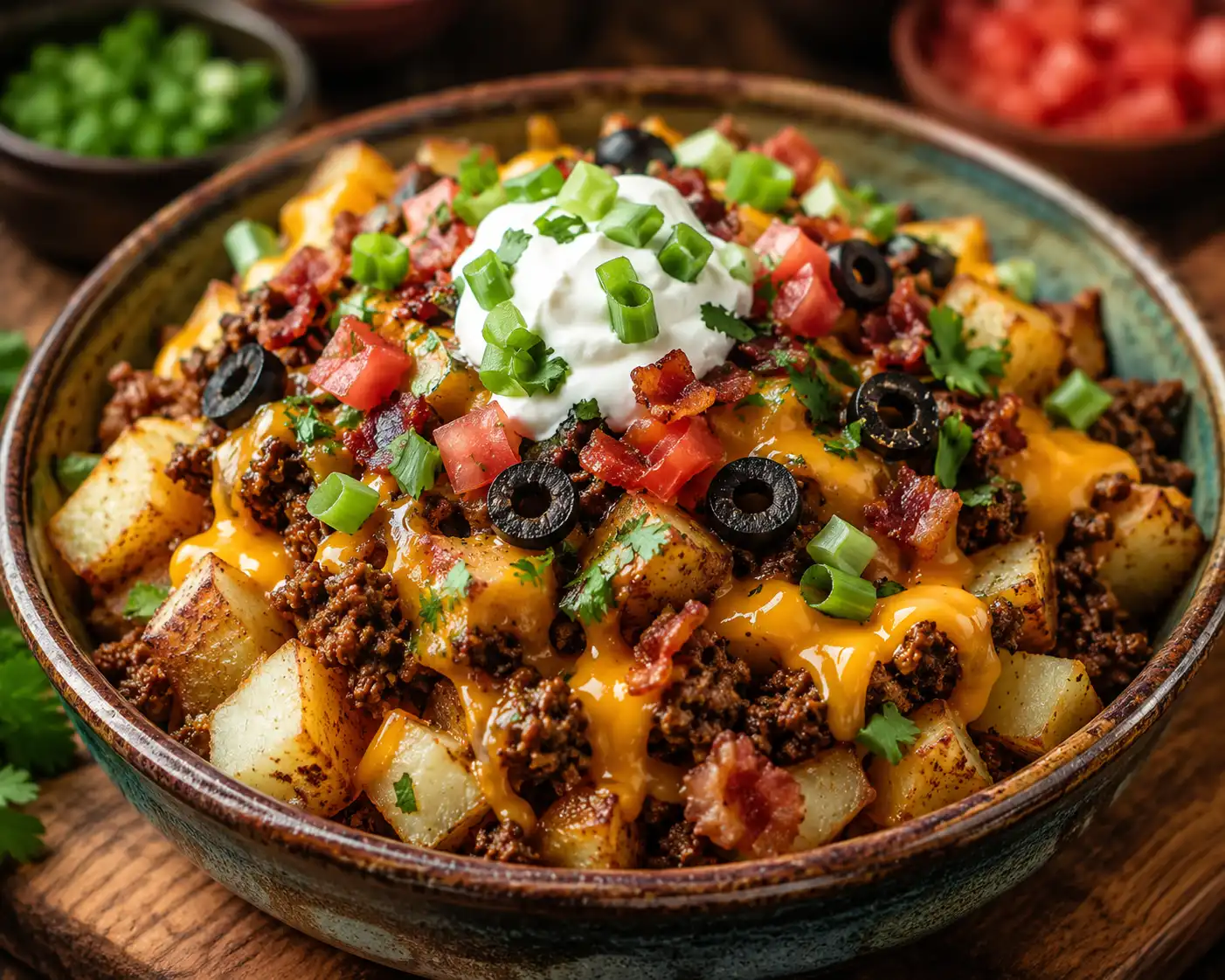
Welcome to the ultimate comfort-meets-convenience meal: the Delicious Loaded Potato Taco Bowl. This vibrant, nutrient-dense, and deeply satisfying dish reimagines classic taco night by swapping traditional tortillas for tender roasted potatoes—transforming them into hearty, flavorful “bowls” that cradle bold Mexican-inspired fillings. Whether you’re meal prepping for busy weekdays, hosting friends for a casual dinner, or simply craving something warm, textural, and packed with personality, this bowl delivers on every front. It’s not just food—it’s a celebration of balance: creamy and crunchy, smoky and zesty, earthy and bright—all in one colorful, customizable, and deeply nourishing package.
The History
The Loaded Potato Taco Bowl is a delicious example of modern culinary fusion—born from the intersection of Tex-Mex tradition, California bowl culture, and the global rise of plant-forward, build-your-own meals. While tacos have roots stretching back centuries in Mesoamerica—and baked potatoes have long been a staple across European and North American cuisines—the idea of combining them into a deconstructed, bowl-format meal gained traction in the early 2010s. Food trucks in Austin and Los Angeles began experimenting with “taco-stuffed spuds,” and health-conscious chefs at farm-to-table restaurants soon elevated the concept by emphasizing whole-food ingredients, roasted (not fried) potatoes, grass-fed proteins, and house-made salsas. Social media accelerated its popularity: vibrant overhead shots of golden potato halves overflowing with black beans, pickled red onions, avocado crema, and crumbled cotija went viral—proving that hearty doesn’t have to mean heavy, and convenience doesn’t require compromise. Today, the Loaded Potato Taco Bowl stands as a beloved symbol of mindful indulgence—a dish that honors heritage while embracing innovation, flexibility, and joyful eating.
Ingredients Breakdown
Every component of this bowl plays a purpose—flavor, texture, nutrition, or visual appeal. Here’s why each ingredient matters:
- Yukon Gold or Russet Potatoes: Chosen for their ideal starch-to-moisture ratio—Russets yield fluffy interiors and crisp exteriors when roasted; Yukons offer buttery richness and hold their shape beautifully. Both are naturally gluten-free and rich in potassium and vitamin C.
- Smoked Paprika & Chipotle Powder: These spices provide signature warmth and depth without overwhelming heat. Smoked paprika contributes subtle oakiness, while chipotle (smoked, dried jalapeño) adds fruity smokiness and gentle spice—both are potent antioxidants.
- Black Beans (cooked from dry or low-sodium canned): A fiber- and protein-packed plant-based powerhouse. When simmered with cumin and garlic, they become velvety and aromatic—acting as both binder and flavor anchor.
- Fresh Corn (grilled or pan-seared): Adds natural sweetness, crunch, and vibrant color. Contains lutein and zeaxanthin—nutrients vital for eye health.
- Pico de Gallo: A fresh, uncooked salsa made with ripe tomatoes, red onion, jalapeño, cilantro, and lime. Its acidity cuts through richness and introduces live enzymes and vitamin A.
- Avocado Crema: A luxuriously smooth blend of ripe avocado, Greek yogurt (or dairy-free alternative), lime juice, and garlic. Delivers heart-healthy monounsaturated fats, probiotics (if using cultured yogurt), and creamy contrast.
- Crumbled Cotija Cheese: Mexico’s answer to feta—salty, crumbly, and slightly tangy. Adds umami depth and calcium. For a vegan version, try almond-feta or nutritional yeast–toasted sunflower seed crumble.
- Quick-Pickled Red Onions: Made with apple cider vinegar, sugar, and salt—these add brightness, digestive support (from vinegar’s acetic acid), and a stunning magenta hue.
- Microgreens or Fresh Cilantro: The finishing flourish—adding enzymatic freshness, chlorophyll, and a delicate herbal note that ties everything together.
Step-by-Step Recipe
- Prep & Roast the Potatoes: Preheat oven to 425°F (220°C). Scrub 4 medium Yukon Gold or Russet potatoes clean (leave skins on for fiber and nutrients). Pierce each several times with a fork, rub lightly with avocado oil, then season generously with smoked paprika, chipotle powder, garlic powder, onion powder, cumin, salt, and black pepper. Place directly on middle oven rack (or on a parchment-lined baking sheet) and roast for 50–65 minutes—until skin is taut and crisp, and a paring knife slides easily into the center. Let cool slightly (10–15 min) before halving lengthwise.
- Prepare the Black Bean Base: While potatoes roast, heat 1 tbsp olive oil in a skillet over medium heat. Sauté ½ finely diced yellow onion until translucent (~4 min). Add 2 minced garlic cloves and 1 tsp ground cumin; toast 30 seconds until fragrant. Stir in 2 (15-oz) cans low-sodium black beans (rinsed and drained) or 3 cups cooked-from-dry beans. Add ¼ cup vegetable broth or water, 1 tbsp lime juice, and a pinch of oregano. Simmer gently for 8–10 minutes, mashing ~⅓ of beans with a fork or potato masher to thicken. Season with salt and a splash of apple cider vinegar for brightness.
- Char the Corn: Heat a cast-iron skillet or grill pan over high heat. Add 2 cups fresh or thawed frozen corn kernels (no oil needed). Cook undisturbed 2–3 minutes until deeply golden and blistered in spots. Flip and char opposite side. Remove, stir in 1 tsp lime zest, 1 tbsp chopped cilantro, and a pinch of smoked salt.
- Make the Avocado Crema: In a blender or food processor, combine 1 ripe Hass avocado, ½ cup plain nonfat Greek yogurt (or unsweetened coconut yogurt), 2 tbsp fresh lime juice, 1 small garlic clove, ¼ tsp salt, and 1–2 tbsp water to reach desired drizzling consistency. Blend until ultra-smooth. Taste and adjust acidity or salt.
- Assemble the Bowls: Using a spoon, gently scoop out a shallow well in each roasted potato half—leaving a ½-inch border of flesh and skin intact to act as the “bowl.” Fill each generously with warm black bean mixture, then top with charred corn, pico de gallo, quick-pickled red onions, crumbled cotija, a generous drizzle of avocado crema, and a final flourish of microgreens or cilantro leaves.
- Serve Immediately: These bowls shine at peak temperature—warm potatoes, creamy crema, crisp toppings—but components can be prepped up to 3 days ahead and assembled fresh.
Tips
- Roasting Shortcut: For faster prep, microwave potatoes for 5–7 minutes (pierced!) before roasting—reduces total oven time by 20+ minutes without sacrificing crispness.
- Skin-Savvy Strategy: Don’t peel! Potato skins contain nearly half the fiber, B vitamins, and iron—and crisping them adds incredible texture and visual appeal.
- Bean Texture Tip: Mash only part of the beans—not all—to create a thick, cohesive base that clings to the potato while retaining satisfying whole-bean bites.
- Lime Juice Timing: Always add lime juice *after* cooking beans and corn—heat dulls its vibrant acidity. Reserve a final squeeze right before serving for maximum zing.
- Cheese Substitution Wisdom: If cotija is unavailable, try queso fresco (milder, less salty) or a sharp white cheddar (for extra meltiness). For vegan bowls, blend ½ cup raw cashews (soaked 4 hrs), 2 tbsp lemon juice, 1 tsp miso paste, and ¼ tsp garlic powder until silky.
- Make-Ahead Mastery: Roast potatoes and prepare bean mixture up to 3 days ahead. Store separately in airtight containers in the fridge. Reheat beans gently on stove; refresh potatoes in a 400°F oven for 10 minutes before assembling.
- Texture Contrast is Key: Never skip the quick-pickle or fresh herbs—they cut richness and awaken the palate. If short on time, sub with store-bought pickled jalapeños + extra lime juice.
- Spice Control: Chipotle powder varies widely in heat. Start with ¼ tsp per batch and taste before adding more. For zero heat, omit chipotle and double the smoked paprika.
- Batch Cooking Friendly: Double the recipe and freeze cooled roasted potatoes (unfilled) for up to 3 months. Thaw overnight in fridge, then re-crisp before loading.
- Leftover Love: Extra black bean mixture makes an amazing dip with tortilla chips—or fold into scrambled eggs for breakfast tacos the next day.
Variations and Customizations
This bowl is infinitely adaptable—whether you’re feeding a family, following dietary protocols, or simply chasing seasonal inspiration:
- Protein-Powered: Top with grilled flank steak strips marinated in lime-cumin adobo; shredded slow-cooked carnitas; chipotle-lime shrimp; or pan-seared tempeh cubes tossed in liquid smoke and maple syrup.
- Vegan Deluxe: Swap Greek yogurt for unsweetened oat or coconut yogurt; use almond-cotija or hemp-seed “feta”; add roasted sweet potato cubes and toasted pepitas for extra crunch and omega-3s.
- Breakfast Bowl Version: Replace black beans with chorizo-spiced scrambled tofu or turkey sausage crumbles; top with a sunny-side-up egg and chipotle ketchup instead of crema.
- Southwest Southwest: Add roasted poblano peppers, fire-roasted tomatoes, and crumbled blue cheese with a drizzle of honey-lime vinaigrette.
- Keto-Friendly Adaptation: Skip beans entirely—fill potato “bowls” with cauliflower rice sautéed in taco seasoning, guacamole, shredded chicken, crispy bacon bits, and sour cream.
- Low-FODMAP Option: Use canned lentils (rinsed well) instead of beans; swap onion in pico for green onion tops (green part only); omit garlic in crema (use garlic-infused oil instead).
- Global Twists: Mediterranean: replace taco spices with za’atar and sumac; fill with lemon-herb chickpeas, cucumber-tomato salad, and tahini drizzle. Korean BBQ: use gochujang-marinated beef, kimchi slaw, and sesame-ginger crema.
- Seasonal Swaps: Summer: add heirloom cherry tomatoes and grilled zucchini ribbons. Fall: include roasted delicata squash and toasted pecans. Winter: toss in braised kale and pomegranate arils.
- Kid-Approved Mild: Omit jalapeños and chipotle; use mild salsa verde; add shredded cheddar and a dollop of mild ranch instead of crema.
- Meal Prep Jars: Layer components in 32-oz mason jars (beans on bottom, then corn, then pickles/onions, then crema in center, toppings on top)—shake to mix before eating.
Health Considerations and Nutritional Value
A single serving (1 large roasted potato half loaded with full toppings) delivers approximately 580–650 calories, with exceptional macro- and micronutrient synergy:
- Fiber Powerhouse: ~18–22g total fiber—nearly 80% of the daily recommended intake—supporting gut microbiome diversity, steady blood sugar, and lasting satiety. Sources: potato skin, black beans, corn, onions, avocado, and greens.
- Plant-Based Protein: ~24–28g complete protein (when including cotija and Greek yogurt) or ~19g vegan protein (with tempeh or lentils). Beans + potato + seeds = complementary amino acid profile.
- Heart-Healthy Fats: Monounsaturated fats from avocado and olive oil help lower LDL cholesterol and reduce inflammation. Omega-3s from optional pepitas or flaxseed garnish further support cardiovascular function.
- Vitamin & Mineral Density: Exceptionally high in potassium (more than a banana!), vitamin C (immune support), B6 (energy metabolism), folate (cell repair), magnesium (muscle/nerve function), and iron (especially when paired with vitamin C-rich lime juice for enhanced absorption).
- Low Glycemic Impact: Despite being carb-based, the combination of resistant starch (in cooled-and-reheated potatoes), fiber, healthy fat, and acid (lime/vinegar) significantly slows glucose absorption—making it suitable for prediabetic or insulin-sensitive individuals when portion-controlled.
- No Refined Sugar: Naturally sweet corn and caramelized onions provide all the subtle sweetness needed—zero added sugars required.
- Digestive Support: Fermented elements (pickled onions, yogurt), prebiotic fiber (beans, potatoes), and digestive enzymes (raw onions, cilantro, lime) work synergistically to ease bloating and support regularity.
- Allergen-Conscious Options: Naturally gluten-free, nut-free (unless customized), and easily dairy-free or soy-free—ideal for multiple elimination diets.
- Mindful Sodium Note: Total sodium ranges from 420–680mg per bowl—well within ADA guidelines (<2,300mg/day)—especially when using low-sodium beans and limiting added salt.
- Antioxidant-Rich: Smoked paprika (capsaicin + vitamin E), chipotle (polyphenols), tomatoes (lycopene), corn (carotenoids), and cilantro (quercetin) collectively combat oxidative stress and cellular aging.
Ingredients
- 4 medium Yukon Gold or Russet potatoes (about 8–10 oz each), scrubbed
- 2 tbsp avocado oil or olive oil
- 1½ tsp smoked paprika
- ½–1 tsp chipotle powder (to taste)
- 1 tsp garlic powder
- 1 tsp onion powder
- 1 tsp ground cumin
- 1 tsp fine sea salt (plus more to taste)
- ½ tsp freshly ground black pepper
- 2 tbsp olive oil (for beans)
- 1 medium yellow onion, finely diced
- 3 garlic cloves, minced
- 2 (15-oz) cans low-sodium black beans, rinsed and drained (or 3 cups cooked dry beans)
- ¼ cup low-sodium vegetable broth or water
- 2 tbsp fresh lime juice (plus zest of 1 lime)
- ½ tsp dried oregano
- 2 cups fresh or frozen corn kernels
- 1 cup pico de gallo (homemade or high-quality store-bought)
- 1 cup quick-pickled red onions (see tip below)
- 1 large ripe Hass avocado
- ½ cup plain nonfat Greek yogurt (or unsweetened coconut yogurt)
- 2 tbsp fresh lime juice (for crema)
- ¼ tsp salt (for crema)
- 2–3 tbsp water (as needed for consistency)
- ½ cup crumbled cotija cheese (or sub of choice)
- ¼ cup fresh cilantro leaves, plus extra for garnish
- Handful of microgreens or radish sprouts (optional but recommended)
Quick-Pickle Red Onions (makes ~1 cup): Thinly slice 1 medium red onion. Place in jar with ½ cup apple cider vinegar, 2 tbsp water, 1 tbsp sugar or maple syrup, 1 tsp salt, and ½ tsp whole black peppercorns. Shake well. Refrigerate minimum 30 minutes (best after 2 hours). Keeps 2 weeks.
Directions
- Roast the Potatoes: Preheat oven to 425°F (220°C). Rub potatoes with 2 tbsp avocado oil, then sprinkle evenly with smoked paprika, chipotle powder, garlic powder, onion powder, cumin, salt, and pepper. Place directly on middle oven rack (or on parchment-lined baking sheet). Roast 50–65 minutes until deeply golden, crisp-skinned, and tender when pierced. Cool 10–15 minutes.
- Prepare Black Beans: Heat 2 tbsp olive oil in skillet over medium. Sauté diced onion 4–5 minutes until soft. Add minced garlic and cumin; toast 30 seconds. Stir in beans, broth, 2 tbsp lime juice, and oregano. Simmer 8–10 minutes, mashing ~⅓ beans. Season with salt and 1 tsp apple cider vinegar.
- Char the Corn: Heat dry cast-iron skillet over high heat. Add corn; cook 3–4 minutes, stirring occasionally, until blistered and golden. Stir in lime zest and 1 tbsp cilantro. Set aside.
- Make Avocado Crema: In blender, combine avocado, yogurt, 2 tbsp lime juice, salt, and 1–2 tbsp water. Blend until completely smooth, scraping sides. Add more water if too thick. Taste and adjust.
- Assemble: Slice cooled potatoes in half lengthwise. Gently scoop out center to create a shallow bowl, leaving ½-inch border. Fill each with warm black beans, then top with corn, pico de gallo, pickled onions, cotija, crema, cilantro, and microgreens.
- Serve immediately while warm—or chill components separately and assemble fresh.
FAQ
- Can I make these ahead for meal prep?
- Absolutely! Roast potatoes and prepare bean mixture up to 3 days ahead. Store separately in airtight containers. Reheat beans on stove; refresh potatoes in 400°F oven for 10 minutes before loading. Keep toppings (crema, pico, pickles, herbs) refrigerated separately and assemble day-of.
- What’s the best potato for this recipe?
- Russets deliver maximum fluffiness and crisp skin—ideal for “bowl” structure. Yukon Golds offer richer flavor and creamier texture, holding up beautifully with bold toppings. Avoid waxy varieties like red or fingerling potatoes—they won’t crisp or hold fillings as well.
- Can I air-fry the potatoes instead of roasting?
- Yes! Toss scrubbed, oiled potatoes with spices and air-fry at 400°F for 35–45 minutes, flipping halfway, until deeply browned and tender. Air-frying yields even crispier skin in less time.
- Is this recipe gluten-free?
- Yes—naturally gluten-free, provided all packaged ingredients (beans, yogurt, pico) are certified GF. Always check labels on canned goods and condiments.
- How do I keep the avocado crema from browning?
- Acid is your friend! Lime juice helps, but for storage, press plastic wrap directly onto the surface to block oxygen. Best used within 24 hours for optimal color and flavor.
- Can I freeze loaded potato bowls?
- We recommend freezing *unloaded* roasted potatoes only. Freeze up to 3 months. Thaw overnight in fridge, re-crisp in oven, then load fresh toppings. Freezing loaded bowls causes sogginess and texture breakdown.
- Why do you recommend rinsing canned beans?
- Rinsing removes excess sodium (up to 40%) and the starchy liquid that can cause digestive discomfort. It also improves flavor absorption and prevents “slippery” texture.
- My potatoes turned out gummy—what went wrong?
- Overworking the potato flesh when scooping or mashing causes gumminess. Use a light touch—scoop gently, leaving structural integrity intact. Also, ensure potatoes are fully roasted: undercooked centers steam and soften the skin.
- What can I use instead of cotija?
- Queso fresco (milder, less salty), feta (tangier, brinier), or aged goat cheese (earthy, crumbly). Vegan options: almond-cotija (blanched almonds + nutritional yeast + lemon juice + salt), or hemp-seed “feta” (hemp hearts + lemon + capers + garlic).
- How spicy is this dish?
- Mild-to-medium, depending on chipotle amount. The chipotle adds smoky depth—not intense heat. Jalapeños in pico and pickled onions provide optional brightness. Easily adjusted: omit chipotle for zero heat; add minced fresh jalapeño to pico for more kick.
- Can I use sweet potatoes?
- Yes—with adjustments! Roast at 400°F for 40–50 minutes (they cook faster). Their natural sweetness pairs beautifully with black beans and chipotle—but reduce or omit added sugar in pickled onions and consider lime-heavy toppings to balance.
- Is this suitable for weight loss?
- Yes—when portioned mindfully. High fiber and protein promote fullness; complex carbs fuel sustained energy. Skip high-fat toppings like excessive cheese or sour cream, and emphasize volume with extra veggies (zucchini, bell peppers, spinach).
- What wine or beverage pairs well?
- A crisp, citrus-driven Albariño or dry Riesling complements the smokiness and acidity. For non-alcoholic: hibiscus agua fresca, lime-mint sparkling water, or cold-brew coffee with cinnamon.
- Can kids enjoy this?
- Definitely! Make a “mild version”: skip chipotle, use mild pico, add shredded cheddar, and serve with a side of lime wedges for them to squeeze on themselves. Let them assemble their own bowl—it encourages veggie acceptance!
- How do I reheat leftovers?
- Reheat potatoes in oven or toaster oven (400°F for 8–10 min) to retain crispness. Warm beans gently on stove. Assemble fresh with cold toppings—never reheat crema or pico.
Summary
The Delicious Loaded Potato Taco Bowl is a masterclass in hearty, wholesome, and endlessly customizable dining—where humble potatoes become edible vessels for bold Mexican flavors, vibrant vegetables, and creamy, tangy, crunchy contrasts.
It’s nutritionally robust, kitchen-friendly, and soul-satisfying—proving that comfort food and conscious eating don’t just coexist… they elevate each other.