Introduction
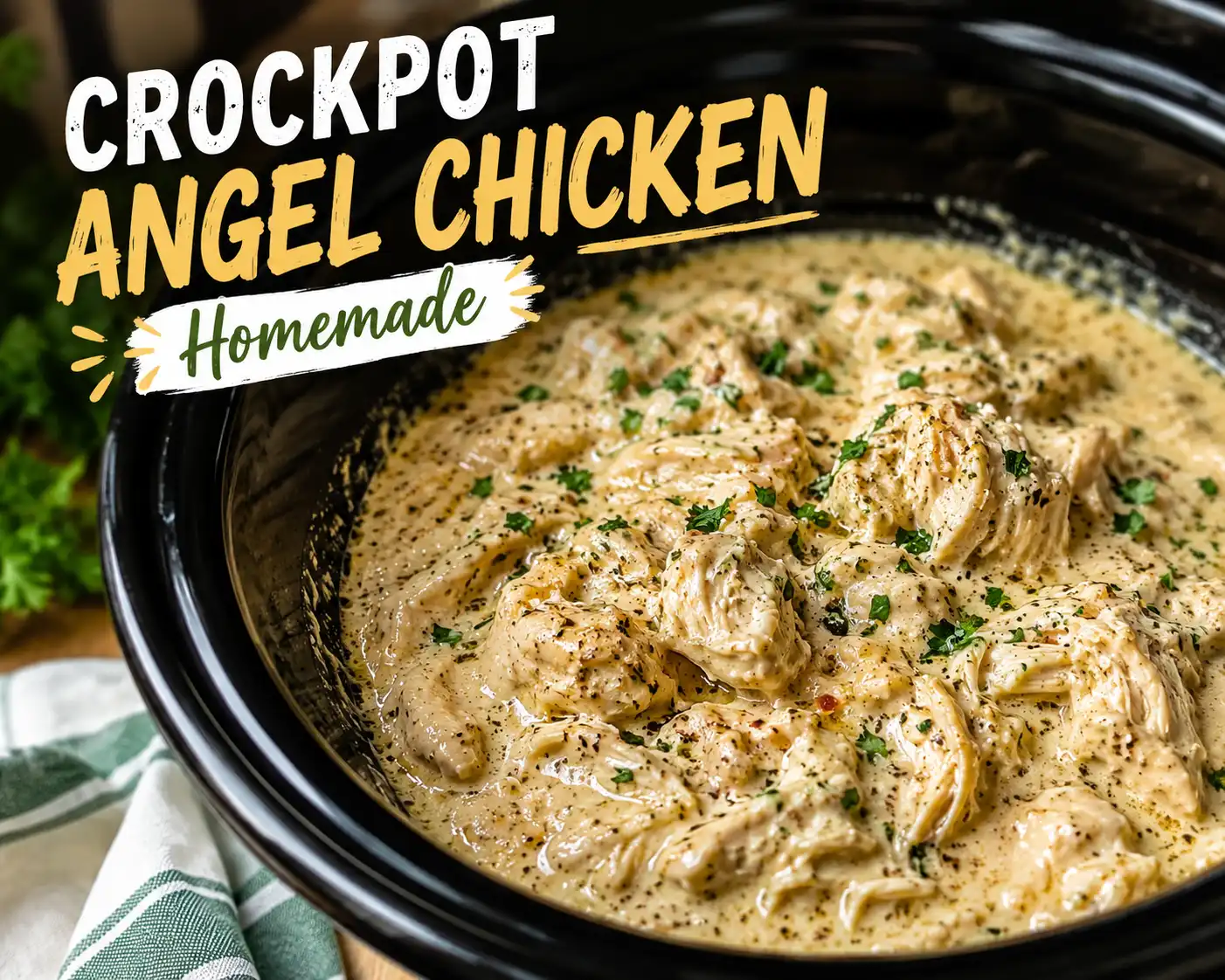
Crockpot Angel Chicken is a beloved, ultra-comforting slow-cooker dish that has earned its heavenly nickname for good reason—tender, melt-in-your-mouth chicken breasts infused with creamy, savory-sweet flavors, requiring minimal prep and zero hands-on attention. This dish is the epitome of effortless elegance: elegant enough to serve at Sunday dinner or holiday gatherings, yet humble and forgiving enough for weeknight survival. With its luscious, velvety sauce clinging to delicate shreds of chicken, it delivers restaurant-quality richness without the fuss—making it a staple in home kitchens across North America and beyond. Whether you’re a seasoned slow-cooker devotee or just discovering the magic of low-and-slow cooking, Angel Chicken promises consistent, soul-soothing results every single time.
The History
Though its exact origin remains delightfully elusive—unclaimed by any single cookbook or celebrity chef—Crockpot Angel Chicken emerged organically in the late 1980s and early 1990s as part of the broader “dump-and-go” slow cooker movement that swept suburban American households. It evolved from earlier cream-of-something casseroles (think: Cream of Mushroom + chicken + canned soup classics), but refined itself into something lighter, more balanced, and less reliant on highly processed shortcuts. The name “Angel Chicken” likely stems from both its ethereal tenderness and the almost miraculous transformation of simple, budget-friendly boneless, skinless chicken breasts into something luxuriously soft and flavorful—so tender it seems divinely orchestrated. Early versions appeared in church cookbooks, PTA fundraisers, and regional women’s magazines like Taste of Home and Family Circle, often attributed to “Betty from Topeka” or “Martha’s Sister-in-Law.” Over decades, it gained traction online through food blogs, Pinterest boards, and Facebook recipe groups, where home cooks shared tweaks—adding garlic powder here, swapping sour cream for Greek yogurt there—until it crystallized into the modern, globally adapted version we celebrate today.
Ingredients Breakdown
Every ingredient in Angel Chicken plays a deliberate, synergistic role—no filler, no fluff. Let’s explore each component not just by name, but by function, chemistry, and culinary impact:
- Chicken Breasts (Boneless, Skinless): The canvas. Opt for uniform, thick-cut (6–8 oz) breasts to prevent overcooking; thinner cuts may shred too aggressively. Organic or air-chilled poultry yields superior moisture retention and cleaner flavor. Note: While traditionally breast-only, many now use a 50/50 blend of breast and thigh for added juiciness and depth—especially helpful for longer cook times or meal prepping.
- Cream Cheese (Full-Fat, Block Style): The structural heart of the sauce. Block cream cheese melts slowly and evenly, yielding a rich, velvety body without graininess or oil separation. Low-fat or whipped varieties destabilize under prolonged heat, causing curdling or a chalky mouthfeel. Cold cream cheese, cut into small cubes, incorporates more smoothly than room-temperature slabs.
- Sour Cream (Full-Fat, Cultured): Adds tangy brightness, acidity to balance the fat, and natural enzymes that gently tenderize proteins. Its lactic acid also helps stabilize the emulsion with cream cheese and broth. Avoid “reduced-fat” or “light” versions—they contain stabilizers and gums that can turn gummy or separate when heated.
- Garlic Powder & Onion Powder: Not mere seasonings—they’re flavor amplifiers that penetrate deeply during slow cooking. Unlike fresh garlic or onion, which can turn bitter or harsh over 4+ hours, these dehydrated forms offer mellow, rounded savoriness with reliable consistency.
- Dried Dill Weed (Not Dill Seed): The signature aromatic lift—earthy, grassy, subtly anise-like. Fresh dill wilts and loses potency; dried dill holds up beautifully and releases oils gradually, infusing the entire dish. A pinch of lemon zest added at the end enhances its citrus-herbal notes.
- Chicken Broth (Low-Sodium Preferred): Provides liquid medium, depth, and collagen-rich umami. Low-sodium broth gives you full control over salt levels—critical since cream cheese and sour cream already contribute subtle sodium. For elevated depth, substitute ¼ cup of the broth with dry white wine (e.g., Sauvignon Blanc) or a splash of dry vermouth—alcohol fully cooks off, leaving only aromatic complexity.
- Butter (Unsalted, Optional but Recommended): Stirred in at the end, it adds glossy sheen, roundness, and a luxurious mouth-coating finish. Clarified butter or ghee works even better for high-heat stability and nuttier aroma.
- Freshly Ground Black Pepper & Sea Salt: Always added at the end—not during cooking—to preserve volatile aromatic compounds and avoid metallic bitterness. Coarse sea salt (like Maldon or fleur de sel) offers textural contrast and clean salinity.
Step-by-Step Recipe
- Prep the Chicken: Pat chicken breasts *very* dry with paper towels—moisture is the enemy of flavor adhesion. Lightly season both sides with a whisper of salt (just enough to enhance, not dominate) and freshly ground black pepper. Place in a single layer in the bottom of a clean, 6-quart oval slow cooker. If stacking is unavoidable, overlap minimally and rotate orientation halfway through cooking.
- Layer the Aromatics: Evenly sprinkle garlic powder, onion powder, dried dill, and a generous crack of black pepper directly over the chicken. Do *not* stir—let the spices rest on the surface to bloom slowly in the steam.
- Add Liquids Strategically: Pour low-sodium chicken broth around (not directly onto) the chicken to avoid washing away the spice layer. Add a splash of lemon juice (½ tsp) to the broth for subtle brightness—it’ll deepen flavor without detectable acidity.
- Introduce the Dairy Foundation: Dot the top of the chicken generously with cold, cubed full-fat cream cheese (about 1 tbsp per breast). Then spoon sour cream in dollops over the cream cheese—not mixed in yet. This layered approach prevents premature thinning and allows gradual emulsification.
- Seal & Set: Cover with lid—ensure the seal is snug. Cook on LOW for 4 to 5 hours *exactly*. Do NOT open the lid before the 4-hour mark—steam loss disrupts temperature equilibrium and extends cook time unpredictably. At 4 hours, gently test doneness: chicken should register 160°F internally and yield easily to a fork. Overcooking beyond 5.5 hours risks dryness—even in liquid.
- Emulsify the Sauce: Carefully remove lid. Using two forks, gently lift and twist chicken to shred *in the pot*, allowing juices and melted dairy to mingle. Discard any large, unincorporated cream cheese lumps (rare, but possible if cubes were too large). Whisk vigorously for 60–90 seconds until sauce thickens, smooths, and coats the back of a spoon.
- Finish with Finesse: Stir in cold unsalted butter (1 tbsp) and a final pinch of flaky sea salt. Fold in 1 tbsp finely chopped fresh dill and optional lemon zest (½ tsp). Taste and adjust: a tiny splash of apple cider vinegar (⅛ tsp) can revive brightness if sauce tastes flat; a drizzle of honey (¼ tsp) rounds out sharpness if too tangy.
- Rest & Serve: Let rest, covered, for 10 minutes off heat—this allows starches (from natural chicken juices) and dairy proteins to fully relax and thicken. Sauce will tighten slightly, enhancing cling and mouthfeel.
Tips
- Slow Cooker Size Matters: Use a 5–6 quart oval cooker. Smaller pots cause crowding and uneven heating; larger ones increase surface evaporation, risking sauce reduction and dry edges.
- “Cold-In, Cold-Out” Dairy Rule: Always add cream cheese and sour cream straight from the fridge. Warm dairy separates; cold dairy melts gradually and integrates cleanly.
- No-Stir Mandate: Resist stirring during cooking. The slow, gentle convection creates ideal conditions for tenderizing—stirring disrupts collagen breakdown and encourages stringiness.
- Thermometer Is Non-Negotiable: Visual cues lie. Invest in an instant-read thermometer—chicken is safe at 165°F, but optimal tenderness hits between 160–163°F. Remove at 160°F; carryover cooking will reach 165°F during the 10-minute rest.
- Broth Quality = Sauce Quality: Simmer homemade bone broth (chicken feet + carrots + celery + apple cider vinegar) for 24 hrs, then freeze in portions. Its natural gelatin transforms the sauce into a silken, spoon-coating glaze.
- Freeze Like a Pro: Cool completely, portion into vacuum-sealed bags (remove all air), and freeze flat for up to 4 months. Thaw overnight in fridge—never microwave-thaw, as dairy will separate.
- Reheat Gently: Never boil leftover Angel Chicken. Reheat in a saucepan over lowest possible heat, stirring constantly, with a splash of broth or milk to rehydrate. Or steam in a covered bamboo basket over simmering water for 8 minutes.
- Grease Trap Hack: Line your slow cooker insert with parchment paper (cut to fit base and sides), then spray lightly with avocado oil spray. Removes cleanup from near-impossible to effortless—and prevents sauce scorching on the bottom rim.
Variations and Customizations
This recipe is a masterclass in adaptable comfort—here’s how to make it your own without compromising integrity:
- Herb Garden Edition: Swap dill for 1 tsp dried tarragon + ½ tsp dried chives + ¼ tsp lavender buds (culinary grade). Finish with microgreens and crème fraîche.
- Smoky Southwest Twist: Replace dill with 1 tsp smoked paprika, ½ tsp chipotle powder, and 1 minced chipotle in adobo. Stir in ¼ cup roasted corn and black beans at the end. Top with pickled red onions and crumbled cotija.
- Lemon-Rosemary Brightness: Omit dill; use 1½ tsp finely minced fresh rosemary + zest of 1 whole lemon added with butter. Swirl in 2 tbsp lemon-infused olive oil before serving.
- Umami Bomb Version: Add 1 tbsp white miso paste + 1 tsp grated fresh ginger + 1 star anise pod (remove before shredding) to broth. Finish with toasted sesame oil and scallions.
- Gluten-Free Gravy Boost: For extra thickness without flour, whisk 1 tsp konjac root (glucomannan) powder into cold broth before adding—creates a glossy, velvety, calorie-free binder.
- Keto-Optimized: Double the cream cheese, omit broth entirely, and replace with ½ cup heavy cream + ¼ cup dry white wine. Add 2 tbsp nutritional yeast for “cheesy” depth and B-vitamin boost.
- Paleo/Whole30 Compliant: Skip dairy entirely: use 1 cup raw cashew cream (soaked 4 hrs, blended smooth with water), 2 tbsp coconut aminos instead of salt, and 1 tbsp coconut vinegar. Garnish with cilantro and lime.
- Instant Pot Express: Sauté aromatics 1 min, add chicken + broth, pressure cook 12 min + 10-min natural release. Quick-release, shred, then use “Sauté Less” mode to melt in cream cheese/sour cream 4 min, stirring constantly.
Health Considerations and Nutritional Value
A single 6-oz serving (chicken + ¼ cup sauce) provides approximately:
- Calories: 320–360 kcal (varies by dairy fat % and broth sodium)
- Protein: 38–42g (complete, high-bioavailability animal protein supporting muscle synthesis and satiety)
- Fat: 16–19g (mostly unsaturated from dairy; includes conjugated linoleic acid [CLA] from grass-fed sources—linked to anti-inflammatory benefits)
- Carbs: 3–5g (naturally occurring lactose + trace from broth; effectively keto-friendly)
- Vitamins & Minerals: Rich in B12 (120% DV), selenium (75% DV), phosphorus (45% DV), and zinc (30% DV)—all critical for immune resilience, thyroid health, and cellular repair.
Key Health Notes:
- Low Sodium Option: Using no-salt-added broth + omitting added salt keeps sodium under 250mg/serving—ideal for hypertension management.
- Digestibility: Slow cooking breaks down tough muscle fibers and collagen into bioavailable peptides and gelatin—easier on digestion than grilled or roasted chicken, especially for sensitive GI tracts.
- Dairy Sensitivity Workaround: Lactose content is dramatically reduced due to prolonged gentle heat—many lactose-intolerant individuals tolerate this dish well. For strict avoidance, see Paleo variation above.
- No Added Sugars: Authentic Angel Chicken contains zero refined sugars—unlike many “cream-based” slow cooker recipes relying on condensed soups or sauces.
- Anti-Oxidant Boost: Dill contains flavonoids (vicenin and luteolin) with documented neuroprotective and anti-cancer properties. Pairing with lemon zest further elevates vitamin C absorption.
- Not for Histamine Intolerance: Prolonged cooking increases histamine levels in poultry and fermented dairy (sour cream). Those with histamine intolerance should limit portion size or choose quicker-cook alternatives.
Ingredients
- 1.5 lbs boneless, skinless chicken breasts (6–8 oz each, uniformly thick)
- 8 oz full-fat brick-style cream cheese, cold, cut into ½-inch cubes
- ¾ cup full-fat cultured sour cream, cold
- 1 cup low-sodium chicken broth (or bone broth for enhanced nutrition)
- 1½ tsp garlic powder
- 1½ tsp onion powder
- 1½ tsp dried dill weed (not dill seed)
- 1 tsp freshly ground black pepper (plus more for finishing)
- 2 tbsp unsalted butter, cold, cut into small pieces
- 1 tbsp fresh dill, finely chopped (for garnish)
- 1 tsp lemon zest (optional, for brightness)
- Fine sea salt or flaky finishing salt, to taste
Directions
- Pat chicken breasts extremely dry with paper towels. Arrange in a single layer in a 6-quart slow cooker.
- In a small bowl, combine garlic powder, onion powder, dried dill, and 1 tsp black pepper. Sprinkle evenly over chicken—do not rub in.
- Pour chicken broth carefully around (not directly onto) the chicken.
- Dot the top of each chicken breast with cold cream cheese cubes. Spoon sour cream in generous dollops over the cream cheese.
- Cover and cook on LOW for exactly 4 hours and 15 minutes. Do not open lid before 4 hours.
- At 4h15m, check internal temp: chicken should read 160–163°F. If under, continue in 15-minute increments.
- Gently shred chicken in the pot using two forks, incorporating juices and melted dairy.
- Whisk vigorously for 75 seconds until sauce is smooth and coats the back of a spoon.
- Stir in cold butter, fresh dill, lemon zest (if using), and a pinch of flaky salt.
- Cover and let rest off heat for 10 minutes before serving.
FAQ
- Can I use frozen chicken?
- No—frozen chicken drastically alters cook time, causes excess water release, and increases risk of bacterial hotspots. Always thaw fully in fridge overnight.
- Why does my sauce look curdled?
- Most often caused by using low-fat dairy, overheating during emulsifying, or stirring cold dairy into hot broth too quickly. Fix: strain sauce through a fine-mesh sieve, then whisk in 1 tsp cold butter off-heat.
- Can I cook this on HIGH?
- Technically yes—but not recommended. HIGH setting (3–4 hrs) often leads to rubbery texture, separated sauce, and diminished herb nuance. LOW is essential for collagen conversion and gentle protein denaturation.
- How do I thicken a runny sauce?
- After shredding, set slow cooker to WARM. Whisk in ½ tsp xanthan gum or 1 tsp arrowroot slurry (arrowroot + cold water), then stir continuously for 2 minutes until glossy and cohesive.
- Is this safe for pregnant people?
- Yes—when cooked to 165°F and consumed within 3 days refrigerated. Pasteurized dairy and thorough cooking eliminate listeria risk. Avoid unpasteurized sour cream or raw herb garnishes unless washed impeccably.
- Can I add vegetables?
- Yes—with caveats. Add 1 cup diced fennel bulb or leeks at the start—they soften beautifully. Avoid watery veggies (zucchini, tomatoes) or dense roots (carrots, potatoes) unless parboiled first, as they leach water and dilute sauce.
- What’s the best way to store leftovers?
- In airtight glass container, refrigerated up to 4 days. Press plastic wrap directly on surface to prevent skin formation. Freeze in portioned, freezer-safe jars (leave ½-inch headspace) up to 4 months.
- Can I double this recipe?
- Yes—but only in an 8-quart slow cooker. Do not exceed 3 lbs total chicken. Increase cook time by only 30 minutes maximum; monitor closely with thermometer.
Summary
Crockpot Angel Chicken is a transcendent slow-cooked masterpiece—transforming humble chicken breasts into impossibly tender, cloud-soft morsels enveloped in a luxuriously creamy, herb-kissed sauce—all with under 10 minutes of active prep and zero monitoring required.
It’s nutritionally robust, endlessly customizable, deeply comforting, and rooted in generations of home kitchen wisdom—proving that true culinary magic doesn’t demand complexity, but rather patience, quality ingredients, and profound respect for the alchemy of time and temperature.