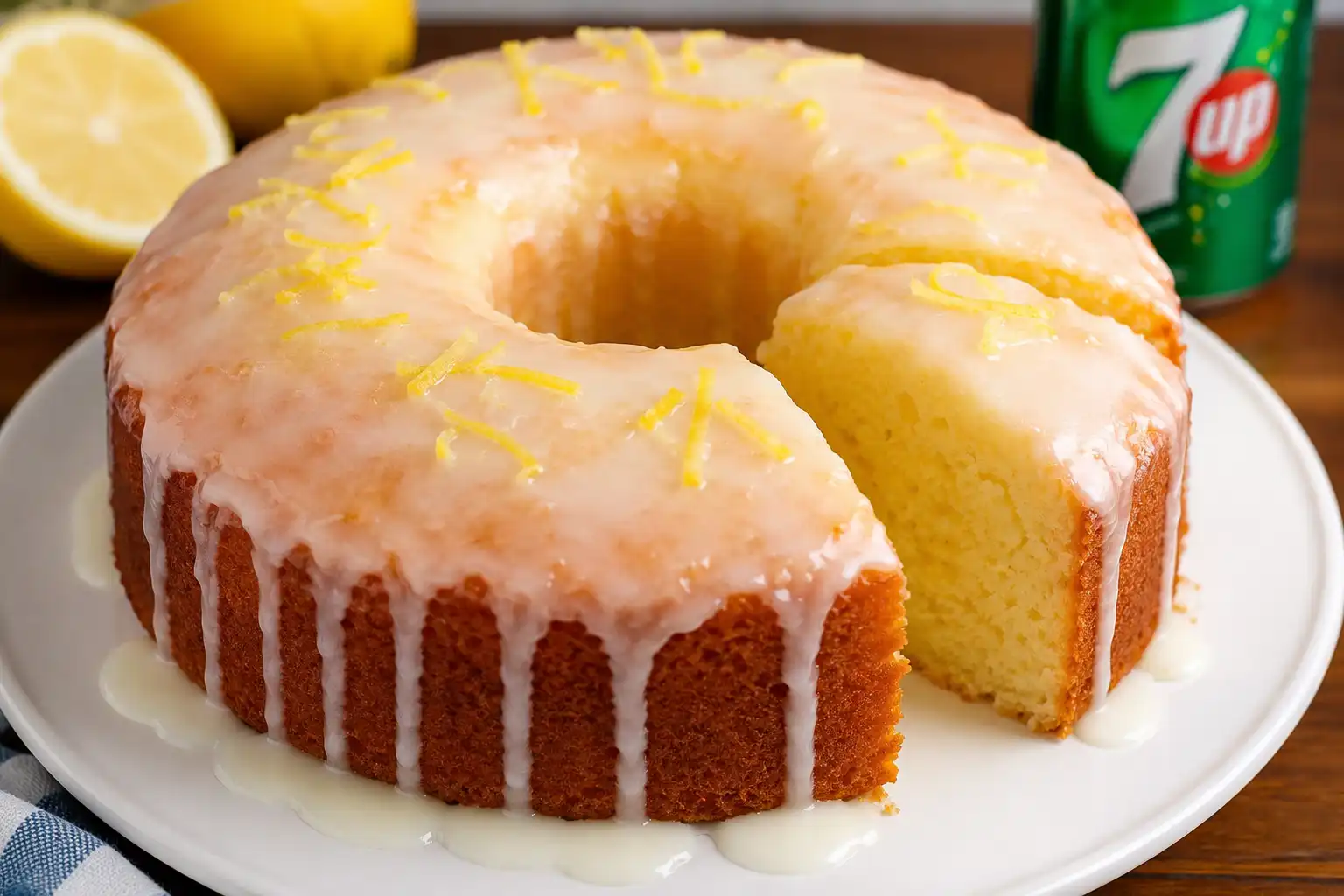
Easy Lemon 7UP Cake: A Bright, Effortless Classic
There’s something magical about a cake that bakes up moist, tangy, and impossibly light—without requiring hours of prep, multiple bowls, or a degree in baking science. Enter the Easy Lemon 7UP Cake: a beloved American dessert that rose to prominence in the mid-20th century as a brilliant fusion of pantry staples, clever ingenuity, and irresistible flavor chemistry. This cake isn’t just easy—it’s *effortlessly joyful*, delivering restaurant-quality brightness and tenderness with the simplicity of a one-bowl stir-and-bake method. Whether you’re a beginner baker seeking confidence, a busy parent needing a stress-free treat, or a seasoned cook craving nostalgic comfort with a citrusy twist, this recipe delivers every time—no fancy tools, no obscure ingredients, and absolutely no compromise on taste.
The History: From Mid-Century Ingenuity to Modern Staple
The Lemon 7UP Cake is a quintessential example of “soda cake” culture—a uniquely American baking tradition that flourished in the 1950s and 60s, when carbonated soft drinks were enthusiastically embraced not only as refreshments but as transformative baking agents. At its core, the trend emerged from practicality: housewives across the U.S. discovered that sodas like 7UP®, Sprite®, and even Coca-Cola® could replace traditional leaveners (like baking powder or soda), add subtle sweetness, enhance moisture, and lend a delicate, effervescent lift to batters. 7UP®, with its crisp lemon-lime profile and neutral sweetness (unlike cola’s caramel depth), proved especially ideal for citrus-forward desserts.
Early versions appeared in community cookbooks, newspaper food sections, and promotional pamphlets distributed by beverage companies—7UP® itself published dozens of “7UP Baking Recipes” booklets between 1958 and 1972, featuring everything from chiffon cakes to meatloaf glazes. The Lemon 7UP Cake stood out for its dazzling simplicity: often baked in a simple 9×13-inch pan, it required no creaming, no egg separation, and frequently used boxed cake mix as a base—making it accessible during an era of rapid suburban expansion and evolving kitchen technology. Over decades, home bakers refined it further—swapping mixes for scratch versions, adding real lemon zest and juice, and layering it with glossy glazes—yet its spirit remains unchanged: joyful, resourceful, and unapologetically refreshing.
Ingredients Breakdown: Why Each Component Matters
This recipe shines because every ingredient pulls double—or triple—duty. Understanding their roles helps you adapt with confidence and troubleshoot like a pro:
- All-purpose flour: Provides essential structure. Its moderate protein content (10–12%) ensures tenderness without toughness. Sifting or whisking before measuring prevents compaction and guarantees even distribution.
- Granulated sugar: Sweetens, tenderizes (by interfering with gluten formation), and contributes to browning and crust development. The amount balances tartness while preserving the cake’s light crumb.
- Baking powder & baking soda: A dynamic duo. Baking powder provides most of the lift, while baking soda reacts instantly with the acidity in lemon juice and 7UP® to create extra air bubbles—enhancing rise and giving the cake its signature airy-yet-moist texture.
- Salt: Not just for seasoning—it sharpens all other flavors and controls yeast-like activity in leaveners for consistent rise.
- Lemon zest: Packed with aromatic citrus oils, zest delivers intense, fragrant top notes that perfume the entire cake. Always zest before juicing, and use a microplane for fine, potent shreds—avoid the bitter white pith.
- Fresh lemon juice: Adds bright acidity that cuts through sweetness, activates baking soda, and contributes subtle fruity complexity. Bottled juice lacks volatile oils and can taste flat or overly sharp; fresh is non-negotiable for best results.
- 7UP® (or generic lemon-lime soda): The star catalyst. Its carbonation creates microscopic air pockets as it warms in the oven—yielding exceptional lightness. Its mild sweetness reduces added sugar needs, while citric acid boosts tang and aids leavening. Chilled soda works best to preserve bubbles longer into mixing.
- Vegetable oil (or neutral oil): Ensures consistent moisture and tenderness—unlike butter, it remains liquid at room temperature, coating flour proteins more thoroughly and inhibiting gluten development. Canola, grapeseed, or avocado oil all work beautifully.
- Eggs: Bind ingredients, add richness and structure, and contribute to volume via trapped air when beaten (even minimally). Room-temperature eggs incorporate more evenly and yield a smoother batter.
- Vanilla extract: An aromatic bridge—rounding out sharp lemon notes and adding warm, creamy depth without overpowering.
Step-by-Step Recipe: Foolproof Success, Every Time
- Preheat & Prep: Position oven rack in center position. Preheat oven to 350°F (175°C). Generously grease and flour a 9×13-inch metal baking pan (or line with parchment paper for foolproof release). For extra insurance against sticking, use non-stick baking spray with flour.
- Zest & Juice: Finely zest 2 large lemons (yielding ~2 tbsp zest), then juice them to get exactly ¼ cup (60ml) of fresh juice. Strain out any pulp or seeds. Set both aside.
- Dry Whisk: In a large bowl, whisk together 2½ cups (315g) all-purpose flour, 2 cups (400g) granulated sugar, 1 tablespoon baking powder, ½ teaspoon baking soda, and 1 teaspoon fine sea salt until fully combined and lump-free. Whisking dry ingredients first ensures even leavener distribution—critical for uniform rise and no bitter pockets.
- Wet Mix: Add to the dry mixture: ½ cup (120ml) fresh lemon juice, 1 cup (240ml) chilled 7UP®, ¾ cup (180ml) neutral vegetable oil, 4 large room-temperature eggs, 2 tablespoons lemon zest, and 2 teaspoons pure vanilla extract.
- Combine Gently: Using a silicone spatula or wooden spoon (not an electric mixer—overmixing develops gluten and causes toughness), fold the wet and dry ingredients together just until no dry streaks remain—about 45–60 seconds. Batter will be thin and slightly bubbly. Do *not* overmix; a few small lumps are perfectly fine and preferable to a dense cake.
- Pour & Smooth: Immediately pour batter into prepared pan. Tilt and gently tap pan on counter 2–3 times to settle batter and release large air pockets. Use an offset spatula to smooth the top evenly.
- Bake with Confidence: Bake for 30–35 minutes, rotating pan halfway through for even browning. Cake is done when a toothpick inserted into the center comes out clean or with *moist* crumbs (not wet batter), and edges pull slightly away from pan. Top should be golden and spring back lightly when touched.
- Cool Strategically: Let cake cool in pan on a wire rack for 15 minutes—this allows structure to set. Then run a thin knife around edges and invert onto rack. Carefully flip right-side-up and let cool completely (at least 1 hour) before glazing. Cooling fully prevents glaze from melting or soaking in unevenly.
Pro Tips for Perfect Results—Every Single Time
- Measure flour correctly: Spoon flour into measuring cup and level with a knife—don’t scoop! Scooping packs flour, leading to dry, dense cake (up to 25% more flour!). For precision, weigh it: 2½ cups = 315g.
- Chill the 7UP®: Cold soda retains carbonation longer during mixing, maximizing lift. Don’t use flat or room-temp soda—it won’t deliver the same airy crumb.
- No mixer needed—really: Electric mixers introduce too much air and develop gluten too quickly. A spatula + gentle fold = tender, velvety texture.
- Don’t open the oven early: Resist checking before 25 minutes. Sudden temperature drops can cause collapse, especially in delicate, soda-leavened batters.
- Test doneness wisely: Toothpick test is key—but remember: moist crumbs = perfect. Wet batter = underbaked. Dry toothpick = possibly overbaked (risking dryness).
- Glaze timing is everything: Apply lemon glaze only to *completely cool* cake. Warm cake absorbs glaze, resulting in sogginess instead of shine.
- Storage secret: Keep unfrosted cake covered at room temperature for up to 3 days, or refrigerate for up to 1 week. Glazed cake stays freshest refrigerated (cover loosely with plastic)—bring to room temp 30 minutes before serving for best texture.
Variations and Customizations: Make It Your Own
This recipe is a canvas—not a cage. Here’s how to personalize it while honoring its easy, vibrant soul:
- Lemon Blueberry Burst: Gently fold 1½ cups fresh or frozen (unthawed) blueberries into batter just before pouring. Toss berries in 1 tsp flour first to prevent sinking. Add ½ tsp almond extract with vanilla for harmony.
- Coconut-Lime Twist: Replace ½ cup 7UP® with coconut water, add ½ cup unsweetened shredded coconut to dry ingredients, and swap lemon zest/juice for lime. Top with toasted coconut flakes.
- Buttermilk Upgrade: Substitute ½ cup 7UP® with buttermilk for richer tang and ultra-tender crumb—reduce baking soda to ¼ tsp to balance acidity.
- Gluten-Free Friendly: Use a 1:1 gluten-free flour blend (like King Arthur or Bob’s Red Mill) *with xanthan gum included*. Add 1 extra tablespoon 7UP® to compensate for absorbency differences. Let batter rest 10 minutes before baking.
- Vegan Version: Replace eggs with 4 flax eggs (4 tbsp ground flaxseed + 10 tbsp water, rested 10 min); use vegan-certified 7UP® (check label—some contain animal-derived additives) and swap oil for refined coconut oil. Increase baking powder to 1¼ tbsp for lift.
- Layered Elegance: Bake in three 8-inch round pans (reduce bake time to 22–26 min). Fill and frost with Lemon Swiss Meringue Buttercream or Cream Cheese Frosting. Garnish with candied lemon slices.
- Mini-Muffin Magic: Portion into lined muffin tins (fill ⅔ full). Bake at 350°F for 15–18 minutes. Perfect for parties, lunchboxes, or portion control.
Health Considerations and Nutritional Value: Balanced Enjoyment
While undeniably indulgent, this Lemon 7UP Cake can fit thoughtfully into a balanced lifestyle—especially when approached with awareness and small, impactful tweaks:
Nutrition Snapshot (per standard 9×13-inch cake, ~24 servings):
Calories: ~230 | Total Fat: 8g (1.5g saturated) | Carbohydrates: 39g (26g sugars) | Protein: 3g | Sodium: 220mg | Fiber: 0.5g
- Sugar Awareness: The recipe uses 2 cups sugar—necessary for texture and shelf life—but you can reduce to 1¾ cups with minimal impact on moisture or rise. For natural alternatives, try coconut sugar (same volume, slightly lower glycemic index) or erythritol blends (follow package conversion ratios—note they may affect browning).
- Oil Options: Vegetable oil is neutral and reliable, but heart-healthy swaps include avocado oil (high smoke point, mild flavor) or light olive oil (adds subtle fruitiness—best with extra lemon zest).
- Boosting Nutrition: Add ¼ cup poppy seeds for crunch, omega-3s, and calcium—or fold in ½ cup finely grated raw zucchini (squeezed dry) for moisture, fiber, and vitamins without altering flavor.
- Portion Mindfulness: Serve modest slices (2″x2″) alongside Greek yogurt or fresh berries to add protein and antioxidants—slowing sugar absorption and enhancing satiety.
- Dietary Notes: Naturally nut-free and soy-free (verify 7UP® label if strict allergen avoidance is needed). Easily adaptable for vegan or GF diets (see Variations). Contains gluten and eggs—clearly label for guests with sensitivities.
Ingredients
- 2½ cups (315g) all-purpose flour, spooned & leveled (or weighed)
- 2 cups (400g) granulated sugar
- 1 tablespoon baking powder
- ½ teaspoon baking soda
- 1 teaspoon fine sea salt
- ¼ cup (60ml) fresh lemon juice (from ~2 large lemons)
- 1 cup (240ml) chilled 7UP® (or lemon-lime soda)
- ¾ cup (180ml) neutral vegetable oil (canola, grapeseed, or avocado)
- 4 large eggs, room temperature
- 2 tablespoons finely grated lemon zest (from ~2 lemons)
- 2 teaspoons pure vanilla extract
Directions
- Preheat oven to 350°F (175°C). Generously grease and flour a 9×13-inch metal baking pan, or line with parchment paper leaving 2-inch overhangs on two sides.
- Zest lemons, then juice them. Measure ¼ cup juice and 2 tbsp zest; set aside.
- In a large bowl, whisk together flour, sugar, baking powder, baking soda, and salt until uniform and aerated—about 45 seconds.
- Add lemon juice, chilled 7UP®, oil, eggs, lemon zest, and vanilla to dry ingredients.
- Fold gently with a silicone spatula just until combined and no dry patches remain—do not overmix. Batter will be fluid and slightly frothy.
- Pour into prepared pan. Tap pan firmly on counter twice to release air bubbles. Smooth top with offset spatula.
- Bake 30–35 minutes, rotating pan halfway, until golden brown and a toothpick inserted in center comes out clean or with moist crumbs.
- Cool in pan on wire rack 15 minutes. Run thin knife around edges, invert onto rack, then flip right-side-up. Cool completely (≈1 hour) before glazing.
Frequently Asked Questions (FAQ)
- Can I use Sprite instead of 7UP®?
- Yes! Sprite is nearly identical in composition and flavor profile. Avoid diet or zero-sugar versions—they contain different acids and sweeteners that negatively impact rise and taste.
- Why did my cake sink in the middle?
- Most common causes: opening oven too early, underbaking (toothpick showed wet batter), overmixing batter, or expired leaveners. Always test with a toothpick at minimum bake time—and verify baking powder/soda freshness (they lose potency after 6–12 months).
- Can I make this ahead of time?
- Absolutely. Bake cake up to 2 days ahead—cool completely, wrap tightly in plastic, and store at room temperature. Glaze the day of serving. Frosted cake keeps refrigerated up to 5 days.
- Is there a way to make it less sweet?
- Reduce sugar to 1¾ cups successfully. For deeper flavor balance, increase lemon zest to 3 tbsp and add 1 tsp lemon extract along with vanilla.
- Can I freeze this cake?
- Yes! Cool completely, wrap *very* tightly in plastic wrap, then in foil. Freeze up to 3 months. Thaw overnight in fridge, then bring to room temperature before glazing.
- What if I don’t have lemon zest?
- Zest adds irreplaceable aroma—but if unavailable, add 1 extra teaspoon lemon extract + 1 tbsp extra juice. Texture will be fine, but fragrance will be milder.
- Can I bake this in a bundt pan?
- Yes! Use a 10–12 cup capacity pan. Grease *thoroughly*, including all crevices. Bake 45–55 minutes—test deeply near the center tube. Cool in pan 20 minutes before inverting.
- My glaze soaked in—is that normal?
- No—that means cake was still warm. Glaze must go on *completely cool* cake. If it soaks, make a thicker second batch (less milk, more powdered sugar) and drizzle sparingly.
Summary
The Easy Lemon 7UP Cake is a timeless, brilliantly simple dessert where sparkling citrus soda transforms humble pantry staples into a luminous, tender, and irresistibly bright celebration cake—no mixer, no fuss, no fail.
Baked to golden perfection in under an hour and crowned with a zingy lemon glaze, it delivers nostalgic joy, modern versatility, and the kind of effortless elegance that makes everyday moments feel like dessert-worthy occasions.