Introduction
In the fast-paced world of modern cooking, few dishes offer the perfect balance of speed, nutrition, and explosive flavor quite like a stir fry. The Easy Chicken Zucchini Stir Fry stands out as a quintessential weeknight hero, designed for home cooks who refuse to compromise on taste despite a tight schedule. This dish marries the lean, versatile protein of chicken with the mild, refreshing crunch of fresh zucchini, all coated in a savory, umami-rich sauce that clings to every bite. Whether you are looking to reduce your carbohydrate intake, increase your vegetable consumption, or simply need a meal on the table in under thirty minutes, this recipe delivers consistent results every time.
Beyond its convenience, this stir fry represents a harmonious blend of textures and temperatures. The chicken is seared to golden perfection, ensuring a juicy interior, while the zucchini retains a slight bite, preventing the dish from becoming mushy. The sauce, a complex interplay of soy sauce, aromatics, and subtle sweetness, ties the components together without overpowering the natural flavors of the ingredients. It is a meal that appeals to children and adults alike, adaptable to various dietary restrictions, and forgiving enough for beginner cooks while satisfying enough for culinary enthusiasts. By mastering this recipe, you gain a foundational skill set that can be applied to countless other stir-fry variations, making it a valuable addition to your culinary repertoire.
The History
To truly appreciate the Easy Chicken Zucchini Stir Fry, one must understand the rich historical tapestry from which it emerges. The technique of stir-frying, known as “chao” in Chinese, dates back thousands of years to the Han Dynasty. It was born out of necessity and resourcefulness; fuel was scarce, and cooking food quickly in a wok over high heat preserved nutrients and saved energy. The wok, with its rounded bottom and high sides, was engineered to distribute heat evenly and allow cooks to toss ingredients continuously, ensuring nothing burned while everything cooked uniformly. This ancient method traveled across continents, evolving as it encountered new ingredients and cultural preferences.
Interestingly, the zucchini itself is a relative newcomer to the global culinary stage compared to the wok. Originating in the Americas, specifically northern Mexico, zucchini was brought to Europe by explorers in the 16th century but did not gain widespread popularity until the 19th century in Italy. Its integration into Asian-inspired stir-fry dishes is a testament to the fusion cuisine movement of the 20th century. As immigration brought Asian cooking techniques to the West, and Western vegetables became available globally, cooks began experimenting. The zucchini’s high water content and neutral flavor profile made it an ideal candidate for the high-heat environment of the wok, absorbing sauces beautifully while providing a low-calorie bulk to the dish. This recipe is therefore not just a meal, but a historical convergence of ancient Chinese cooking technology and New World agriculture.
Ingredients Breakdown
Understanding the role of each component in this recipe is crucial for mastering the flavor profile and texture. We do not simply throw ingredients together; each item serves a specific chemical or culinary purpose.
The Protein: Chicken
We typically use boneless, skinless chicken breasts or thighs. Breasts offer a leaner profile with a mild flavor that acts as a canvas for the sauce. Thighs, however, contain more fat and connective tissue, resulting in a juicier, more forgiving meat that is less likely to dry out during high-heat cooking. For this recipe, cutting the chicken into uniform bite-sized pieces is essential. This increases the surface area, allowing for better searing and faster cooking, which ensures the meat remains tender rather than becoming tough and rubbery.
The Vegetable: Zucchini
Zucchini is composed of over 90% water. The challenge in cooking it is to evaporate enough moisture to concentrate the flavor without turning the vegetable into mush. Selecting firm, glossy zucchini with unblemished skin is key. We leave the skin on not only for the vibrant green color it adds to the plate but also for the fiber and nutrients located just beneath the surface. Slicing them into half-moons or batons ensures they cook at the same rate as the chicken.
The Aromatics: Garlic and Ginger
No stir fry is complete without the foundational duo of garlic and ginger. Garlic provides a pungent, savory depth that mellows into sweetness when cooked. Ginger adds a spicy, warm kick that cuts through the richness of the oil and soy sauce. Fresh is always superior to powdered here; the volatile oils in fresh aromatics are released upon hitting the hot oil, infusing the entire dish with fragrance.
The Sauce Components
The sauce is the soul of the stir fry. Soy sauce provides saltiness and umami through fermented soybeans. Oyster sauce (or a vegetarian alternative) adds a viscous texture and a deep, savory sweetness. A touch of sesame oil introduces a nutty aroma that is heat-sensitive, which is why it is often added at the end. Cornstarch is used as a slurry to thicken the sauce, allowing it to coat the ingredients rather than pooling at the bottom of the pan. Finally, a sweetener like brown sugar or honey balances the sodium and acidity.
Step-by-Step Recipe
Executing this dish requires attention to timing and heat management. Below is a detailed narrative of the cooking process to guide you through the technique.
Phase 1: Preparation and Mise en Place
Stir frying happens quickly, so there is no time to chop vegetables once the pan is hot. Begin by washing and drying your zucchini thoroughly; excess water will steam the vegetables instead of frying them. Slice the chicken against the grain to shorten the muscle fibers, ensuring tenderness. Marinate the chicken briefly with a little soy sauce and cornstarch; this technique, known as “velveting,” protects the protein from the intense heat. Prepare your sauce in a small bowl beforehand so you can pour it in one go. Have your aromatics minced and ready near the stove.
Phase 2: Searing the Protein
Heat your wok or large skillet over high heat until it is smoking slightly. Add a high-smoke-point oil like canola or avocado oil. Add the chicken in a single layer. Do not overcrowd the pan, or the temperature will drop, causing the chicken to boil in its own juices. Let it sear undisturbed for a minute to develop a golden crust, then toss. Once the chicken is cooked through but not dried out, remove it from the pan and set it aside on a plate. This prevents overcooking while you tend to the vegetables.
Phase 3: Cooking the Vegetables
In the same pan, add a bit more oil if necessary. Toss in the garlic and ginger, stirring constantly for about thirty seconds until fragrant but not browned. Burnt garlic tastes bitter and can ruin the dish. Add the zucchini immediately. Stir fry on high heat. The goal is to char the edges slightly while keeping the center crisp-tender. This usually takes about 3 to 4 minutes. If the pan looks too dry, add a splash of water to create a burst of steam that helps cook the interior of the zucchini.
Phase 4: Combining and Saucing
Return the cooked chicken to the pan with the zucchini. Give your sauce mixture a quick stir (as cornstarch settles) and pour it over the ingredients. Toss everything vigorously. The heat will activate the cornstarch almost immediately, thickening the liquid into a glossy glaze that coats every piece of chicken and vegetable. Once the sauce bubbles and thickens, remove the pan from the heat immediately to prevent the sauce from becoming too gloopy.
Tips
To elevate this dish from good to restaurant-quality, consider these professional tips and tricks.
- Heat Control is King: Ensure your pan is genuinely hot before adding ingredients. You should hear a loud sizzle when the food hits the oil. If it doesn’t sizzle, the pan is too cold, and you will end up with steamed food.
- Cut Uniformly: Spend time cutting your chicken and zucchini into pieces of equal size. This ensures that everything finishes cooking at the exact same moment, preventing some pieces from being raw while others are overcooked.
- Don’t Skip the Rest: Let the chicken rest for a minute after searing before cutting or returning it to the pan. This allows the juices to redistribute throughout the meat.
- Prep the Sauce Early: Mixing the sauce beforehand prevents the common mistake of burning the garlic while you measure out soy sauce. Have everything in a bowl ready to pour.
- Use High Smoke Point Oils: Avoid extra virgin olive oil or butter, as they will burn at the high temperatures required for stir frying. Use peanut, canola, vegetable, or avocado oil.
- Finish with Freshness: A squeeze of fresh lime juice or a sprinkle of chopped green onions right before serving can brighten the flavors and add a fresh contrast to the savory sauce.
- Avoid Overcrowding: If you are doubling the recipe, cook in batches. Overcrowding the pan lowers the temperature and leads to soggy, unappealing textures.
Variations and Customizations
One of the greatest strengths of this recipe is its flexibility. You can adapt it to suit dietary needs, flavor preferences, or whatever ingredients you have in your pantry.
Dietary Adjustments
For a Gluten-Free version, simply substitute regular soy sauce with Tamari or Coconut Aminos. Ensure your oyster sauce is also certified gluten-free, or use a mushroom-based stir-fry sauce. For a Keto or Low-Carb diet, this recipe is naturally compliant, but ensure you use a keto-friendly sweetener like erythritol instead of brown sugar or honey in the sauce. To make it Dairy-Free, this recipe is already safe, as traditional stir fry does not utilize dairy products.
Protein Swaps
While chicken is the standard, you can easily swap it for thinly sliced beef flank steak, pork tenderloin, or large shrimp. Tofu is an excellent plant-based alternative; press the tofu firmly to remove water and fry it until crispy before adding the sauce. For a richer flavor, try using duck breast slices.
Vegetable Additions
Zucchini pairs well with a myriad of other vegetables. Consider adding red bell peppers for sweetness and color, snap peas for extra crunch, or baby corn for texture. Broccoli florets work well but may need a brief blanch before stir-frying to ensure they are tender. Mushrooms, such as shiitake or button, will add an earthy umami depth that complements the soy sauce.
Flavor Profiles
Spice lovers can add dried red chili flakes, fresh jalapeños, or a spoonful of Sambal Oelek or Sriracha to the sauce. For a nutty variation, toss in roasted cashews or peanuts at the very end of cooking. To create a teriyaki twist, increase the sweetness in the sauce and add a bit of mirin. For a lemon-pepper vibe, add fresh cracked black pepper and lemon zest during the final toss.
Health Considerations and Nutritional Value
This Easy Chicken Zucchini Stir Fry is not only delicious but also a nutrient-dense meal that supports a balanced lifestyle.
Macronutrient Balance
The chicken provides a high source of lean protein, essential for muscle repair and satiety. Depending on the cut, a serving can provide between 25 to 30 grams of protein. The zucchini contributes minimal calories while adding volume to the meal, making it excellent for weight management. The sauce does contain sodium and sugars, but these can be controlled by adjusting the ratios of soy sauce and sweetener.
Vitamins and Minerals
Zucchini is rich in Vitamin C, which supports the immune system, and Vitamin A, which is vital for eye health. It also contains potassium, which helps regulate blood pressure. The garlic and ginger offer anti-inflammatory properties and antioxidants. Ginger, in particular, is known to aid digestion and reduce nausea.
Caloric Considerations
Compared to takeout stir fry, this homemade version is significantly lower in calories and unhealthy fats. Restaurant versions often use excessive oil and sugar. By cooking at home, you control the amount of oil used for searing and can limit the sugar in the sauce. A typical serving of this homemade recipe ranges between 300 to 400 calories, depending on portion size and oil usage, making it a light yet filling dinner option.
Sodium Awareness
The primary health concern in stir fry is sodium content due to soy sauce. To mitigate this, use low-sodium soy sauce. You can also bulk up the dish with more vegetables like broccoli or cauliflower rice to dilute the sodium concentration per bite while increasing fiber intake.
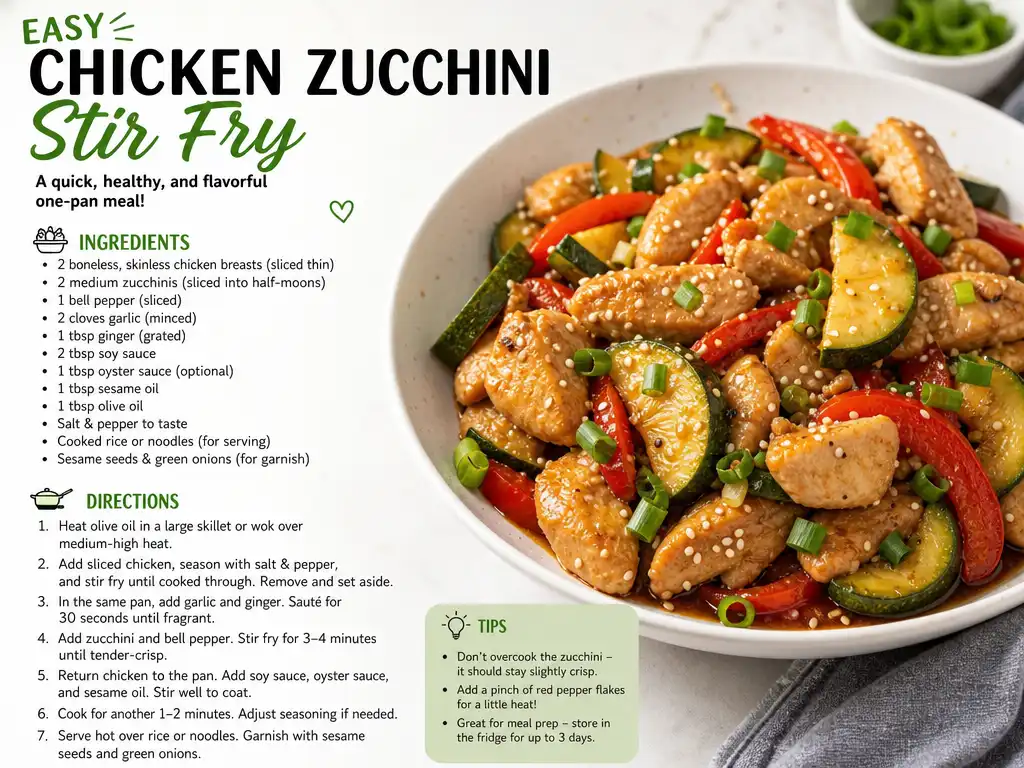
Ingredients
Below is the precise list of ingredients required to create this dish. Ensure you measure accurately for the best balance of flavors.
- Chicken: 1.5 lbs (approx. 700g) boneless, skinless chicken breasts or thighs, cut into bite-sized cubes.
- Zucchini: 3 medium-sized zucchini, washed and sliced into half-moons or batons.
- Oil: 2 tablespoons of high-heat cooking oil (canola, vegetable, or avocado oil).
- Garlic: 4 cloves, minced finely.
- Ginger: 1 tablespoon of fresh ginger, grated or minced.
- Soy Sauce: 3 tablespoons (use low-sodium if preferred).
- Oyster Sauce: 2 tablespoons (use vegetarian mushroom sauce for vegetarian option).
- Sesame Oil: 1 teaspoon (toasted).
- Sweetener: 1 tablespoon brown sugar or honey.
- Cornstarch: 1 tablespoon for the marinade, 1 tablespoon for the sauce slurry.
- Water or Chicken Broth: 1/4 cup for the sauce.
- Black Pepper: To taste, freshly cracked.
- Green Onions: 2 stalks, sliced for garnish (optional).
- Sesame Seeds: For garnish (optional).
Directions
Follow these numbered steps to execute the recipe perfectly.
- Marinate the Chicken: In a medium bowl, combine the cut chicken pieces with 1 tablespoon of soy sauce and 1 tablespoon of cornstarch. Mix well until the chicken is evenly coated. Let it sit for at least 10 minutes while you prepare the other ingredients.
- Prepare the Sauce: In a small bowl, whisk together the remaining 2 tablespoons of soy sauce, oyster sauce, sesame oil, brown sugar, 1 tablespoon of cornstarch, and water or chicken broth. Ensure the cornstarch is fully dissolved with no lumps. Set aside.
- Prep the Vegetables: Wash the zucchini and trim the ends. Slice them into uniform pieces. Mince the garlic and grate the ginger. Slice the green onions for garnish.
- Heat the Pan: Place a large wok or skillet over high heat. Add 1 tablespoon of cooking oil. Wait until the oil shimmers and is very hot.
- Cook the Chicken: Add the chicken pieces to the pan in a single layer. Cook without stirring for 2 minutes to get a sear. Then stir-fry for another 3-4 minutes until golden and cooked through. Remove chicken from the pan and set aside on a plate.
- Sauté Aromatics: Add the remaining 1 tablespoon of oil to the pan. Add the garlic and ginger. Stir constantly for 30 seconds until fragrant. Be careful not to burn them.
- Stir Fry Zucchini: Add the zucchini to the pan. Stir-fry on high heat for 3-4 minutes until the zucchini is tender-crisp and slightly charred at the edges.
- Combine and Sauce: Return the cooked chicken to the pan with the zucchini. Give the sauce mixture a quick stir and pour it over the ingredients.
- Thicken: Toss everything together continuously. The sauce will bubble and thicken within 1-2 minutes. Once coated and glossy, remove from heat.
- Serve: Garnish with sliced green onions and sesame seeds. Serve immediately over steamed rice, cauliflower rice, or noodles.
FAQ
Here are answers to some of the most common questions regarding this recipe.
Can I freeze the leftovers?
Yes, you can freeze this dish, but the texture of the zucchini may become softer upon reheating due to its high water content. Store in an airtight container for up to 3 months. Thaw in the refrigerator overnight before reheating.
How do I prevent the zucchini from getting soggy?
The key is high heat and not overcooking. Do not cover the pan with a lid, as this traps steam. Also, ensure you salt the zucchini only in the sauce stage, as salting too early draws out moisture.
What can I serve this with?
Steamed jasmine rice or brown rice is the traditional choice. For a lower carb option, serve over cauliflower rice, quinoa, or zucchini noodles. It also pairs well with egg noodles or rice vermicelli.
Can I make this ahead of time?
Stir fry is best served fresh. However, you can prep the ingredients (chop veggies, mix sauce, cut chicken) earlier in the day and store them separately in the fridge. Cook just before serving for the best texture.
Is this recipe spicy?
As written, the recipe is mild and family-friendly. To add heat, include red pepper flakes in the sauce or add fresh chili peppers when sautéing the garlic and ginger.
What if I don’t have oyster sauce?
You can substitute oyster sauce with hoisin sauce for a sweeter profile, or use additional soy sauce mixed with a pinch of sugar. Vegetarian mushroom stir-fry sauce is also an excellent alternative.
How do I know when the chicken is done?
The chicken should be opaque throughout with no pink remaining. The internal temperature should reach 165°F (74°C). If you cut the pieces uniformly, they will cook evenly in the time specified.
Summary
This Easy Chicken Zucchini Stir Fry offers a perfect weeknight solution combining lean protein and fresh vegetables in a savory, umami-rich sauce. Ready in under 30 minutes, it is a healthy, customizable meal that balances speed with restaurant-quality flavor.