Oven-Baked Salmon: A Healthy, Flavorful, and Foolproof Recipe
The History of Baked Salmon
Salmon has been a dietary staple for centuries, especially among indigenous populations in the Pacific Northwest of North America and in Nordic countries like Norway, Sweden, and Iceland. These regions have long relied on salmon not only for its rich flavor but also for its abundance during seasonal runs. Traditionally, salmon was smoked, grilled over open fires, or preserved through salting and drying. However, with the advent of modern ovens in the 20th century, baking became a popular method to prepare salmon—especially in home kitchens.
Baking salmon in the oven gained popularity due to its simplicity, ability to preserve moisture, and ease of seasoning. Unlike grilling, which requires constant attention, oven-baking allows for consistent, hands-off cooking. Over time, culinary traditions from around the world influenced how salmon was seasoned and prepared. Mediterranean herbs, Asian soy-ginger glazes, and American citrus-herb combinations all found their way into baked salmon recipes, making it a globally beloved dish. Today, oven-baked salmon is celebrated not just for its taste but also for its health benefits, making it a centerpiece in heart-healthy and protein-rich diets.
Ingredients Breakdown
The magic of oven-baked salmon lies in the quality and balance of its ingredients. Each component plays a vital role in enhancing flavor, texture, and nutritional value.
- Salmon Fillets: The star of the dish. Opt for wild-caught salmon when possible, as it tends to have a richer flavor and higher levels of beneficial omega-3 fatty acids than farmed salmon. Skin-on fillets are recommended for baking, as the skin helps protect the delicate flesh and keeps it moist.
- Olive Oil: A heart-healthy fat that helps conduct heat evenly and prevents the fish from drying out. It also acts as a carrier for herbs and seasonings.
- Lemon: Fresh lemon juice and zest brighten the dish, cutting through the richness of the salmon. Lemon also contains citric acid, which gently “cooks” the surface of the fish and enhances flavor.
- Garlic: Adds depth and aromatic complexity. Freshly minced garlic is preferred over powdered for optimal taste.
- Fresh Herbs: Dill, parsley, thyme, or rosemary are commonly used. Dill pairs exceptionally well with salmon, offering a slightly sweet, anise-like flavor that complements the fish’s natural richness.
- Salt and Black Pepper: Essential for seasoning. Sea salt or kosher salt is ideal for even distribution and clean taste.
- Optional Additions: Honey or maple syrup (for a touch of sweetness), Dijon mustard (for tanginess), capers (for brininess), or red pepper flakes (for heat) can be incorporated to customize the flavor profile.
Step-by-Step Recipe
- Preheat the Oven: Set your oven to 375°F (190°C). This temperature ensures even cooking without over-drying the salmon.
- Prepare the Baking Sheet: Line a rimmed baking sheet with parchment paper or aluminum foil for easy cleanup. Lightly grease the surface with olive oil or non-stick spray to prevent sticking.
- Season the Salmon: Pat the salmon fillets dry with paper towels—this helps the seasoning adhere and promotes better browning. Place the fillets skin-side down on the prepared baking sheet.
- Create the Marinade: In a small bowl, whisk together 2 tablespoons of olive oil, the juice of half a lemon, 1 teaspoon of lemon zest, 2 minced garlic cloves, 1 tablespoon of chopped fresh dill, ½ teaspoon of sea salt, and freshly ground black pepper to taste.
- Coat the Fillets: Brush the marinade generously over the top and sides of each salmon fillet. For deeper flavor, let the salmon marinate at room temperature for 15–20 minutes (or refrigerate for up to 1 hour).
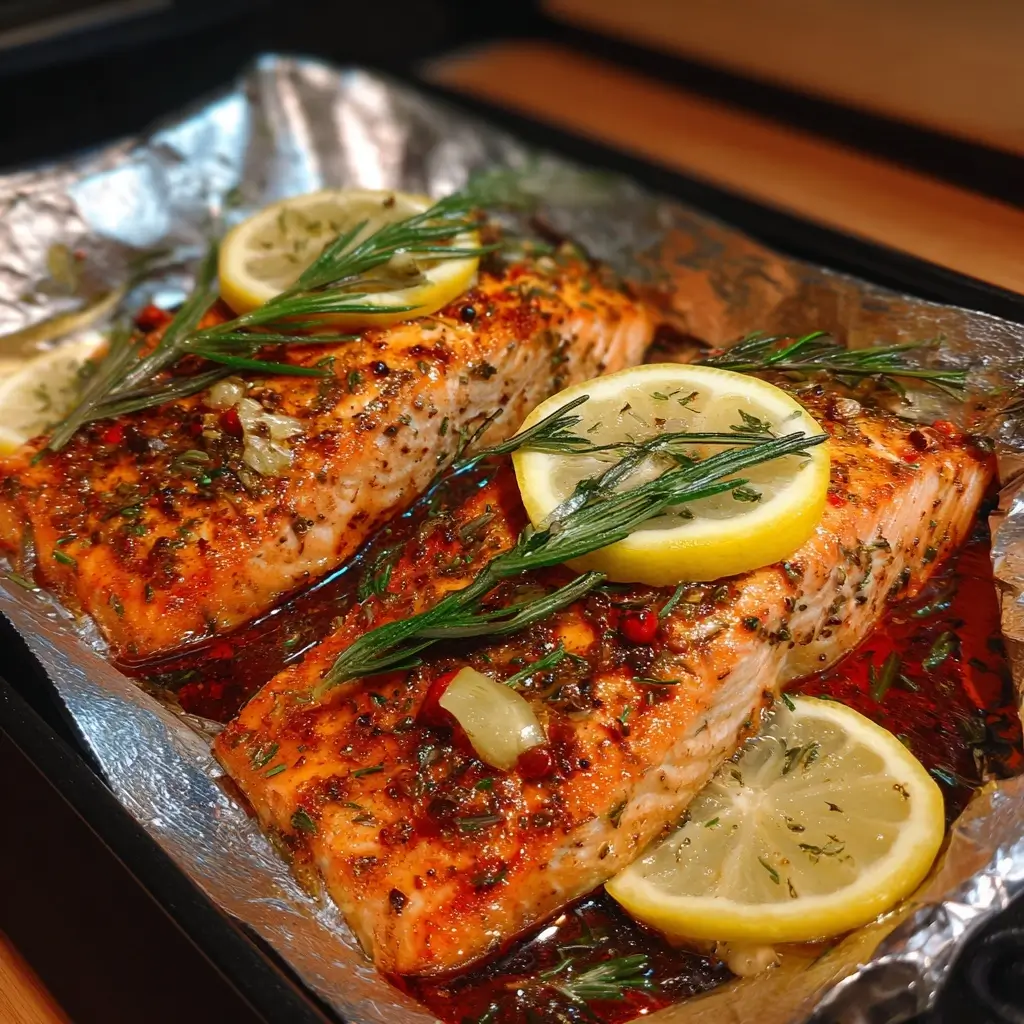
- Add Aromatics (Optional): Place lemon slices, whole garlic cloves, or fresh herb sprigs on top of or around the fillets for added aroma and visual appeal.
- Bake the Salmon: Place the baking sheet in the center rack of the preheated oven. Bake for 12–15 minutes, depending on the thickness of the fillets. Thicker cuts may require 18–20 minutes.
- Check for Doneness: The salmon is ready when it flakes easily with a fork and reaches an internal temperature of 145°F (63°C) at the thickest part. The color should change from translucent to opaque pink.
- Rest and Serve: Remove from the oven and let rest for 3–5 minutes. This allows the juices to redistribute, ensuring a moist bite. Garnish with fresh herbs and additional lemon wedges before serving.
Tips for Perfect Oven-Baked Salmon
- Uniform Thickness: Choose fillets that are similarly sized and thick so they cook evenly. If one end is thinner, fold it under to create consistency.
- Don’t Overcook: Salmon continues to cook slightly after removal from the oven (carryover cooking). Pull it out just before it’s fully done to avoid dryness.
- Skin-On vs. Skin-Off: Cooking skin-on protects the flesh and makes flipping easier. If desired, the skin can be removed after baking—it typically separates easily when cooked properly.
- Use a Meat Thermometer: This is the most accurate way to ensure perfect doneness without guesswork.
- Room Temperature Start: Let the salmon sit at room temperature for 10–15 minutes before baking to promote even cooking.
- High Heat Option: For a more caramelized exterior, increase the oven temperature to 400°F (200°C) and reduce baking time to 10–12 minutes.
- Broil for Finish: For a golden-brown top, switch the oven to broil for the last 1–2 minutes, watching closely to prevent burning.
Variations and Customizations
Oven-baked salmon is incredibly versatile and can be adapted to suit different cuisines and preferences:
- Mediterranean Style: Top with cherry tomatoes, Kalamata olives, artichoke hearts, and crumbled feta. Drizzle with olive oil and sprinkle with oregano before baking.
- Asian-Inspired Glaze: Marinate in a mixture of soy sauce, grated ginger, honey, sesame oil, and a splash of rice vinegar. Garnish with green onions and toasted sesame seeds.
- Dill-Mustard Crust: Combine Dijon mustard, mayonnaise, fresh dill, and breadcrumbs for a creamy, crunchy topping. Spread over fillets before baking.
- Citrus-Herb Butter: Place pats of compound butter (butter mixed with lemon zest, herbs, and garlic) on top of the salmon just before serving—the heat will melt it into a luxurious sauce.
- Spicy Cajun: Rub fillets with Cajun seasoning, paprika, garlic powder, and cayenne for a bold, smoky kick.
- Honey-Garlic: Use a glaze of honey, soy sauce, minced garlic, and a dash of lime juice for a sweet-savory finish.
- With Vegetables: Arrange sliced zucchini, bell peppers, red onion, and asparagus around the salmon on the same pan for a complete sheet-pan meal.
Health Considerations and Nutritional Value
Salmon is widely recognized as one of the healthiest foods you can eat, and oven-baking preserves its nutrients without adding excess fats.
Nutritional Benefits:
- Omega-3 Fatty Acids: Essential for brain health, reducing inflammation, and supporting cardiovascular function. Salmon is one of the best dietary sources.
- High-Quality Protein: Supports muscle repair, satiety, and overall metabolic health. A 6-ounce serving provides about 34 grams of protein.
- Vitamin D: Crucial for immune function and bone health. Wild salmon contains significantly more vitamin D than farmed.
- B Vitamins: Especially B12 and niacin, which aid in energy metabolism and nervous system function.
- Selenium: An antioxidant mineral that supports thyroid health and DNA synthesis.
- Low in Saturated Fat: Especially when baked instead of fried, salmon is a lean source of healthy fats.
Considerations:
- Farmed vs. Wild: Farmed salmon may contain higher levels of contaminants like PCBs and antibiotics, though regulations have improved. Wild-caught Alaskan salmon is often considered the safest and most sustainable option.
- Mercury Levels: Salmon is low in mercury compared to other fish like tuna or swordfish, making it safe for regular consumption, including for pregnant women.
- Sodium Content: Be mindful of added salt, especially if using soy sauce or store-bought marinades. Use low-sodium versions when possible.
- Allergies: Fish is a common allergen. Always inform guests if serving salmon in a shared meal.
Ingredients
- 4 salmon fillets (about 6 ounces each), skin-on
- 2 tablespoons extra-virgin olive oil
- Juice of 1 lemon (about 3 tablespoons)
- 1 teaspoon lemon zest
- 2 cloves garlic, minced
- 1 tablespoon fresh dill, chopped (or 1 teaspoon dried dill)
- ½ teaspoon sea salt
- Freshly ground black pepper, to taste
- 2 lemons, thinly sliced (for garnish and roasting)
- Optional: 1 tablespoon honey, 1 teaspoon Dijon mustard, or 1 tablespoon capers
Directions
- Preheat oven to 375°F (190°C). Line a baking sheet with parchment paper or foil and lightly grease.
- Pat salmon fillets dry with paper towels and place skin-side down on the baking sheet.
- In a small bowl, whisk together olive oil, lemon juice, lemon zest, minced garlic, dill, salt, and pepper.
- Brush the mixture evenly over the salmon fillets. Marinate at room temperature for 15 minutes.
- Arrange lemon slices on top of or around the fillets.
- Bake for 12–15 minutes (or up to 18–20 minutes for thicker cuts) until the salmon flakes easily and reaches 145°F internally.
- Remove from oven, let rest 5 minutes, then serve warm with additional lemon wedges and fresh herbs.
FAQ
Q: Can I bake frozen salmon?
A: Yes, but it’s best to thaw it first in the refrigerator overnight for even cooking. If baking from frozen, add 5–10 minutes to the cooking time and cover with foil to prevent drying.
Q: How do I know when salmon is done?
A: It should flake easily with a fork and appear opaque throughout. An internal thermometer should read 145°F (63°C).
Q: Can I use skinless salmon?
A: Yes, but the fish may dry out more easily. Reduce baking time by 2–3 minutes and consider covering with foil.
Q: What sides go well with baked salmon?
A: Steamed vegetables, quinoa, roasted potatoes, wild rice, avocado salad, or a fresh arugula salad with vinaigrette.
Q: Can I make this ahead of time?
A: You can prep the marinade and coat the salmon a few hours in advance. Cook just before serving for best texture. Leftovers can be refrigerated and reheated gently.
Q: Is baked salmon keto-friendly?
A: Absolutely! Salmon is low in carbs and high in healthy fats, making it ideal for ketogenic and low-carb diets.
Summary
Oven-baked salmon is a nutritious, delicious, and effortless dish that brings restaurant-quality flavor to your home kitchen. Packed with omega-3s and protein, it’s perfect for quick weeknight dinners or elegant meals alike.