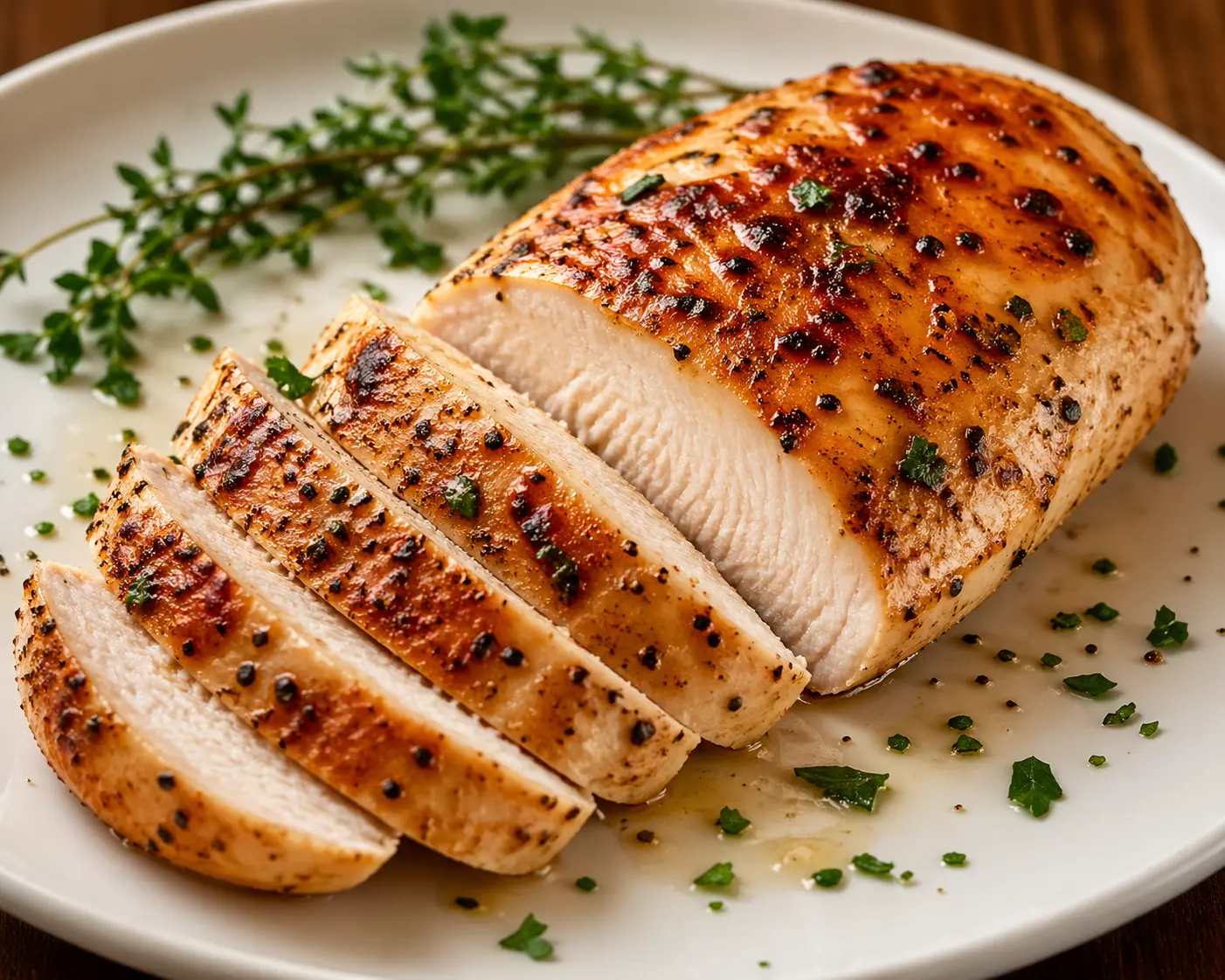
Cooking chicken breast sounds simple, but getting it consistently juicy, flavorful, and tender is where most people struggle. Overcooking leads to dryness, under-seasoning makes it bland, and uneven cooking ruins texture. This guide breaks down a reliable, repeatable method that works in any kitchen, along with the reasoning behind each step so you can adapt it confidently.
Why Chicken Breast Is Tricky
Chicken breast is lean, which means it lacks the fat that naturally keeps meat moist. That’s why it goes from perfectly cooked to dry very quickly. The goal is precise temperature control and proper preparation.
Key Principles Before You Start
1. Even thickness matters
Uneven chicken cooks unevenly. Thinner parts dry out before thicker sections finish.
2. Salt early (or at least properly)
Salt enhances flavor and improves moisture retention.
3. Don’t rely on guesswork
Temperature is more reliable than timing.
Ingredients
- 2 boneless, skinless chicken breasts
- 1–2 tbsp olive oil
- Salt (about ¾ tsp per breast)
- Black pepper
- Optional: garlic powder, paprika, dried herbs (thyme, oregano)
Step 1: Prepare the Chicken
Place the chicken between plastic wrap or parchment and gently pound it to an even thickness (about 1.5–2 cm). This ensures uniform cooking.
Pat dry with paper towels. Moisture on the surface prevents proper browning.
Step 2: Season Properly
Season both sides with salt and pepper. If time allows, let it sit for 15–30 minutes. This acts as a light dry brine, improving flavor and juiciness.
Step 3: Preheat Your Pan
Use a heavy pan (stainless steel or cast iron). Heat it over medium-high until hot, then add oil.
You want the oil shimmering, not smoking.
Step 4: Sear the Chicken
Place the chicken in the pan and do not move it for 5–6 minutes. This builds a golden crust.
Flip once and cook another 4–5 minutes.
Step 5: Finish Gently
Reduce heat to medium-low and cook until the internal temperature reaches 74°C (165°F).
If the outside is browning too quickly, lower the heat earlier.
Step 6: Rest the Chicken
Remove from heat and let it rest for 5 minutes. This allows juices to redistribute, preventing dryness when sliced.
Optional Flavor Upgrades
Pan sauce (quick method):
- Remove chicken
- Add a bit of butter, garlic, and a splash of lemon juice or broth
- Scrape the browned bits
- Spoon over chicken
Marinade variation:
- Olive oil + lemon + garlic + herbs
- Marinate 1–4 hours (not overnight—acid can toughen the meat)
Common Mistakes to Avoid
- Cooking straight from the fridge → uneven cooking
- Skipping the resting step → juice loss
- Using high heat the entire time → burnt outside, raw inside
- Overcooking “just to be safe” → dry texture
How to Tell It’s Perfect
- Internal temp: 74°C (165°F)
- Texture: firm but slightly springy
- Juices: clear, not dry
Storage and Reheating
- Store in the fridge up to 3 days
- Reheat gently (low heat or microwave with a bit of water and cover)
- Avoid high heat when reheating—it dries it out again
Final Takeaway
Perfect chicken breast isn’t about complicated techniques—it’s about controlling thickness, seasoning properly, and cooking to the right temperature. Once you master this method, you can build endless variations on top of it without ever ending up with dry chicken again.