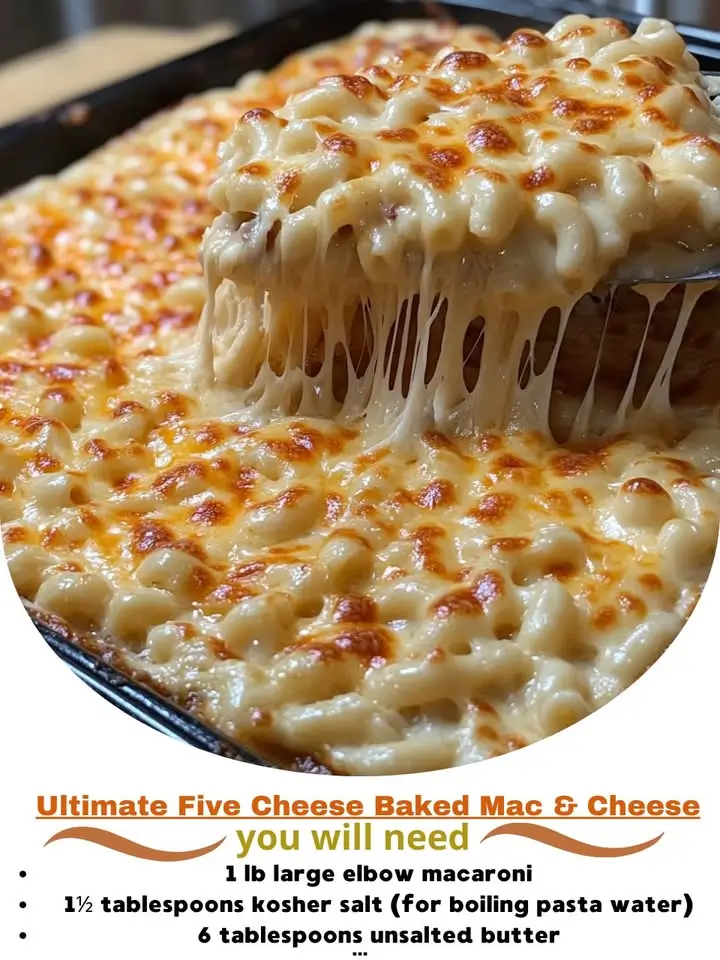
Ultimate Five Cheese Baked Mac & Cheese
The History
The roots of macaroni and cheese trace back centuries, with early forms appearing in 13th-century Italy, where pasta was combined with simple cheeses and baked. However, the dish as we know it today evolved primarily in England and America. The first recorded recipe resembling modern mac and cheese appeared in De arte coquinaria per octo libros by Bartolomeo Platina around 1465, which described a dish of boiled pasta mixed with butter and Parmesan.
In colonial America, Thomas Jefferson played a pivotal role in popularizing the dish after encountering “macaroni” during his travels in Europe. He brought back a macaroni machine and served a version of mac and cheese at a state dinner in 1802, sparking widespread interest. By the 19th century, American cookbooks began including more elaborate recipes that layered pasta with cheese and breadcrumbs, foreshadowing the casserole-style dish beloved today.
The Great Depression and World War II further cemented mac and cheese as a staple comfort food due to its affordability, simplicity, and satiating qualities. In 1937, Kraft Foods revolutionized accessibility with the introduction of Kraft Macaroni & Cheese—a boxed version that required only water and stove-top preparation. While convenient, many home chefs sought richer, more decadent versions, leading to the rise of gourmet baked mac and cheese recipes like the Ultimate Five Cheese Baked Mac & Cheese.
This recipe represents the culmination of culinary evolution—honoring tradition while embracing indulgence. It combines creamy textures, deep cheesy flavors, and a golden, crispy crust, transforming humble ingredients into a luxurious centerpiece suitable for holidays, family dinners, or any occasion demanding pure comfort on a plate.
Ingredients Breakdown
The magic of this Ultimate Five Cheese Baked Mac & Cheese lies not just in the number of cheeses but in their complementary roles. Each ingredient is carefully selected to contribute to flavor, texture, and structure:
- Elbow Macaroni (16 oz): The classic choice for trapping sauce. Its curved shape holds creamy cheese sauce and ensures even distribution of flavor in every bite. You can substitute with cavatappi, shells, or penne for a twist.
- Unsalted Butter (½ cup / 1 stick): Provides richness and helps create the roux base. Using unsalted butter allows you to control the salt level throughout the recipe.
- All-Purpose Flour (½ cup): Acts as a thickening agent when combined with butter to form a roux, which stabilizes the cheese sauce and prevents separation.
- Whole Milk (3 cups): Adds creaminess without overpowering the cheese. Lower-fat milk may result in a thinner sauce, so whole milk is preferred for optimal texture.
- Heavy Cream (1 cup): Enhances silkiness and contributes to a luxurious mouthfeel. It also promotes browning during baking and improves the sauce’s stability.
- Dijon Mustard (1 tablespoon): A secret weapon! It brightens the richness, cuts through fat, and enhances the complexity of the cheese blend without adding noticeable heat.
- Garlic Powder (1 teaspoon): Offers savory depth without the texture of fresh garlic. For extra punch, sauté one minced clove in the butter before adding flour.
- Onion Powder (1 teaspoon): Complements the garlic and adds a subtle sweetness that balances the sharpness of certain cheeses.
- Smoked Paprika (½ teaspoon): Introduces a gentle smokiness that elevates the overall aroma and gives the dish a warm, rustic note.
- Nutmeg (¼ teaspoon, freshly grated): A classic addition to béchamel-based sauces; it subtly sweetens and rounds out dairy flavors.
- Kosher Salt and Freshly Ground Black Pepper (to taste): Essential for seasoning layers. Season both the pasta water and sauce gradually for balanced flavor.
The Five Cheeses – The Heart of the Dish:
- Sharp Cheddar (8 oz, freshly grated): The backbone of flavor—sharp, tangy, and vibrant orange when melted. Always grate your own; pre-shredded cheese contains anti-caking agents that hinder smooth melting.
- Gruyère (6 oz, freshly grated): Nutty, slightly sweet, and supremely meltable. It adds sophistication and a silky texture that binds the sauce together.
- Muenster (6 oz, freshly grated): Mild and ultra-creamy when melted, Muenster contributes gooey stretch and balances sharper cheeses.
- Parmigiano-Reggiano (½ cup, finely grated): Salty, umami-rich, and deeply aromatic. It intensifies the savory profile and adds a granular depth to the sauce.
- Raclette (6 oz, freshly grated): Known for its exceptional meltability and delicate earthy notes, Raclette brings a unique alpine character and glossy sheen.
Topping Ingredients:
- Panko Breadcrumbs (1 cup): Light, airy, and crispier than regular breadcrumbs. They create a golden, shatteringly crunchy top layer.
- Melted Butter (3 tablespoons): Tossed with breadcrumbs to ensure even browning and rich flavor in the crust.
- Fresh Parsley (2 tablespoons, chopped): Adds color and a fresh herbal lift to contrast the heaviness of the dish.
- Extra Parmesan (¼ cup): Sprinkled over the top for additional umami and browning.
Step-by-Step Recipe
1. Preheat and Prepare
Preheat your oven to 375°F (190°C). Grease a 9×13-inch baking dish with softened butter or non-stick spray to prevent sticking and ensure clean servings.
2. Cook the Pasta
Bring a large pot of salted water to a boil (use about 2 tablespoons of kosher salt for 4 quarts of water). Add the elbow macaroni and cook until al dente—approximately 1 minute less than package instructions. This prevents overcooking during baking. Drain and set aside. Do not rinse, as the starch helps the sauce cling to the pasta.
3. Make the Roux-Based Cheese Sauce
In a large heavy-bottomed saucepan or Dutch oven, melt ½ cup (1 stick) of unsalted butter over medium heat. Once melted and slightly foamy, whisk in ½ cup all-purpose flour. Cook, stirring constantly, for 2–3 minutes until the mixture turns pale golden and smells nutty—this is your roux. Do not let it brown.
Gradually pour in the whole milk, whisking continuously to avoid lumps. Add the heavy cream next, continuing to whisk until fully incorporated and the mixture begins to thicken slightly (about 5–7 minutes). Reduce heat to low.
4. Season the Sauce
Add Dijon mustard, garlic powder, onion powder, smoked paprika, nutmeg, a generous pinch of salt, and black pepper. Stir well to combine. Taste and adjust seasoning—you want it slightly oversalted at this stage, as the pasta will absorb some of the flavor.
5. Incorporate the Cheeses
Remove the sauce from heat. Gradually add the grated cheeses in batches, starting with cheddar, Gruyère, Muenster, and Raclette. Stir gently after each addition until fully melted and smooth before adding the next. Finally, stir in half of the grated Parmigiano-Reggiano. Avoid high heat here—excessive temperatures can cause the sauce to break or become grainy.
6. Combine Pasta and Sauce
Pour the cooked macaroni into the cheese sauce. Use a silicone spatula or wooden spoon to fold gently until every noodle is evenly coated. The mixture should be luxuriously creamy and cohesive.
7. Transfer to Baking Dish
Pour the mac and cheese into the prepared 9×13-inch baking dish, spreading it into an even layer.
8. Prepare the Topping
In a small bowl, combine panko breadcrumbs, 3 tablespoons melted butter, chopped parsley, and the remaining Parmesan. Mix until the crumbs are evenly moistened.
Sprinkle the breadcrumb mixture uniformly over the surface of the mac and cheese.
9. Bake to Perfection
Place the dish in the preheated oven and bake for 25–30 minutes, or until the top is golden brown and the edges are bubbling gently. For extra browning, switch to broil for the last 2–3 minutes—but watch closely to avoid burning.
10. Rest Before Serving
Remove from the oven and let the mac and cheese rest for 5–10 minutes. This allows the sauce to set slightly, making it easier to scoop and serve without collapsing.
Tips
- Grate Your Own Cheese: Pre-shredded cheeses contain cellulose and starch to prevent clumping, which interferes with smooth melting. Freshly grated cheese melts better and tastes superior.
- Use Room-Temperature Dairy: Cold milk added too quickly can shock the roux. Let milk and cream sit out for 15–20 minutes before use.
- Low and Slow Melting: Remove the sauce from heat before adding cheese to prevent curdling or oil separation.
- Al Dente is Key: Slightly undercooked pasta maintains structure during baking. Overcooked noodles turn mushy.
- Bubble Test: Look for small bubbles around the edges as an indicator that the center is heated through.
- Resting Matters: Allowing the dish to rest firms up the sauce for cleaner slices, especially important when serving at gatherings.
- Golden Top Hack: For an extra-crispy crust, mix a tablespoon of mayonnaise into the breadcrumb topping—it promotes browning and adds richness.
- Make-Ahead Friendly: Assemble the dish up to 24 hours ahead, cover, and refrigerate. Add 10–15 minutes to baking time if going straight from fridge to oven.
Variations and Customizations
While this recipe stands strong on its own, it’s incredibly adaptable to different tastes, diets, and occasions:
Protein Additions
- Crispy Bacon (1½ cups): Fold in after combining sauce and pasta for a smoky, salty crunch.
- Rotisserie Chicken (2 cups, shredded): Makes it a hearty main course—perfect for using leftovers.
- Lobster or Crab Meat (1½ cups): Elevate to a luxurious seafood mac and cheese ideal for special dinners.
- Pulled Pork or BBQ Brisket (2 cups): Creates a bold, Southern-inspired fusion.
Vegetable Mix-Ins
- Steamed Broccoli or Cauliflower (2 cups): Adds color, nutrients, and texture contrast.
- Caramelized Onions (1 cup): Deepens sweetness and complexity.
- Sautéed Mushrooms (1½ cups): Earthy umami boost, great with Gruyère and Raclette.
- Roasted Red Peppers (1 cup, diced): Bright acidity and pop of color.
- Spinach or Kale (2 cups, wilted and drained): Sneak in greens without altering flavor dramatically.
Dietary Modifications
- Gluten-Free: Substitute gluten-free elbow pasta and use a GF flour blend (like rice or tapioca-based) for the roux. Ensure all other ingredients are certified GF.
- Lighter Version: Replace heavy cream with evaporated milk, use reduced-fat cheddar, and skip the butter in the topping. Results will be less rich but still satisfying.
- Dairy-Free/Vegan: Use plant-based butter, unsweetened almond or oat milk, vegan cheeses (look for cashew or coconut oil-based), and nutritional yeast for cheesiness. Opt for agar-based or store-bought vegan cheese sauces designed for baking.
Flavor Twists
- Truffle Mac & Cheese: Drizzle 1–2 teaspoons truffle oil into the sauce or top with shaved black truffle.
- Spicy Arrabbiata Style: Stir in 1–2 tablespoons of Calabrian chili paste or red pepper flakes.
- Jalapeño Popper Mac: Add 1 cup pickled jalapeños and 4 oz cream cheese to the sauce. Top with crumbled cooked bacon.
- Buffalo Chicken Mac: Mix in buffalo sauce and blue cheese crumbles, then top with chicken and extra blue cheese.
- Italian Herb Infusion: Add 1 tablespoon Italian seasoning or fresh rosemary/thyme to the sauce.
Health Considerations and Nutritional Value
While undeniably indulgent, understanding the nutritional profile helps balance enjoyment with wellness:
Nutritional Snapshot (Per Serving, 1/8th of Recipe)
- Calories: ~650–700 kcal
- Total Fat: ~38 g (Saturated Fat: ~22 g)
- Cholesterol: ~110 mg
- Sodium: ~800–1000 mg (varies based on cheese salt content)
- Carbohydrates: ~52 g (Dietary Fiber: ~3 g, Sugars: ~6 g)
- Protein: ~26 g
- Calcium: ~50% DV
- Vitamin A: ~30% DV
Health Notes
Pros:
This dish provides high-quality protein and calcium from multiple dairy sources, supporting muscle maintenance and bone health. The combination of complex carbohydrates and fats offers sustained energy, making it suitable for active individuals or those needing calorie-dense meals.
The inclusion of real, minimally processed ingredients (versus boxed versions) means no artificial preservatives, colors, or excessive sodium unless added manually.
Cons:
High in saturated fat and sodium, which may be concerning for individuals managing heart disease, hypertension, or cholesterol. Portion control is key. Enjoy as an occasional treat rather than a daily staple.
Ways to Make Healthier:
- Reduce butter by 25% and use olive oil in the roux.
- Swap half the pasta with chickpea or lentil-based pasta for added fiber and protein.
- Increase vegetable content (e.g., blend steamed cauliflower into the sauce) to boost fiber and reduce overall calorie density.
- Use lower-sodium cheeses and omit added salt where possible.
- Serve with a side salad or roasted vegetables to improve meal balance.
Ingredients
- 16 oz elbow macaroni
- ½ cup (1 stick) unsalted butter, plus 3 tbsp for topping
- ½ cup all-purpose flour
- 3 cups whole milk
- 1 cup heavy cream
- 1 tbsp Dijon mustard
- 1 tsp garlic powder
- 1 tsp onion powder
- ½ tsp smoked paprika
- ¼ tsp freshly grated nutmeg
- Kosher salt and freshly ground black pepper, to taste
- 8 oz sharp cheddar cheese, freshly grated
- 6 oz Gruyère cheese, freshly grated
- 6 oz Muenster cheese, freshly grated
- 6 oz Raclette cheese, freshly grated
- ½ cup Parmigiano-Reggiano, finely grated (divided)
- 1 cup panko breadcrumbs
- 2 tbsp fresh parsley, chopped
Directions
- Preheat oven to 375°F (190°C). Grease a 9×13-inch baking dish and set aside.
- Bring a large pot of salted water to a boil. Cook macaroni until al dente (1 minute less than package directions). Drain, do not rinse, and set aside.
- In a large saucepan, melt ½ cup butter over medium heat. Whisk in flour and cook for 2–3 minutes to form a roux.
- Gradually whisk in milk and cream. Cook 5–7 minutes, stirring frequently, until slightly thickened.
- Reduce heat to low. Stir in Dijon mustard, garlic powder, onion powder, smoked paprika, nutmeg, salt, and pepper.
- Remove from heat. Add cheddar, Gruyère, Muenster, and Raclette, one at a time, stirring until smooth. Stir in half the Parmigiano-Reggiano.
- Fold in cooked macaroni until fully coated.
- Pour mixture into prepared baking dish and spread evenly.
- In a small bowl, mix panko, 3 tbsp melted butter, parsley, and remaining Parmesan. Sprinkle over mac and cheese.
- Bake 25–30 minutes until top is golden and edges bubble. Broil 2–3 minutes for extra crispiness if desired.
- Let rest 5–10 minutes before serving.
FAQ
Can I make this ahead of time?
Yes! Assemble the dish (without baking), cover tightly, and refrigerate for up to 24 hours. Add 10–15 minutes to baking time. You can also freeze unbaked or baked mac and cheese for up to 3 months—thaw overnight before reheating.
Why did my cheese sauce become grainy?
Overheating or using pre-shredded cheese with anti-caking agents often causes this. Always melt cheese off direct heat and use freshly grated varieties.
Can I reheat leftovers?
Absolutely. Reheat individual portions in the microwave with a splash of milk to restore creaminess. For larger amounts, bake at 350°F covered with foil until warmed through.
What can I substitute for one of the cheeses?
If Raclette is unavailable, try fontina or provolone. If Gruyère is missing, Emmental or Comté work well. Avoid very hard or very soft cheeses unless tested.
How do I prevent a dry mac and cheese?
Don’t overbake, and consider increasing cream or milk slightly if making ahead. A bit of reserved pasta water can also loosen the sauce pre-bake.
Is this freezer-friendly?
Yes, though texture may soften slightly upon thawing. For best results, freeze before baking and add 10–15 minutes to cooking time when baking from frozen.
Summary
The Ultimate Five Cheese Baked Mac & Cheese is a symphony of creamy, tangy, nutty, and smoky flavors, brought together through a velvety sauce and crowned with a buttery, golden crust.
Perfect for holidays, potlucks, or anytime you crave unparalleled comfort, this decadent dish redefines what mac and cheese can be—one unforgettable bite at a time.