Introduction
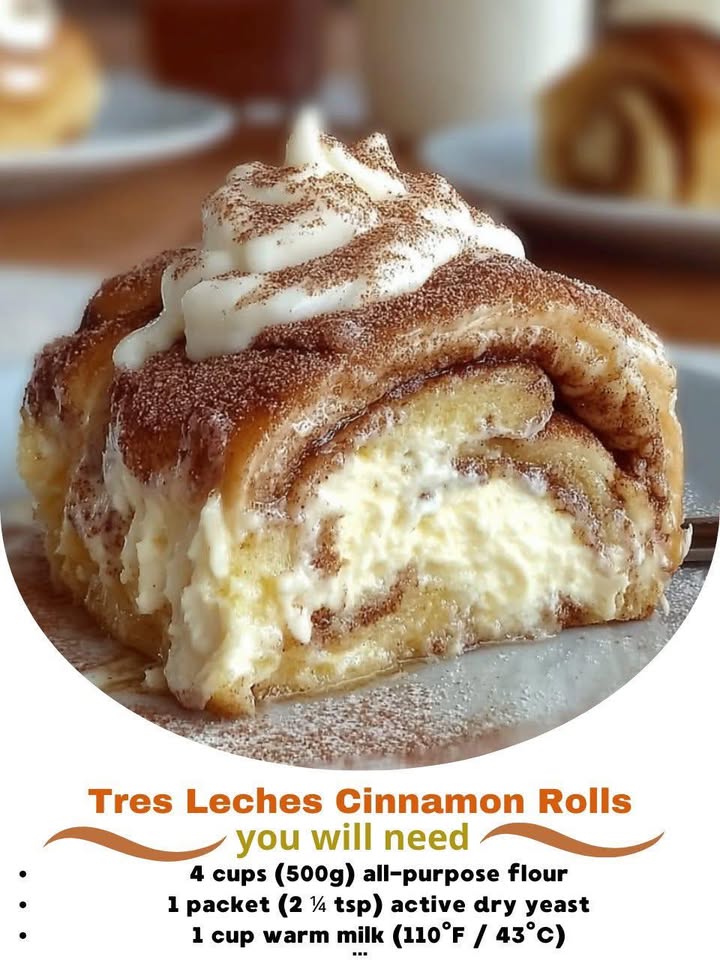
Imagine the soul-warming embrace of classic cinnamon rolls—buttery, spiced, and tender—elevated to decadent new heights with the luscious, milk-soaked magic of Tres Leches. Tres Leches Cinnamon Rolls are not merely a fusion dessert; they’re a harmonious marriage of two beloved Latin American and American baking traditions. These rolls combine the soft, pull-apart texture of yeasted brioche-style dough with the rich, custardy saturation of the iconic three-milk soak—evaporated milk, sweetened condensed milk, and whole milk—infused with warm cinnamon, brown sugar, and a whisper of vanilla and rum. Topped with a velvety cinnamon-cream cheese glaze and finished with a delicate dusting of ground cinnamon and toasted pecans, each bite delivers layers of aroma, moisture, and complexity that linger long after the last crumb is savored. Whether served warm for Sunday brunch, chilled for an elegant dessert platter, or packed in a lunchbox for a midday indulgence, these rolls redefine comfort food with sophistication, cultural resonance, and unapologetic richness.
The History
The origins of Tres Leches Cinnamon Rolls lie at the vibrant intersection of culinary evolution, diasporic adaptation, and modern bakery innovation. While traditional tres leches cake traces its roots to early 20th-century Latin America—with documented versions appearing in Nicaraguan cookbooks as early as the 1930s and gaining widespread popularity across Mexico, Cuba, and Puerto Rico—the cinnamon roll has deep ties to Swedish kardemummabullar, later adapted by Mexican bakers into bunuelos de canela and further transformed by Midwestern American bakeries in the 1950s using Pillsbury’s refrigerated dough revolution. The hybrid concept began emerging organically in bilingual bakeries along the U.S.–Mexico border in the late 1990s, where pastry chefs experimented with soaking laminated doughs in tres leches syrup instead of simple sugar washes. By the mid-2000s, food bloggers in Los Angeles and Miami began documenting “leche-soaked conchas” and “canela rolls en leche,” laying the groundwork for what would become a viral sensation on Instagram and TikTok circa 2021–2022. Notably, acclaimed pastry chef Elena Martínez of San Antonio’s Leche y Canela Bakery is widely credited with standardizing the technique—including cold-proofing the rolls pre-soak and using a stabilized tres leches emulsion—to prevent sogginess while maximizing absorption. Today, Tres Leches Cinnamon Rolls appear on menus from Brooklyn to Bogotá, celebrated not only for their flavor but also as a symbol of culinary hybridity, intergenerational tradition, and joyful reinvention.
Ingredients Breakdown
Every component of this recipe is intentionally selected to balance structure, flavor depth, moisture retention, and authentic character:
- Dough Base: High-protein bread flour (12–13% gluten) provides essential elasticity and oven spring, while a small percentage of cake flour (5–8%) adds tenderness without compromising lift. Whole milk—not water—enhances richness and browning; egg yolks contribute fat and emulsification; unsalted butter is folded in *after* initial kneading to preserve gluten development and create subtle lamination.
- Filling: Dark brown sugar (not light) delivers molasses depth and hygroscopic moisture; freshly ground Saigon (Vietnamese) cinnamon offers intense, spicy-sweet warmth unmatched by common cassia; softened European-style butter (82–84% fat) ensures even spreadability and prevents leakage during rolling; a pinch of flaky sea salt amplifies all other flavors and balances sweetness.
- Tres Leches Soak: Evaporated milk contributes concentrated dairy sweetness and body; sweetened condensed milk adds caramelized notes and viscosity to cling to the crumb; full-fat whole milk adjusts consistency and introduces fresh dairy brightness. A touch of real vanilla bean paste (seeds + pod scrapings), a splash of dark rum (optional but highly recommended for aromatic complexity), and a hint of almond extract round out the profile without overpowering.
- Cream Cheese Glaze: Full-fat brick-style cream cheese (not spreadable) ensures stability and tang; powdered sugar is sifted twice to eliminate grittiness; heavy cream adjusts drizzle-ability without thinning too much; ground cinnamon and a micro-grating of orange zest introduce aromatic lift and cut through richness.
- Finishing Touches: Toasted, chopped pecans add textural contrast and nutty earthiness; a final dusting of Vietnamese cinnamon mixed with organic cane sugar enhances visual appeal and delivers an aromatic first impression.
Step-by-Step Recipe
- Prepare the Dough (Day One, Evening): In the bowl of a stand mixer fitted with a dough hook, combine 1 cup warm whole milk (105–110°F), 2¼ tsp active dry yeast, and 2 tbsp granulated sugar. Let bloom for 8–10 minutes until foamy. Add 3 large egg yolks, ½ cup granulated sugar, 1 tsp fine sea salt, and 4 cups bread flour. Mix on low for 3 minutes until shaggy. Gradually add ¾ cup softened unsalted butter (cut into tablespoon-sized pieces), one piece at a time, waiting until fully incorporated before adding the next. Increase speed to medium and knead for 8–10 minutes until smooth, elastic, and passes the windowpane test. Transfer to a lightly oiled bowl, cover tightly with plastic wrap, and refrigerate for 12–16 hours (overnight cold fermentation).
- Prepare the Filling (Next Morning): In a medium bowl, whisk together 1½ cups dark brown sugar, 3 tbsp freshly ground Saigon cinnamon, and ½ tsp flaky sea salt. Set aside. In another bowl, beat ¾ cup softened European-style butter with an electric mixer until creamy and pale (2–3 minutes). Reserve.
- Roll & Shape the Rolls: Lightly flour a clean surface. Turn chilled dough out and gently punch down. Roll into a 24″ × 18″ rectangle (approx. ¼” thick), maintaining even thickness. Evenly spread the softened butter over the entire surface, leaving a ½” border along one long edge. Sprinkle the cinnamon-sugar mixture evenly over the buttered surface. Starting from the opposite long edge, tightly roll the dough into a log. Pinch the seam to seal. Using a serrated knife dipped in hot water and wiped dry between cuts, slice into 12 equal rolls (about 2″ wide). Place rolls cut-side up in a generously buttered 9×13-inch baking dish lined with parchment (for easy removal). Cover loosely with oiled plastic wrap and let rise at room temperature for 2–2.5 hours, until puffy and nearly doubled—rolls should be touching but not squished.
- Bake: Preheat oven to 350°F (convection off). Bake uncovered for 22–26 minutes, rotating pan halfway, until golden brown, puffed, and internal temperature reaches 195–200°F. Remove from oven and cool in pan on a wire rack for exactly 15 minutes—this allows steam to escape and prevents mushiness during soaking.
- Prepare and Apply the Tres Leches Soak: While rolls cool, whisk together in a large measuring cup: 1 cup evaporated milk, 1 cup sweetened condensed milk, 1 cup whole milk, 2 tsp pure vanilla extract (or 1 tsp paste + 1 tsp extract), 1 tbsp dark rum (optional), and ¼ tsp almond extract. Stir vigorously until homogenous. Using a fine-mesh sieve, gently spoon or pour the mixture evenly over the warm rolls, allowing it to pool in the pan. Let soak for 20 minutes at room temperature, then refrigerate—uncovered—for at least 4 hours (ideally overnight) to allow full absorption and chilling. This step is non-negotiable for optimal texture and flavor integration.
- Prepare the Glaze & Finish: In a stand mixer or with hand beaters, beat 8 oz full-fat cream cheese (room temperature), 2 tbsp softened unsalted butter, 2 cups sifted powdered sugar, 2–3 tbsp heavy cream, 1 tsp ground cinnamon, and ½ tsp finely grated orange zest on medium-high until ultra-smooth and glossy (3–4 minutes). Adjust cream for desired thickness—should drizzle slowly off a spoon. Drizzle generously over chilled rolls. Garnish immediately with toasted pecans and a final dusting of cinnamon-sugar blend.
Tips
- Yeast Matters: Use high-quality active dry yeast (e.g., Red Star Platinum or SAF Gold for richer flavor) and verify freshness by proofing—it must foam within 10 minutes. Instant yeast may be substituted weight-for-weight, but reduce total amount by 20% and skip blooming.
- Temperature Is Key: Milk must be warmed precisely—too hot kills yeast; too cold slows activation. Use a digital thermometer. Similarly, butter for filling should be cool but pliable (62–65°F); if too warm, it’ll melt into the dough and cause leakage.
- Chill Before Cutting: If rolls feel soft or sticky when slicing, pop the shaped log into the freezer for 10–15 minutes—this firms the butter and yields cleaner cuts.
- Soak Timing: Never soak while hot—the steam will make the crust gummy. Never soak at room temperature longer than 30 minutes—refrigeration is essential for food safety and texture control. For best results, soak overnight.
- Glaze Consistency: If glaze becomes too thin, refrigerate for 10 minutes and rewhip. If too thick, add cream ½ tsp at a time—never water, which breaks the emulsion.
- Storage Wisdom: Store covered in the refrigerator for up to 5 days. To serve, bring to room temperature for 30 minutes—or warm individual rolls in a 325°F oven for 8–10 minutes (glaze will soften; re-dust with cinnamon before serving).
- No-Stick Secret: Butter your parchment paper *before* lining the pan—this prevents sliding and ensures even browning on the bottom crust.
- Visual Doneness Cue: Rolls are done when deeply golden with a slight sheen, edges slightly pulling away from the pan, and a skewer inserted into center comes out clean—not wet, not dry.
Variations and Customizations
This recipe serves as a master template—endlessly adaptable to dietary needs, seasonal ingredients, and global inspirations:
- Vegan Adaptation: Replace dairy milk with oat milk (unsweetened, barista edition), use vegan butter (Miyoko’s or Country Crock Plant Butter), swap eggs with flax eggs (2 tbsp ground flax + 6 tbsp water), and substitute condensed milk with homemade version (simmer 1 can coconut milk + ½ cup coconut sugar + 1 tsp lemon juice until reduced by ⅓). Soak with coconut milk, cashew milk, and oat milk blend. Glaze with soaked cashews, coconut cream, maple syrup, and lemon juice.
- Gluten-Free Option: Use a certified GF 1:1 flour blend with added xanthan gum (e.g., King Arthur Measure for Measure or Bob’s Red Mill 1-to-1). Increase yeast by 25%, add 1 extra egg yolk, and include 1 tbsp psyllium husk powder to mimic gluten elasticity. Chill dough for 30 minutes before rolling.
- Flavor Infusions: Add 1 tsp cardamom or star anise to the filling; swirl in ¼ cup dulce de leche before rolling; fold in ½ cup toasted coconut flakes or chopped dried pineapple into the dough; replace rum with coffee liqueur or orange blossom water in the soak.
- Textural Twists: Press toasted pepitas or crushed amaretto cookies into the filling; top with candied ginger bits before glazing; embed a small square of dark chocolate (70%) into the center of each roll before baking.
- Savory-Sweet Fusion: Add 1 tbsp finely grated Manchego or queso fresco to the filling; finish with flaky smoked sea salt and a drizzle of honey-thyme syrup.
- Miniature Version: Divide dough into 24 smaller rolls baked in a muffin tin—reduce bake time to 16–18 minutes and soak for 15 minutes before chilling.
- Breakfast Roll-Ups: Omit soak, bake as directed, then brush warm rolls with tres leches glaze (reduced soak + extra powdered sugar) and fill with scrambled eggs, chorizo, and avocado slices.
Health Considerations and Nutritional Value
While undeniably indulgent, thoughtful preparation can enhance nutritional integrity without sacrificing authenticity. Per standard serving (1 roll, approx. 180g), this recipe delivers approximately 420–450 calories, 22g fat (12g saturated), 52g carbohydrates (34g sugars), 6g protein, and 210mg sodium. Notably, the overnight cold fermentation increases resistant starch content by up to 25%, supporting improved glycemic response and gut microbiome diversity. Using whole milk and real butter provides bioavailable vitamin A, D, K2, and butyrate—a short-chain fatty acid linked to intestinal health. Dark brown sugar contributes trace minerals like calcium, potassium, and iron, while Saigon cinnamon contains cinnamaldehyde, a potent anti-inflammatory compound shown in clinical studies to support insulin sensitivity. To increase fiber and micronutrients, consider adding 2 tbsp ground flaxseed or chia seeds to the dough, or substituting ¼ cup of bread flour with sprouted wheat flour. For reduced sugar impact, decrease condensed milk by ¼ cup and compensate with 1 tsp monk fruit-glycerin blend and extra vanilla. Those managing lactose intolerance may benefit from using lactase-treated milk or fermented dairy alternatives—many find tres leches rolls surprisingly well-tolerated due to enzymatic breakdown during soaking and chilling. As with all enriched baked goods, portion awareness and mindful pairing (e.g., alongside Greek yogurt or a green salad) support balanced enjoyment. Always consult a registered dietitian for personalized guidance related to diabetes, celiac disease, or cardiovascular concerns.
Ingredients
For the Dough
- 1 cup (240 ml) whole milk, warmed to 105–110°F
- 2¼ tsp (7g) active dry yeast (or 2 tsp instant yeast)
- 2 tbsp (25g) granulated sugar
- 3 large egg yolks (reserve whites for glaze or discard)
- ½ cup (100g) granulated sugar
- 1 tsp (6g) fine sea salt
- 4 cups (500g) bread flour, plus more for dusting
- ¾ cup (170g) unsalted butter, softened to 65°F, cut into tbsp pieces
For the Filling
- 1½ cups (300g) dark brown sugar, packed
- 3 tbsp (21g) freshly ground Saigon cinnamon
- ½ tsp (3g) flaky sea salt
- ¾ cup (170g) European-style unsalted butter, softened to 62–65°F
For the Tres Leches Soak
- 1 cup (240 ml) evaporated milk
- 1 cup (240 ml) sweetened condensed milk
- 1 cup (240 ml) whole milk
- 2 tsp pure vanilla extract (or 1 tsp paste + 1 tsp extract)
- 1 tbsp (15 ml) dark rum (optional but recommended)
- ¼ tsp almond extract
For the Cinnamon-Cream Cheese Glaze
- 8 oz (225g) full-fat brick-style cream cheese, room temperature
- 2 tbsp (28g) unsalted butter, softened
- 2 cups (240g) powdered sugar, sifted twice
- 2–3 tbsp (30–45 ml) heavy cream
- 1 tsp (2g) ground Saigon cinnamon
- ½ tsp (1g) finely grated orange zest
For Garnish
- ½ cup (60g) pecans, toasted and coarsely chopped
- 1 tbsp (8g) Saigon cinnamon mixed with 1 tbsp (12g) organic cane sugar
Directions
- In the bowl of a stand mixer fitted with a dough hook, combine warm milk, yeast, and 2 tbsp sugar. Let sit 8–10 minutes until foamy and fragrant.
- Add egg yolks, ½ cup sugar, salt, and bread flour. Mix on low for 3 minutes until shaggy. Gradually add softened butter, one piece at a time, mixing fully before adding next. Increase speed to medium and knead 8–10 minutes until smooth, supple, and passes windowpane test.
- Transfer dough to lightly oiled bowl, cover tightly with plastic wrap, and refrigerate 12–16 hours.
- Next morning, whisk together brown sugar, cinnamon, and flaky salt. Beat butter in separate bowl until creamy and pale.
- Lightly flour surface. Turn out dough and roll into 24″ × 18″ rectangle. Spread butter evenly, leaving ½” border. Sprinkle cinnamon-sugar mix over butter. Roll tightly from long edge; pinch seam. Slice into 12 equal rolls with serrated knife (dip in hot water, wipe dry between cuts).
- Place rolls cut-side up in buttered 9×13″ pan lined with parchment. Cover loosely with oiled plastic. Rise at room temp 2–2.5 hrs until puffy and nearly doubled.
- Preheat oven to 350°F. Bake 22–26 minutes, rotating halfway, until golden and internal temp reads 195–200°F. Cool in pan 15 minutes exactly.
- Whisk together all tres leches soak ingredients until smooth. Pour evenly over warm rolls. Let soak 20 minutes at room temp, then refrigerate uncovered ≥4 hours (preferably overnight).
- Beat cream cheese, butter, powdered sugar, cream, cinnamon, and orange zest until glossy and smooth (3–4 mins). Drizzle over chilled rolls.
- Garnish with toasted pecans and cinnamon-sugar blend. Serve chilled or bring to room temp 30 minutes before serving.
FAQ
- Can I make these ahead and freeze them?
- Yes—but only *before* soaking. After shaping rolls in pan, cover tightly and freeze solid (up to 3 weeks). Thaw overnight in fridge, let rise 2–3 hours at room temp, then bake, cool, and soak as directed. Do not freeze after soaking—texture degrades severely.
- Why did my rolls turn out dense or gummy?
- Most commonly due to under-kneading (insufficient gluten), over-proofing (causes collapse), soaking while hot (traps steam), or skipping the refrigerated soak (prevents proper absorption and leads to uneven saturation).
- Can I use store-bought dough?
- You can—but results vary widely. Refrigerated crescent dough lacks richness and absorbs poorly. Frozen brioche or dinner roll dough works better if thawed overnight, rolled thin, and filled carefully. Expect less tender crumb and reduced soak retention.
- Is there a way to reduce the sweetness?
- Absolutely. Reduce condensed milk to ¾ cup and add ¼ cup additional whole milk. Decrease brown sugar in filling by ¼ cup. Increase cinnamon to 3½ tbsp for flavor compensation. Add 1 tsp lemon juice to soak for brightness.
- What if I don’t have Saigon cinnamon?
- Ceylon cinnamon is milder and safer for daily consumption but lacks intensity—use ¼ cup. Cassia is stronger but more pungent; reduce to 2 tbsp and add ½ tsp cardamom to balance.
- Can I make a non-alcoholic version?
- Yes—omit rum and add ½ tsp orange extract + 1 tsp additional vanilla to preserve aromatic complexity. You may also substitute 1 tbsp brewed strong coffee (cooled) for depth.
- Why does the glaze sometimes crack or slide off?
- Glaze cracks when too thick or applied to overly cold rolls. Slide occurs when rolls are still damp from excess soak or glaze is too thin. Always pat rolls lightly with paper towel before glazing, and ensure glaze is at room temp and properly emulsified.
- How do I reheat leftovers without drying them out?
- Wrap individual rolls tightly in foil and warm in 325°F oven for 10–12 minutes. Or microwave on 50% power for 20 seconds per roll, covered with damp paper towel. Never reheat uncovered or at full power.
Summary
Tres Leches Cinnamon Rolls represent a masterclass in cross-cultural pastry innovation—melding the airy, enriched structure of American brioche with the luxuriously saturated tenderness of Latin American tres leches tradition through precise fermentation, strategic soaking, and layered spicing.
With make-ahead flexibility, endless customization potential, and nuanced attention to ingredient quality and technique, these rolls deliver extraordinary sensory pleasure while honoring the legacy and ingenuity embedded in both of their culinary ancestors.