Introduction
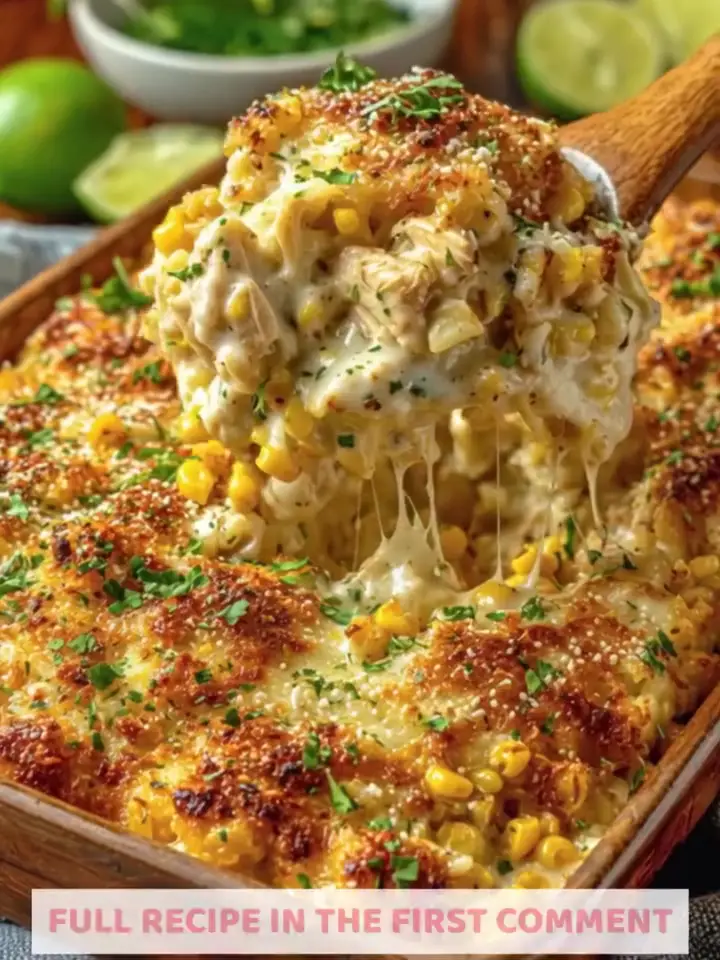
Street Corn Chicken Casserole is a vibrant, bold-flavored, and deeply comforting fusion dish that marries the beloved street food essence of Mexican elotes—grilled corn slathered with creamy, tangy, spicy, and cheesy toppings—with the hearty satisfaction of an American-style baked casserole. This crowd-pleasing one-dish meal captures the smoky-sweet crunch of charred corn, the richness of melted cotija and Monterey Jack cheeses, the zing of lime and chipotle, the savory depth of roasted chicken, and the creamy silkiness of Mexican crema or sour cream—all layered, baked to golden perfection, and finished with fresh garnishes that pop with color and brightness. Whether served at summer potlucks, weeknight family dinners, tailgates, or holiday side tables, this casserole doesn’t just feed the stomach—it evokes memories of sizzling grills, bustling food carts, sun-drenched patios, and the joyful chaos of shared meals. It’s not merely a recipe; it’s a culinary celebration of cultural crossover, ingredient integrity, and unapologetic flavor.
The History
While no single documented “invention date” exists for Street Corn Chicken Casserole, its origins lie in the natural evolution of two powerful food movements: the rise of elotes and esquites as iconic Mexican street foods, and the enduring American casserole tradition. Elotes—corn on the cob slathered with mayonnaise or crema, crumbled cotija, chili powder, lime juice, and cilantro—has been a staple across Mexico for generations, especially in urban centers like Mexico City and Guadalajara, where vendors use portable grills and hand-cranked carts to serve thousands daily. In the U.S., particularly along the Southwest borderlands and in communities with strong Mexican-American roots, elotes evolved into esquites (off-the-cob corn salad), which became a natural bridge to baked preparations. Simultaneously, the mid-20th-century American casserole boom—fueled by convenience foods, Jell-O molds, and community cookbooks—laid the groundwork for combining proteins, starches, and dairy into oven-baked masterpieces. By the early 2010s, food bloggers and home cooks began experimenting with “deconstructed elotes” in casserole form, swapping canned soup for real ingredients and elevating flavors with authentic chiles and artisanal cheeses. The dish gained viral traction on Pinterest and Instagram around 2016–2017, especially after several Texas-based chefs featured it at food festivals as “Tex-Mex Comfort Reinvented.” Today, it appears in mainstream grocery store meal kits, restaurant brunch menus, and even frozen gourmet lines—testament to its cross-generational, cross-cultural resonance.
Ingredients Breakdown
Every element in this casserole serves a distinct sensory and structural purpose—no ingredient is arbitrary:
- Fresh or Frozen Corn: The soul of the dish. Fresh sweet corn (preferably white or bi-color) offers superior sweetness and texture; when grilled or pan-seared first, it develops nutty, caramelized notes. Frozen kernels (thawed and patted dry) are a reliable, year-round alternative—but avoid canned corn, which adds excess water and dulls flavor.
- Cooked Chicken: Boneless, skinless chicken breasts or thighs, shredded or diced. Thighs are preferred for their higher fat content, yielding juicier, more flavorful bites that stand up to bold seasonings without drying out. Rotisserie chicken is an excellent time-saving option—but be sure to remove excess seasoning or brine to avoid salt overload.
- Cheeses: A dynamic trio: Monterey Jack for meltability and mild creaminess; Cotija (aged, crumbly, salty—never substitute with feta unless necessary, as feta is tangier and softer); and optional Queso Fresco for fresh, milky contrast. Some versions include a small amount of sharp cheddar for extra depth, but balance is key—too much sharp cheese can overwhelm the corn’s sweetness.
- Creamy Base: A blend of full-fat Mexican crema (essential for authentic tang and silkiness) and plain whole-milk Greek yogurt or sour cream. Crema’s lower acidity and higher fat prevent curdling during baking, while yogurt adds protein and subtle tartness. Never use low-fat or non-dairy substitutes unless explicitly adapted—they lack stability and richness.
- Aromatics & Alliums: Finely minced red onion provides sharp, crisp bite; garlic (freshly pressed or microplaned) delivers pungent depth; and jalapeño (seeds and membranes removed for moderate heat, left in for fiery kick) supplies vegetal heat and fragrance.
- Acid & Brightness: Freshly squeezed lime juice—not bottled—is critical for cutting through richness and lifting all other flavors. Lime zest adds aromatic citrus oil that enhances perception of freshness without adding liquid.
- Spices & Heat: Smoked paprika imparts gentle, earthy smoke; ground cumin adds warm, nutty backbone; chipotle powder (or finely minced chipotle in adobo) contributes complex, fruity heat. Ancho chili powder may be added for raisin-like sweetness and mild fruitiness. Avoid generic “chili powder” blends, which often contain fillers and inconsistent heat.
- Herbs & Garnishes: Fresh cilantro leaves (stems removed) lend herbal brightness and visual appeal. Optional additions include pickled red onions for tangy crunch, crumbled bacon for umami depth, or roasted poblano strips for smoky-sweet complexity.
- Binders & Texture Enhancers: A light dusting of cornstarch or masa harina (toasted lightly first) helps absorb excess moisture and encourages cohesive layering without gumminess. Panko breadcrumbs or crushed tortilla chips sprinkled on top add essential textural contrast—crisp, golden, and slightly salty.
Step-by-Step Recipe
- Preheat & Prep: Preheat oven to 375°F (190°C). Lightly grease a 9×13-inch baking dish (glass or ceramic preferred for even heating) with avocado oil or butter. Set aside.
- Char the Corn (Optional but Highly Recommended): Heat 1 tbsp neutral oil (avocado or grapeseed) in a large cast-iron skillet over medium-high heat. Add corn kernels in a single layer (work in batches if needed). Cook undisturbed 2–3 minutes until golden brown spots appear, then stir and continue cooking 4–5 minutes total until evenly blistered and fragrant. Remove from heat and let cool slightly.
- Sauté Aromatics: In same skillet, reduce heat to medium. Add 1 tbsp oil, then sauté ½ cup finely diced red onion until translucent (~3 min). Stir in 2 cloves minced garlic and 1 finely diced jalapeño (seeded); cook 1 minute until fragrant—do not brown.
- Bloom Spices: Push aromatics to edges. Add 1 tsp smoked paprika, ½ tsp ground cumin, ¼ tsp chipotle powder, and a pinch of ancho chili powder (optional). Toast 30 seconds, stirring constantly, until spices are aromatic and oil turns deep orange-red.
- Combine Base Mixture: In a large mixing bowl, whisk together ¾ cup Mexican crema, ½ cup plain Greek yogurt, 2 tbsp fresh lime juice, 1 tsp lime zest, 1 tsp kosher salt, and ½ tsp freshly ground black pepper. Fold in charred corn, sautéed aromatics, 2 cups shredded cooked chicken, 1 cup shredded Monterey Jack, and ½ cup crumbled cotija. Gently mix until fully incorporated—do not overmix, to preserve texture.
- Transfer & Level: Pour mixture into prepared baking dish. Smooth top with a spatula. Sprinkle evenly with remaining ½ cup Monterey Jack and ¼ cup cotija.
- Add Crunch Topping: Combine ¼ cup panko breadcrumbs, 2 tbsp finely crushed baked tortilla chips, 1 tbsp melted butter, and a pinch of smoked paprika. Sprinkle evenly over cheese layer.
- Bake: Place dish on center oven rack. Bake 25–30 minutes, until bubbly at edges, golden on top, and internal temperature reaches 165°F (74°C) when tested with an instant-read thermometer inserted into center.
- Rest & Finish: Remove from oven and let rest 10 minutes—this allows custard to set and prevents runny slices. Just before serving, scatter generously with ¼ cup fresh chopped cilantro and a final squeeze of lime juice. Optional: drizzle with extra crema or a zigzag of chipotle-lime aioli.
Tips
- Texture Control is Everything: Excess moisture is the #1 casserole killer. Always pat thawed frozen corn *very* dry with paper towels. If using fresh corn, ensure it’s cooled completely post-charring to avoid steaming the mixture.
- Cheese Timing Matters: Reserve at least ¼ cup of cotija to sprinkle on *after* baking—its delicate saltiness and crumbly texture shine brightest when raw and fresh.
- Don’t Skip the Char: Even if you don’t have a grill or cast iron, broil corn on a sheet pan 3–4 minutes per side under high broiler until blackened in spots. That Maillard reaction is non-negotiable for depth.
- Season in Layers: Salt the chicken while cooking (if prepping from scratch), season the aromatics, *and* season the base mixture. This ensures balanced flavor throughout—not just on the surface.
- Acid Last, Always: Add lime juice *after* removing from oven—not before baking. Heat degrades volatile citrus oils and can make dairy separate. Save half the juice for finishing.
- Resting Is Non-Negotiable: Cutting too soon releases steam and causes structural collapse. Set a timer—if guests hover, tell them “the casserole is still writing its memoir.”
- Make-Ahead Magic: Assemble up to 24 hours ahead—cover tightly and refrigerate unbaked. Add 5–8 minutes to bake time if going straight from fridge to oven. For longer storage, freeze unbaked casserole (up to 3 months); thaw overnight in fridge before baking.
- Golden Top Hack: If topping isn’t browning sufficiently by 25 minutes, switch oven to broil for 1–2 minutes—watch *constantly*. Or brush top lightly with melted butter before baking for deeper color.
- Batch Scaling: To double? Use two 9×13 dishes—or one 12×17-inch hotel pan. Increase bake time by only 5 minutes; convection setting recommended for even airflow.
- Leftover Reinvention: Cold leftovers make stellar breakfast frittatas, taco fillings, quesadilla stuffing, or grain bowl bases. Stir in black beans and avocado for instant lunch.
Variations and Customizations
This casserole is gloriously adaptable—here’s how to personalize it without compromising integrity:
- Vegetarian Version: Replace chicken with 1½ cups roasted sweet potatoes + 1 cup black beans (rinsed, patted dry) + ½ cup roasted zucchini. Boost umami with 1 tbsp nutritional yeast and 1 tsp soy sauce in base mixture.
- Vegan Adaptation: Use cashew crema (soaked raw cashews blended with lime juice, water, and salt), coconut-based shreds instead of Monterey Jack, and vegan cotija-style crumbles (made from almonds or tofu). Add 1 tbsp white miso for fermented depth.
- Low-Carb/Keto: Swap corn for riced cauliflower (sautéed until dry), increase chicken to 3 cups, add ½ cup sliced green onions, and use full-fat dairy only. Top with crushed pork rinds instead of panko.
- Seafood Twist: Substitute chicken with 2 cups flaked cooked cod or shrimp (tossed in lime zest and smoked paprika before folding in). Add 2 tbsp chopped dill and reduce chipotle to ⅛ tsp.
- Breakfast Casserole: Add 6 whisked eggs + ¼ cup milk to base mixture. Reduce bake time to 40–45 min at 350°F. Top with fried eggs before serving.
- Smoky BBQ Fusion: Mix 3 tbsp Kansas City–style BBQ sauce into base; swap cotija for sharp white cheddar; add ¼ cup crispy fried onions and 2 tbsp chopped applewood-smoked bacon.
- Global Riffs: Indian-Inspired: Use ghee instead of butter, add 1 tsp garam masala and ¼ cup chopped mint; top with mango chutney swirl. Thai-Inspired: Swap lime for yuzu, add lemongrass paste and fish sauce, top with crushed peanuts and Thai basil.
- Kid-Friendly Mild: Omit jalapeño and chipotle; use mild paprika only; increase cotija slightly for salt-forward appeal; add ¼ cup finely grated carrot for hidden veggie boost.
- Gourmet Upgrade: Use house-made esquites (corn simmered in epazote-infused broth), heirloom chicken confit, aged añejo cotija, and finish with edible flowers and micro-cilantro.
Health Considerations and Nutritional Value
A single 1-cup serving (approx. 1/12 of full recipe) provides approximately:
- Calories: 320–360 kcal (varies by cheese/fat choices)
- Protein: 22–26 g (excellent source—supports muscle repair and satiety)
- Fat: 18–22 g (mostly unsaturated from corn oil, dairy, and chicken; includes beneficial CLA from grass-fed dairy options)
- Carbohydrates: 16–19 g (primarily from corn—naturally occurring sugars + fiber; ~3 g dietary fiber)
- Vitamins & Minerals: Rich in Vitamin A (from corn + dairy), Vitamin C (lime), B12 (chicken + dairy), calcium (cheese), potassium (corn + chicken), and folate (corn).
Dietary Notes: Naturally gluten-free (verify all spice blends and tortilla chips are certified GF). Contains dairy and eggs (if using egg-enriched version). High in sodium—reduce added salt by 25% if using rotisserie chicken or pre-seasoned cheeses. For heart health, opt for reduced-sodium cotija and limit added butter in topping. Those managing blood sugar should pair with leafy greens or a fiber-rich side (e.g., roasted Brussels sprouts) to slow glucose absorption. While indulgent, this casserole delivers nutrient density uncommon in comfort foods—especially when built with whole, minimally processed ingredients.
Ingredients
- 4 cups fresh or frozen corn kernels (thawed and patted *very* dry)
- 2 tbsp neutral high-heat oil (avocado, grapeseed, or refined coconut), divided
- ½ cup finely diced red onion
- 2 cloves garlic, finely minced
- 1 jalapeño, finely diced (seeds and membranes removed for mild heat)
- 1 tsp smoked paprika
- ½ tsp ground cumin
- ¼ tsp chipotle powder (plus more to taste)
- Pinch of ancho chili powder (optional)
- 2 cups cooked, shredded chicken (thighs preferred)
- ¾ cup Mexican crema (or full-fat sour cream)
- ½ cup plain whole-milk Greek yogurt
- 2 tbsp fresh lime juice (plus extra for finishing)
- 1 tsp lime zest
- 1 tsp kosher salt (adjust to taste)
- ½ tsp freshly ground black pepper
- 1 ½ cups shredded Monterey Jack cheese, divided
- ¾ cup crumbled cotija cheese, divided
- ¼ cup panko breadcrumbs
- 2 tbsp finely crushed baked tortilla chips
- 1 tbsp unsalted butter, melted
- ¼ cup fresh cilantro leaves, roughly chopped
Directions
- Preheat oven to 375°F (190°C). Lightly grease a 9×13-inch baking dish.
- In a large cast-iron or heavy-bottomed skillet, heat 1 tbsp oil over medium-high heat. Add corn in a single layer and cook, undisturbed, 2–3 minutes. Stir and continue cooking 4–5 minutes until kernels are blistered and golden. Transfer to a plate to cool slightly.
- In same skillet, reduce heat to medium. Add remaining 1 tbsp oil, then sauté red onion 3 minutes until soft. Stir in garlic and jalapeño; cook 1 minute until fragrant.
- Add smoked paprika, cumin, chipotle powder, and optional ancho powder. Toast 30 seconds, stirring constantly.
- In a large bowl, whisk crema, yogurt, lime juice, lime zest, salt, and pepper. Fold in cooled corn, sautéed aromatics, chicken, 1 cup Monterey Jack, and ½ cup cotija. Mix gently but thoroughly.
- Transfer mixture to prepared baking dish. Smooth top. Sprinkle with remaining ½ cup Monterey Jack and ¼ cup cotija.
- In a small bowl, combine panko, crushed tortilla chips, melted butter, and a pinch of smoked paprika. Sprinkle evenly over cheese layer.
- Bake 25–30 minutes, until bubbling vigorously at edges and top is golden brown. Internal temp should read 165°F (74°C).
- Let rest 10 minutes. Garnish generously with fresh cilantro and an extra squeeze of lime juice before serving.
FAQ
- Can I use canned corn?
- No—canned corn contains too much liquid and lacks sweetness and texture integrity. If absolutely necessary, drain *extremely* well, rinse, and pat dry with triple-layered paper towels—and consider roasting briefly to drive off residual moisture.
- What if I can’t find cotija?
- Aged feta is the closest substitute (not fresh feta)—use ¾ the amount and reduce added salt. Queso fresco is milder and less salty; combine with a pinch of flaky sea salt. Vegan cotija alternatives made from almond or tofu are increasingly available at specialty grocers.
- Can I make this dairy-free?
- Yes—with caveats. Use soaked-and-blended cashew crema (1 cup raw cashews + ½ cup water + 1 tbsp lime juice + ½ tsp salt), coconut-based shreds for melting, and a nut-based cotija crumble. Add 1 tsp white miso to replace umami lost from dairy.
- Why does my casserole turn out watery?
- Most commonly: wet corn, under-drained beans (if added), or overmixing causing dairy separation. Always pat corn bone-dry. Let sautéed aromatics cool before mixing. And never stir aggressively after adding dairy.
- Can I freeze this casserole?
- Absolutely. Assemble unbaked, cover tightly with parchment + foil, and freeze up to 3 months. Thaw overnight in fridge before baking. Add 5–8 minutes to bake time.
- Is there a low-carb version?
- Yes. Replace corn with 4 cups riced cauliflower (sautéed in oil until dry and lightly golden), increase chicken to 2½ cups, omit panko/tortilla topping, and use crushed pork rinds + extra cheese for crunch.
- Can I prepare this ahead for a party?
- Yes! Fully assemble up to 24 hours in advance and refrigerate covered. Let sit at room temperature 20 minutes before baking. For best results, add fresh cilantro and lime *only* after baking.
- What sides pair well?
- Light, acidic, or crunchy contrasts work best: simple arugula salad with lemon vinaigrette; quick-pickled red onions; jicama sticks with Tajín; chilled cucumber-radish salad; or warm flour tortillas for scooping.
- My family hates cilantro—what’s a good substitute?
- Flat-leaf parsley offers similar texture and freshness without the soapy gene issue. Fresh oregano (Mexican variety preferred) or epazote (if available) also complement the profile beautifully.
- Can I cook this in a slow cooker?
- Not ideal—the texture becomes mushy and cheese separates. However, you can *pre-cook* components (char corn, sauté aromatics, shred chicken) in a slow cooker on low 2–3 hours, then assemble and bake as directed.
Summary
Street Corn Chicken Casserole is a masterclass in bold, balanced, culturally resonant comfort food—where smoky-sweet charred corn, tender shredded chicken, creamy tangy crema, crumbly salty cotija, and bright lime unite in a golden, bubbling, herb-flecked embrace.
It’s endlessly adaptable, nutritionally robust, deeply nostalgic yet refreshingly modern, and guaranteed to spark conversation, clear plates, and earn repeat requests—whether served at a backyard barbecue, a church potluck, or a quiet Tuesday night dinner for two.