Introduction
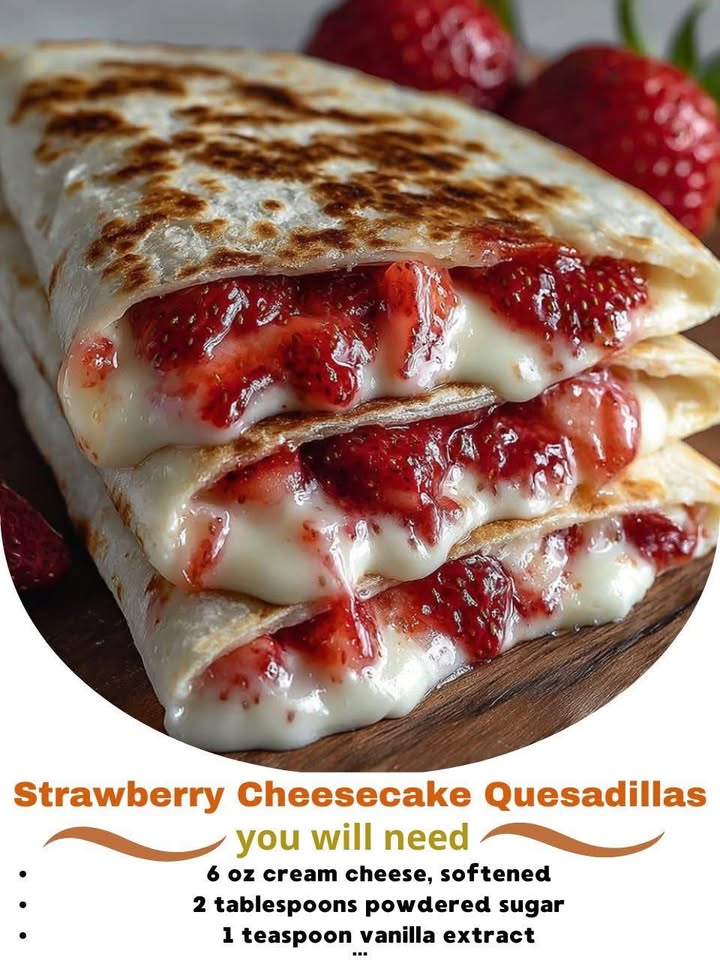
Strawberry Cheesecake Quesadillas are a whimsical, indulgent fusion dessert that marries the creamy richness of classic New York-style cheesecake with the warm, crispy comfort of a grilled quesadilla—reimagined with a playful, portable twist. Far from traditional Mexican fare, this innovative treat redefines dessert boundaries by transforming familiar pantry staples into an elegant yet approachable handheld delight. Imagine golden-brown, lightly caramelized tortillas enveloping a luscious, velvety filling of sweetened cream cheese, fresh strawberries, and subtle vanilla—then finished with a whisper of cinnamon sugar and a drizzle of glossy strawberry compote. Whether served at weekend brunches, after-school snacks, summer poolside gatherings, or as a showstopping finale to taco night, these quesadillas surprise and satisfy with every bite: crisp edges giving way to molten, tangy-sweet decadence. They’re not just dessert—they’re edible nostalgia with a modern, Instagram-worthy flair.
The History
While the exact origin of Strawberry Cheesecake Quesadillas remains undocumented in culinary archives, its emergence reflects a broader 21st-century food trend: the “dessert-ification” of savory formats. The quesadilla—rooted in central Mexican cuisine as a simple folded corn tortilla with melted cheese—began evolving in U.S. kitchens during the 1980s and ’90s, especially in Tex-Mex and Cal-Mex restaurants, where flour tortillas, Monterey Jack, and creative fillings gained popularity. By the early 2000s, food bloggers and home cooks started experimenting with sweet iterations: Nutella-and-banana, apple-cinnamon, and s’mores versions appeared on recipe forums and early YouTube cooking channels. The strawberry cheesecake variation likely surfaced around 2012–2014, inspired by viral Pinterest pins showcasing “cheesecake-stuffed pancakes” and “cream cheese–filled French toast sticks.” Its rise coincided with the mainstreaming of cream cheese as a versatile dessert base (thanks in part to the bagel boom and TikTok’s “whipped cream cheese toast” craze) and growing consumer appetite for hybrid foods—think cronuts, muffin-tops, or cake-waffles. Notably, no single chef or cookbook claims sole authorship; rather, it evolved organically through collective kitchen experimentation—a testament to how digital food culture accelerates culinary innovation across borders and traditions.
Ingredients Breakdown
Every exceptional Strawberry Cheesecake Quesadilla relies on carefully balanced components—each playing a distinct textural, flavor, and functional role. Below is a detailed, chef-level breakdown of why each ingredient matters:
- Full-Fat Cream Cheese (8 oz, room temperature): The structural and flavor backbone. Full-fat ensures richness, proper meltability, and resistance to weeping when heated. Cold cream cheese won’t blend smoothly and may create lumps; room temperature allows seamless incorporation with sugar and vanilla. Neufchâtel or low-fat versions yield a grainy, watery filling that separates under heat.
- Powdered Sugar (¼ cup, sifted): Preferred over granulated sugar for immediate dissolution and ultra-smooth texture. Sifting prevents gritty pockets and ensures even sweetness distribution. Its fine particles also help stabilize the cream cheese mixture slightly, improving spreadability and heat resilience.
- Vanilla Extract (1½ tsp, pure, not imitation): Adds aromatic depth and rounds out the sharp tang of cream cheese. Real vanilla contains over 250 flavor compounds—imitation vanillin lacks complexity and can taste medicinal when warmed. For elevated nuance, consider ½ tsp of Madagascar bourbon vanilla bean paste (seeds + pod-infused syrup).
- Fresh Strawberries (1 cup, finely diced, hulled): Must be ripe but firm—not overly juicy or mushy. Overripe berries release excess water, causing steam pockets and soggy interiors. Finely dicing maximizes surface contact with cream cheese and ensures even distribution without tearing tortillas. A light pat-dry with paper towels removes residual moisture—a non-negotiable step for structural integrity.
- Granulated Sugar (1 tbsp, for strawberries): Draws out minimal juice while enhancing natural sweetness and brightening acidity. Too much sugar creates syrupiness; too little yields blandness. Optional addition of a pinch of lemon zest here adds brightness without sourness.
- Flour Tortillas (6–8 inch, medium-thick, unseasoned): Opt for “street taco” or “soft taco” style—thicker than burrito tortillas but thinner than fajita wraps. Corn tortillas lack the pliability and browning capacity needed; whole wheat adds bitterness and inhibits crispness. Look for brands with minimal ingredients (flour, water, fat, salt) and no added preservatives or dough conditioners, which interfere with caramelization.
- Unsalted Butter (3 tbsp, softened): Used for both filling enrichment (1 tbsp blended in) and exterior grilling (2 tbsp melted for brushing). Softened butter integrates seamlessly, adding subtle dairy richness and helping the cream cheese hold air. Melted butter brushed on the tortilla surface promotes even Maillard browning and prevents sticking—oil alternatives (like canola) lack flavor and don’t brown as beautifully.
- Ground Cinnamon (¼ tsp) & Pinch of Fine Sea Salt: Cinnamon enhances warmth and complements strawberry’s berry notes without overpowering. Salt is essential—it doesn’t make the dish “salty,” but heightens all other flavors, balances sweetness, and mitigates cream cheese’s inherent lactic tang.
- Optional Garnishes: Fresh strawberry slices, crumbled graham cracker crust (homemade or store-bought), whipped cream (stabilized with ½ tsp powdered sugar + ¼ tsp cornstarch per ½ cup), strawberry coulis (simmered + strained), toasted slivered almonds, or edible flowers for visual elegance.
Step-by-Step Recipe
- Prep the Strawberry Filling: In a small bowl, gently combine diced strawberries and 1 tablespoon granulated sugar. Let macerate for 10 minutes at room temperature. Drain thoroughly in a fine-mesh sieve over a bowl, pressing lightly with a spoon to extract excess liquid (reserve juice for coulis or discard). Pat berries completely dry with paper towels—this is critical for preventing sogginess.
- Make the Cheesecake Base: In a medium mixing bowl, beat softened cream cheese with an electric hand mixer on medium speed until smooth and creamy (about 1 minute). Add powdered sugar, 1 tablespoon softened butter, pure vanilla extract, ground cinnamon, and fine sea salt. Beat on medium-low for 1–2 minutes until fully incorporated and airy—do not overmix, or the filling will become runny. Fold in the dried strawberries gently with a spatula until evenly distributed. Refrigerate for 15–20 minutes to thicken slightly (eases spreading and prevents oozing).
- Warm & Prep Tortillas: Heat a dry cast-iron skillet or nonstick griddle over medium-low heat (300°F/150°C). Lightly warm each tortilla for 10–15 seconds per side—just enough to make them pliable and slightly puffed, not browned. Stack between clean kitchen towels to keep warm and moist. Avoid microwaving, which steams and weakens structure.
- Assemble with Precision: Lay one warm tortilla flat on a clean surface. Using an offset spatula or butter knife, spread 3–4 tablespoons of chilled filling evenly over half the tortilla, leaving a ½-inch border. Avoid overfilling—the goal is a thin, uniform layer (¼-inch thick max) for optimal melt and fold integrity. Fold tortilla in half over filling to form a half-moon shape. Press edges gently with fingertips to seal.
- Grill to Golden Perfection: Brush the *outside* of the folded quesadilla generously but evenly with melted butter (½ tbsp per side). Place seam-side down in the preheated skillet. Cook undisturbed for 2–3 minutes, until deep golden brown and lacy-crisp on the bottom. Carefully flip using a wide, thin spatula—support the underside to prevent filling leakage. Brush the newly exposed top with remaining butter. Cook another 2–3 minutes until equally golden, fragrant, and the filling is warm (not hot—internal temp ~140°F/60°C). Resist pressing down—this squeezes out filling and toughens the tortilla.
- Cool & Slice: Transfer to a wire rack immediately (prevents steam-induced sogginess). Let rest 2 minutes—this allows residual heat to finish setting the filling and firms up the structure. Slice diagonally into 3–4 wedges with a sharp chef’s knife wiped clean between cuts. Serve warm, not piping hot, for ideal contrast of crisp shell and creamy center.
Tips
- Temperature Control Is Everything: Never skip chilling the filling—even 10 minutes makes the difference between a clean slice and a messy collapse. Likewise, never grill over high heat: medium-low ensures gradual melting and browning without burnt exteriors and cold centers.
- Tortilla Tension Test: Before assembling, gently stretch each warmed tortilla outward with both hands. If it resists or tears, it’s too cold or stale—discard and use a fresher one. Ideal tortillas feel supple and elastic, like soft leather.
- Butter Brushing Technique: Use a silicone pastry brush and apply butter in concentric circles from center outward—this ensures full coverage without pooling at edges, which causes uneven browning or greasy spots.
- No-Stick Skillet Hack: If your pan isn’t perfectly seasoned, add ¼ tsp neutral oil to the melted butter before brushing—this boosts slipperiness without compromising flavor.
- Rescue Undercooked Centers: If the interior feels cool after flipping, reduce heat to low, cover skillet loosely with foil for 1 minute—trapped steam gently warms the filling without further browning.
- Consistent Slicing Secret: Chill fully assembled (uncooked) quesadillas for 15 minutes before grilling—cold filling holds shape better during cooking and yields cleaner cuts post-grill.
- Batch Cooking Wisdom: Cook no more than two quesadillas simultaneously in a standard 12-inch skillet. Crowding drops pan temperature, steams instead of sears, and invites sticking.
- Resting Ritual: Always rest on a wire rack—not a plate. Trapped steam underneath the quesadilla softens the crust within seconds. A rack maintains crispness for up to 15 minutes.
- Reheat Right: To refresh leftovers, place on a parchment-lined baking sheet and bake at 325°F (160°C) for 5–7 minutes. Microwaving turns them rubbery and separates the layers.
- Serve Immediately—But Strategically: Plate on warmed plates (run under hot water, dry thoroughly) to maintain surface temperature longer. Garnish *after* plating to preserve crunch and visual appeal.
Variations and Customizations
These quesadillas are a canvas for creativity—whether adapting to dietary needs, seasonal produce, or global flavor profiles. Here’s how to personalize them thoughtfully:
- Dietary Adaptations: Gluten-Free: Use certified GF corn or almond-flour tortillas (note: corn tortillas require extra care—brush more butter and cook slower). Vegan: Substitute full-fat coconut cream cheese (Tofutti or Kite Hill), maple syrup for powdered sugar, coconut oil for butter, and omit strawberries or use freeze-dried powder for intensity. Low-Sugar: Replace powdered sugar with monk fruit–erythritol blend (1:1 ratio), use unsweetened strawberries, and add ¼ tsp stevia glycerite for depth.
- Seasonal Fruit Swaps: Swap strawberries for blueberries (toss with ½ tsp lemon juice + 1 tsp cornstarch to absorb juice), blackberries (slightly mashed + 1 tsp orange zest), raspberries (seeds strained out), or peaches (blanched, peeled, diced, and lightly sautéed to evaporate moisture).
- Flavor Infusions: Add 2 tbsp crushed amaretti cookies to filling for almond-anise nuance; stir in 1 tsp finely grated orange peel for citrus lift; fold in 2 tbsp mini chocolate chips (dark or white) for textural surprise; or swirl in 1 tbsp salted caramel sauce before folding.
- Cultural Twists: Mexican-Inspired: Add 1 tsp piloncillo (unrefined cane sugar) and ¼ tsp ancho chile powder to filling; garnish with crumbled cotija and lime crema. Japanese-Inspired: Use matcha-infused cream cheese (1 tsp ceremonial-grade matcha + 1 tsp hot water, whisked smooth), swap strawberries for sweetened azuki beans, and finish with black sesame seeds. Mediterranean-Inspired: Fold in 2 tbsp chopped pistachios and 1 tsp rosewater; serve with honey-yogurt drizzle.
- Texture Enhancements: Layer a thin strip of graham cracker crust (crushed + 1 tsp melted butter, pressed thin) along the fold line before closing—adds crunch and structural reinforcement. Or sprinkle toasted coconut flakes into the filling for tropical flair.
- Breakfast Edition: Add 1 large egg yolk to the cream cheese mixture for richness and binding; include 2 tbsp finely chopped candied ginger and 1 tbsp chopped walnuts; serve with maple-strawberry compote.
- Mini Bite-Sized Version: Use 4-inch corn tortillas, fill with 1 tbsp mixture, fold into quarters (like a taco wedge), and cook in batches in a mini pancake griddle. Perfect for parties and portion control.
- Deconstructed “Quesadilla Board”: Serve warm tortilla wedges alongside small ramekins of chilled filling, fresh berries, graham cracker crumbs, whipped cream, and coulis for interactive assembly.
Health Considerations and Nutritional Value
While inherently indulgent, Strawberry Cheesecake Quesadillas can be approached mindfully—with transparency about trade-offs and opportunities for thoughtful enhancement. A standard serving (one 6-inch quesadilla, made with full-fat ingredients) contains approximately:
- Calories: 380–420 kcal
- Total Fat: 22–26g (12–15g saturated)
- Carbohydrates: 40–44g (24–28g sugars, primarily from added sugar and fruit)
- Protein: 7–9g
- Fiber: 1–2g (naturally low; boosted significantly with whole-grain tortillas or added flaxseed)
- Vitamins & Minerals: Notable sources of calcium (from cream cheese), vitamin C (from strawberries), and B vitamins (from enriched flour tortillas).
Key Considerations:
- Sugar Content: The primary nutritional concern lies in added sugars—powdered sugar, granulated sugar for berries, and optional toppings. Reducing total added sugar by 25% (using 3 tbsp powdered sugar + omitting berry sugar) lowers sugar by ~10g per serving without sacrificing palatability, especially when using very ripe strawberries.
- Fat Quality: While saturated fat is present, it comes from whole-food dairy sources (cream cheese, butter) containing beneficial conjugated linoleic acid (CLA) and fat-soluble vitamins (A, D, K2). Substituting with highly processed vegetable oils or margarines introduces trans fats and inflammatory omega-6s—making full-fat dairy the healthier choice in moderation.
- Glycemic Impact: Despite sweetness, the combination of fat, protein, and fiber (especially with whole-grain tortillas) slows glucose absorption. Pairing with a side of plain Greek yogurt or mixed greens further stabilizes blood sugar response.
- Allergen Notes: Contains dairy (cream cheese, butter), gluten (standard tortillas), and potential tree nuts (if using nut-based variations). Always verify labels for cross-contamination if serving those with severe allergies.
- Nutrient-Dense Upgrades: Boost nutrition without compromising taste: use sprouted whole-wheat tortillas (higher fiber, B vitamins), add 1 tbsp ground flax or chia seeds to filling (omega-3s, fiber), incorporate 2 tbsp mashed roasted cauliflower into cream cheese (adds creaminess, vitamins A/C, zero detectable flavor), or top with fresh mint (antioxidants, digestive aid).
- Mindful Enjoyment: These are best positioned as an occasional treat—not daily fare—but their homemade nature avoids preservatives, artificial colors, and high-fructose corn syrup common in commercial desserts. Framing them as “special occasion nourishment” supports intuitive eating principles.
Ingredients
- 8 oz full-fat brick cream cheese, softened to room temperature
- ¼ cup powdered sugar, sifted
- 1½ tsp pure vanilla extract
- 1 tbsp unsalted butter, softened
- ¼ tsp ground cinnamon
- ⅛ tsp fine sea salt
- 1 cup fresh strawberries, hulled and finely diced (about 12 medium berries)
- 1 tbsp granulated sugar (for macerating strawberries)
- 6–8 inch medium-thick flour tortillas (6–8 count)
- 3 tbsp unsalted butter, melted (for brushing)
- Optional garnishes: fresh strawberry slices, graham cracker crumbs, whipped cream, strawberry coulis, toasted almonds
Directions
- Prepare strawberries: In a small bowl, gently mix diced strawberries with 1 tablespoon granulated sugar. Let sit 10 minutes. Drain thoroughly in a fine-mesh sieve, then pat *completely dry* with paper towels. Set aside.
- In a medium bowl, beat cream cheese with electric mixer on medium until smooth (~1 min). Add powdered sugar, 1 tablespoon softened butter, vanilla, cinnamon, and salt. Beat on medium-low 1–2 minutes until light and fluffy. Gently fold in dried strawberries. Refrigerate 15–20 minutes.
- Heat a dry skillet or griddle over medium-low heat (300°F/150°C). Warm each tortilla 10–15 sec per side until pliable. Stack between clean towels.
- Lay one tortilla flat. Spread 3–4 tbsp chilled filling over half, leaving ½-inch border. Fold over; press edges gently to seal.
- Brush outside of folded quesadilla generously with melted butter. Place seam-side down in hot skillet. Cook 2–3 min until deep golden and crisp. Flip carefully; brush top with more butter. Cook 2–3 min more until golden and filling is warm.
- Transfer to wire rack. Rest 2 minutes. Slice diagonally into 3–4 wedges. Serve warm with desired garnishes.
FAQ
- Can I make these ahead of time?
- Yes—with caveats. Assembled (uncooked) quesadillas can be refrigerated up to 8 hours—wrap tightly in plastic wrap. For longer storage, freeze uncooked quesadillas between parchment sheets for up to 3 weeks. Thaw overnight in fridge before grilling. Cooked quesadillas are best fresh but can be refrigerated 2 days—reheat in oven (not microwave) at 325°F for 5–7 minutes.
- Why does my filling leak out while cooking?
- Three main causes: 1) Filling too warm or overmixed (chill longer), 2) Tortillas too thin or torn (use medium-thick, warm gently), or 3) Overfilling or insufficient sealing (use less filling, press edges firmly). Also ensure strawberries are *bone-dry*—moisture is the #1 culprit.
- Can I use frozen strawberries?
- Not recommended. Frozen strawberries release excessive water when thawed, even after draining and patting—guaranteeing sogginess. If necessary, thaw completely, drain aggressively, simmer drained juice into a thick compote, and use only the *dried* berry pieces—still inferior to fresh.
- What’s the best tortilla brand?
- Tested favorites: Mission “Soft Taco” Flour Tortillas, La Tortilla Factory “Smart & Delicious” Whole Grain (for fiber boost), or locally milled, preservative-free varieties. Avoid “burrito size” (too thick) or “street taco” corn (too brittle). Always check ingredient list—no DATEM, guar gum, or dough conditioners.
- My quesadilla is browning too fast but filling is cold—what do I do?
- Immediately reduce heat to low. Cover skillet loosely with aluminum foil for 60–90 seconds—trapped steam gently heats the center. Then uncover and finish browning. Alternatively, transfer to a 325°F oven for 3 minutes.
- Can I air-fry these?
- Yes—with adjustments. Brush both sides generously with butter. Air-fry at 350°F for 4 minutes, flip, spray lightly with butter-flavored cooking spray, and air-fry 3–4 more minutes until golden and crisp. Watch closely—air fryers vary widely in intensity.
- How do I prevent the tortilla from getting tough or chewy?
- Avoid overcooking and high heat. Remove *as soon as* golden brown—carryover heat continues cooking. Also, never use stale tortillas; freshness ensures tenderness. If reheating, add a splash of milk to filling before warming to restore creaminess.
- Are these suitable for kids?
- Absolutely—and highly engaging for picky eaters. Let children assemble their own (with supervision), choose toppings, or dip in coulis. The familiar textures (creamy, crunchy, fruity) make it a gateway dessert for expanding palates. Reduce sugar by 25% for younger children.
- Can I double or triple the batch?
- Yes—but scale filling first, then tortillas. Mix filling in batches to avoid overworking. Grill in *single layers*—never stack. Keep cooked quesadillas warm on a wire rack in a 200°F oven for up to 20 minutes without drying.
- What drinks pair well?
- Chilled sparkling water with lime, lightly sweetened iced green tea, cold brew coffee (the bitterness balances sweetness), or a sparkling rosé for celebrations. Avoid milk—its proteins clash with cream cheese’s tang.
Summary
Strawberry Cheesecake Quesadillas are a masterclass in joyful culinary alchemy—transforming humble tortillas and pantry staples into a sophisticated, handheld dessert where golden crispness embraces creamy, ruby-flecked luxury. With meticulous attention to moisture control, temperature discipline, and layered flavor, they deliver nostalgic comfort and modern elegance in every warm, aromatic bite.
Beyond taste, they embody adaptable joy: endlessly customizable for seasons, diets, and occasions—yet always rooted in the simple, profound pleasure of perfectly balanced sweetness, tang, and texture, shared with love.