Introduction
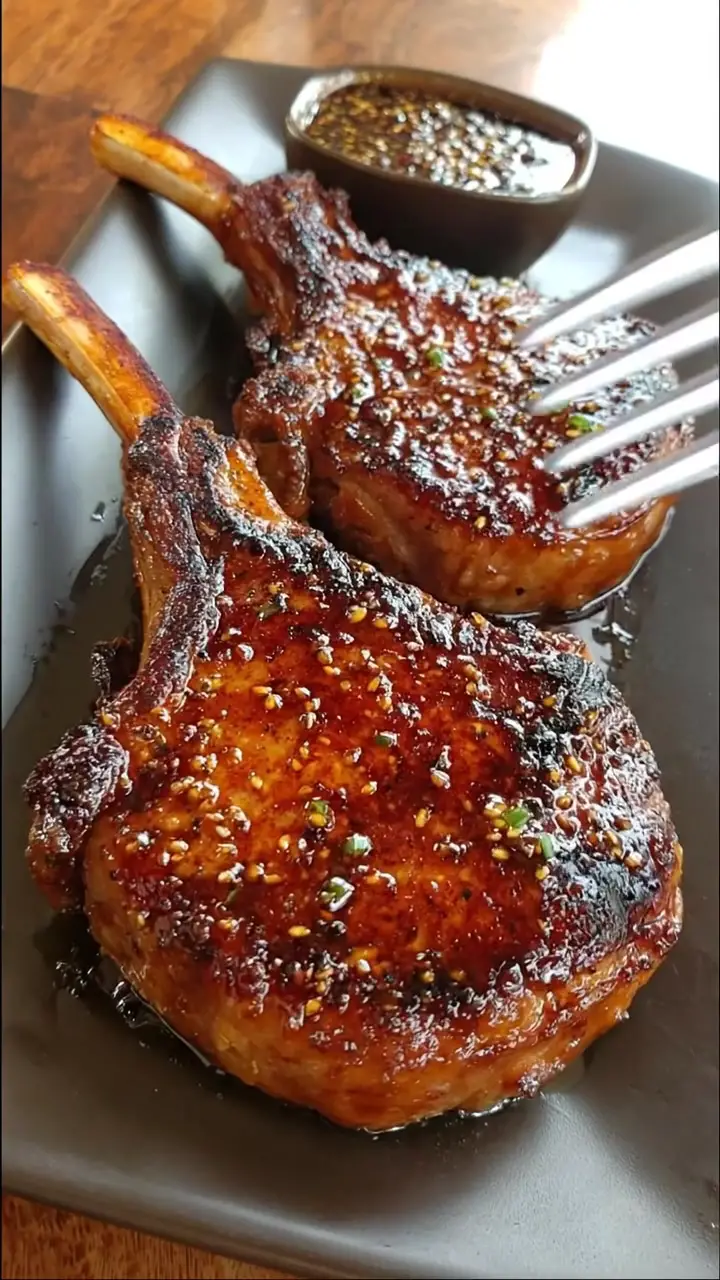
Sticky Honey Garlic Double Bone Beef Chops are a showstopping, restaurant-worthy dish that marries bold savory depth with luscious sweetness and irresistible caramelized texture. Unlike traditional pork or chicken chops, this recipe features premium double-bone beef chops—also known as “beef rib chops” or “double-rib steaks”—cut from the rib section with two adjacent rib bones attached. This cut delivers exceptional marbling, robust beef flavor, and unparalleled tenderness when cooked with precision. The signature sticky glaze—crafted from raw honey, aged garlic, tamari or low-sodium soy sauce, toasted sesame oil, rice vinegar, and a whisper of ginger—clings luxuriously to each chop, forming a glossy, amber-hued lacquer that crackles gently under the broiler. Whether served for a special family dinner, an elegant weekend entertaining centerpiece, or a memorable date-night meal, these chops promise deep umami satisfaction, aromatic complexity, and textural contrast in every bite.
The History
The origins of Sticky Honey Garlic Double Bone Beef Chops lie at the vibrant intersection of East Asian culinary tradition and modern American steakhouse innovation. Honey garlic sauce traces its roots to mid-20th-century Chinese-American and Korean-American kitchens, where chefs adapted regional sweet-savory braising techniques—like Korean ganjang-based glazes and Cantonese char siu-inspired marinades—to suit local palates and available ingredients. The use of honey as a primary sweetener gained prominence in North America during the 1970s and ’80s, replacing refined sugar for richer flavor and superior caramelization. Meanwhile, the resurgence of heritage beef cuts—including the double-bone rib chop—was propelled by the farm-to-table movement and renewed appreciation for grass-fed, dry-aged, and pasture-raised beef beginning in the early 2000s. Chefs and home cooks alike began reimagining classic sticky sauces not just for poultry or pork, but for premium beef cuts that could stand up to intense flavor without sacrificing juiciness. This dish embodies that evolution: a globally inspired, technique-driven homage to tradition—honoring the time-honored art of slow-sear-and-glaze while celebrating the integrity and luxury of whole-muscle, bone-in beef.
Ingredients Breakdown
Every element in this recipe serves a distinct functional and sensory purpose—no ingredient is arbitrary. Let’s explore the science and soul behind each component:
- Double-Bone Beef Chops (1¼–1½ inches thick): Sourced from the rib primal, these chops contain the longissimus dorsi (eye of ribeye) and parts of the spinalis (cap), delivering extraordinary intramuscular fat (marbling). The dual rib bones act as natural insulators during cooking, slowing heat transfer to retain moisture and imparting subtle mineral-rich flavor via bone marrow diffusion.
- Raw, Unfiltered Honey: Not merely a sweetener—raw honey contains natural enzymes (invertase, diastase) and trace minerals that interact with amino acids in beef during caramelization, generating complex Maillard-derived aromas (caramel, toasted nuts, dried fruit). Its high fructose content ensures deep browning without premature burning.
- Fresh Garlic (minced, not pressed): Crushing or pressing garlic releases allicin—a pungent, volatile compound that diminishes with heat. Mincing preserves more nuanced alliinase activity and allows gradual, controlled flavor release during simmering and glazing.
- Low-Sodium Tamari (or Coconut Aminos for GF/soy-free): Fermented for 6–12 months, tamari provides rich, rounded umami without excessive salt. Its wheat-free formulation (unlike traditional soy sauce) ensures gluten-free compliance while contributing depth from naturally occurring glutamates and melanoidins.
- Toasted Sesame Oil (cold-pressed, artisanal): Added *only at the end* off-heat, this oil contributes volatile aromatic compounds (sesamol, sesamin) that would evaporate under direct flame—delivering nutty, roasted fragrance that lifts the entire dish.
- Rice Vinegar (unseasoned, 4.2% acidity): Provides bright, clean acidity to balance honey’s viscosity and cut through beef fat. Its mild profile avoids overpowering; higher-acid vinegars (e.g., apple cider) would curdle proteins or create harshness.
- Fresh Ginger (microplaned): Microplaning ruptures rhizome cells fully, releasing zesty, citrusy gingerols and shogaols—compounds with anti-inflammatory properties and synergistic flavor enhancement with garlic and soy.
- Arrowroot Powder (not cornstarch): A gluten-free, neutral-tasting thickener with twice the thickening power of cornstarch and freeze-thaw stability—ideal for glossy, non-grainy glazes that cling without gumminess.
- Smoked Paprika & Black Cardamom Pods (optional but recommended): These elevate the glaze beyond basic sweet-savory: smoked paprika adds velvety warmth and subtle campfire nuance; crushed black cardamom pods (seeds only) lend eucalyptus-tinged complexity that complements beef’s earthiness.
Step-by-Step Recipe
- Prep & Dry-Brine (24–48 hours ahead): Pat chops *extremely* dry with triple-layered paper towels. Generously season both sides with 1 tsp Diamond Crystal kosher salt per chop (≈½ tsp Morton’s). Place on a wire rack over a baking sheet and refrigerate uncovered. This draws out surface moisture, firms the exterior for better sear, and seasons meat deeply.
- Bring to Temperature: Remove chops from fridge 90 minutes before cooking. Wipe *once more* with dry towel. Lightly rub with ½ tsp neutral oil (grapeseed or avocado) per side—just enough to coat, not slick.
- Make Glaze Base (Simmer Stage): In a heavy-bottomed stainless or enameled Dutch oven, combine ¾ cup raw honey, ⅓ cup tamari, 3 tbsp rice vinegar, 4 cloves minced garlic, 1 tbsp microplaned ginger, 1 tsp toasted sesame oil, ½ tsp smoked paprika, and 4 crushed black cardamom seeds. Bring to gentle simmer over medium-low heat. Reduce heat to lowest setting and maintain bare simmer (small bubbles at edges only) for 12 minutes, stirring every 90 seconds. This develops flavor and reduces water content.
- Thicken Glaze: Whisk 1½ tsp arrowroot powder with 1 tbsp cold water until smooth. Slowly drizzle into simmering glaze while whisking constantly. Cook 90 seconds until translucent and slightly viscous. Remove from heat. Discard cardamom pods. Reserve ⅓ cup for basting; chill remainder for serving.
- Sear Chops (Cast Iron Method): Heat 14-inch cast iron skillet over medium-high until smoking lightly (infrared thermometer: 450°F). Add 1 tbsp ghee or tallow. Place chops diagonally—do not crowd. Press gently with spatula for 30 seconds to ensure full contact. Sear undisturbed 3½ minutes until deep mahogany crust forms. Flip; sear 3 minutes for medium-rare (125°F internal). Transfer to wire rack; rest 7 minutes.
- Glaze & Finish (Broiler Stage): Preheat broiler to HIGH. Place rested chops on broiler-safe pan. Brush generously with reserved warm glaze. Broil 90 seconds, rotate pan 180°, brush again, broil 90 seconds more until glaze is bubbling, glossy, and lightly blistered. Optional: torch surface for extra lacquer.
- Rest & Serve: Rest 5 minutes. Slice *against the grain* at 45° angle. Drizzle with chilled glaze, garnish with scallion ribbons, toasted white sesame seeds, and micro-cilantro.
Tips
- Bone-In Is Non-Negotiable: Never substitute single-bone or boneless chops—the dual bones stabilize temperature, prevent curling, and infuse subtle collagen-rich richness during cooking.
- Temperature Precision Matters: Use a leave-in probe thermometer (e.g., ThermoWorks DOT) inserted sideways into thickest part, avoiding bone. Pull at 120°F for medium-rare (carries over to 125°F); 130°F for medium (carries to 135°F). Overcooking dries out even the best marbling.
- Glaze Timing Is Critical: Apply glaze *only after initial sear and resting*. Applying too early causes sugars to burn; applying before resting traps steam and softens crust. Broiling *after* resting ensures crisp exterior + tender interior + perfect glaze adhesion.
- Honey Selection Impacts Flavor: Clover honey yields delicate floral notes; buckwheat offers molasses-like depth; tupelo honey provides buttery, vanilla-kissed viscosity. Avoid pasteurized “light” honeys—they lack enzymatic complexity and caramelize poorly.
- Chop Thickness Dictates Method: For chops under 1 inch thick, reduce sear time by 45 seconds per side and skip broiling—glaze while resting. For chops over 1¾ inches, use reverse sear: roast at 250°F until 10°F below target, then sear 60 seconds per side.
- Acidity Balances Sweetness: If glaze tastes cloying, add ½ tsp rice vinegar *off-heat*, stir, taste, repeat—never add acid to hot glaze (can cause separation).
- Storage & Reheating: Glaze keeps refrigerated 14 days, frozen 6 months. Chops reheat best in 325°F oven on wire rack (8–10 mins)—never microwave (makes glaze rubbery and meat tough).
Variations and Customizations
Dietary Adaptations
- Keto/Low-Carb: Replace honey with ¼ cup BochaSweet® (brown sugar–flavored monk fruit + erythritol blend) + 1 tbsp blackstrap molasses (for color/depth). Reduce tamari to 2 tbsp; add 1 tsp fish sauce for umami compensation.
- Vegan “Beef” Version: Use thick-cut, double-bone-shaped oyster mushrooms or king trumpet “steaks.” Marinate 2 hrs in glaze base minus honey; replace with 2 tbsp date paste + 1 tsp yacon syrup. Grill over charcoal for smoky depth.
- Whole30/Paleo: Substitute coconut aminos for tamari, raw wildflower honey, and omit sesame oil (replace with 1 tsp grass-fed ghee infused with black cardamom).
Cultural Twists
- Korean-Inspired: Add 1 tbsp gochujang + 1 tsp grated Asian pear to glaze. Garnish with kimchi slaw and toasted pine nuts.
- Japanese Yakiniku Style: Incorporate 1 tbsp mirin + 1 tsp yuzu juice into glaze. Serve with pickled shiso and wasabi aioli.
- Thai Fusion: Stir in 1 tsp lemongrass paste + ½ tsp lime zest to glaze. Top with crushed roasted peanuts and Thai basil.
Cut Alternatives (When Double-Bone Isn’t Available)
- Beef Tomahawk (1.5–2.5 lbs): Same method—adjust sear time (4–5 min/side), rest 15+ mins. Carve tableside for drama.
- Flat Iron Steaks (boneless but well-marbled): Score fat cap in diamond pattern; sear 2½ min/side. Glaze same way—slice thinly against grain.
- Grass-Fed Ribeye Chops (single-bone): Add 1 tsp rendered beef tallow to skillet pre-sear for extra richness and smoke point boost.
Health Considerations and Nutritional Value
(Per 10-oz double-bone chop + 2 tbsp glaze, excluding garnishes)
- Calories: 528 kcal (32% from protein, 48% from fat, 20% from carbs)
- Protein: 42g (complete amino acid profile, rich in creatine, carnosine, and heme iron—bioavailable at 25% absorption vs. 5% from plant sources)
- Fat: 28g (11g saturated, 12g monounsaturated—including oleic acid shown to support HDL cholesterol; 2g omega-3 ALA from grass-fed sources)
- Carbs: 26g (24g natural sugars from honey; low glycemic impact due to concurrent fat/protein slowing absorption)
- Vitamins & Minerals: 85% DV B12, 45% DV zinc, 32% DV selenium, 28% DV niacin—all critical for mitochondrial energy production, immune function, and antioxidant defense.
- Functional Benefits: Garlic supports cardiovascular health (reduces platelet aggregation); ginger modulates inflammation (COX-2 inhibition); raw honey contains hydrogen peroxide and bee-defensin-1 with antimicrobial activity. Bone-in cooking leaches collagen peptides into meat—supporting joint and skin health.
- Mindful Notes: While nutrient-dense, limit consumption to 2–3 servings/week per WHO red meat guidelines. Opt for USDA Certified Organic or Regenerative Organic Certified™ beef to minimize pesticide residue and maximize omega-3 ratios. Those with insulin resistance may prefer the keto variation to mitigate glycemic load.
Ingredients
- 2 double-bone beef rib chops (1¼–1½ inches thick, 10–12 oz each, pasture-raised preferred)
- 2 tsp Diamond Crystal kosher salt (or 1 tsp Morton’s)
- 1 tbsp high-smoke-point oil (avocado, grapeseed, or ghee)
- ¾ cup raw, unfiltered honey (clover, wildflower, or buckwheat)
- ⅓ cup low-sodium tamari (or coconut aminos)
- 3 tbsp unseasoned rice vinegar (4.2% acidity)
- 4 large garlic cloves, finely minced (not pressed)
- 1 tbsp fresh ginger, microplaned (about 1-inch knob)
- 1 tsp cold-pressed toasted sesame oil
- ½ tsp smoked paprika (sweet or hot)
- 4 black cardamom pods, lightly crushed (seeds only)
- 1½ tsp arrowroot powder
- 1 tbsp cold water
- Garnishes: Thinly sliced scallion greens, toasted white sesame seeds, micro-cilantro
Directions
- Dry-brine: Pat chops extremely dry. Season generously with salt. Refrigerate uncovered on wire rack over sheet pan 24–48 hours.
- Temper: Remove chops from fridge 90 minutes pre-cook. Wipe dry again. Rub lightly with oil.
- Make glaze: In heavy pot, combine honey, tamari, vinegar, garlic, ginger, sesame oil, paprika, and cardamom seeds. Simmer gently 12 min, stirring every 90 sec.
- Thicken: Whisk arrowroot with cold water. Whisk into simmering glaze. Cook 90 sec until glossy and thickened. Remove from heat; discard cardamom pods. Cool 10 min.
- Reserve & chill: Measure out ⅓ cup warm glaze for basting. Chill remaining glaze in airtight container.
- Sear: Heat cast iron until smoking. Add ghee/tallow. Sear chops 3½ min first side, 3 min second side for medium-rare. Rest on wire rack 7 min.
- Glaze & broil: Preheat broiler. Place rested chops on broiler pan. Brush with reserved glaze. Broil 90 sec, rotate, brush again, broil 90 sec until blistered and glossy.
- Final rest & serve: Rest 5 min. Slice against grain at 45°. Drizzle with chilled glaze. Garnish and serve immediately.
FAQ
- Q: Can I make this in an air fryer?
- A: Yes—with caveats. Preheat air fryer to 400°F. Sear chops in skillet first (essential for crust), then place in basket. Air fry 4–5 min at 375°F, flip, brush with glaze, air fry 3 more min. Glaze won’t be as deeply caramelized, but still delicious.
- Q: Why does my glaze burn or seize?
- A: Burning occurs from too-high heat during simmering or broiling. Seizing (grainy texture) happens when cold glaze hits hot chops or if honey is overheated past 180°F. Always simmer gently, cool glaze slightly before brushing, and never pour cold glaze onto sizzling meat.
- Q: Can I use store-bought honey garlic sauce?
- A: Not recommended. Commercial versions contain high-fructose corn syrup, artificial colors, preservatives (sodium benzoate), and excessive sodium—masking beef’s natural flavor and inhibiting proper caramelization. Homemade takes 15 minutes and delivers superior control and nutrition.
- Q: How do I know if my beef chops are truly “double-bone”?
- A: True double-bone rib chops feature two intact, parallel rib bones connected by a solid slab of meat (minimum 1.25″ thick). Ask your butcher for “double-rib rib chops” or “two-rib steaks.” Avoid “club steaks” or “bone-in ribeyes” unless confirmed to have two full ribs.
- Q: Can I grill these instead of using cast iron?
- A: Absolutely—and ideal for summer. Set up two-zone fire (hot direct + cooler indirect). Sear 3–4 min per side over direct flame, then move to indirect zone, close lid, cook 4–6 min until target temp. Glaze only during last 2 min over direct heat.
- Q: Is it safe to eat medium-rare beef chops?
- A: Yes. Intact muscle cuts like rib chops pose negligible risk of pathogenic bacteria (which reside only on surfaces). Proper searing kills surface microbes. USDA confirms 145°F is safe, but 125°F (medium-rare) is widely accepted and preferred for tenderness.
- Q: What sides pair best?
- A: Choose textures and temperatures that contrast and complement: creamy wasabi mashed potatoes, charred bok choy with chili oil, forbidden black rice pilaf with edamame and pickled daikon, or a crisp jicama-apple slaw with yuzu vinaigrette. Avoid heavy starches that compete with the glaze’s intensity.
Summary
Sticky Honey Garlic Double Bone Beef Chops are a masterclass in balancing primal richness with refined sweetness—where heritage beef craftsmanship meets globally inspired, scientifically tuned glazing technique. Every step, from dry-brining and precise temperature control to enzymatic glaze reduction and broiler-finishing, exists to honor the ingredient’s integrity while delivering unforgettable depth, sheen, and succulence.
This isn’t just a recipe—it’s a ritual: a celebration of slow food values, cross-cultural flavor wisdom, and the profound satisfaction of transforming simple, whole ingredients into something transcendent, one glossy, bone-in chop at a time.