Introduction
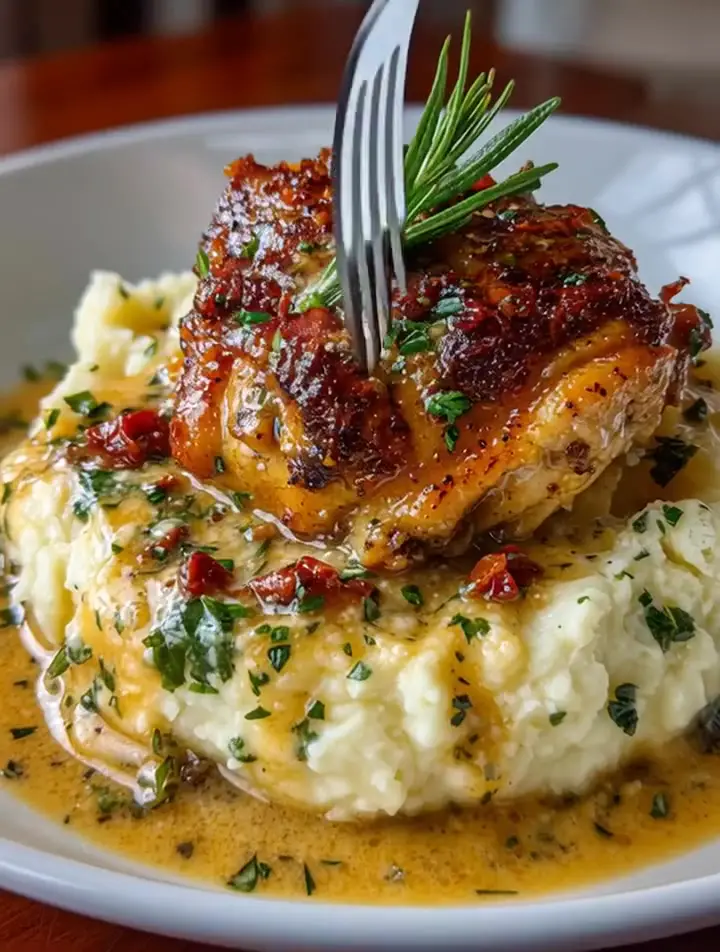
Smothered Chicken Thighs in Gravy is a beloved comfort food staple that brings together the rich, savory flavors of tender chicken and a luscious, velvety gravy. This dish is deeply rooted in Southern cuisine but has found its way into kitchens across the United States and beyond, thanks to its hearty appeal and satisfying taste. Whether served over fluffy white rice, buttery mashed potatoes, or warm biscuits, smothered chicken thighs are a meal that warms the soul and fills the kitchen with irresistible aromas. The beauty of this recipe lies not only in its delicious outcome but also in its simplicity—few ingredients, minimal prep work, and maximum flavor.
The History
The origins of smothered chicken can be traced back to Southern American cooking traditions, particularly those influenced by Creole and Cajun cultures in Louisiana. “Smothering” is a cooking technique common in these regions, involving browning meat and then slowly cooking it in a covered pot with vegetables like onions, bell peppers, and celery—a trinity fundamental to Creole cooking. This slow-cooking method allows the meat to become incredibly tender while absorbing deep, complex flavors from the sauce.
Historically, smothered dishes were practical meals made with affordable, readily available ingredients. Chicken thighs, being more flavorful and less expensive than breasts, were often preferred. Over time, the dish evolved and spread throughout the South and into mainstream American home cooking. Today, variations of smothered chicken appear in family cookbooks, church potlucks, and Sunday dinners across the country, symbolizing warmth, tradition, and home-cooked love.
Ingredients Breakdown
The magic of smothered chicken thighs lies in the harmony of simple, wholesome ingredients that come together to create something greater than the sum of their parts. Let’s break down each component:
- Chicken Thighs: Bone-in, skin-on chicken thighs are ideal for this recipe. They stay moist during slow cooking, have more fat (which enhances flavor), and become fall-off-the-bone tender. You can use boneless if preferred, but expect slightly less richness.
- Salt and Black Pepper: Essential seasonings that enhance the natural flavor of the chicken. Freshly ground black pepper adds a subtle bite.
- Flour: Used both as a seasoning coating and thickening agent. Dredging the chicken in flour before browning helps build the base of the gravy and promotes a beautiful golden crust.
- Vegetable Oil or Butter: For browning the chicken. Oil has a higher smoke point, making it ideal for searing, while butter adds richness and flavor (many cooks use a combination).
- Onion: Yellow or white onions add sweetness and depth when caramelized. They form the aromatic foundation of the gravy.
- Garlic: Fresh garlic cloves provide a pungent, earthy note that elevates the entire dish.
- Beef or Chicken Broth: Adds savory umami and body to the gravy. Low-sodium versions are recommended to control salt levels.
- Worcestershire Sauce: A few dashes contribute tanginess, complexity, and a hint of fermentation that rounds out the flavor profile.
- Bay Leaf: Imparts a subtle herbal aroma without overpowering. Always remove before serving.
- Thyme: Dried or fresh thyme adds an earthy, slightly floral note that pairs beautifully with poultry.
- Butter (for finishing): A small amount stirred in at the end gives the gravy a silky, restaurant-quality sheen and richness.
Step-by-Step Recipe
- Prepare the Chicken: Pat the chicken thighs dry with paper towels—this ensures proper browning. Season generously on both sides with salt and black pepper.
- Dredge in Flour: Spread about 1/3 cup of all-purpose flour on a plate. Lightly coat each chicken thigh, shaking off excess. This layer will help crisp the skin and thicken the gravy later.
- Brown the Chicken: Heat 2–3 tablespoons of oil or a mix of oil and butter in a large, heavy-bottomed skillet or Dutch oven over medium-high heat. Once hot, place the chicken thighs skin-side down. Cook for 5–7 minutes until deeply golden brown. Flip and cook another 3–4 minutes. Do not rush this step—it builds flavor through fond (browned bits) on the pan bottom. Transfer thighs to a plate and set aside.
- Sauté the Aromatics: Reduce heat to medium. Add chopped onions to the same pot and cook for 6–8 minutes, stirring occasionally, until softened and lightly caramelized. Scrape up any browned bits—they’re flavor gold!
- Add Garlic: Stir in minced garlic and cook for 30 seconds to 1 minute until fragrant. Be careful not to burn it.
- Build the Gravy Base: Sprinkle another tablespoon of flour over the onions and stir to make a loose roux. Cook for 1–2 minutes to eliminate raw flour taste.
- Pour in Broth: Gradually whisk in 2 cups of warm broth (beef or chicken), ensuring no lumps form. Stir in Worcestershire sauce, bay leaf, and thyme.
- Simmer the Chicken: Return the chicken thighs to the pot, skin-side up (to keep it submerged would soften the crispness). Bring the liquid to a gentle simmer.
- Cover and Cook: Reduce heat to low, cover the pot, and let it cook for 35–45 minutes. The chicken should reach an internal temperature of 165°F and be very tender.
- Finish the Gravy: Remove chicken and set aside. Discard bay leaf. If desired, blend the gravy briefly with an immersion blender for smoothness (optional). Stir in 1–2 tablespoons of cold butter to enrich and gloss the sauce.
- Adjust Seasoning: Taste and adjust salt, pepper, or acidity (a splash of apple cider vinegar can brighten it if needed).
- Serve: Plate the chicken thighs and smother generously with hot gravy.
Tips
- Don’t Crowd the Pan: Brown chicken in batches if necessary to avoid steaming instead of searing.
- Control the Heat: Too high, and the flour burns; too low, and you won’t develop enough fond. Medium-high is usually perfect.
- Use Warm Broth: Adding cold liquid to a hot pan can cause sauces to break or cool too quickly. Warm broth integrates smoothly.
- Skim Excess Fat: After cooking, if the gravy seems greasy, skim off fat with a spoon or use a fat separator.
- Rest Before Serving: Letting the dish sit for 5–10 minutes after cooking allows flavors to meld and the sauce to thicken slightly.
- Make Ahead: Smothered chicken tastes even better the next day. Reheat gently on the stove to preserve texture.
- Gravy Too Thin? Simmer uncovered to reduce, or make a slurry (1 tsp cornstarch + 1 tbsp water) and stir in.
- Gravy Too Thick? Whisk in additional broth or water a little at a time until desired consistency is reached.
Variations and Customizations
One of the joys of smothered chicken thighs is how easily they adapt to different tastes and dietary needs:
- Cajun-Style: Add diced green bell pepper and celery with the onion (the “holy trinity”), plus cayenne pepper, smoked paprika, and a dash of hot sauce for heat.
- Mushroom Smothered Chicken: Sauté sliced cremini or button mushrooms with the onions for an earthy, umami-rich twist.
- Creamy Version: Stir in 1/2 cup of heavy cream or sour cream at the end for a luxurious, creamy gravy.
- Tomato-Based: Add 1/2 cup of crushed tomatoes or tomato paste for a deeper, slightly tangy sauce reminiscent of fricassee.
- Apple and Sage: Use apple cider instead of part of the broth and add fresh chopped sage for a fall-inspired variation.
- Gluten-Free: Substitute the flour with rice flour, cornstarch, or a gluten-free all-purpose blend. Dredge chicken lightly and use cornstarch slurry to thicken gravy if needed.
- Dairy-Free: Skip butter and use olive oil or dairy-free margarine. Omit the final butter swirl or replace with a drizzle of extra virgin olive oil.
- Instant Pot Version: Brown chicken using sauté function, then add aromatics and broth. Pressure cook for 12 minutes, natural release, then thicken gravy using sauté mode again.
- Oven-Braised: After browning, transfer everything to a 325°F oven for 45–60 minutes. Oven braising provides even, gentle heat for ultra-tender results.
Health Considerations and Nutritional Value
While smothered chicken thighs are undeniably comforting, they can be adapted to fit various health goals:
- Nutritional Profile (per serving, approx. 1 thigh with 1/2 cup gravy):
- Calories: ~380–450
- Protein: 28–32g (excellent source)
- Fat: 22–28g (mostly unsaturated and saturated from chicken skin and butter)
- Carbohydrates: 12–18g (primarily from flour and onions)
- Sodium: 600–900mg (depending on broth and added salt)
- Benefits: Chicken thighs are rich in iron, zinc, selenium, and B vitamins (especially B12 and niacin). The dark meat provides more monounsaturated fats than breast meat, which are heart-healthy when consumed in moderation.
- Heart-Healthy Modifications: Use skinless thighs, reduce butter, substitute olive oil, and use low-sodium broth. Increase vegetables (add carrots, celery, mushrooms) to boost fiber and nutrients.
- Low-Carb/Keto Options: Replace flour with almond flour or pork rind crumbs for dredging, and thicken gravy with xanthan gum or a keto-friendly thickener.
- Balanced Meal Tip: Serve over cauliflower mash or zucchini noodles to reduce carbs, or pair with a large side salad to increase volume and nutrition without excess calories.
Ingredients
- 6 bone-in, skin-on chicken thighs (about 2.5–3 lbs)
- Salt and freshly ground black pepper (to taste)
- 1/3 cup all-purpose flour (plus 1 tbsp for gravy)
- 2–3 tablespoons vegetable oil or a mix of oil and butter
- 1 large yellow onion, thinly sliced or diced
- 3 cloves garlic, minced
- 2 cups low-sodium chicken or beef broth
- 1 tablespoon Worcestershire sauce
- 1 bay leaf
- 1 teaspoon dried thyme (or 1 tbsp fresh)
- 1–2 tablespoons cold butter (optional, for finishing)
Directions
- Season chicken thighs generously with salt and pepper. Dredge each piece in flour, shaking off excess.
- In a large skillet or Dutch oven, heat oil over medium-high heat. Add chicken skin-side down and cook 5–7 minutes until golden brown. Flip and cook 3–4 minutes more. Remove and set aside.
- Reduce heat to medium. Add onions and cook 6–8 minutes until soft and lightly browned, scraping up browned bits from the bottom.
- Stir in garlic and cook 30 seconds until fragrant.
- Sprinkle in 1 tablespoon flour and stir for 1 minute to form a roux.
- Gradually whisk in broth, then add Worcestershire sauce, bay leaf, and thyme. Bring to a simmer.
- Return chicken to the pan, skin-side up. Cover and reduce heat to low. Simmer for 35–45 minutes, until chicken is tender and cooked through.
- Remove chicken and set aside. Discard bay leaf. Optional: blend gravy briefly for smoothness.
- Stir in cold butter to enrich the gravy. Adjust seasoning to taste.
- Serve hot over rice, mashed potatoes, or biscuits, smothered with warm gravy.
FAQ
Can I use chicken breasts instead of thighs?
Yes, but breasts cook faster and can dry out. Reduce simmering time to 20–25 minutes and consider using bone-in, skin-on breasts for moisture.
Why are my chicken thighs tough?
Undercooking or using breasts instead of thighs may cause toughness. Thighs should be tender after 35+ minutes of simmering. If tough, continue cooking and check doneness.
Can I freeze smothered chicken?
Absolutely. Cool completely, store in airtight containers, and freeze for up to 3 months. Thaw overnight in the fridge and reheat gently on the stove.
How do I reheat leftovers?
Warm in a covered skillet over low heat with a splash of broth to refresh the gravy. Microwaving works but may alter texture slightly.
Can I make this in a slow cooker?
Yes! Brown chicken and sauté onions/garlic on the stove, then transfer to a slow cooker with remaining ingredients (except finishing butter). Cook on low for 6–7 hours or high for 3–4. Finish with butter before serving.
Is this recipe gluten-free?
Not by default due to flour, but it can be made gluten-free using alternative flours and thickening agents (see variations).
What sides go well with smothered chicken?
Classic pairings include white rice, mashed potatoes, mac and cheese, collard greens, cornbread, green beans, or a simple garden salad.
Can I use canned gravy?
You can, but homemade is vastly superior in flavor and texture. Canned gravy lacks depth and may contain preservatives. This recipe is easy enough to skip the canned version entirely.
Summary
Smothered Chicken Thighs in Gravy is a timeless, flavor-packed dish that combines crispy-seared chicken with a rich, savory sauce made from pan drippings, onions, and herbs. Slow-simmered to perfection, it’s comfort food at its finest—ideal for weeknight dinners or special gatherings.