Introduction
Slow-Cooked Pot Roast with Vegetables is the quintessential comfort food—a dish that transforms humble, affordable cuts of meat into a tender, deeply flavorful centerpiece through the gentle, patient magic of low-and-slow cooking. More than just a meal, it’s an aromatic ritual: the rich aroma of seared beef mingling with caramelizing onions, the earthy sweetness of carrots and potatoes softening in savory broth, and the subtle herbal notes of thyme and rosemary weaving through steam rising from a heavy pot or slow cooker. Whether prepared in a traditional Dutch oven, an electric slow cooker, or even an Instant Pot set to slow-cook mode, this dish embodies warmth, nourishment, and time-honored culinary wisdom. Its versatility makes it equally suited for weeknight family dinners, Sunday suppers, holiday gatherings, or meal-prep batches designed to last throughout the week. In an era of rushed meals and instant gratification, the slow-cooked pot roast stands as a delicious reminder that some of life’s greatest rewards—tenderness, depth, and soul-satisfying richness—are born not from speed, but from patience.
The History
The origins of pot roast trace back centuries—to medieval Europe, where resourceful cooks developed methods to tenderize tough, inexpensive cuts of meat using moist-heat techniques. Before modern refrigeration and widespread access to prime cuts, families relied on tougher, collagen-rich muscles like chuck, brisket, and round, which were unsuitable for quick roasting but ideal for long, gentle braising. Early versions were cooked in heavy iron pots suspended over open hearths or buried in hot coals, often with root vegetables and herbs gathered from gardens or foraged nearby. In 17th-century France, the technique evolved into *boeuf à la mode*—beef “in the fashion” of the time—braised in wine and aromatics. As European settlers brought these traditions to North America, pot roast adapted to local ingredients: American cooks incorporated tomatoes (often in the form of ketchup or tomato paste), brown sugar for balance, and regional produce like parsnips and turnips. The mid-20th century saw the rise of the electric slow cooker in the 1970s—popularized by brands like Crock-Pot—which democratized the technique, allowing home cooks to prepare complex, restaurant-quality braises with minimal hands-on effort. Today, slow-cooked pot roast remains a beloved staple across generations, bridging tradition and modern convenience while continually reinventing itself through global flavors, dietary adaptations, and innovative kitchen tools.
Ingredients Breakdown
Every exceptional pot roast begins with intentionality—not just in selection, but in understanding the functional role each ingredient plays in building layers of flavor, texture, and tenderness.
- Beef Chuck Roast (3–4 lbs): The undisputed star. Chuck comes from the shoulder, rich in marbling and connective tissue (collagen). When slowly heated, collagen converts to gelatin—yielding succulent, fork-tender meat with luxurious mouthfeel. Look for well-marbled, deep ruby-red cuts with creamy-white fat streaks; avoid overly lean or grayish meat.
- All-Purpose Flour (¼ cup): Used for dredging, flour creates a protective crust during searing and acts as a natural thickener for the braising liquid. Gluten-free alternatives like arrowroot or brown rice flour work well for sensitive diets.
- Olive Oil or Avocado Oil (2–3 tbsp): High-smoke-point oils ensure optimal browning without burning. Avoid butter at this stage—it browns too quickly and can scorch.
- Yellow Onions (2 large, roughly chopped): Provide foundational sweetness and umami depth. Sautéing them until golden unlocks complex caramelized compounds essential to the sauce’s body.
- Garlic (6–8 cloves, smashed and minced): Adds pungent, aromatic complexity. Add toward the end of sautéing to prevent bitterness from overcooking.
- Tomato Paste (2 tbsp): A flavor powerhouse—its concentrated sugars and acids deepen color, add richness, and balance the meat’s savoriness. Cooking it for 1–2 minutes (“blooming”) removes raw taste and enhances nutty, umami notes.
- Beef Broth (4–5 cups, low-sodium preferred): Forms the braising medium. Opt for high-quality, collagen-rich bone broth when possible—or enhance store-bought broth with a splash of Worcestershire sauce, soy sauce, or fish sauce for extra glutamates and depth.
- Dry Red Wine (½ cup, e.g., Cabernet Sauvignon or Merlot): Optional but highly recommended. Alcohol dissolves fat-soluble flavor compounds, while tannins add structure and acidity. Substitute with additional broth + 1 tsp apple cider vinegar if avoiding alcohol.
- Fresh Herbs (2–3 sprigs each thyme & rosemary, plus 2 bay leaves): Earthy, piney, and floral notes that infuse gradually. Tie stems together with kitchen twine for easy removal. Dried herbs may be substituted (1 tsp dried thyme, ½ tsp dried rosemary), though fresh delivers superior vibrancy.
- Carrots (4–5 large, peeled and cut into 2-inch chunks): Sweetness balances salt and acid; their natural pectin also contributes subtle thickening. Baby carrots lack depth—opt for full-size, preferably organic.
- Potatoes (4–5 medium Yukon Gold or Russet, peeled and quartered): Yukons hold shape and offer buttery creaminess; Russets absorb more flavor but may disintegrate slightly. Avoid waxy red potatoes unless added in the final 90 minutes to preserve integrity.
- Celery (2 ribs, sliced ½-inch thick): Adds aromatic bitterness and vegetal backbone—often overlooked but critical for balancing sweetness.
- Optional Enhancers: 1 tbsp Worcestershire sauce (umami boost), 1 tsp black peppercorns (freshly cracked), 1 tbsp balsamic vinegar (for brightness at the end), 2 tbsp chopped fresh parsley (garnish), and a pat of unsalted butter stirred in post-cooking for sheen and richness.
Step-by-Step Recipe
- Prep & Pat Dry: At least 1 hour before cooking, remove roast from refrigerator. Unwrap, blot thoroughly with paper towels—moisture is the enemy of browning. Let sit uncovered at room temperature for 45–60 minutes. Season generously on all sides with kosher salt (1½ tsp) and freshly ground black pepper (1 tsp).
- Heat & Sear: In a large, heavy-bottomed Dutch oven (or slow cooker liner-safe pan), heat 2 tbsp oil over medium-high heat until shimmering. Carefully place roast in pan—do not crowd. Sear undisturbed for 5–6 minutes per side (including edges) until deeply browned and crust forms. Transfer to a plate; tent loosely with foil.
- Sauté Aromatics: Reduce heat to medium. Add remaining oil if needed, then add onions. Cook 6–8 minutes, stirring occasionally, until softened and golden. Add celery and carrots; cook 4 minutes more. Stir in garlic and tomato paste; cook 2 minutes, stirring constantly, until fragrant and brick-red.
- Flame & Deglaze: Pour in red wine (if using), scraping vigorously with a wooden spoon to lift browned bits (fond) from the pan bottom—the flavor foundation of your sauce. Simmer 2–3 minutes until reduced by half.
- Braise Base: Return seared roast to pot. Pour in enough low-sodium beef broth to come halfway up the roast (approx. 4 cups). Add herb bundle and bay leaves. Bring to a gentle simmer—do not boil. Cover tightly with lid.
- Slow Cook (Oven Method): Transfer covered pot to a preheated 325°F (163°C) oven. Braise for 2.5 hours.
- Add Vegetables: Carefully remove lid. Nestle potatoes and remaining carrots around roast. Spoon some broth over vegetables. Re-cover and return to oven for another 1.5–2 hours—or until meat is fork-tender and shreds effortlessly.
- Slow Cook (Crock-Pot Method): Transfer everything (except potatoes and late carrots) to a 6–7 qt slow cooker. Cook on LOW for 6–7 hours. Add potatoes and carrots in the final 2 hours.
- Rest & Skim: Remove roast and vegetables to a warmed platter; cover with foil. Let rest 15 minutes. Meanwhile, skim excess fat from surface of braising liquid using a ladle or fat separator.
- Reduce & Finish: Place pot over medium heat. Simmer uncovered 10–15 minutes to concentrate flavor and thicken slightly. Stir in 1 tbsp balsamic vinegar and optional butter for gloss. Adjust seasoning with salt and pepper.
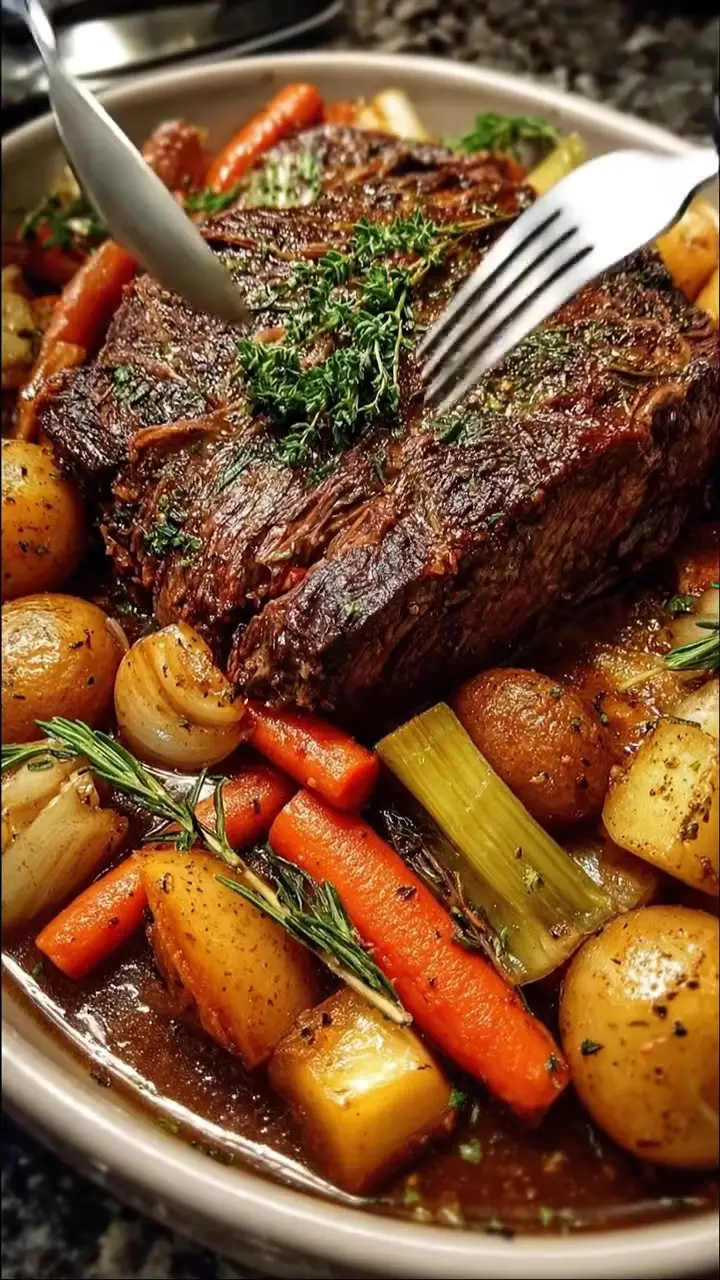
- Plate & Serve: Slice or shred roast against the grain. Arrange with vegetables. Ladle generous amounts of rich, velvety gravy over top. Garnish with fresh parsley and extra cracked black pepper.
Tips
- Never Skip the Sear: Maillard reaction = flavor insurance. A properly browned crust develops hundreds of new aromatic compounds. Don’t rush—patience here pays dividends later.
- Low & Slow Is Non-Negotiable: Temperatures above 350°F cause muscle fibers to contract violently, squeezing out moisture. 325°F (oven) or LOW setting (crock-pot) maintains steady collagen breakdown without drying.
- Resist the Lid-Lift: Every time you uncover the pot, heat and steam escape—adding up to 20+ minutes to total cook time. Trust the process and use visual cues (steam condensation on lid, gentle bubbles at edge) instead.
- Vegetable Timing Matters: Root vegetables added too early become mushy or overly sweet. Introduce potatoes and delicate carrots in the final 90–120 minutes—unless using parsnips or turnips, which benefit from longer braising.
- Broth Quality Dictates Outcome: Store-bought broth varies widely. Simmer cheap broth with roasted bones, onion skins, and herb stems for 1 hour before using—or opt for certified organic, low-sodium varieties with no artificial flavors or MSG.
- Acid Is Your Secret Weapon: A splash of vinegar, lemon juice, or wine at the end brightens the entire dish, cutting through richness and lifting flavors. Never add acidic elements early—they can toughen proteins.
- Resting Is Essential: Allowing the roast to rest redistributes juices internally. Cutting too soon releases precious moisture onto the cutting board—not the plate.
- Make-Ahead Magic: Pot roast tastes even better the next day. Cool completely, refrigerate overnight in broth, then gently reheat on stove or in oven. Fat congeals on top—easily skimmed off for lighter gravy.
- Skim, Strain, Reduce: For restaurant-worthy gravy: strain braising liquid through a fine-mesh sieve, skim fat, then reduce by 25% over medium-low heat. Whisk in 1 tsp cornstarch slurry if thicker consistency is desired.
- Freeze Smartly: Portion cooled roast + gravy into airtight containers (leave 1-inch headspace). Freeze up to 4 months. Thaw overnight in fridge; reheat gently on stovetop with splash of broth to refresh moisture.
Variations and Customizations
This timeless recipe welcomes creativity—whether adapting to pantry staples, cultural influences, or personal preferences—without sacrificing its soulful essence.
- Global Twists:
- Mexican-Inspired: Replace tomato paste with 2 tbsp ancho chile powder + 1 tsp cumin; add 1 diced chipotle in adobo and orange zest. Serve with cilantro-lime crema and warm tortillas.
- Asian-Fusion: Swap wine for dry sherry; use ginger (1 tbsp grated) and star anise (2 pods) with soy sauce (3 tbsp) and hoisin (1 tbsp). Finish with scallions and toasted sesame seeds.
- Mediterranean Style: Use white wine, add Kalamata olives, lemon zest, oregano, and feta crumbles just before serving. Pair with couscous or roasted cauliflower “rice.”
- Dietary Adaptations:
- Gluten-Free: Use GF flour or cornstarch for dredging; verify broth and Worcestershire are certified GF.
- Keto/Low-Carb: Omit potatoes and carrots; substitute with radishes, turnips, celery root, and zucchini added in the last 45 minutes. Increase healthy fats—finish with ghee or olive oil.
- Vegetarian “Roast” Option: Replace beef with a whole roasted cauliflower head or king oyster mushrooms, braised in mushroom broth with miso and nutritional yeast for umami depth.
- Cut & Cooking Variations:
- Chuck Eye vs. Bottom Round: Chuck eye offers more marbling and tenderness; bottom round is leaner—add 1 extra hour and baste frequently.
- Pressure Cooker Shortcut: Sear, sauté, deglaze, then pressure cook on HIGH for 60–75 minutes with natural release. Add veggies in last 5 minutes.
- Smoky Oven-Roast: After searing, transfer to smoker at 275°F for 3 hours, then finish in oven with vegetables for tenderness + wood-fired nuance.
- Flavor Boosters:
- Add 1 tbsp fish sauce for stealth umami (undetectable, deeply savory).
- Stir in 2 tbsp green goddess dressing at the end for herbal brightness.
- Top with gremolata (lemon zest, garlic, parsley) for vibrant contrast.
- Infuse broth with roasted garlic cloves or caramelized shallots for layered sweetness.
Health Considerations and Nutritional Value
A thoughtfully prepared slow-cooked pot roast is not only deeply satisfying—it’s nutritionally robust, especially when balanced with colorful vegetables and mindful preparation techniques.
Nutritional Highlights (per 6-oz serving of beef + 1 cup mixed vegetables + ½ cup gravy):
- Protein Powerhouse: ~42g high-biological-value protein—complete with all 9 essential amino acids—supporting muscle maintenance, satiety, and metabolic health.
- Collagen & Gelatin Benefits: Naturally occurring collagen breaks down into bioavailable gelatin, supporting joint health, gut lining integrity, skin elasticity, and hair/nail strength. Bone-in broths amplify this effect.
- Iron & B12 Rich: Beef provides heme iron (absorbed 3x more efficiently than plant-based non-heme iron) and methylcobalamin (active B12)—crucial for red blood cell formation, neurological function, and energy metabolism.
- Phytonutrient Diversity: Carrots (beta-carotene), onions (quercetin), garlic (allicin), and rosemary (rosmarinic acid) deliver potent antioxidants that combat oxidative stress and support immune resilience.
- Healthy Fats: Moderate saturated fat from grass-fed beef provides building blocks for hormones and cell membranes. Adding avocado oil or finishing with olive oil introduces heart-healthy monounsaturated fats and polyphenols.
Considerations & Mindful Modifications:
- Sodium Awareness: Use low-sodium broth and limit added salt—enhance flavor with herbs, citrus zest, mushrooms, and fermented seasonings (tamari, miso) instead.
- Portion Balance: Prioritize vegetables—aim for at least 2:1 veg-to-meat ratio by volume on the plate to increase fiber, micronutrients, and volume without excess calories.
- Gravy Wisdom: Skim fat and reduce gravy naturally rather than relying on flour-heavy thickeners—preserving nutrients and minimizing refined carbs.
- Grass-Fed Advantage: Grass-finished beef contains higher levels of omega-3s, CLA (conjugated linoleic acid), and vitamins A/E—making it a superior choice for inflammation modulation and cellular health.
- Digestive Support: The long braise predigests tough fibers and collagen, making nutrients highly bioavailable—ideal for aging adults, post-illness recovery, or sensitive digestive systems.
When paired with a side of leafy greens, fermented vegetables (like sauerkraut), or a simple arugula salad with lemon vinaigrette, this dish becomes a holistic, nutrient-dense meal aligned with principles of functional and ancestral nutrition.
Ingredients
- 3–4 lbs boneless beef chuck roast, well-marbled
- ¼ cup all-purpose flour (or gluten-free alternative)
- 3 tbsp high-heat oil (avocado, grapeseed, or olive)
- 2 large yellow onions, roughly chopped
- 6–8 garlic cloves, smashed and minced
- 2 tbsp tomato paste
- ½ cup dry red wine (Cabernet, Merlot, or Pinot Noir) — optional but recommended
- 4–5 cups low-sodium beef broth (preferably collagen-rich bone broth)
- 2–3 sprigs fresh thyme
- 2–3 sprigs fresh rosemary
- 2 large bay leaves
- 4–5 medium Yukon Gold potatoes, peeled and quartered
- 4–5 large carrots, peeled and cut into 2-inch chunks
- 2 celery ribs, sliced ½-inch thick
- 1½ tsp kosher salt (plus more to taste)
- 1 tsp freshly ground black pepper (plus more to taste)
- 1 tbsp Worcestershire sauce (optional, for umami)
- 1 tbsp balsamic vinegar (for finishing)
- 2 tbsp unsalted butter (optional, for gloss)
- Fresh flat-leaf parsley, chopped (for garnish)
Directions
- Remove roast from refrigerator 1 hour before cooking. Pat *extremely* dry with paper towels. Season liberally on all sides with salt and pepper. Let sit uncovered at room temperature.
- Heat 2 tbsp oil in a heavy 6–7 quart Dutch oven over medium-high heat until shimmering. Sear roast on all sides—including edges—until deeply browned (5–6 min per side). Transfer to a plate; tent with foil.
- Reduce heat to medium. Add remaining 1 tbsp oil, then onions. Cook 6–8 minutes until softened and golden. Stir in celery and carrots; cook 4 minutes. Add garlic and tomato paste; cook 2 minutes, stirring constantly.
- Pour in red wine, scraping bottom to release fond. Simmer 2–3 minutes until reduced by half.
- Return roast to pot. Add enough broth to come halfway up roast. Tuck in herb sprigs and bay leaves.
- Cover tightly and place in preheated 325°F oven. Braise 2.5 hours.
- Remove lid. Gently nestle potatoes and remaining carrots around roast. Spoon broth over vegetables. Re-cover.
- Return to oven. Continue braising 1.5–2 hours longer—or until meat is fork-tender and pulls apart easily.
- Carefully lift roast and vegetables onto a warmed platter. Cover with foil. Rest 15 minutes.
- Skim fat from braising liquid using a ladle or fat separator. Strain liquid into a saucepan through a fine-mesh sieve.
- Bring strained liquid to a gentle simmer over medium heat. Cook uncovered 10–15 minutes to reduce and concentrate. Stir in balsamic vinegar and optional butter.
- Taste and adjust seasoning with salt and pepper. Strain again if desired for silky texture.
- Slice or shred roast against the grain. Serve with vegetables, generous ladles of gravy, and fresh parsley.
FAQ
- Can I use a different cut of beef?
- Yes—but choose collagen-rich, well-marbled cuts: brisket flat, bottom round roast, short rib (boneless), or blade roast all work beautifully. Avoid lean cuts like sirloin or tenderloin—they’ll dry out. Cooking times may vary by ±30 minutes.
- Why is my pot roast tough?
- Most commonly: insufficient cooking time, too-high temperature, or skipping the sear. Toughness means collagen hasn’t fully converted to gelatin—return to low heat and braise 30–60 minutes longer. Also ensure meat was not cut *with* the grain (always slice/shred against it).
- Can I cook this entirely in a slow cooker?
- Absolutely. Follow steps 1–4 on the stovetop (sear, sauté, deglaze), then transfer to slow cooker with broth and herbs. Cook on LOW 6–7 hours. Add potatoes and carrots in the final 2 hours.
- How do I store and reheat leftovers?
- Cool completely, then refrigerate in airtight container with gravy for up to 5 days. Freeze portions (meat + gravy only) for up to 4 months. Reheat gently on stove in saucepan with splash of broth, or in covered dish at 325°F until internal temp reaches 165°F. Avoid microwaving on high—it toughens meat.
- What if I don’t have red wine?
- No problem! Substitute with equal parts additional broth + 1 tsp apple cider vinegar or lemon juice. Or use ½ cup unsweetened pomegranate juice for fruity depth.
- Can I make this ahead for a party?
- Highly recommended! Prepare 1–2 days in advance. Refrigerating allows flavors to meld and fat to solidify for easy skimming. Reheat gently—then finish with fresh herbs and a splash of acid for brightness.
- Is the gravy supposed to be thin?
- Traditional pot roast yields a light, brothy gravy—not thick like gravy for turkey. If you prefer richer texture: whisk 1 tsp cornstarch into 2 tbsp cold water, stir into simmering liquid, and cook 2 minutes until glossy. Or reduce longer (up to 20 min) for natural thickness.
- Can I add other vegetables?
- Yes! Parsnips, turnips, rutabaga, pearl onions (blanched first), and even cabbage wedges (added last 45 minutes) all braise beautifully. Avoid zucchini, bell peppers, or broccoli—they turn mushy or lose flavor.
- What sides pair best?
- Classic: buttered egg noodles, mashed potatoes, or crusty sourdough bread for soaking up gravy. Lighter options: roasted Brussels sprouts, kale salad with lemon-tahini, or quinoa pilaf with dried cherries and almonds.
- Can I use dried herbs instead of fresh?
- You can—but use ⅓ the amount (e.g., 1 tsp dried thyme instead of 3 sprigs). Fresh herbs provide brighter, more nuanced flavor and are worth seeking out—or grow your own!
Summary
Slow-Cooked Pot Roast with Vegetables is a masterclass in transformative cooking—where time, temperature, and technique convert economical, fibrous beef into meltingly tender, deeply savory perfection, enveloped in a rich, herb-kissed gravy and surrounded by caramelized root vegetables. It’s a dish rooted in history, adaptable to modern lifestyles and dietary needs, and endlessly expressive—offering both profound comfort and quiet culinary sophistication.
Whether prepared in a cast-iron Dutch oven, a programmable slow cooker, or even a precision sous-vide bath, this roast delivers unmatched depth, nourishment, and soul-warming satisfaction—proving that the most memorable meals are rarely the fastest, but always the most patiently, lovingly made.