Introduction
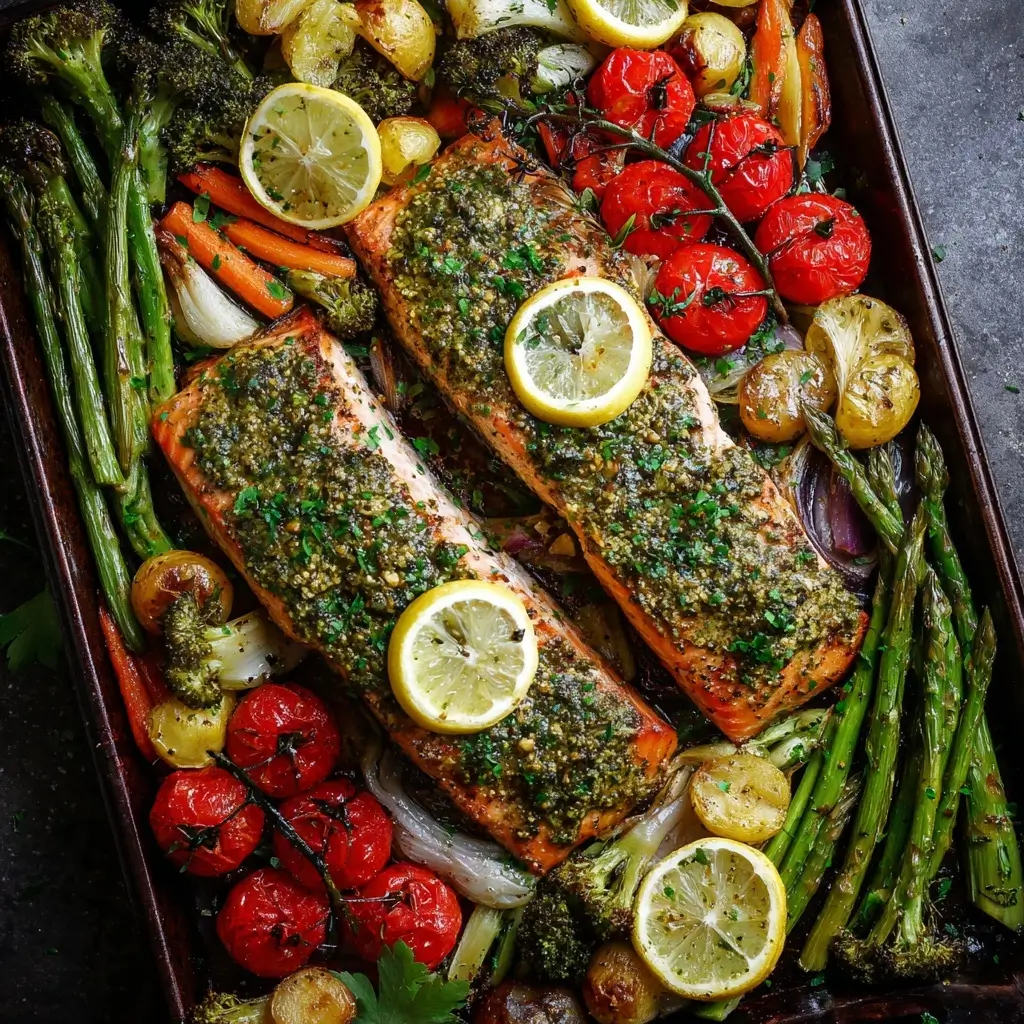
Looking for a quick, nutritious, and delicious weeknight dinner that’s as vibrant as it is satisfying? Look no further than Sheet Pan Pesto Salmon & Veggies. This one-pan wonder combines tender salmon fillets with crisp-tender roasted vegetables, all kissed with the bold, herbaceous flavor of fresh pesto. Not only does this dish deliver on taste, but it also minimizes cleanup—making it a favorite among busy families, meal preppers, and anyone who loves flavorful food without the fuss. Whether you’re a seasoned home cook or just starting out in the kitchen, this recipe is simple enough to master yet impressive enough to serve at a casual dinner party.
The History
The concept of roasting proteins and vegetables together on a single sheet pan has roots in rustic European cooking traditions, where efficiency and flavor were paramount. In Mediterranean countries like Italy and Greece, fish was often baked with seasonal produce using olive oil, herbs, and garlic—a practice that emphasized freshness and simplicity. The modern “sheet pan dinner” trend gained popularity in North America during the 2010s, especially among health-conscious eaters and time-strapped individuals seeking balanced meals with minimal effort.
Salmon, rich in omega-3 fatty acids and prized for its buttery texture, became a staple protein in these dishes due to its ease of preparation and compatibility with bold flavors. Pesto, originating from Genoa, Italy, traditionally made with basil, pine nuts, garlic, Parmesan cheese, and olive oil, adds a luxurious depth to roasted dishes. Combining pesto with salmon and vegetables on a sheet pan is a contemporary fusion of Italian culinary heritage and modern American cooking trends, resulting in a globally inspired dish that feels both comforting and elevated.
Ingredients Breakdown
Each ingredient in this Sheet Pan Pesto Salmon & Veggies recipe plays a vital role in creating a harmonious blend of textures, flavors, and nutritional benefits:
- Salmon Fillets: Choose center-cut, skin-on fillets for even cooking and moisture retention. Wild-caught salmon offers superior flavor and nutrition, though farm-raised works well too.
- Pesto Sauce: Store-bought or homemade pesto brings an aromatic punch. Traditional basil pesto is ideal, but sun-dried tomato, kale, or arugula pesto can be used for variation.
- Cherry Tomatoes: These burst when roasted, releasing sweet juices that mingle beautifully with the other ingredients.
- Zucchini: Adds mild sweetness and a soft texture when roasted. Cut into uniform half-moons for consistent cooking.
- Red Bell Pepper: Offers natural sweetness and a pop of color. High in vitamin C and antioxidants.
- Red Onion: Provides a sharp bite when raw but mellows into caramelized richness when roasted.
- Asparagus: Tender-crisp stalks add elegance and are packed with fiber and folate.
- Olive Oil: Extra virgin olive oil helps prevent sticking, promotes browning, and enhances flavor absorption.
- Lemon: Fresh lemon juice brightens the dish, while lemon slices placed over the salmon infuse citrus notes during roasting.
- Salt & Black Pepper: Essential seasonings that enhance all components of the dish.
- Fresh Herbs (optional): Basil or parsley sprinkled at the end elevates freshness and presentation.
- Parmesan Cheese (optional): A light grating adds umami and richness after roasting.
Step-by-Step Recipe
- Preheat Oven: Begin by preheating your oven to 400°F (200°C). Line a large rimmed baking sheet with parchment paper or lightly coat it with non-stick spray to prevent sticking and make cleanup easier.
- Prepare Vegetables: Wash and dry all vegetables thoroughly. Slice zucchini into ½-inch thick half-moons. Core and slice red bell pepper into thin strips. Cut red onion into ½-inch wedges. Trim the woody ends off asparagus spears. Leave cherry tomatoes whole.
- Toss Vegetables: Place all chopped vegetables in a large mixing bowl. Drizzle with 2–3 tablespoons of olive oil, then season with salt and freshly ground black pepper to taste. Toss well until evenly coated.
- Arrange on Pan: Spread the seasoned vegetables in a single layer across one side of the prepared baking sheet. Keep them spaced out to ensure they roast rather than steam.
- Prepare Salmon: Pat the salmon fillets dry with paper towels to remove excess moisture, which helps achieve better browning. Season each fillet lightly with salt and pepper on both sides.
- Coat with Pesto: Spoon about 1 tablespoon of pesto per fillet onto the top of each salmon piece. Use the back of the spoon to spread it evenly over the surface. For extra flavor, gently press a few slivers of garlic or small basil leaves into the pesto.
- Add Lemon: Place 1–2 thin lemon slices directly on top of each salmon fillet. You can also squeeze a little lemon juice over the fish before adding the slices.
- Position Salmon: Place the pesto-covered salmon fillets on the other side of the baking sheet, leaving space between each piece for proper air circulation.
- Raise Salmon (Optional): To promote even cooking, consider placing the salmon on a wire rack set over the sheet pan, or elevate it slightly using lemon slices or onion pieces underneath.
- Bake: Roast in the preheated oven for 15–18 minutes, depending on the thickness of the salmon. The vegetables should be tender with slight charring at the edges, and the salmon should flake easily with a fork and reach an internal temperature of 145°F (63°C).
- Broil (Optional): For a golden, slightly crisped pesto topping, switch the oven to broil for the last 1–2 minutes. Watch closely to avoid burning.
- Rest and Serve: Remove from oven and let the salmon rest for 2–3 minutes. Garnish with freshly chopped basil or parsley, a sprinkle of grated Parmesan, and an extra drizzle of pesto if desired. Serve immediately.
Tips
- Uniform Cutting: Cut vegetables into similar sizes to ensure even roasting. Larger pieces may remain undercooked while smaller ones burn.
- Dry Salmon: Always pat salmon dry before seasoning—it helps the pesto adhere better and encourages surface browning.
- Don’t Overcrowd: Leaving space between ingredients allows hot air to circulate, promoting roasting instead of steaming.
- Use Parchment Paper: Prevents sticking and makes cleanup effortless. Avoid wax paper, which isn’t heat-safe.
- Check Early: Ovens vary, so begin checking for doneness around the 14-minute mark, especially if your salmon fillets are thinner than 1 inch.
- Homemade Pesto: If making your own pesto, use a food processor or blender for a smooth consistency. Toasting the nuts beforehand deepens the flavor.
- Acid Balance: A splash of balsamic glaze or white wine vinegar on the roasted veggies before serving can enhance complexity.
- Prep Ahead: Chop vegetables up to a day in advance and store them in airtight containers in the refrigerator. Assemble just before baking.
- Cook Skin-Side Down: If cooking skin-on salmon, place it skin-side down on the pan. The skin will crisp slightly and protect the delicate flesh.
- Leftover Ideas: Flake leftover salmon into salads, grain bowls, or pasta dishes for tomorrow’s lunch.
Variations and Customizations
This Sheet Pan Pesto Salmon & Veggies recipe is incredibly versatile. Here are several creative ways to customize it based on dietary preferences, seasonal availability, or flavor cravings:
- Vegetable Swaps: Try broccoli florets, green beans, baby potatoes, fennel, carrots, or mushrooms instead of or in addition to the listed veggies.
- Protein Alternatives: Replace salmon with skinless chicken breasts, cod, halibut, shrimp, or even tofu for a vegetarian version.
- Pesto Varieties: Experiment with different pestos—try walnut, pistachio, cilantro-lime, spinach-artichoke, or dairy-free versions made with nutritional yeast.
- Mediterranean Twist: Add kalamata olives, artichoke hearts, and crumbled feta cheese after baking for a Greek-inspired flair.
- Spicy Kick: Mix a pinch of red pepper flakes into the pesto or sprinkle over the salmon before roasting.
- Citrus Swap: Use orange or lime instead of lemon for a different citrus profile.
- Herb Infusion: Add sprigs of rosemary or thyme to the pan before roasting for earthy undertones.
- Cheesy Finish: Sprinkle mozzarella or goat cheese over the veggies during the last 5 minutes of cooking for a melty touch.
- Gluten-Free & Dairy-Free: Ensure your pesto is free from cheese or use a vegan alternative. Most store-bought brands now offer allergen-friendly options.
- Keto-Friendly: This dish is naturally low-carb. Just monitor portion sizes if pairing with grains.
- Meal Prep Version: Double the recipe and portion into meal prep containers with quinoa or cauliflower rice for ready-to-go lunches.
Health Considerations and Nutritional Value
Sheet Pan Pesto Salmon & Veggies isn’t just delicious—it’s a powerhouse of essential nutrients that support heart health, brain function, and overall wellness.
- Omega-3 Fatty Acids: Salmon is one of the best sources of EPA and DHA, which reduce inflammation, lower triglycerides, and support cognitive function.
- Antioxidant-Rich Vegetables: The colorful array of vegetables provides vitamins A, C, E, and K, along with antioxidants like lycopene (from tomatoes) and beta-carotene (from peppers).
- Fiber Content: Zucchini, asparagus, and onions contribute dietary fiber, aiding digestion and helping maintain stable blood sugar levels.
- Healthy Fats: Olive oil and pesto supply monounsaturated fats and polyphenols, which are linked to reduced risk of cardiovascular disease.
- Lean Protein: Salmon delivers high-quality protein with all nine essential amino acids, supporting muscle repair and satiety.
- Vitamin B12 and Selenium: Found abundantly in salmon, these nutrients play key roles in energy metabolism and immune function.
- Low Added Sugar: Unlike many processed meals, this recipe contains no added sugars, relying on natural sweetness from roasted vegetables.
- Calorie Range: One serving (salmon + veggies) typically ranges from 350–450 calories, depending on portion size and pesto quantity.
- Sodium Note: Be mindful of sodium content if using store-bought pesto, which can be high in salt. Opt for low-sodium versions or make your own to control the amount.
- Allergies: Traditional pesto contains tree nuts (pine nuts) and dairy. Substitute with seeds like sunflower or pumpkin and omit cheese for allergy-safe alternatives.
This meal aligns well with Mediterranean, heart-healthy, pescatarian, and anti-inflammatory diets. It’s also suitable for those managing diabetes or aiming for sustainable weight loss due to its balance of protein, fiber, and healthy fats.
Ingredients
- 4 (6-ounce) salmon fillets, skin-on preferred
- 1 cup cherry tomatoes
- 1 medium zucchini, sliced into half-moons
- 1 red bell pepper, sliced
- 1 bunch asparagus, trimmed and cut into 2-inch pieces
- 1 red onion, cut into wedges
- 3 tablespoons extra virgin olive oil
- ¼ teaspoon sea salt (or to taste)
- Freshly ground black pepper, to taste
- ½ cup prepared basil pesto (store-bought or homemade)
- 1 lemon, thinly sliced and juiced
- Fresh basil or parsley, for garnish
- Grated Parmesan cheese (optional)
Directions
- Preheat oven to 400°F (200°C). Line a large baking sheet with parchment paper.
- In a large bowl, combine cherry tomatoes, zucchini, red bell pepper, asparagus, and red onion. Drizzle with olive oil, season with salt and pepper, and toss to coat evenly.
- Spread vegetables in a single layer on one side of the baking sheet.
- Pat salmon fillets dry with paper towels. Season lightly with salt and pepper on both sides.
- Spread about 1 tablespoon pesto over the top of each salmon fillet. Place 1–2 lemon slices on each fillet and drizzle with a bit of lemon juice.
- Place salmon fillets on the other side of the baking sheet, ensuring space between each piece.
- Roast in the preheated oven for 15–18 minutes, or until salmon flakes easily with a fork and vegetables are tender and slightly caramelized.
- Optional: Broil for 1–2 minutes for a golden pesto crust (watch carefully).
- Remove from oven and let rest for 2–3 minutes. Garnish with fresh herbs and Parmesan if desired.
- Serve warm, optionally with additional lemon wedges and a drizzle of pesto on the side.
FAQ
Can I use frozen salmon?
Yes, but thaw it completely in the refrigerator overnight before cooking. Frozen salmon releases more moisture, which can affect texture and browning.
How do I store leftovers?
Store cooled leftovers in an airtight container in the refrigerator for up to 3 days. Reheat gently in the oven or microwave to preserve texture.
Can I freeze this dish?
While possible, freezing may alter the texture of the vegetables and salmon. It’s best enjoyed fresh or refrigerated short-term.
Is this recipe gluten-free?
Yes, provided the pesto used is certified gluten-free. Always check labels, as some commercial pestos may contain additives with gluten.
Can I cook everything at once if the salmon finishes faster?
Absolutely! Add the salmon to the pan during the last 12–15 minutes of roasting if your vegetables take longer. Alternatively, roast veggies first, then add salmon.
What sides go well with this dish?
Serve with quinoa, brown rice, farro, mashed potatoes, or a simple arugula salad dressed with lemon vinaigrette.
Can I make this dairy-free?
Yes—use a dairy-free pesto made without Parmesan or opt for a nut-based pesto using nutritional yeast for cheesy flavor.
Why is my salmon overcooked?
Overcooking often occurs due to high oven temperatures or thick fillets not being checked early enough. Use a thermometer: 145°F (63°C) is ideal.
How can I make this kid-friendly?
Reduce strong flavors like garlic in the pesto, cut vegetables into fun shapes, and let kids assemble their own sheet pan portions.
Can I use dried herbs instead of fresh?
Fresh herbs are recommended, especially in pesto. If substituting, use ⅓ the amount of dried herbs, as they are more concentrated.
Summary
Sheet Pan Pesto Salmon & Veggies is a flavorful, nutrient-dense meal that combines perfectly roasted salmon with colorful seasonal vegetables, all brought together with aromatic pesto and citrus zest. Easy to prepare, minimal cleanup, and endlessly customizable—this dish is a weeknight hero for healthy eating.