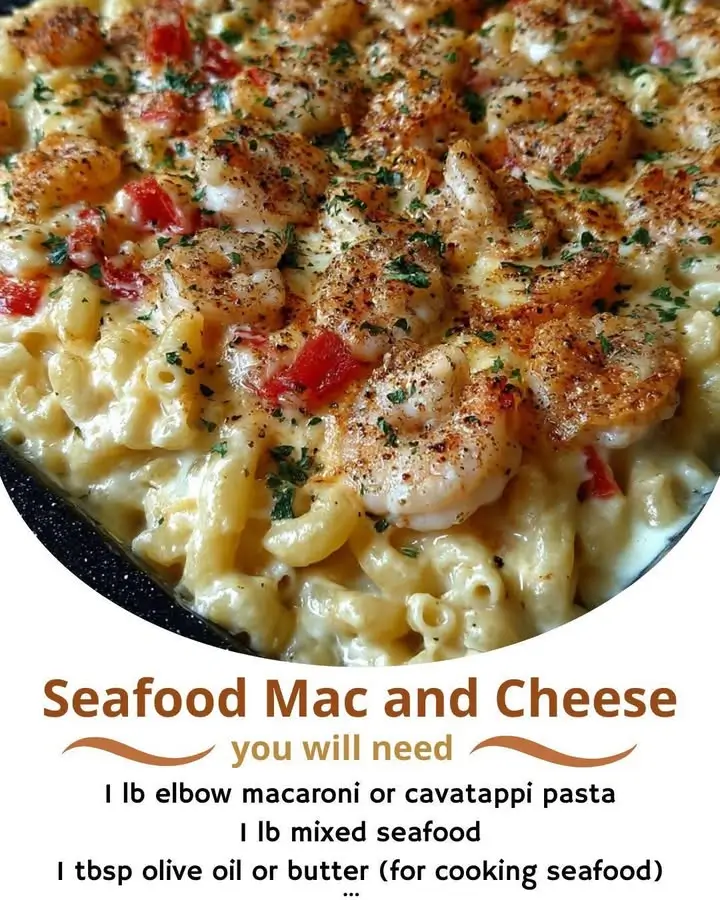
Seafood Mac and Cheese: A Luxurious Twist on a Classic Comfort Dish
There are few dishes as universally beloved as macaroni and cheese. Its creamy, cheesy embrace around tender pasta is comfort food at its finest. But when you elevate this classic with the delicate richness of seafood, you transform it into something truly extraordinary—Seafood Mac and Cheese. This decadent fusion brings together the best of land and sea, blending succulent shrimp, tender crab meat, flaky white fish, or even lobster with velvety cheese sauce and perfectly al dente pasta. Whether served at an elegant dinner party or enjoyed as a cozy weekend indulgence, Seaamed Mac and Cheese delivers an unforgettable culinary experience that balances richness, brininess, and warmth in every bite.
The History of Seafood Mac and Cheese
The roots of mac and cheese trace back centuries, with early versions appearing in 14th-century Italian cookbooks like Liber de Coquina, which described a dish of layered pasta and cheese. By the 18th century, British chefs had developed elaborate baked pasta dishes using cheddar and other sharp cheeses. When the recipe crossed the Atlantic, it became a staple in American households—especially after Kraft Foods introduced boxed mac and cheese during the Great Depression, making it accessible to millions.
However, the idea of combining seafood with pasta and cheese isn’t new either. Coastal regions around the world have long integrated shellfish and fish into creamy pasta dishes. In coastal France, Normandy-style sauces often feature cream, cheese, and seafood. In Italy, dishes like pasta al gratin con gamberi (baked pasta with shrimp) showcase similar concepts. The modern American version of Seafood Mac and Cheese likely emerged in the late 20th century as chefs began experimenting with gourmet twists on comfort food classics. Upscale restaurants in cities like New Orleans, Charleston, and Seattle began offering luxurious takes featuring local catches such as Gulf shrimp, blue crab, and Pacific salmon, all folded into rich, multi-cheese sauces over artisanal pasta. Today, it stands as a symbol of culinary innovation—a bridge between humble origins and high-end dining.
Ingredients Breakdown: What Makes This Dish Shine
The magic of Seafood Mac and Cheese lies not just in its components but in how they harmonize. Each ingredient plays a vital role:
- Pasta: Elbow macaroni is traditional, but shells, cavatappi, or penne work beautifully due to their ability to hold sauce. Using bronze-die extruded pasta enhances texture and sauce adhesion.
- Seafood: Shrimp, lump crab meat, scallops, lobster, or white fish like cod or halibut provide the oceanic essence. Freshness is key; if using frozen, thaw slowly in the refrigerator overnight.
- Cheeses: A blend creates depth:
- Sharp Cheddar – for tang and color.
- Gruyère or Fontina – for meltability and nuttiness.
- Parmesan – for umami and saltiness.
- Blue Cheese or Gorgonzola (optional) – adds bold complexity.
- Dairy Base: Whole milk, heavy cream, or half-and-half create a luscious sauce. Butter and flour form the roux, providing structure and silkiness.
- Aromatics & Seasonings: Onion, garlic, shallots, Dijon mustard, Worcestershire sauce, paprika (smoked or sweet), cayenne pepper, black pepper, fresh thyme, and parsley add layers of flavor without overpowering the seafood.
- Breadcrumb Topping (optional): Panko breadcrumbs mixed with butter, Parmesan, and herbs give a golden, crispy finish when baked.
Step-by-Step Recipe: Crafting the Perfect Seafood Mac and Cheese
Ingredients
- 12 oz (340g) elbow macaroni or cavatappi
- 3 tbsp unsalted butter
- 3 tbsp all-purpose flour
- 2 cups whole milk, warmed
- 1 cup heavy cream
- 1 small onion, finely diced
- 3 cloves garlic, minced
- ½ tsp smoked paprika
- ¼ tsp cayenne pepper (adjust to taste)
- 1 tsp Dijon mustard
- 1 tbsp Worcestershire sauce
- Salt and freshly ground black pepper to taste
- 2 cups shredded sharp cheddar cheese
- 1 cup shredded Gruyère or Fontina cheese
- ½ cup grated Parmesan cheese
- 1 lb (450g) mixed seafood (e.g., peeled shrimp, lump crab meat, bay scallops)
- 1 tbsp olive oil
- 1 tbsp fresh lemon juice
- 1 tsp lemon zest
- ¼ cup chopped fresh parsley
- 1 tsp chopped fresh thyme
- For topping: ¾ cup panko breadcrumbs + 2 tbsp melted butter + 2 tbsp Parmesan
Directions
- Preheat oven to 375°F (190°C). Grease a 9×13-inch baking dish or individual ramekins.
- Cook the pasta: Bring a large pot of salted water to a boil. Add pasta and cook until al dente (about 8–9 minutes). Drain and set aside. Do not overcook—remember it will bake further.
- Prepare the seafood: In a skillet over medium heat, warm olive oil. Add shrimp and scallops (if using), sautéing 2–3 minutes per side until just opaque. Add crab meat only to warm through—do not overcook. Remove from heat, stir in lemon juice, zest, and a pinch of salt. Set aside.
- Make the roux: In a large saucepan, melt butter over medium heat. Add diced onion and cook until soft and translucent (about 5 minutes). Stir in garlic and cook for 30 seconds until fragrant.
- Thicken the sauce: Sprinkle in flour and whisk constantly for 1–2 minutes to form a smooth roux. Do not let it brown unless you want a nuttier flavor.
- Add liquids: Gradually pour in warm milk and cream, whisking continuously to prevent lumps. Cook, stirring frequently, until the mixture thickens enough to coat the back of a spoon (about 6–8 minutes).
- Season the béchamel: Stir in smoked paprika, cayenne, Dijon mustard, Worcestershire sauce, salt, and black pepper. Taste and adjust seasoning.
- Add cheese: Reduce heat to low. Gradually add cheddar, Gruyère, and Parmesan, one handful at a time, stirring until fully melted and smooth. Avoid boiling once cheese is added to prevent separation.
- Combine everything: Fold in cooked pasta and prepared seafood gently. Stir in fresh herbs (parsley and thyme). Transfer mixture into the prepared baking dish.
- Add topping: Mix panko, melted butter, and Parmesan. Sprinkle evenly over the top.
- Bake: Place in oven and bake for 20–25 minutes, until bubbly around the edges and the topping is golden brown. For extra browning, broil 1–2 minutes at the end (watch closely).
- Rest before serving: Let sit for 5–10 minutes so the sauce sets slightly. Serve warm, garnished with extra parsley and a lemon wedge.
Tips for Success
- Don’t skip warming the milk. Cold milk can shock the roux and cause lumps.
- Use freshly grated cheese. Pre-shredded cheese contains anti-caking agents that can make the sauce grainy.
- Undercook the pasta slightly. It will absorb sauce and continue cooking in the oven.
- Balance the seafood flavors. Stronger fish like salmon may overpower the cheese; stick to mild varieties unless intentionally creating a bold profile.
- Layer flavors: Sautéing aromatics, using mustard and Worcestershire, and finishing with citrus brighten the richness.
- Keep the sauce creamy: If reheating leftovers, add a splash of milk when warming to restore texture.
- Control moisture: Pat seafood dry before adding to prevent watery sauce.
Variations and Customizations
One of the joys of Seafood Mac and Cheese is its versatility. Here are inspired variations to suit different tastes and occasions:
- Lobster Mac and Cheese: Substitute lobster meat for shrimp and crab. Add a touch of cognac or brandy to the sauce for elegance.
- Spicy Cajun Seafood Version: Add diced Andouille sausage, bell peppers, and Cajun seasoning. Use Creole spice blend and hot sauce for heat.
- Low-Carb/Keto Option: Replace pasta with steamed cauliflower florets or zucchini noodles. Use full-fat dairy and increase cheese ratio slightly.
- Dairy-Free/Vegan Alternative: Use cashew cream or coconut milk-based béchamel, nutritional yeast, vegan cheeses, and plant-based seafood analogs.
- Gluten-Free: Use gluten-free pasta and substitute flour with cornstarch or gluten-free all-purpose blend.
- Smoky Chipotle Style: Add pureed chipotle in adobo sauce and smoked Gouda for a deep, smoky kick.
- Mediterranean-Inspired: Swap seafood for grilled octopus or squid, add sun-dried tomatoes, Kalamata olives, feta, and oregano.
- Breakfast-for-Dinner Twist: Top with poached or fried eggs and serve with crusty bread.
- Buffalo Seafood Mac: Toss seafood in buffalo sauce before mixing in, use blue cheese in the sauce, and top with green onions.
Health Considerations and Nutritional Value
While undeniably rich, Seafood Mac and Cheese can be adapted for better nutrition without sacrificing flavor:
- Protein Powerhouse: Seafood provides high-quality protein, omega-3 fatty acids (especially from fatty fish), and essential nutrients like selenium and vitamin B12.
- Calcium & Vitamin D: Cheese and dairy contribute calcium and fortified vitamin D, supporting bone health.
- Heart Health: Omega-3s from seafood help reduce inflammation and support cardiovascular function.
- Calorie Awareness: Traditional recipes can exceed 700–900 calories per serving. To lighten:
- Use reduced-fat milk or evaporated skim milk.
- Reduce butter and cheese by 25%, compensating with cream cheese or pureed cauliflower.
- Choose lean seafood like shrimp or cod.
- Increase vegetable content with sautéed spinach, peas, or roasted broccoli.
- Sodium Levels: Cheese, processed breadcrumbs, and seasonings can make this dish high in sodium. Use low-sodium cheese, homemade breadcrumbs, and limit added salt.
- Allergies: Contains dairy, gluten, and shellfish. Always label accordingly when serving guests.
- Portion Control: Serve smaller portions alongside a crisp green salad or roasted vegetables for balance.
Frequently Asked Questions (FAQ)
Can I make Seafood Mac and Cheese ahead of time?
Yes! Assemble the dish up to one day in advance, cover, and refrigerate. Bake just before serving, adding 5–10 minutes to the cook time. You may need to cover with foil initially to prevent over-browning.
What kind of seafood works best?
Shrimp, crab, scallops, lobster, and mild white fish are ideal. Avoid strongly flavored fish like mackerel or tuna, which can clash with cheese.
Can I freeze it?
Freezing is possible but not ideal due to dairy separation. If freezing, omit breadcrumbs, cool completely, and store in airtight containers for up to 2 months. Thaw overnight and reheat covered with foil at 350°F, then crisp topping under the broiler.
Why did my sauce turn grainy?
Overheating, low-quality cheese, or adding cheese too quickly can cause curdling. Always melt cheese on low heat and off direct flame. Adding a splash of lemon juice or mustard helps stabilize emulsification.
How do I reheat leftovers?
Warm in the oven at 325°F with a splash of milk to restore creaminess. Microwave in short bursts, stirring frequently, though texture may suffer slightly.
Is canned seafood okay?
Yes—canned lump crab meat (not imitation) and high-quality canned salmon can work in a pinch. Drain well and rinse lightly to reduce sodium.
Can I make it stovetop-only (no bake)?
Absolutely. Skip the breadcrumb topping and serve immediately after combining everything. Some prefer this creamier, non-baked version.
How do I avoid rubbery seafood?
Do not overcook! Seafood continues to cook in the hot sauce. Sauté just until opaque, then fold in gently. Add delicate items like crab last.
Summary
Seafood Mac and Cheese merges the comforting soul of classic mac and cheese with the refined elegance of fresh ocean flavors, creating a dish that’s both indulgent and memorable. With the right balance of creamy cheese sauce, perfectly cooked pasta, and tender seafood, it’s a show-stopping meal perfect for special occasions or elevating weeknight dinners.