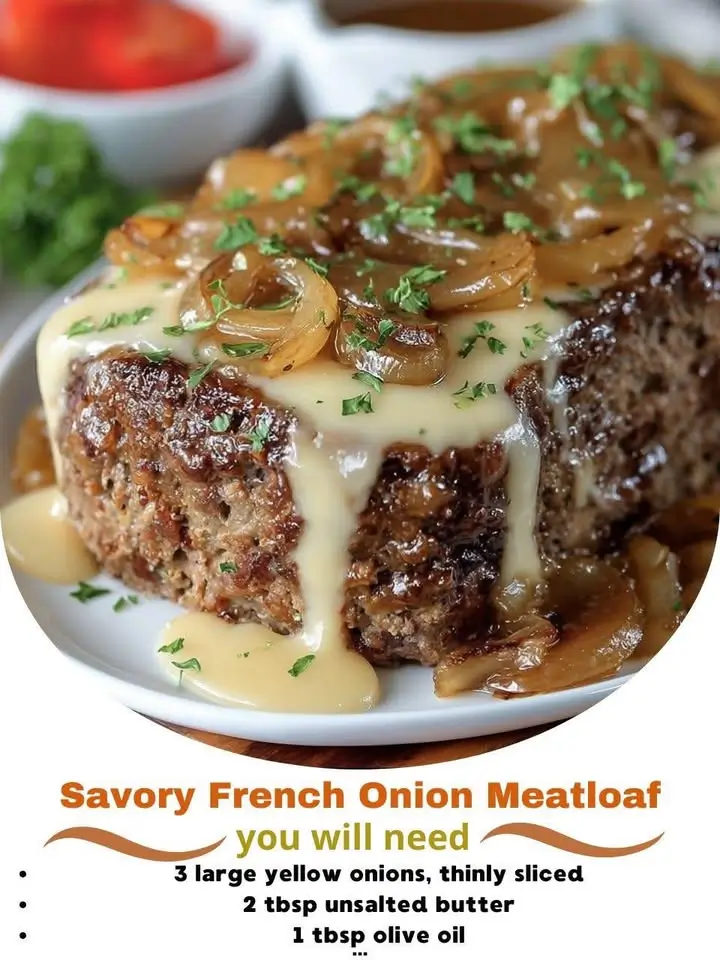
Savory French Onion Meatloaf: A Hearty Twist on a Classic Comfort Dish
There’s something undeniably comforting about a warm slice of meatloaf fresh from the oven—tender, juicy, and packed with flavor. But what happens when you elevate that classic dish with the rich, savory depth of French onion soup? Enter Savory French Onion Meatloaf: a luxurious fusion of two beloved comfort foods that brings together caramelized onions, beef broth, Gruyère cheese, and aromatic herbs in a hearty, homestyle loaf perfect for weeknight dinners or Sunday suppers. This recipe transforms the traditional meatloaf into a gourmet experience without sacrificing ease or accessibility. Whether you’re serving it to family, guests, or meal-prepping for the week ahead, this meatloaf is guaranteed to impress.
The History Behind the Dish
Meatloaf has long been a staple in American kitchens, dating back to the early 20th century when frugal homemakers sought ways to stretch ground meat with fillers like breadcrumbs and onions. Its roots can be traced even further to European cuisines—German, Scandinavian, and Eastern European traditions all feature similar minced meat dishes baked into loaves.
French onion soup, on the other hand, hails from 18th-century Paris, where street vendors served it as a restorative broth thickened with bread and topped with melted cheese. Over time, both dishes became symbols of home cooking—simple, nourishing, and deeply flavorful.
The idea of merging these two iconic recipes likely emerged from modern culinary experimentation, particularly within the realm of “gourmet comfort food.” Chefs and home cooks alike began reimagining classic dishes by layering in bold, complex flavors. The natural sweetness of slowly caramelized onions, combined with the umami richness of beef broth and the creamy tang of Gruyère, makes French onion soup an ideal inspiration for reinventing meatloaf. Thus, Savory French Onion Meatloaf was born—a delicious homage to tradition with a sophisticated twist.
Ingredients Breakdown: What Makes This Meatloaf So Special?
The magic of this meatloaf lies not just in its taste but in the thoughtful selection and preparation of each ingredient. Here’s a detailed look at what goes into crafting this masterpiece:
- Ground Beef (85% lean): The foundation of any great meatloaf. An 85/15 ratio ensures enough fat to keep the loaf moist while still holding its shape during baking.
- Ground Pork (optional): Adding a portion of ground pork enhances juiciness and adds a subtle sweetness that complements the onions.
- Yellow Onions: These are slowly caramelized to bring out their natural sugars, creating deep, buttery notes that infuse every bite of the meatloaf.
- Butter and Olive Oil: Used together for sautéing onions—butter for flavor, olive oil to prevent burning.
- Garlic: Freshly minced garlic provides a pungent kick that balances the sweetness of the onions.
- Beef Broth: Adds moisture and intense savory depth. Low-sodium is recommended so you can control the salt level.
- Worcestershire Sauce: A dash contributes complexity with its fermented, slightly tangy profile.
- Dijon Mustard: Offers a sharp, clean heat that cuts through the richness of the meat and cheese.
- Tomato Paste: Not only acts as a binder but also deepens color and adds a subtle acidity.
- Fresh Thyme and Rosemary: Herbs that echo the rustic charm of French cuisine; they lend earthy, woodsy aromas.
- Panko Breadcrumbs: Lighter than regular breadcrumbs, they help absorb excess moisture without making the loaf dense.
- Whole Milk: Keeps the mixture tender and helps hydrate the breadcrumbs.
- Egg: Acts as a crucial binder to hold everything together.
- Gruyère Cheese: Melts beautifully and offers a nutty, slightly sweet flavor that’s quintessentially French. It’s folded into the meat and also used as a topping.
- Salt and Black Pepper: Essential seasonings adjusted to taste.
- Optional Glaze: A mix of ketchup, brown sugar, and a splash of balsamic vinegar brushed on top before baking for a glossy, slightly sweet crust.
Step-by-Step Recipe: How to Make Savory French Onion Meatloaf
This recipe yields one large meatloaf (about 6–8 servings) and takes approximately 2 hours from start to finish, including prep and cooking time. Patience with the caramelization process is key—it makes all the difference!
Ingredients
- 2 tablespoons unsalted butter
- 2 tablespoons olive oil
- 3 large yellow onions, thinly sliced
- 4 cloves garlic, minced
- ½ cup low-sodium beef broth
- 1 tablespoon Worcestershire sauce
- 1 tablespoon Dijon mustard
- 2 tablespoons tomato paste
- 1 teaspoon fresh thyme leaves (or ½ tsp dried)
- 1 teaspoon fresh rosemary, finely chopped
- 1½ pounds ground beef (85% lean)
- ½ pound ground pork (optional)
- 1 cup panko breadcrumbs
- ¾ cup whole milk
- 2 large eggs
- 1½ cups grated Gruyère cheese, divided
- 1½ teaspoons kosher salt
- ½ teaspoon freshly ground black pepper
- For the glaze (optional): ¼ cup ketchup, 1 tablespoon brown sugar, 1 teaspoon balsamic vinegar
Directions
- Caramelize the Onions: In a large skillet over medium-low heat, melt butter with olive oil. Add sliced onions and stir to coat. Cook slowly, stirring occasionally, for 35–45 minutes until golden brown and jammy. If needed, deglaze the pan with a splash of water to loosen any stuck bits. Stir in garlic during the last 2 minutes. Remove from heat and let cool slightly.
- Prepare Flavor Base: To the caramelized onions, add beef broth, Worcestershire sauce, Dijon mustard, tomato paste, thyme, and rosemary. Mix well and set aside to cool completely (this prevents the eggs from scrambling later).
- Preheat Oven: Set oven to 375°F (190°C). Line a rimmed baking sheet with parchment paper or lightly grease a loaf pan (if using).
- Soak Breadcrumbs: In a small bowl, combine panko and milk. Let sit for 5 minutes to soften.
- Mix Meat Mixture: In a large mixing bowl, combine ground beef, ground pork (if using), soaked breadcrumbs, eggs, 1 cup of Gruyère cheese, salt, and pepper. Add the cooled onion mixture and gently fold everything together using your hands or a wooden spoon until just combined. Do not overmix, or the meatloaf will become tough.
- Shape the Loaf: Transfer the mixture to the prepared baking sheet and shape into a compact oval loaf about 9×5 inches. Alternatively, press into a greased 9×5 inch loaf pan for a more uniform shape.
- Apply Glaze (Optional): In a small bowl, whisk together ketchup, brown sugar, and balsamic vinegar. Brush evenly over the top of the meatloaf.
- Bake: Place in the center of the oven and bake for 50–60 minutes, or until the internal temperature reaches 160°F (71°C) when measured with a meat thermometer inserted into the center.
- Add Cheese Topping: Remove meatloaf from oven during the last 10 minutes of cooking. Sprinkle the remaining ½ cup of Gruyère over the top, return to oven, and continue baking until cheese is melted and bubbly.
- Rest Before Slicing: Once done, remove from oven and let rest for 10–15 minutes. This allows juices to redistribute and helps the loaf hold its shape when sliced.
- Serve: Slice with a sharp knife and serve warm with sides like mashed potatoes, green beans, or a crisp garden salad.
Tips for Perfect Savory French Onion Meatloaf Every Time
- Don’t Rush the Onions: Caramelizing onions properly is essential. Cooking them slowly develops sweetness and complexity. If pressed for time, you can make them ahead and store in the fridge for up to 3 days.
- Cool the Onion Mixture: Always allow the caramelized onions and liquid ingredients to cool before adding to the meat. Hot mixtures can cook the eggs prematurely, leading to a dry texture.
- Use a Meat Thermometer: This is the most reliable way to ensure your meatloaf is cooked perfectly—not underdone nor overcooked.
- Let It Rest: Skipping the resting step may cause the meatloaf to fall apart or release too much juice when cut.
- Freeze for Later: Assemble the raw meatloaf, wrap tightly in plastic and foil, and freeze for up to 3 months. Thaw overnight in the fridge before baking.
- Double the Batch: This recipe freezes and reheats beautifully, so consider making two—one for now, one for later.
- Drain Excess Fat (if using loaf pan): If baking in a loaf pan, drain accumulated fat halfway through cooking to reduce greasiness.
Variations and Customizations
This versatile recipe welcomes creativity. Try these tasty twists:
- Gluten-Free: Substitute panko with gluten-free breadcrumbs or rolled oats processed into fine crumbs.
- Dairy-Free: Omit Gruyère or use a plant-based meltable cheese. Replace butter with vegan margarine and milk with unsweetened almond or oat milk.
- Smoked Paprika Version: Add 1 teaspoon smoked paprika for a hint of campfire smokiness.
- Mushroom Boost: Sauté mushrooms along with the onions for an earthy, umami-rich addition.
- Spicy Kick: Mix in ½ teaspoon cayenne pepper or a diced jalapeño for heat lovers.
- Italian-Inspired: Swap Gruyère for mozzarella and Parmesan, and add oregano and basil for an Italian twist.
- Mini Meatloaves: Divide the mixture into muffin tins for individual portions—great for kids or meal prep. Bake for 20–25 minutes.
- Slow Cooker Option: Form the loaf and place in a slow cooker lined with parchment. Cook on high for 4–5 hours or low for 7–8 hours. Top with cheese in the last 30 minutes.
Health Considerations and Nutritional Value
While meatloaf is inherently rich and satisfying, there are ways to enjoy this dish mindfully:
- Leaner Protein Options: Use lean ground turkey or chicken instead of beef and pork. Note: the flavor will be milder, so consider boosting seasoning with extra herbs and spices.
- Reduced-Fat Dairy: Opt for reduced-fat Gruyère or use less cheese overall.
- Lower-Sodium Choices: Choose no-salt-added beef broth and skip added salt if necessary. Use fresh herbs to enhance flavor naturally.
- Breadcrumb Alternatives: Try crushed whole-grain crackers, cooked quinoa, or almond flour for added fiber or lower carbs.
- Portion Control: Serve moderate slices alongside generous portions of vegetables to balance the plate.
Nutritional Estimate (per serving, based on 8 servings):
- Calories: ~380
- Protein: 26g
- Fat: 24g (Saturated Fat: 11g)
- Carbohydrates: 15g
- Fiber: 1g
- Sugar: 6g (mostly from onions and glaze)
- Sodium: ~600mg (varies with broth and cheese choices)
Note: Values are approximate and will vary based on specific ingredients and substitutions.
Frequently Asked Questions (FAQ)
Can I make this meatloaf ahead of time?
Yes! Assemble the meatloaf, cover, and refrigerate for up to 24 hours before baking. You may need to add 5–10 minutes to the baking time if starting cold.
How do I store leftovers?
Cool completely, then transfer slices to an airtight container. Refrigerate for up to 4 days.
Can I freeze French Onion Meatloaf?
Absolutely. Wrap tightly in plastic and foil, then freeze for up to 3 months. Thaw in the refrigerator overnight before reheating.
Why did my meatloaf fall apart?
Common causes include insufficient binder (eggs, breadcrumbs), overmixing, or slicing too soon. Always let it rest before cutting.
Can I use pre-caramelized onions?
Yes, though homemade will always have superior flavor. Store-bought options work in a pinch—just check for additives.
What side dishes pair well with this meatloaf?
Classic pairings include garlic mashed potatoes, roasted carrots, steamed broccoli, scalloped potatoes, or a mixed green salad with vinaigrette.
Is this recipe kid-friendly?
Many children love the mild cheese and sweet onions. For picky eaters, consider reducing garlic and herbs slightly or blending the onions finer.
Can I make this without wine or alcohol?
The recipe doesn’t call for wine, but if you want to deglaze with something beyond broth, apple cider or balsamic vinegar work well.
Summary
Savory French Onion Meatloaf blends the soul-warming richness of French onion soup with the homestyle comfort of classic meatloaf, creating a deeply flavorful, cheesy, and aromatic dish that elevates dinner to a new level. With caramelized onions, fragrant herbs, and melted Gruyère, every bite is a celebration of rustic elegance.