Introduction
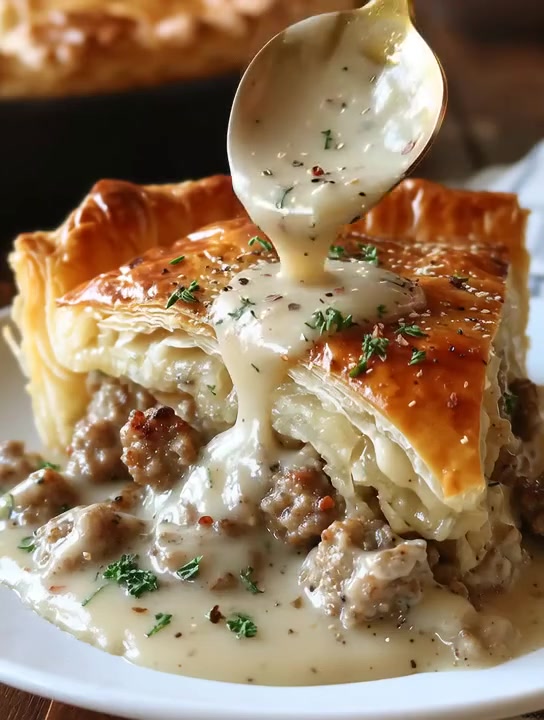
Sausage Gravy Puff Pie is a soul-warming, rustic American comfort food masterpiece that marries the savory richness of Southern-style sausage gravy with the flaky, buttery elegance of French-inspired puff pastry. Unlike traditional biscuits-and-gravy platters or handheld sausage pies, this dish elevates the concept into a stunning, shareable centerpiece—perfect for weekend brunches, holiday breakfasts, cozy Sunday suppers, or even elevated tailgating fare. With its golden, shatteringly crisp crust enveloping a luxuriously thick, herb-flecked gravy studded with tender browned sausage, caramelized onions, and subtle umami depth from aged cheddar and a whisper of Worcestershire, this pie delivers layers of texture and flavor in every forkful. It’s hearty without being heavy, nostalgic yet refined, and endlessly adaptable to seasonal ingredients and dietary preferences—all while remaining deeply rooted in culinary tradition.
The History
The origins of Sausage Gravy Puff Pie lie at the crossroads of several rich culinary lineages. Its foundation—the sausage gravy—is quintessentially Southern U.S., emerging in the 19th century among resourceful Appalachian and rural households where pork scraps, pan drippings, flour, milk, and black pepper were transformed into a velvety, protein-rich sauce served over cornbread or buttermilk biscuits. This “white gravy” was born of necessity: a way to stretch inexpensive ground pork, repurpose cooking fats, and create satiating meals with minimal waste.
Meanwhile, the puff pastry shell traces its lineage back to medieval Europe—particularly France and Hungary—with documented iterations appearing as early as the 17th century. The labor-intensive lamination process (alternating thin layers of dough and butter) was historically reserved for festive occasions and aristocratic tables. In America, commercial puff pastry became widely accessible only after the mid-20th century, when brands like Pepperidge Farm and Dufour began offering high-quality frozen versions—democratizing what was once a bakery-exclusive technique.
The fusion of these two traditions—Southern gravy and European pastry—gained traction in the 2000s through food blogs and televised cooking shows, as home cooks sought to reimagine regional staples with global technique. Early versions appeared as “Sausage Gravy Turnovers” or “Biscuit-Topped Sausage Pies,” but the full puff pastry encasement emerged as a signature evolution: a structural marvel that contains the gravy’s moisture while creating dramatic flakiness. Today, Sausage Gravy Puff Pie appears on menus at modern Southern bistros (like Husk in Charleston or The Grey in Savannah), features in James Beard–nominated cookbooks, and has become a viral sensation on Pinterest and TikTok—often tagged #BrunchGoals or #ComfortFoodReinvented.
Ingredients Breakdown
Every element of this pie plays a precise, synergistic role—no ingredient is arbitrary. Here’s why each matters:
- Ground Pork Sausage (1 lb, 85/15 fat ratio): Provides deep porcine savoriness, essential fat for gravy body and pastry basting, and natural collagen that enriches mouthfeel. Avoid pre-seasoned breakfast sausage with excessive sugar or maple—it competes with gravy balance. Opt for fresh, unsmoked, sage-forward varieties—or make your own blend with ground pork shoulder, fennel pollen, dried rubbed sage, white pepper, and a pinch of red pepper flakes.
- All-Purpose Flour (¼ cup): The thickening agent for gravy. Wondra flour is ideal for lump-free roux due to its pre-gelatinized starch; regular all-purpose works perfectly when whisked thoroughly and cooked to eliminate raw taste.
- Whole Milk (2 cups, warmed): Adds creaminess and subtle sweetness. Low-fat milk yields thinner gravy prone to breaking; ultra-pasteurized milk may curdle—use pasteurized whole milk warmed gently to 100°F before adding. For extra richness, substitute ½ cup heavy cream + 1½ cups milk.
- Unsalted Butter (3 tbsp): Used both for sautéing aromatics and finishing the gravy. Unsalted allows precise sodium control. Clarified butter can be used for higher smoke point during browning.
- Yellow Onion (1 small, finely diced): Builds aromatic base. Slowly sweated—not fried—to develop natural sugars and mellow pungency without bitterness.
- Garlic (2 cloves, minced): Added late to preserve brightness and prevent acridness. Roasted garlic paste adds deeper, nuttier dimension if desired.
- Fresh Thyme (1 tsp chopped) & Sage (½ tsp rubbed): Earthy, resinous herbs that complement pork without overpowering. Fresh thyme stems can be infused into warm milk and strained.
- Worcestershire Sauce (1½ tsp): Umami catalyst—fermented anchovies, tamarind, and molasses add complexity and depth that salt alone cannot replicate.
- Aged White Cheddar (¾ cup, finely grated): Melts smoothly, contributes tangy sharpness, and reinforces the gravy’s body via casein proteins. Avoid pre-shredded cheese (coated in anti-caking agents that impede melting).
- Puff Pastry Sheets (2 sheets, thawed): Dufour or Trader Joe’s All-Butter are gold standards—minimum 60% butter content ensures lift and flavor. Never use “light” or “phyllo-style” pastry; lamination integrity is non-negotiable for steam-driven rise.
- Egg Wash (1 large egg + 1 tbsp cream + pinch salt): Creates glossy, mahogany-brown finish and seals edges. Optional: brush with maple syrup glaze (1 tsp) in final 3 minutes for subtle sheen and caramel notes.
- Black Pepper (1½ tsp freshly cracked): Not just seasoning—it’s *essential*. Coarse grind releases volatile oils that cut through fat and elevate aroma. Pre-ground loses potency within days.
Step-by-Step Recipe
- Prepare Components Ahead: Dice onion, mince garlic, grate cheese, chop herbs, measure spices, and warm milk in a saucepan over low heat (do not boil). Thaw puff pastry in refrigerator overnight; let sit at room temperature 15 minutes before rolling.
- Brown the Sausage: In a 12-inch heavy-bottomed skillet (preferably stainless steel or enameled cast iron), cook sausage over medium heat, breaking into fine crumbles with a wooden spoon. Render fat 8–10 minutes until deeply browned and internal temp reaches 160°F. Transfer to a paper-towel-lined plate; reserve 3 tbsp drippings.
- Sauté Aromatics: In same skillet, melt 2 tbsp butter into reserved drippings. Add onion; sweat 5 minutes until translucent. Add garlic, thyme, sage, and ½ tsp black pepper; cook 1 minute until fragrant.
- Make the Roux: Sprinkle flour over onions; stir constantly 2 minutes until golden and nutty-smelling (do not let darken). Gradually whisk in warm milk, ¼ cup at a time, fully incorporating before adding more. Bring to gentle simmer.
- Simmer & Season: Reduce heat to low. Cook 8–10 minutes, stirring often with a flat-edged wooden spoon, until gravy coats the back of a spoon (nappe consistency). Whisk in Worcestershire, then fold in reserved sausage and cheddar. Adjust salt (start with ¾ tsp kosher) and pepper. Cool completely—refrigerate 1 hour if time allows (prevents soggy bottom).
- Roll & Line Pan: On parchment-lined surface, roll one puff pastry sheet to 12×14 inches. Gently drape into a 9-inch deep-dish pie plate (not standard pie plate—depth prevents overflow). Trim overhang to ½ inch; chill 15 minutes.
- Fill & Seal: Spoon cooled gravy into chilled shell, mounding slightly in center. Brush edge with water. Roll second sheet to same size; lay over filling. Press edges firmly with tines of a fork. Cut four 2-inch steam vents in top crust; refrigerate 20 minutes.
- Bake to Perfection: Preheat oven to 400°F (convection recommended). Place pie on lowest rack with baking stone or heavy sheet pan beneath. Brush generously with egg wash. Bake 25 minutes. Reduce heat to 375°F; rotate pie; bake 25–30 more minutes until crust is deep amber and gravy bubbles vigorously through vents.
- Rest Before Serving: Cool on wire rack 25–30 minutes. This allows gravy to re-set (preventing run-off) and pastry to crisp fully. Serve warm—not hot—with black coffee or apple cider vinegar–dressed arugula salad.
Tips
- Temperature Discipline is Non-Negotiable: Cold filling + cold pastry = flaky layers. Warm gravy melts butter layers, causing collapse and greasiness. Always chill assembled pie before baking—and never skip the resting period post-bake.
- Roux Mastery Matters: Undercooked flour tastes raw; overcooked roux turns gravy bitter and thin. Cook until pale golden—just shy of peanut butter color. Stir constantly with heat-resistant silicone spatula to prevent scorching.
- Gravy Consistency Check: Dip a spoon, hold it horizontally—if film holds for 5 seconds without dripping, it’s ready. Too thin? Simmer 2 more minutes. Too thick? Whisk in 1 tbsp warm milk.
- Puff Pastry Pro-Tips: Work quickly on cool surface; if pastry softens, return to fridge 10 minutes. Use bench scraper to lift and move—never stretch. Score bottom crust lightly before filling to encourage even rise.
- Vent Strategically: Steam vents must be large enough (at least 1.5 inches) and placed near center—not edges—to allow pressure release without leaking. Reinforce vent edges with extra pastry trimmings if bubbling occurs.
- Prevent Soggy Bottom: Blind-bake bottom crust 8 minutes at 400°F with parchment + pie weights before filling (optional but recommended for humid climates or high-moisture gravy).
- Golden Finish Secret: For maximum shine and browning, apply second egg wash 10 minutes before end of bake. Sprinkle with flaky sea salt (Maldon) immediately after removing from oven.
Variations and Customizations
This pie is a canvas—respect the core technique, then personalize with confidence:
- Breakfast Edition: Fold in 4 scrambled eggs (cooled), crispy bacon bits, diced roasted potatoes, and chives. Swap cheddar for Gruyère for nuttier profile.
- Spicy Cajun Style: Use Andouille sausage, add 1 tsp smoked paprika + ½ tsp cayenne, replace thyme with oregano, and stir in 2 tbsp pickled okra brine for brightness.
- Vegetarian “Sausage” Gravy: Substitute lentil-walnut “sausage” (sautéed with fennel seed, tamari, liquid smoke) and use mushroom stock instead of milk for umami depth. Add nutritional yeast (2 tbsp) for cheesy note.
- Gourmet Mushroom & Gouda: Replace sausage with 2 cups mixed wild mushrooms (oyster, shiitake, hen-of-the-woods), sautéed in duck fat. Use smoked Gouda and finish with truffle oil.
- Apple-Sage Harvest Pie: Add 1 cup peeled, julienned Granny Smith apples (sautéed with onions), increase sage to 1 tsp, and use Calvados instead of Worcestershire.
- Gluten-Free Adaptation: Use GF all-purpose flour blend (with xanthan gum) for roux; substitute GF puff pastry (like GeeFree or DIY almond-flour version) and ensure certified GF sausage.
- Mini Individual Pies: Use muffin tin lined with parchment. Fill ¾ full; top with smaller pastry circles. Bake at 400°F for 18–22 minutes. Perfect for parties or meal prep.
- Freezer-Friendly Build: Assemble unbaked pie, wrap tightly in plastic + foil, freeze up to 3 months. Bake from frozen—add 15–20 minutes total time, covering edges with foil if over-browning.
Health Considerations and Nutritional Value
A single generous slice (1/6 of standard 9-inch pie) contains approximately 580–640 calories, with 38–42g fat (18–21g saturated), 22–26g protein, 32–38g carbohydrates, and 680–820mg sodium. While undeniably indulgent, mindful modifications significantly enhance nutritional alignment without sacrificing satisfaction:
- Heart-Healthy Swaps: Use lean turkey sausage (93/7) + 1 tbsp olive oil instead of pork drippings; substitute half the milk with unsweetened oat milk (fortified with calcium); increase onions, mushrooms, and spinach for fiber and antioxidants.
- Sodium Reduction: Omit added salt; rely on herbs, lemon zest, and smoked paprika. Choose low-sodium Worcestershire or tamari. Rinse canned ingredients (if using beans or tomatoes in variations).
- Protein Optimization: Boost with ¼ cup cooked quinoa or hemp hearts stirred into cooled gravy—adds complete protein and magnesium.
- Digestive Support: Add 1 tsp apple cider vinegar to milk before heating—it mildly predigests lactose and enhances mineral absorption.
- Portion Mindfulness: Serve with voluminous sides—roasted Brussels sprouts, kale Caesar, or grilled tomato halves—to promote satiety with fewer calories.
- Who Should Modify: Those managing hypertension should monitor sodium closely; individuals with lactose intolerance may tolerate baked dairy better than raw—but lactase enzyme supplements or A2 milk are safe alternatives. Diabetics should pair with high-fiber vegetables to moderate glucose response.
Note: The high-fat content supports sustained energy and fat-soluble vitamin absorption (A, D, E, K), while pork provides heme iron and B12—critical for neurological health. Enjoy as part of a balanced, varied diet—not daily, but meaningfully.
Ingredients
- 1 pound fresh ground pork sausage (unseasoned or mild sage)
- 3 tablespoons reserved pork drippings (or unsalted butter)
- 1 small yellow onion (about ½ cup), finely diced
- 2 cloves garlic, minced
- ¼ cup all-purpose flour (or Wondra)
- 2 cups whole milk, warmed to 100°F
- 1½ teaspoons Worcestershire sauce
- 1 teaspoon fresh thyme leaves, chopped
- ½ teaspoon rubbed sage
- 1½ teaspoons freshly cracked black pepper (plus more to taste)
- ¾ teaspoon kosher salt (adjust after tasting)
- ¾ cup aged white cheddar cheese, finely grated
- 2 (9-oz) sheets all-butter puff pastry, thawed
- 1 large egg + 1 tablespoon heavy cream + pinch salt (for egg wash)
- Flaky sea salt (Maldon), for finishing
Directions
- In a large heavy-bottomed skillet over medium heat, cook sausage, breaking into fine crumbles, until deeply browned and cooked through (160°F), about 8–10 minutes. Transfer to a paper-towel-lined plate; drain all but 3 tablespoons of drippings.
- Add diced onion to skillet with drippings. Cook over medium-low heat, stirring occasionally, until softened and translucent (5 minutes). Add garlic, thyme, sage, and ½ tsp black pepper; cook 1 minute until fragrant.
- Sprinkle flour over onions. Cook, stirring constantly, for 2 minutes until roux turns pale golden and smells nutty.
- Gradually whisk in warm milk, ¼ cup at a time, ensuring no lumps form. Bring mixture to a gentle simmer.
- Reduce heat to low. Simmer, stirring frequently with a flat wooden spoon, until gravy thickens to coat the back of the spoon (8–10 minutes).
- Whisk in Worcestershire sauce. Remove from heat; stir in cooked sausage, grated cheddar, remaining black pepper, and kosher salt. Taste and adjust seasoning. Transfer to a shallow dish, spread evenly, and refrigerate uncovered for 1 hour (or up to overnight).
- Preheat oven to 400°F. Line a 9-inch deep-dish pie plate with parchment. Roll out one puff pastry sheet to fit dish with ½-inch overhang. Gently press into dish; trim excess. Chill 15 minutes.
- Spoon chilled gravy into pastry shell, mounding slightly in center. Brush rim with water. Roll second pastry sheet to match size; lay over filling. Press edges firmly to seal. Trim excess; crimp decoratively with fork. Cut four 2-inch slits in top crust. Refrigerate 20 minutes.
- Brush entire surface with egg wash. Place pie on lowest oven rack over preheated baking stone or heavy sheet pan. Bake 25 minutes.
- Reduce oven temperature to 375°F. Rotate pie. Continue baking 25–30 minutes, until crust is deep golden brown and gravy bubbles vigorously through vents.
- Remove from oven. Cool on wire rack for 25–30 minutes before slicing. Sprinkle with flaky sea salt. Serve warm.
FAQ
- Can I make this ahead of time?
- Absolutely. Assemble unbaked pie and refrigerate up to 24 hours—or freeze up to 3 months. If baking from fridge, add 5 minutes to initial bake time. If from freezer, add 15–20 minutes and cover crust edges with foil first 20 minutes.
- Why did my crust get soggy?
- Sogginess almost always results from warm filling or insufficient chilling. Always cool gravy completely and refrigerate assembled pie before baking. For extra insurance, blind-bake bottom crust 8 minutes before filling—or sprinkle bottom with crushed crackers or cornmeal.
- Can I use store-bought gravy?
- We strongly advise against it. Jarred gravies contain stabilizers, gums, and inconsistent fat levels that break under pastry steam, yielding greasy, separated filling. Homemade ensures proper emulsion, flavor control, and structural integrity.
- My gravy is too thin—how do I fix it?
- Return to stove over low heat and simmer 3–5 more minutes, stirring constantly. If still loose, mix 1 tsp cornstarch with 1 tbsp cold milk, whisk into gravy, and simmer 2 minutes until thickened.
- Can I make it vegetarian?
- Yes! Use a savory lentil-walnut “sausage” (sautéed with fennel, tamari, and liquid smoke), replace milk with unsweetened soy or oat milk, and use nutritional yeast + miso paste for umami depth. Add sautéed cremini mushrooms for meaty texture.
- What’s the best way to reheat leftovers?
- For optimal texture, reheat individual slices in a 350°F oven for 12–15 minutes on parchment-lined sheet—this crisps pastry while gently warming gravy. Avoid microwaving, which steams the crust limp.
- Can I use gluten-free puff pastry?
- Yes—but choose reputable brands like GeeFree or make your own with GF flour blend + xanthan gum. Note: GF pastry browns faster and may require foil shielding earlier in bake.
- Is there a dairy-free version?
- Use coconut milk (full-fat, canned) warmed with 1 tsp apple cider vinegar (to mimic buttermilk tang), vegan butter for roux, and dairy-free cheddar shreds (like Daiya Cutting Board or Violife). Ensure sausage is dairy-free (many contain whey).
Summary
Sausage Gravy Puff Pie is a masterclass in comforting contrast—flaky, buttery pastry embracing a luxuriously thick, herb-kissed gravy studded with savory sausage and sharp cheddar, all built on generations of resourceful, flavor-forward cooking traditions.
With meticulous attention to temperature, roux technique, and pastry handling—and endless room for customization—it transforms humble ingredients into an unforgettable, shareable celebration of home, heritage, and culinary ingenuity.