Introduction
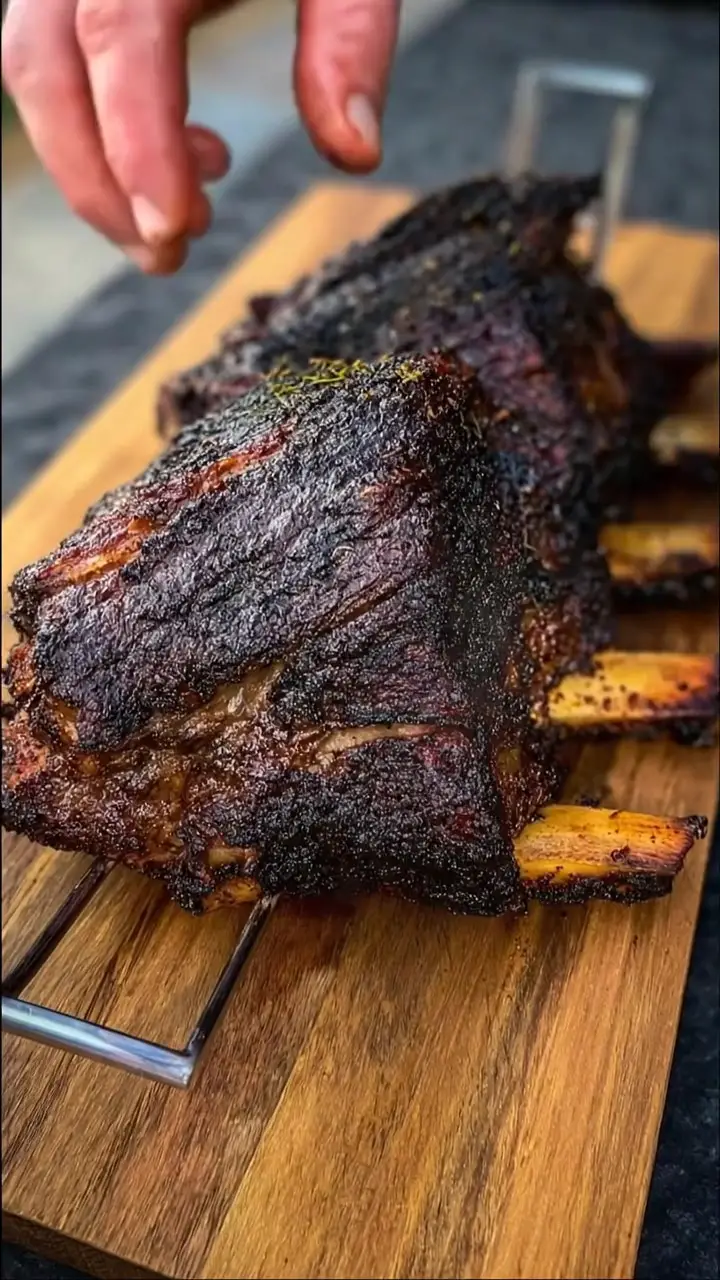
Rotisserie Beef Plate Ribs with Coffee Rub represent a bold, modern evolution of classic barbecue—melding the rich, savory depth of slow-roasted beef with the complex aromatic intensity of a house-blended coffee rub. Unlike traditional pork ribs or even beef short ribs, plate ribs (also known as beef plate short ribs or “dino ribs”) are cut from the beef plate primal—a dense, marbled, collagen-rich section located beneath the rib cage. When cooked low-and-slow on a rotisserie, these substantial cuts transform into tender, juicy, deeply flavorful centerpieces that boast a luxurious mouthfeel and an unforgettable crust. The coffee rub—crafted with freshly ground dark roast coffee, smoked paprika, brown sugar, espresso powder, toasted cumin, black pepper, garlic, and a whisper of chipotle—adds layers of bittersweet earthiness, subtle heat, and caramelized complexity that complements rather than overpowers the beef’s natural umami. This dish is more than a meal—it’s a culinary experience: rustic yet refined, smoky yet nuanced, deeply comforting yet strikingly sophisticated. Whether served at a backyard gathering, elevated dinner party, or weekend feast, Rotisserie Beef Plate Ribs with Coffee Rub delivers restaurant-quality impact with the soulful satisfaction of time-honored technique.
The History
The origins of beef plate ribs stretch back centuries to the practical butchery traditions of cattle-raising cultures—from Argentine parrilladas to Texas ranch kitchens—where every cut was utilized with reverence. Historically undervalued due to their tough texture and high connective tissue content, plate ribs were long relegated to slow-braised stews or stock pots. It wasn’t until the early 2000s—fueled by the rise of “nose-to-tail” cooking and renewed interest in underappreciated heritage cuts—that chefs and pitmasters began reimagining them through modern low-and-slow methods. The advent of reliable home rotisseries, precision temperature controllers, and accessible wood-fired setups further catalyzed their ascent. Meanwhile, coffee as a barbecue rub ingredient emerged from Southern and Southwestern U.S. smokehouses in the 1990s, inspired by Mexican moles and Central American coffee-growing regions. Early adopters like Aaron Franklin and Melissa Cookston experimented with espresso-infused dry rubs to deepen bark formation and balance sweetness—discovering that coffee’s natural acidity and tannins help tenderize meat while its roasted notes harmonize exquisitely with beef fat. By the mid-2010s, coffee-rubbed beef ribs appeared on menus from Brooklyn to Austin, evolving into today’s signature preparation: rotisserie-roasted for unparalleled evenness, juiciness, and caramelization—honoring tradition while boldly rewriting the rules of beef barbecue.
Ingredients Breakdown
Every component of this recipe has been deliberately selected—not just for flavor, but for functional synergy in the rotisserie environment:
- Beef Plate Ribs (3–4 lbs, 3–4 bone-in slabs): Also labeled “beef short ribs (plate cut)” or “dino ribs,” these are rectangular, thick-cut sections (typically 2–3 inches thick) with abundant intramuscular marbling and a generous fat cap. Their size ensures they retain moisture during extended rotisserie cooking and develop a magnificent bark without drying out.
- Dark Roast Whole Bean Coffee (½ cup, freshly ground fine-to-medium): Essential for maximum surface adhesion and flavor release. Avoid pre-ground supermarket coffee—it oxidizes quickly and lacks aromatic volatility. A bold, low-acid Sumatran or Guatemalan dark roast delivers optimal chocolatey, woody, and smoky notes without bitterness.
- Unrefined Brown Sugar (⅓ cup, packed): Adds molasses depth and promotes Maillard reaction and bark formation. Dark brown sugar is preferred over light for richer caramelization.
- Smoked Paprika (2 tbsp): Provides deep red color, gentle smoke essence, and subtle sweetness—critical for visual appeal and layered aroma without overpowering heat.
- Espresso Powder (1 tbsp, instant, unsweetened): Concentrated coffee flavor booster that enhances roastiness and binds with the rub’s other spices during cooking.
- Toasted Ground Cumin (1½ tsp): Toasted in a dry skillet until fragrant, then finely ground—adds warm, nutty earthiness that bridges coffee and beef beautifully.
- Freshly Cracked Black Pepper (1 tbsp): Coarsely ground for textural contrast and volatile oil release; contributes sharp, floral heat that cuts through richness.
- Garlic Powder (1½ tsp, not garlic salt): Offers consistent, mellow allium depth without sodium interference in the rub’s balance.
- Onion Powder (1 tsp): Adds savory-sweet backbone and enhances natural beef flavors.
- Chipotle Powder (¾ tsp, optional but recommended): Smoked, dried jalapeño lends restrained heat and a haunting mesquite-like nuance—enhances coffee’s smokiness without spiciness dominating.
- Ground Mustard (½ tsp): A secret weapon—its enzymatic properties subtly assist in breaking down surface proteins, improving rub adherence and bark integrity.
- Kosher Salt (2 tsp, Diamond Crystal): Used judiciously—not for oversalting, but to season the meat’s interior, draw out surface moisture for better crust, and activate flavor compounds. Note: Diamond Crystal measures ~50% less salty by volume than Morton’s—adjust if substituting.
- Neutral High-Smoke-Point Oil (2 tbsp, e.g., avocado or grapeseed): Applied before rubbing to hydrate the surface, carry fat-soluble flavors, and create a tacky base for optimal rub adhesion.
- Optional Finishing Glaze (for last 20 minutes): Bourbon-barrel-aged maple syrup + reduced coffee + touch of apple cider vinegar—adds glossy sheen and bright counterpoint to the rub’s richness.
Step-by-Step Recipe
- Select & Trim (Day Before Cooking): Purchase three to four large, well-marbled plate rib slabs (approx. 3–4 lbs total). Look for creamy white fat and deep cherry-red meat. Trim only excess hard fat (>¼ inch) from edges—leave the thick fat cap intact for self-basting. Remove any loose flaps or silver skin with a boning knife, but do not over-trim; collagen and connective tissue are essential for tenderness.
- Dry-Brine (12–24 Hours Ahead): Pat ribs completely dry with paper towels. Lightly season all sides with 1 tsp kosher salt. Place on a wire rack over a baking sheet, uncovered, and refrigerate for 12–24 hours. This draws out surface moisture, tightens the meat’s surface, and seasons deeply—setting the stage for superior bark formation.
- Prepare the Coffee Rub (Same Day, Morning of Cook): In a medium bowl, combine freshly ground dark roast coffee, brown sugar, smoked paprika, espresso powder, toasted cumin, black pepper, garlic powder, onion powder, chipotle powder, mustard, and remaining 1 tsp kosher salt. Whisk vigorously for 60 seconds to evenly distribute oils and break up clumps. Store in an airtight container away from light and heat until needed.
- Bring to Cool Room Temperature (1–2 Hours Before Rotisserie): Remove ribs from fridge. Let rest, uncovered, for 60–90 minutes until internal temp reaches ~55°F (13°C). This prevents thermal shock when placed on the rotisserie and ensures even cooking from edge to center.
- Oil & Apply Rub (30 Minutes Before Cooking): Lightly brush all surfaces—including sides and fat cap—with neutral oil using a silicone brush. Then, generously apply the coffee rub—pressing firmly with fingertips to embed spices into the meat’s surface. Use ~¼ cup rub per slab. Allow to rest at room temperature for 30 minutes to let the rub hydrate and begin forming a pellicle.
- Preheat Rotisserie Setup (Gas or Charcoal): For gas rotisserie: Preheat with lid closed to 250°F (121°C) using indirect heat—burners off directly under the spit, rear and side burners on low. For charcoal: Build a two-zone fire with lit coals banked to one side; place water pan on cool side and position rotisserie motor so ribs rotate over the cool zone (indirect). Target ambient temp: 245–255°F. Insert dual-probe thermometer: one probe into thickest part of meat (avoiding bone), second in ambient air near ribs.
- Secure on Spit Rod (Critical Step): Center each slab lengthwise on the rotisserie rod. Use stainless steel rib skewers or heavy-duty metal prongs—insert deeply through both ends of the slab, ensuring no wobble. Balance weight evenly; add counterweights if necessary. Tighten all clamps securely. Double-check rotation clearance—ribs must spin freely without contacting grill grates, drip pans, or housing.
- Begin Rotisserie Cooking (Low & Slow, 6–8 Hours): Start motor. Maintain steady 245–255°F ambient temperature. Rotate speed should be 4–6 RPM—smooth and consistent. No flipping, no spraying, no wrapping. Resist opening the lid unnecessarily—each peek drops temp and extends cook time. At ~3 hours, gently wipe any excessive surface grease from the drip pan to prevent flare-ups. Monitor internal temp closely: target 195–203°F for ideal tenderness (probe should slide in with little resistance, like warm butter).
- Optional Glaze Application (Last 20 Minutes): If using glaze, gently brush a thin, even layer over all surfaces during final 20 minutes. Rotate slowly to allow glaze to set without burning. Avoid glazing earlier—sugar will scorch.
- Rest & Serve (Non-Negotiable): Once target temp is reached, carefully remove ribs from rotisserie. Place upright (fat cap up) on a wire rack over a tray. Tent *loosely* with foil—never seal tightly—and rest for 45–60 minutes. This allows juices to redistribute, collagen to fully gelatinize, and exterior to firm slightly for clean slicing. Slice against the grain into ½-inch thick pieces just before serving.
Tips
- Grind Your Own Coffee: Pre-ground coffee loses 60% of its volatile aromatic compounds within 15 minutes of grinding. Use a burr grinder set to medium-fine (like table salt)—too coarse won’t adhere; too fine burns. Grind immediately before mixing the rub.
- Rotisserie Balance Is Everything: An unbalanced load causes uneven rotation, hot spots, and inconsistent cooking. Weigh each slab; use equal-weight portions or trim accordingly. If using multiple slabs, stagger them along the rod—not stacked—to maximize airflow and radiant heat exposure.
- Water Pan = Moisture Insurance: Always use a heavy-duty stainless steel water pan filled ¾ full with hot water (not cold) beneath the rotating ribs. It stabilizes ambient temperature, catches drippings safely, adds gentle humidity to prevent surface desiccation, and minimizes flare-ups. Refill with hot water only if level drops significantly.
- Probe Placement Matters: Insert the meat probe into the thickest section of lean muscle—away from bone, fat seams, or edges. Bone conducts heat faster and gives false-high readings; fat insulates and reads cooler. Confirm accuracy by probing two different locations.
- Embrace the Stall—Don’t Fight It: Around 155–170°F, evaporation will cause temps to plateau for 60–90 minutes. This is normal collagen conversion. Do NOT increase heat—patience yields tender results. If stall persists beyond 2 hours, lightly tent with foil *only* over the top third of the ribs (not wrapped) to reduce evaporative cooling.
- Clean Your Rotisserie Thoroughly Post-Cook: Residual fat and coffee sugars bake onto rods and forks, creating stubborn carbon buildup. Soak parts in hot water + degreaser for 30 minutes, scrub with stainless steel brush, rinse, and dry completely before storage.
- Slice Against the Grain—But Know the Grain Direction: Plate ribs have a unique grain pattern: long parallel fibers run lengthwise along the slab—but also cross-hatch near the bone. Examine the surface before slicing; rotate your knife to cut perpendicular to the dominant fiber direction for maximum tenderness.
- Save the Drippings: Collect rendered fat and juices from the drip pan. Skim solids, chill overnight, and lift off solidified beef tallow—ideal for searing steaks, roasting potatoes, or making coffee-rub compound butter.
Variations and Customizations
- Mexican-Inspired Adobo Coffee Rub: Replace chipotle with ancho and guajillo powders; add 1 tsp dried oregano (Mexican variety) and ½ tsp ground clove. Finish with fresh cilantro and pickled red onions.
- Asian-Fusion Umami Coffee Rub: Swap brown sugar for palm sugar; add 1 tbsp white miso paste (mixed into oil before rubbing), 1 tsp five-spice powder, and ½ tsp Sichuan peppercorn powder. Serve with scallion-ginger slaw and black vinegar gastrique.
- Herbes de Provence Coffee Rub: Substitute smoked paprika with sweet paprika; add 1 tbsp dried lavender buds (culinary grade), 1 tsp dried thyme, and ½ tsp fennel pollen. Pair with roasted garlic mashed potatoes and sautéed wild mushrooms.
- Spicy Chocolate Coffee Rub: Add 1 tbsp unsweetened cocoa powder and ½ tsp cayenne to the base rub. Enhance with a finishing drizzle of mole negro reduction.
- Smoke-Free Oven-Roasted Version: For those without rotisserie: Use a heavy-duty roasting pan with rack. Roast at 250°F in conventional oven for 7–9 hours, rotating pan front-to-back halfway. Baste once hourly with beef broth + espresso shot mixture.
- Instant Pot / Pressure Cooker Shortcut: Sear slabs, then pressure cook 60 minutes on high with 1 cup brewed coffee + ½ cup low-sodium beef stock. Reduce liquid into glaze, then finish under broiler for 5–7 minutes to crisp exterior.
- Vegan “Beef Rib” Alternative: Use thick-cut king oyster mushroom “steaks” or seitan slabs. Marinate 2 hours in coffee-soy-tamari-molasses mixture, then rotisserie at 325°F for 25–35 minutes until deeply caramelized and firm.
- Breakfast Ribs Option: Slice cooled ribs thinly and pan-sear in tallow. Serve atop shakshuka with poached eggs, or fold into breakfast hash with sweet potatoes and caramelized onions.
Health Considerations and Nutritional Value
Rotisserie Beef Plate Ribs with Coffee Rub offer notable nutritional benefits when prepared mindfully—and several considerations for balanced consumption. A standard 6-ounce serving (boneless, trimmed of excess surface fat) provides approximately 480–520 calories, 38–42g high-quality complete protein, 32–36g total fat (of which ~12g is saturated), and zero carbohydrates. The marbling contributes monounsaturated fats (oleic acid)—similar to olive oil—which support heart health when consumed in moderation. Beef plate ribs are naturally rich in heme iron (highly bioavailable), zinc (crucial for immune function and wound healing), vitamin B12 (essential for nerve health and red blood cell formation), selenium, and creatine (supporting muscle maintenance and cognitive function). The coffee rub adds potent antioxidants—including chlorogenic acid, cafestol, and melanoidins—linked to reduced inflammation, improved insulin sensitivity, and neuroprotective effects. Notably, the dry-rub method avoids added sugars common in commercial BBQ sauces, and rotisserie cooking allows excess fat to drip away naturally—unlike frying or sautéing. However, due to higher saturated fat content, individuals managing cholesterol or following cardiac diets should limit portions to 4–5 oz per serving and pair with ample fiber-rich vegetables (e.g., roasted Brussels sprouts, kale salad, grilled asparagus) to support lipid metabolism. Those sensitive to caffeine should note that while roasting degrades ~60–70% of caffeine, trace amounts remain—though far below a cup of coffee (<5mg per serving). Sodium content is moderate (~520mg per serving) when using kosher salt judiciously; for low-sodium diets, reduce salt by 25% and boost flavor with extra toasted cumin, smoked paprika, and black pepper. As always, consult with a registered dietitian for personalized guidance—especially for those with kidney disease (due to phosphorus and potassium content) or gout (moderate purine levels).
Ingredients
- 3–4 lbs bone-in beef plate ribs (3–4 slabs, ~2–3 inches thick)
- ½ cup dark roast whole coffee beans, freshly ground fine-to-medium
- ⅓ cup dark brown sugar, packed
- 2 tbsp smoked paprika (sweet or mild, not hot)
- 1 tbsp instant espresso powder (unsweetened)
- 1½ tsp ground cumin, toasted and freshly ground
- 1 tbsp freshly cracked black pepper
- 1½ tsp garlic powder (not garlic salt)
- 1 tsp onion powder
- ¾ tsp chipotle powder (optional, for subtle smoke-heat)
- ½ tsp ground yellow mustard
- 2 tsp Diamond Crystal kosher salt (or 1 tsp Morton’s)
- 2 tbsp neutral high-smoke-point oil (avocado, grapeseed, or refined coconut)
- Optional finishing glaze: ¼ cup barrel-aged maple syrup + 2 tbsp strong brewed coffee + 1 tsp apple cider vinegar, simmered 5 minutes until slightly thickened
Directions
- Trim excess hard fat from edges of ribs, leaving fat cap intact. Pat very dry with paper towels.
- Dry-brine: Lightly sprinkle 1 tsp kosher salt over all surfaces. Place on wire rack over sheet pan, uncovered, in refrigerator for 12–24 hours.
- Remove from fridge 90 minutes before cooking. Let come to cool room temperature (~55°F).
- In a bowl, whisk together ground coffee, brown sugar, smoked paprika, espresso powder, toasted cumin, black pepper, garlic powder, onion powder, chipotle powder, mustard, and remaining 1 tsp kosher salt until uniform.
- Brush ribs lightly but thoroughly with oil. Press coffee rub firmly onto all sides—including fat cap—using hands. Let rest 30 minutes at room temperature.
- Preheat rotisserie to 245–255°F using indirect heat. Place water pan filled with hot water beneath cooking zone.
- Secure slabs evenly on rotisserie rod using heavy-duty prongs. Ensure balance and free rotation.
- Insert dual-probe thermometer: one into thickest lean portion (avoid bone/fat), one monitoring ambient air.
- Start motor (4–6 RPM). Maintain steady temperature. Cook 6–8 hours, until internal temp reaches 195–203°F and probe slides in with minimal resistance.
- (Optional) During final 20 minutes, brush with glaze. Rotate slowly to set.
- Remove ribs. Rest upright, loosely tented with foil, for 45–60 minutes.
- Slice against the grain into ½-inch pieces. Serve immediately with preferred sides and additional rub or glaze on the side.
FAQ
- Can I use pork ribs or beef back ribs instead?
- No—plate ribs are structurally and compositionally distinct. Back ribs are leaner and smaller, prone to drying out over long rotisserie cooks. Pork ribs contain different collagen types and respond poorly to coffee’s tannins. Stick with plate ribs for authentic texture and flavor development.
- What if my rotisserie doesn’t go as low as 250°F?
- If minimum temp is ~275°F, reduce cook time by 1–1.5 hours and monitor internal temp closely. Begin checking at 4 hours. You may need to wrap *loosely* in butcher paper at the 5-hour mark to prevent over-browning—though bark will be thinner.
- Why can’t I use instant coffee granules instead of grinding beans?
- Granules contain fillers (maltodextrin, dextrose) and anti-caking agents that burn easily and impart off-flavors. Freshly ground beans provide pure coffee oils, volatile aromatics, and optimal particle size for adhesion and controlled Maillard reaction.
- Is there a substitute for the water pan?
- No safe substitute. A water pan regulates temperature, catches drippings, adds humidity, and prevents flare-ups. Using sand, gravel, or empty pan risks overheating, inconsistent cooking, and fire hazard.
- Can I make this recipe ahead and reheat?
- Yes—cooked ribs refrigerate beautifully for 4 days or freeze for 3 months. To reheat: Place slices in covered dish with 2 tbsp beef broth + 1 tsp coffee concentrate. Steam in oven at 300°F for 20–25 minutes until heated through. Avoid microwaving—it toughens the texture.
- My rub turned bitter—what went wrong?
- Bitterness usually stems from burnt coffee—caused by too high heat, too fine grind, or applying rub to overly hot surface. Ensure coffee is medium-fine grind, ribs are at room temp (not warm), and rotisserie temp stays below 260°F ambient.
- How do I know when the ribs are done—beyond temperature?
- Use the “jiggle test”: Gently shake the spit rod—if the slab jiggles like Jell-O with no resistance, it’s ready. Also check for “pull-back”: ~½ inch of bone should be exposed at ends, and meat should shrink back from bone tips.
- Can I use this rub on other proteins?
- Absolutely. It excels on beef brisket flat, chuck roast, lamb shoulder, duck breast, and even portobello caps. Adjust salt by 25% for poultry or seafood, and reduce coffee by half for delicate fish.
Summary
Rotisserie Beef Plate Ribs with Coffee Rub deliver extraordinary depth, tenderness, and complexity through the synergistic marriage of collagen-rich beef, precise low-and-slow rotisserie technique, and a meticulously balanced, freshly ground coffee-based spice blend that enhances—never masks—the meat’s inherent luxury.
This recipe honors barbecue tradition while embracing innovation: it’s approachable enough for dedicated home cooks yet refined enough for culinary professionals, transforming an undervalued cut into a showstopping, deeply satisfying centerpiece worthy of celebration.