Introduction
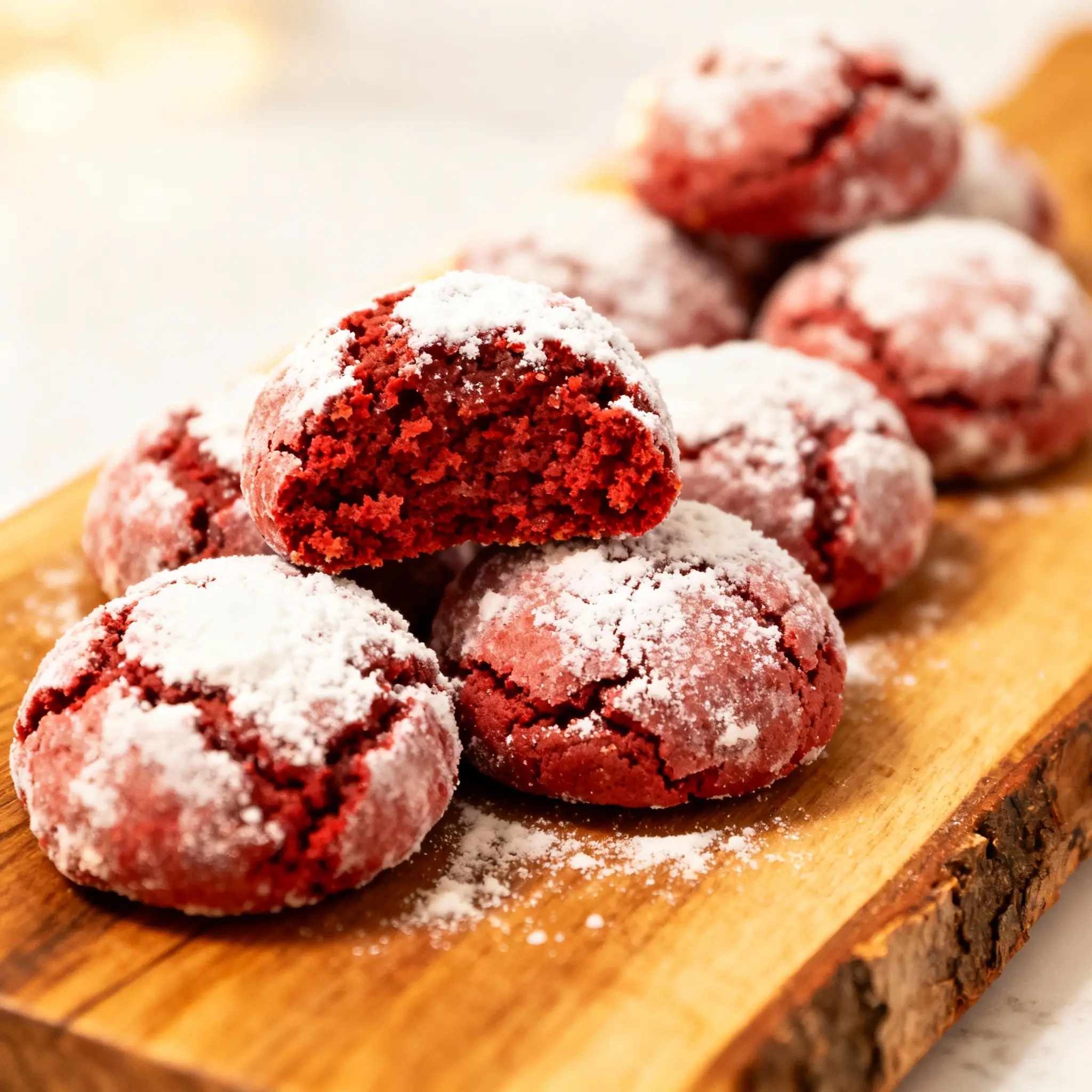
Red Velvet Snowball Cookies—also lovingly called Red Velvet Russian Tea Cakes, Red Velvet Pecan Crescents, or Red Velvet Butterballs—are a festive, elegant, and irresistibly tender holiday confection that marries the beloved depth of classic red velvet cake with the melt-in-your-mouth delicacy of traditional snowball cookies. Unlike standard snowballs (which rely on walnuts or pecans and vanilla), this stunning variation infuses cocoa powder, buttermilk (or sour cream), natural or food-grade red beet powder, and a whisper of white vinegar to evoke the signature tangy-sweet, velvety richness of red velvet—without artificial dyes in many versions. Rolled in snowy confectioners’ sugar while still warm, they emerge from the oven as delicate, crumbly, ruby-tinged morsels dusted in winter-white frost—perfect for gifting, cookie exchanges, Christmas platters, or an indulgent afternoon treat with a cup of spiced chai or cold milk.
The History
The lineage of Red Velvet Snowball Cookies is a beautiful convergence of two iconic American baking traditions: the Russian Tea Cake (originally known as “Mexican Wedding Cookies” or “Polvorones” in Spanish-speaking regions) and the Red Velvet Cake. The snowball cookie itself traces back centuries—to Moorish Spain and later colonial Latin America—where ground nuts, lard or butter, and powdered sugar formed crumbly, ritualistic sweets served at weddings and celebrations. These migrated to Texas and the American Southwest via Spanish missionaries and Mexican settlers, evolving into the buttery, nut-forward treats we know today.
Red velvet cake, meanwhile, emerged in the early 20th century—its origins debated among Southern cooks, New York’s Waldorf Astoria Hotel (circa 1920s–30s), and even Canadian home economists—but its hallmark traits—cocoa-enhanced acidity, subtle red hue, and cream cheese frosting—became culturally cemented by the 1940s. The fusion of these two classics likely began in earnest in the 1980s–90s, as home bakers experimented with flavor cross-pollination during the rise of themed baking and holiday cookie creativity. Food bloggers, Southern cooking magazines, and holiday cookbooks popularized the hybrid in the early 2000s—especially after natural red coloring (like beet powder and pomegranate juice) gained traction amid clean-label trends. Today, Red Velvet Snowballs are a staple in modern Southern, Texan, and gourmet holiday baking circles—a symbol of innovation rooted in heritage, and a testament to how tradition evolves with love, curiosity, and a pinch of cocoa.
Ingredients Breakdown
Every ingredient in this recipe plays a precise functional and sensory role—no filler, no afterthought. Here’s what makes these cookies extraordinary:
- Unsalted Butter (1 cup, softened): Provides richness, tenderness, and structure. Softened—not melted—is critical for proper creaming and air incorporation. European-style butter (82–86% fat) yields even more luxurious mouthfeel.
- Powdered Sugar (1¼ cups, plus extra for rolling): Offers sweetness *and* tenderness—its fine granulation dissolves instantly and inhibits gluten development. Sifted before use to prevent lumps and ensure even distribution.
- Finely Ground Toasted Pecans (1½ cups): Toasted to deepen nutty aroma and reduce moisture; finely ground (but not pasty) to integrate seamlessly without compromising delicate crumbliness. Walnuts or blanched almonds may substitute, but pecans deliver optimal Southern authenticity and buttery nuance.
- Natural Cocoa Powder (¼ cup, unsweetened, Dutch-process preferred): Adds deep chocolate notes and visual contrast—Dutch-process is less acidic and mellower, harmonizing better with red velvet’s balanced tang. Avoid “cocoa mix” or sweetened varieties.
- Red Coloring Agent (2 tbsp natural beetroot powder OR 1½ tbsp liquid pomegranate juice + ½ tsp apple cider vinegar): Beet powder delivers vibrant, earthy-red pigment with zero bitterness and added antioxidants; pomegranate juice offers fruity brightness and acidity. *Note:* Artificial red #40 is avoidable—and unnecessary—for stunning color.
- Buttermilk (2 tbsp, full-fat, well-shaken): Introduces gentle lactic acid to activate cocoa and mimic red velvet’s signature tang—while adding just enough moisture to bind without toughening. Substitute: sour cream thinned with 1 tsp milk, or DIY buttermilk (2 tsp lemon juice + 18 mL whole milk, rested 5 min).
- White Vinegar (½ tsp): Reinforces acidity to bloom cocoa and enhance red tones—acts synergistically with buttermilk. Do not omit; it’s essential for authentic velvet character.
- Vanilla Extract (1½ tsp, pure, Madagascar bourbon-grade): Balances earthiness with warm, floral sweetness. Alcohol-based extract ensures superior flavor release vs. imitation.
- Sea Salt (¼ tsp, flaky or fine): Elevates all other flavors, counteracts sweetness, and enhances perceived richness. Kosher salt works, but sea salt adds subtle mineral complexity.
- Optional Flavor Enhancers: A pinch of instant espresso powder (⅛ tsp) intensifies chocolate without tasting like coffee; a drop of almond extract (⅛ tsp) nods to classic red velvet pairings; a grating of orange zest (½ tsp) brightens the profile.
Step-by-Step Recipe
- Toast & Grind the Pecans: Preheat oven to 350°F (175°C). Spread raw pecans on a parchment-lined baking sheet. Toast 8–10 minutes until fragrant and lightly golden—stir once midway. Cool completely (15+ mins), then pulse in a food processor with 2 tbsp of the powdered sugar until *finely ground* (not oily or paste-like)—about 12–15 one-second pulses. Transfer to a medium bowl and whisk in cocoa powder, beet powder (or pomegranate/vinegar blend), salt, and espresso (if using). Set aside.
- Cream Butter & Sugar: In a large stand mixer fitted with paddle attachment, beat softened butter on medium speed 2 minutes until pale and creamy. Gradually add 1¼ cups powdered sugar in 3 additions, beating 1 minute after each until fully incorporated and fluffy—scrape bowl thoroughly between additions.
- Incorporate Wet Flavor Agents: Reduce speed to low. Add vanilla, buttermilk, and vinegar. Mix just until combined (~20 seconds)—do not overmix. Batter will look slightly curdled; this is normal and desirable.
- Gradually Add Dry Mixture: With mixer on lowest speed, slowly add the pecan-cocoa mixture in 3 equal parts, mixing only until no dry streaks remain after each addition (~15 seconds per addition). Stop immediately when uniform—overmixing causes toughness. Dough should be soft, slightly sticky, and hold together when pinched—similar to Play-Doh.
- Chill for Structure & Flavor Development: Divide dough into two equal portions. Shape each into a 1-inch-thick disc, wrap tightly in parchment + plastic wrap, and refrigerate *minimum 2 hours*, preferably overnight (up to 72 hrs). Chilling firms butter, relaxes gluten, deepens flavor, and prevents spreading.
- Preheat & Prep: Position racks in upper and lower thirds of oven. Preheat to 325°F (163°C)—a lower temp ensures gentle, even baking without browning edges. Line two baking sheets with parchment or silicone mats.
- Portion & Roll: Scoop chilled dough with a 1-tbsp cookie scoop (or level tablespoon). Roll firmly into smooth, compact 1-inch balls—don’t overhandle. Place 2 inches apart on prepared sheets.
- Bake with Precision: Bake 14–16 minutes—rotating pans top-to-bottom and front-to-back at 8 minutes—until cookies are set at edges but centers still look *slightly soft* and matte (not shiny). They should yield gently to light finger pressure—no cracks or browning. Underbaking is intentional: residual heat finishes them.
- Double-Roll in Confectioners’ Sugar: Let cookies cool on sheet 3 minutes—just until firm enough to lift without breaking. While still warm, roll *gently but thoroughly* in a shallow bowl of powdered sugar until fully coated. Transfer to wire rack. Once fully cooled (15–20 mins), roll *a second time* in fresh powdered sugar for maximum snowy opacity and texture contrast.
- Cool Completely & Store: Allow cookies to cool fully before storing. Best enjoyed within 48 hours for peak tenderness—but stay delicious up to 5 days sealed airtight at room temperature.
Tips
- Butter Temperature is Non-Negotiable: Too cold? Won’t cream. Too warm? Dough becomes greasy and spreads. Ideal: 65–68°F (18–20°C)—cool to touch but leaves slight indentation when pressed.
- Toast Nuts in Batches: Overcrowding causes steaming instead of toasting. Use a rimmed sheet and spread in single layer.
- Sift Everything Dry: Especially powdered sugar and cocoa—lumps create dense pockets and uneven color.
- No Substitutions for Buttermilk/Vinegar Combo: This acid duo is what creates the velvet reaction with cocoa—milk alone won’t work.
- Measure Beet Powder by Weight When Possible: Volume varies widely. Aim for 12–14g (≈2 tbsp) for consistent color intensity.
- Use a Timer—Religiously: These bake fast. Even 30 seconds too long yields dryness. Set dual timers: one for oven rotation, one for total bake time.
- Roll While Warm—Not Hot: If too hot, sugar melts; if too cool, it won’t adhere. The 3-minute window is ideal.
- Double-Rolling Isn’t Optional: First roll seals in warmth and flavor; second roll gives the iconic matte, cloud-like finish and prevents sugar from dissolving into the cookie.
- Freeze Like a Pro: Portion unrolled dough balls onto a tray, freeze solid (2 hrs), then transfer to freezer bag. Bake straight from frozen—add 1–2 minutes to bake time. No thawing needed.
- Revive Stale Cookies: Place in a sealed container with a slice of apple or bread overnight—the natural moisture rehydrates them beautifully.
Variations and Customizations
This base recipe is a canvas for creativity—seasonal, dietary, and cultural adaptations abound:
- Vegan Version: Swap butter for refined coconut oil (solid at room temp) + 1 tsp apple cider vinegar + 1 tsp plant-based milk. Use aquafaba (2 tbsp whipped) to replace egg-binding function if needed. Replace powdered sugar with certified vegan brand (some contain bone char).
- Gluten-Free: Substitute 1:1 GF all-purpose flour blend (with xanthan gum) for the cocoa/pecan mixture’s structural support—reduce pecans to 1¼ cups and add ¼ cup GF flour. Ensure all extracts and powders are GF-certified.
- White Chocolate Swirl: After rolling dough balls, press a ¼ tsp white chocolate chip into center before baking—melts into a surprise core.
- Peppermint Sparkle: Add ¼ tsp pure peppermint extract + 2 tbsp crushed candy canes to dough; roll final cookies in crushed cane + powdered sugar mix.
- Spiced Chai Variation: Infuse butter by melting with 1 tsp loose-leaf chai + 2 tbsp cream, steeping 10 min, straining, and chilling until resolidified before creaming.
- Lemon-Raspberry Velvet: Replace beet powder with 1 tbsp freeze-dried raspberry powder; add 1 tsp lemon zest + ¼ tsp lemon extract. Roll in lemon-sugar (zest 1 lemon into ½ cup powdered sugar).
- Mini Bite-Sized: Use a 1-teaspoon scoop—bake 10–12 minutes. Perfect for cookie trays and portion control.
- Decorative Finish: After second sugar roll, gently press a single roasted pecan half, edible gold leaf flake, or candied rose petal onto each cookie’s crown.
- Alcohol-Infused: Add 1 tbsp bourbon or cherry brandy to wet ingredients—reduces acidity and adds sophisticated warmth.
- Savory-Sweet Twist: Add 2 tbsp finely grated aged cheddar and 1 tsp cracked black pepper—unexpectedly divine with coffee.
Health Considerations and Nutritional Value
While undeniably indulgent, Red Velvet Snowball Cookies offer surprising nutritional nuance when prepared thoughtfully:
- Heart-Healthy Fats: Pecans are rich in monounsaturated fats, vitamin E, magnesium, and antioxidants like ellagic acid—linked to reduced inflammation and improved vascular function.
- Natural Antioxidants: Beetroot powder contains betalains—potent anti-inflammatory and detox-supportive phytonutrients—plus nitrates that may support healthy blood pressure.
- Lower Glycemic Impact: Compared to traditional sugar-heavy cookies, the high fat/nut content slows glucose absorption—especially when made with coconut sugar–sweetened powdered sugar alternatives (though texture changes).
- Minimal Processing: Using whole-food colorants (beets, pomegranate) avoids synthetic dyes associated with hyperactivity concerns in sensitive children (per FDA advisory).
- Dietary Flexibility: Easily adapted for dairy-free, vegan, nut-free (sub sunflower seed butter + toasted pumpkin seeds), and lower-sugar versions (using erythritol-based powdered sugar blends—note: may affect melt-in-mouth quality).
- Mindful Indulgence Notes: One cookie (approx. 35g) contains ~130–150 kcal, 8–10g fat (mostly unsaturated), 12–14g carb, 1–1.5g protein, and <10mg sodium. Pair with green tea or tart cherry juice to amplify antioxidant synergy.
- Contraindications to Note: Those managing oxalate-sensitive kidney stones should moderate beet intake. Individuals on blood thinners should consult providers before consuming high-nitrate foods regularly. Always verify nut allergen protocols for gifting.
Ingredients
- 1 cup (227g) unsalted butter, softened to 65–68°F (18–20°C)
- 1¼ cups (150g) powdered sugar, sifted (plus 1½ cups extra for rolling)
- 1½ cups (150g) raw pecans, toasted and finely ground
- ¼ cup (20g) unsweetened Dutch-process cocoa powder, sifted
- 2 tablespoons (12g) natural beetroot powder OR 1½ tbsp (22mL) 100% pomegranate juice + ½ tsp apple cider vinegar
- 2 tablespoons (30mL) full-fat buttermilk, well-shaken
- ½ teaspoon (2.5mL) apple cider vinegar
- 1½ teaspoons (7.5mL) pure vanilla extract
- ¼ teaspoon (1g) fine sea salt
- (Optional) ⅛ teaspoon (0.3g) instant espresso powder
Directions
- Preheat oven to 350°F (175°C). Spread pecans on a parchment-lined baking sheet. Toast 8–10 minutes until fragrant and golden. Cool completely (15+ minutes), then pulse in food processor with 2 tbsp of the 1¼ cups powdered sugar until finely ground (12–15 one-second pulses). Transfer to medium bowl; whisk in cocoa powder, beet powder (or pomegranate/vinegar blend), salt, and espresso (if using). Set aside.
- In stand mixer with paddle attachment, beat softened butter on medium 2 minutes until pale and creamy. Gradually add 1¼ cups powdered sugar in 3 additions, beating 1 minute after each until fluffy. Scrape bowl thoroughly.
- Reduce speed to low. Add vanilla, buttermilk, and vinegar. Mix 20 seconds until combined (slight curdling is normal).
- With mixer on lowest speed, add dry mixture in 3 equal parts, mixing only until no dry streaks remain (~15 sec/part). Stop immediately when uniform. Dough should be soft, slightly sticky, and hold shape when pinched.
- Divide dough into two discs (1-inch thick), wrap in parchment + plastic, refrigerate ≥2 hours (preferably overnight).
- Preheat oven to 325°F (163°C). Line two baking sheets with parchment or silicone mats.
- Scoop dough with 1-tbsp scoop. Roll firmly into smooth 1-inch balls. Place 2 inches apart on sheets.
- Bake 14–16 minutes, rotating pans top-to-bottom/front-to-back at 8 minutes, until edges are set but centers look soft and matte.
- Cool on sheet 3 minutes. While warm, roll gently but thoroughly in powdered sugar until fully coated. Transfer to wire rack.
- Once fully cooled (15–20 minutes), roll again in fresh powdered sugar for ultimate snowy finish.
- Cool completely before storing airtight at room temperature up to 5 days.
FAQ
- Can I use liquid red food coloring?
- Yes—but it adds excess moisture, risking spread and sogginess. Reduce buttermilk by ½ tsp per ½ tsp coloring used. Natural options (beet, pomegranate) yield richer flavor and more stable color.
- Why did my cookies spread or flatten?
- Most common causes: butter too warm, insufficient chilling, under-measured nuts/cocoa (too little structure), or baking on warm sheets. Always chill dough ≥2 hrs and cool sheets between batches.
- Can I make these ahead for Christmas?
- Absolutely. Dough freezes beautifully for up to 3 months. Baked cookies stay fresh 5 days airtight—or freeze baked, sugar-coated cookies for up to 2 months (thaw uncovered at room temp 30 min before serving).
- My powdered sugar coating melted—what went wrong?
- You rolled while too hot (sugar liquefied) or too cool (no adhesion). The 3-minute post-bake window is critical. Also ensure sugar is 100% pure—some store brands contain cornstarch that clumps.
- Are these safe for nut allergies?
- No—pecans are integral. For nut-free versions, substitute toasted sunflower seeds + 1 tbsp oat flour, and use sunflower seed butter in place of some butter for binding. Always label clearly when gifting.
- Can I use regular milk instead of buttermilk?
- No—acidity is essential. Make DIY buttermilk: stir 2 tsp lemon juice or vinegar into 18mL whole milk, let sit 5 minutes until curdled, then use.
- Why do you recommend Dutch-process cocoa?
- Its neutral pH doesn’t react harshly with acids (vinegar/buttermilk), yielding smoother, deeper chocolate notes—unlike natural cocoa, which can taste sharp or metallic in this balance.
- How do I get perfectly round, smooth balls every time?
- Chill dough thoroughly, use a spring-release cookie scoop, and roll between palms with light, even pressure—not squeezing. A tiny bit of powdered sugar on hands prevents sticking.
- Can I add cream cheese frosting?
- Traditionally no—snowballs are meant to be delicate and crumbly. But for a decadent twist, pipe a tiny dot of stabilized cream cheese frosting (using gelatin) onto the center *after* second sugar roll—let set 10 minutes before serving.
- What’s the best way to ship these?
- Layer between parchment in rigid tins with silica gel packets. Avoid plastic bags (traps moisture). Ship priority mail—never ground—to preserve texture.
Summary
Red Velvet Snowball Cookies are a masterclass in nostalgic innovation—melding centuries-old snowball tradition with the beloved complexity of Southern red velvet, elevated by natural ingredients, precise technique, and mindful customization.
With their velvety crumb, ruby-kissed hue, double-dusted snowy finish, and deeply aromatic nut-chocolate-tang profile, they’re not just cookies—they’re edible heirlooms, ready to become your family’s next timeless tradition.