Introduction
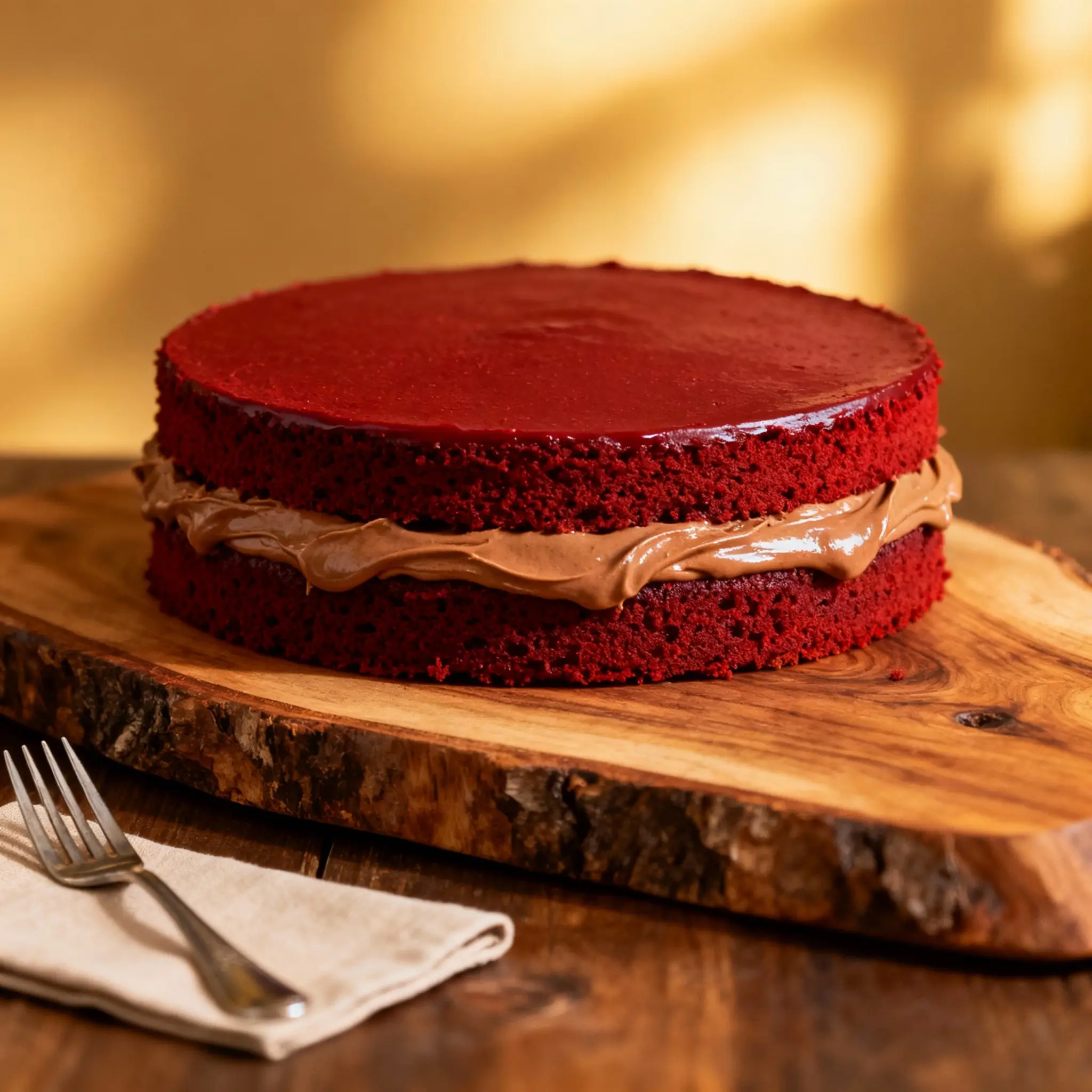
The Red Velvet Mocha Cake is a luxurious, modern fusion dessert that marries the timeless elegance of classic red velvet cake with the bold, aromatic depth of premium coffee—specifically mocha, a harmonious blend of rich dark chocolate and espresso. This decadent creation appeals to both traditionalists who cherish the velvety crumb and signature crimson hue of red velvet, and adventurous bakers seeking a sophisticated twist that awakens the senses. With its striking visual contrast—deep ruby layers crowned with glossy mocha ganache or silky espresso buttercream—and its complex yet balanced flavor profile—subtly tangy, luxuriously chocolaty, gently caffeinated, and delicately sweet—the Red Velvet Mocha Cake has rapidly ascended from café specialty to celebratory centerpiece. Whether served at an intimate brunch, a winter holiday gathering, or as a showstopping birthday masterpiece, this cake delivers not only indulgence but also intentionality: every ingredient serves a purpose, every step enhances texture or depth, and every bite tells a story of culinary evolution.
The History
Understanding the Red Velvet Mocha Cake requires tracing two distinct yet convergent lineages: red velvet and mocha. Red velvet cake’s origins are steeped in American Southern tradition, with documented references dating back to the early 20th century. Early versions relied on natural cocoa (non-Dutched) reacting with acidic ingredients like buttermilk and vinegar—producing a subtle reddish tint via anthocyanin pigments in cocoa, amplified later by beet juice or, most commonly in mid-century America, synthetic red food coloring. The iconic pairing with cream cheese frosting emerged in the 1940s–50s, notably popularized by the Waldorf Astoria Hotel (though the legend of its “secret recipe” remains unverified). Meanwhile, mocha—a portmanteau of “Mokha,” the historic Yemeni port famed for its prized coffee beans, and “chocolate”—has roots in 17th-century European coffeehouses, where ground chocolate was stirred into strong brewed coffee. By the late 19th century, mocha had evolved into a defined beverage category, and by the 1980s–90s, it became a cornerstone flavor in third-wave coffee culture and artisanal baking. The Red Velvet Mocha Cake, as a unified concept, began appearing sporadically in high-end patisseries and food blogs in the mid-2000s, gaining viral traction around 2012–2014 with the rise of Instagram-worthy desserts. Its ascent accelerated alongside the gourmet coffee movement, plant-based baking innovations, and consumer demand for multi-sensory, “elevated comfort food.” Today, it stands as a testament to cross-genre culinary alchemy—where heritage technique meets contemporary flavor science.
Ingredients Breakdown
Every element in this Red Velvet Mocha Cake is chosen for function, flavor synergy, and structural integrity—not merely tradition. Below is a meticulous, chef-level analysis:
- Unbleached All-Purpose Flour (3 cups / 360g): Provides gluten structure without excessive toughness; unbleached retains more natural enzymes and protein consistency than bleached flour, yielding a finer, more tender crumb.
- Granulated Sugar (2¼ cups / 450g): Not just for sweetness—sugar tenderizes by interfering with gluten formation and aids in moisture retention and browning (caramelization) during baking. A portion is reserved for the mocha buttercream to ensure optimal emulsification.
- Natural Unsweetened Cocoa Powder (¾ cup / 65g): Critical for authentic red velvet color development (anthocyanins react with acid), and for nuanced chocolate flavor—not overly bitter, not Dutch-processed (which would neutralize acidity and mute the red reaction). Must be sifted to prevent clumping and ensure even dispersion.
- Baking Soda (1½ tsp): The alkaline leavening agent that reacts instantly with acidic components (buttermilk, vinegar, cocoa) to produce carbon dioxide, creating lift and contributing to the cake’s characteristic light, airy, yet dense-velvet texture.
- Salt (1 tsp fine sea salt): Enhances all other flavors, balances sweetness and acidity, and strengthens gluten bonds subtly—too little results in flat flavor; too much creates harshness.
- Distilled White Vinegar (1 tbsp): A precise, reliable acid source that ensures consistent pH for optimal cocoa-red reaction and full activation of baking soda. Apple cider vinegar may impart unwanted fruit notes.
- High-Fat Buttermilk (1¼ cups / 300ml, room temperature): Adds tang, tenderness, and moisture; the lactic acid further activates leaveners and softens gluten. Whole-milk buttermilk (not low-fat or powdered reconstituted) is essential for richness and proper emulsion.
- Neutral Oil (⅔ cup / 160ml, e.g., grapeseed or light olive oil): Ensures unparalleled moistness and shelf life—oil molecules coat flour proteins more effectively than butter, inhibiting gluten development and producing a silkier crumb. Butter alone would yield a denser, less “velvet” texture.
- Large Eggs (3, room temperature): Bind ingredients, contribute structure via coagulated proteins, add richness (yolks), and provide leavening (whisked whites can be folded in for extra lift—but not required here due to oil’s moisture retention).
- Premium Pure Vanilla Extract (2 tsp): Bourbon or Madagascar vanilla adds floral, creamy depth that bridges chocolate and coffee notes; imitation vanilla lacks complexity and can taste artificial against robust mocha.
- Red Food Coloring (2 tbsp liquid or 1½ tbsp gel—preferably FDA-certified, allergen-free, and vegan): While natural alternatives (beet powder, pomegranate juice) exist, they rarely achieve the vibrant, consistent crimson expected and often alter flavor or texture. Gel color is preferred for intensity without adding excess liquid.
- Freshly Brewed Espresso (½ cup / 120ml, cooled to room temperature): Not instant coffee—it must be strong, freshly pulled or AeroPress/French press brewed (1:2 coffee-to-water ratio), providing bright, aromatic acidity and clean caffeine notes that cut through sweetness. Instant yields dull, tannic bitterness.
- Finely Ground Dark Chocolate (70% cacao, 2 oz / 55g, grated or chopped small): Folded in at the end to create melty pockets of intense chocolate that bloom with heat—enhancing mocha dimension without making batter heavy.
Note on Frosting Ingredients (detailed separately in Directions): The mocha component extends into the frosting—using real espresso powder dissolved in warm heavy cream, high-quality bittersweet chocolate, and cultured European-style butter for superior mouthfeel and stability.
Step-by-Step Recipe
This method prioritizes precision, timing, and sensory cues over rigid timers—because oven variances, humidity, and ingredient temperatures dramatically affect outcomes. Follow in strict sequence:
- Preheat & Prep (15 min): Position oven rack in center. Preheat to 350°F (177°C). Grease three 8-inch round cake pans with baking spray containing flour—or use parchment-lined bottoms + buttered/sugared sides. Ensure pans are completely cool before pouring batter—warm pans cause premature setting at edges and uneven rise.
- Whisk Dry Ingredients (3 min): In a large stainless-steel bowl, whisk together flour, sugar, cocoa, baking soda, and salt until no streaks remain—at least 60 seconds. Sift twice if using lower-quality cocoa or if humidity is high. Let rest 2 minutes—this allows dry ingredients to fully hydrate when wet is added.
- Combine Wet Acids (2 min): In a medium glass measuring cup, vigorously whisk buttermilk, vinegar, and cooled espresso until frothy and uniform. Set aside—do not let sit >5 minutes, or carbonation will dissipate.
- Emulsify Oil & Eggs (4 min): In a separate bowl, whisk oil until smooth. Add eggs one at a time, whisking full 60 seconds after each addition until thick, pale, and ribbon-like. Whisk in vanilla. This step builds a stable emulsion critical for even crumb and moisture distribution.
- Combine Wet & Dry (2 min): Pour wet acid mixture into dry ingredients. Stir with silicone spatula using 15 controlled fold-turns—just until no dry patches remain. Overmixing develops gluten and causes tunneling. Batter will be thin and pourable—this is correct.
- Incorporate Color & Chocolate (1 min): Add red coloring in 3 increments, folding gently after each until evenly dispersed. Gently fold in grated dark chocolate—just 8–10 strokes—until evenly distributed but still visible as flecks.
- Pan & Bake (35–38 min): Immediately divide batter evenly among pans (use kitchen scale for precision: ~580g per pan). Tap each pan sharply on counter 3 times to release air bubbles. Bake 35 minutes, then rotate pans front-to-back and top-to-bottom. At 37 minutes, insert a toothpick into center—if it emerges with moist crumbs (not wet batter), it’s done. Overbaking dries out velvet texture instantly. Total bake time: 36–38 minutes.
- Cool Completely (2+ hours): Let cakes cool in pans on wire racks for 20 minutes. Run thin offset spatula around edges, invert onto racks, peel off parchment, and flip right-side-up. Cool fully—minimum 2 hours at room temp or 1 hour refrigerated—before frosting. Warm cake melts buttercream and causes smearing.
- Make Mocha Buttercream (25 min, chilled): See full frosting section below—must be made while cakes cool.
- Assemble & Decorate (20 min): Level each layer with serrated knife. Brush away loose crumbs. Place first layer on turntable; pipe 1½ cups frosting in spiral, spread evenly to edge with bench scraper. Repeat for second layer. Top with final layer. Apply thin “crumb coat” over entire cake; refrigerate 20 minutes. Apply final thick coat; chill 30 minutes before piping rosettes, drizzling ganache, or applying edible gold leaf.
Tips
- Room Temperature is Non-Negotiable: Cold eggs break emulsions; cold buttermilk causes oil to seize; cold espresso curdles batter. Pull all refrigerated ingredients out 90 minutes ahead—or submerge sealed containers in warm water for 10 minutes.
- Weigh Everything: Volume measurements (cups) for flour vary up to ±25%—a single gram difference in cocoa or baking soda alters chemistry. Use a 0.1g precision scale.
- Vinegar + Baking Soda = Immediate Reaction: Once combined, batter must go into oven within 5 minutes—or gas escapes, resulting in flat, dense layers.
- Oven Thermometer Required: Most built-in oven thermostats are inaccurate by ±25°F. An oven thermometer placed on center rack prevents under/over-baking.
- No Substituting Buttermilk: Milk + lemon juice is not equivalent—it lacks lactic acid concentration and bacterial cultures needed for tenderness and tang. Use cultured buttermilk or make a true substitute: 1 cup whole milk + 1 tbsp cultured buttermilk starter, fermented 12 hrs at 72°F.
- Color Timing Matters: Add red coloring after wet-dry mixing—adding earlier can cause streaking or oxidation. Gel color dissolves best in small amounts of warm milk if stubborn.
- Chill Before Cutting: For clean slices, refrigerate frosted cake 1 hour before serving. Use a hot, wet, sharp knife—wipe between cuts.
- Storage Wisdom: Unfrosted layers freeze beautifully for 3 months (wrap twice in plastic + foil). Frosted cake keeps 4 days refrigerated (cover loosely with cake dome) or 2 days at cool room temp (65–68°F).
Variations and Customizations
This cake is a canvas for creativity—each variation maintains structural integrity while expanding flavor narratives:
- Decadent Black Bottom Version: Pour ½ cup dark chocolate ganache into each pan before batter. Bake as directed—the ganache sinks, forming a molten base layer.
- Vegan Velvet Mocha: Replace eggs with flax eggs (3 tbsp ground flax + 9 tbsp water), buttermilk with almond buttermilk (1¼ cups unsweetened almond milk + 1 tbsp apple cider vinegar), and butter in frosting with vegan European-style butter (e.g., Miyoko’s). Use aquafaba meringue buttercream for lighter texture.
- Gluten-Free Velvet Mocha: Substitute 1:1 GF flour blend with xanthan gum (e.g., King Arthur Measure for Measure). Add ½ tsp psyllium husk powder to improve elasticity. Increase buttermilk by 2 tbsp for moisture compensation.
- Spiced Mocha Variation: Infuse espresso with ½ tsp freshly grated orange zest + ¼ tsp ground cardamom while brewing. Strain before adding to batter.
- Boozy Velvet Layers: Brush cooled layers with 2 tbsp Kahlúa or homemade mocha simple syrup (equal parts strong espresso, brown sugar, and Kahlúa, simmered 5 min).
- Layered Latte Cake: Alternate red velvet batter with espresso-chocolate swirl batter (¼ cup batter + 1 tsp espresso powder + 1 tsp melted chocolate, swirled with knife).
- Nutella Mocha Fusion: Swirl 3 tbsp Nutella into each layer before baking—or use as filling between layers beneath mocha buttercream.
- Flourless Mocha Velvet: Replace 1 cup flour with ¾ cup almond flour + ¼ cup cocoa; reduce baking time by 4 minutes. Yields fudgier, denser texture ideal for gluten-sensitive guests.
- Matcha-Mocha Hybrid: Replace 2 tbsp cocoa with culinary-grade matcha; reduce red coloring to 1 tbsp. Creates earthy, umami-rich complexity.
- Mini Bundt Individual Cakes: Pour batter into greased mini bundt pans (24 cavities). Bake 18–20 minutes. Frost with mocha glaze (powdered sugar + espresso + melted chocolate).
Health Considerations and Nutritional Value
While inherently indulgent, this Red Velvet Mocha Cake can be approached with mindful awareness—balancing pleasure with nutritional literacy:
- Caffeine Content: One standard slice (1/12 of cake) contains ~25–35mg caffeine—equivalent to ¼ cup brewed coffee. Safe for most adults (<400mg/day), but sensitive individuals or children may prefer decaf espresso substitution (use 100% decaf beans, same brewing method).
- Sugar Transparency: Total refined sugar per slice: ~38g (including frosting). To reduce: decrease granulated sugar in batter by ¼ cup (compensate with 2 tbsp applesauce for moisture) and use 70% dark chocolate (lower sugar, higher antioxidants).
- Healthy Fats: High-monounsaturated oil (grapeseed, avocado) contributes heart-healthy fats. Buttercream uses cultured butter rich in butyrate—a short-chain fatty acid linked to gut health.
- Antioxidant Boost: Natural cocoa provides flavonoids (epicatechin, procyanidins) shown to support vascular function and cognitive health. Pairing with espresso amplifies polyphenol absorption.
- Dietary Accommodations: Naturally low-FODMAP (with lactose-free buttermilk and butter), nut-free (if no nut-based substitutions), and kosher/halal compliant with certified ingredients.
- Portion Intelligence: Serve 1″ x 2″ slices—not oversized wedges. Garnish with fresh raspberries (vitamin C enhances iron absorption from cocoa) and mint (digestive aid).
- Glycemic Impact: The combination of fat (oil, butter), acid (buttermilk, vinegar), and fiber (cocoa) slows glucose absorption—resulting in lower glycemic load than comparable vanilla or chocolate cakes.
- Allergen Notes: Contains dairy, eggs, wheat, soy (in chocolate and some food coloring). Vegan/GF versions eliminate top allergens—always verify color and chocolate certifications.
Nutrition Facts (per standard slice, 1/12 of cake with mocha buttercream): Calories: 520 | Total Fat: 28g (17g sat) | Cholesterol: 95mg | Sodium: 320mg | Total Carbs: 64g (42g sugars) | Fiber: 2g | Protein: 5g | Calcium: 110mg | Iron: 2.4mg | Caffeine: 28mg.
Ingredients
For the Red Velvet Mocha Cake:
- 3 cups (360g) unbleached all-purpose flour
- 2¼ cups (450g) granulated sugar
- ¾ cup (65g) natural unsweetened cocoa powder
- 1½ tsp aluminum-free baking soda
- 1 tsp fine sea salt
- 1 tbsp distilled white vinegar
- 1¼ cups (300ml) full-fat cultured buttermilk, room temperature
- ⅔ cup (160ml) neutral oil (grapeseed, avocado, or light olive)
- 3 large eggs, room temperature
- 2 tsp pure vanilla extract
- 2 tbsp concentrated red food coloring (gel preferred)
- ½ cup (120ml) freshly brewed, cooled espresso (double-strength)
- 2 oz (55g) 70% dark chocolate, finely grated
For the Mocha Swiss Meringue Buttercream:
- 1 cup (200g) granulated sugar
- 4 large egg whites, room temperature
- 1¼ cups (280g) unsalted European-style butter, cubed, 65°F
- ¼ cup (25g) unsweetened cocoa powder, sifted
- 2 tbsp instant espresso powder
- ¼ cup (60ml) heavy cream, warmed to 110°F
- 1 tsp pure vanilla extract
- ½ tsp fine sea salt
For Garnish (Optional):
- Dark chocolate curls or shavings
- Fresh raspberries or blackberries
- Edible gold dust or flakes
- Light dusting of cocoa or espresso powder
Directions
Making the Mocha Swiss Meringue Buttercream (Start First):
- Combine sugar and egg whites in heatproof bowl of stand mixer. Set over simmering water (double boiler), whisking constantly until sugar dissolves and mixture reaches 160°F on instant-read thermometer (about 3–4 min). Rub mixture between fingers—no grit should remain.
- Transfer bowl to mixer. Whip on medium-high with whisk attachment until stiff, glossy peaks form and bowl is cool to touch (~10–12 min). Reduce speed to medium.
- Add butter one cube at a time, waiting until fully incorporated before adding next. If mixture looks curdled, continue whipping—it will emulsify. Once all butter is added, whip 2 more minutes until silky.
- In small bowl, dissolve espresso powder in warm cream. Sift cocoa into mixer bowl. Add espresso-cream mixture, vanilla, and salt. Whip on medium until fully combined and fluffy (2–3 min). Refrigerate 15 minutes if too soft, or warm slightly if too stiff.
Baking the Cake Layers:
- Preheat oven to 350°F (177°C). Prepare three 8-inch round cake pans as instructed.
- In large bowl, whisk flour, sugar, cocoa, baking soda, and salt until homogeneous. Rest 2 minutes.
- In measuring cup, whisk buttermilk, vinegar, and cooled espresso until frothy.
- In separate bowl, whisk oil until smooth. Add eggs one at a time, whisking 60 sec after each. Whisk in vanilla.
- Pour wet acid mixture into dry ingredients. Fold gently 15 times until just combined.
- Add red coloring in 3 batches, folding until uniform. Gently fold in grated chocolate (8–10 strokes).
- Divide batter evenly among pans (weigh for accuracy). Tap firmly. Bake 36–38 minutes, rotating at 37 min.
- Cool in pans 20 min. Invert, remove parchment, cool completely (2+ hrs).
Assembling the Cake:
- Level each layer with serrated knife. Brush off crumbs.
- Place first layer on turntable or cake board. Spread 1½ cups buttercream evenly to edge.
- Top with second layer. Repeat. Top with third layer.
- Apply thin crumb coat. Chill 20 min.
- Apply final coat. Chill 30 min.
- Decorate: Pipe rosettes, drizzle with dark chocolate ganache (½ cup heavy cream heated + 4 oz chopped dark chocolate, stirred until smooth), or garnish as desired.
- Let sit at room temperature 30 minutes before slicing. Serve with espresso or cold brew.
FAQ
- Can I make this cake in advance?
- Yes—bake layers up to 3 days ahead; wrap tightly in plastic + foil and refrigerate, or freeze up to 3 months. Frost day-of or day-before serving. Assembled cake keeps 4 days refrigerated.
- Why did my cake sink in the middle?
- Most common causes: opening oven too early (before 30 min), underbaking (toothpick had wet batter), expired baking soda, or overmixing batter. Always test at minimum time and avoid door-opening before 30 minutes.
- Can I use boxed red velvet mix and add espresso?
- Not recommended—boxed mixes rely on specific pH and emulsifier ratios. Adding espresso disrupts leavening and texture. This scratch version is faster and far superior in flavor control.
- My buttercream is soupy—what do I do?
- Overly warm kitchen or butter? Chill bowl 10 minutes, then rewhip. If still soft, add 1 tbsp powdered sugar and ½ tsp cocoa—whip 2 min. Never refrigerate unmixed buttercream—it’ll seize.
- Is red food coloring safe?
- Yes—FDA-approved red dyes (Red #40, Red #3) are rigorously tested. For natural preference: use 3 tbsp beetroot powder + 1 tbsp pomegranate juice (reduce buttermilk by 2 tbsp). Color will be burgundy, not fire-engine red.
- Can I bake this as a sheet cake?
- Absolutely. Pour into two greased 9×13-inch pans. Bake 28–32 minutes. Stack layers with frosting. Adjust garnish for rectangular presentation.
- What’s the best coffee to use for espresso?
- Use a medium-dark roast with chocolate/nutty notes (e.g., Colombian Supremo, Guatemalan Antigua). Avoid overly fruity or smoky roasts—they clash with cocoa. Grind fine (espresso setting) and brew with 1:2 ratio.
- Can I omit the chocolate chunks?
- Yes—but you’ll lose textural contrast and mocha depth. Substitute ¼ cup mini chocolate chips (they won’t sink) or omit entirely for purer red velvet/mocha balance.
- Why does this recipe use oil instead of butter?
- Oil yields a uniquely moist, fine-crumbed, shelf-stable velvet texture. Butter creates flakier, richer cakes—but for red velvet’s signature tenderness and longevity, oil is irreplaceable.
- How do I prevent color bleeding into frosting?
- Ensure layers are completely cool before frosting. Crumb coat and chill thoroughly. Use stabilized buttercream (Swiss meringue base resists weeping better than American buttercream).
Summary
The Red Velvet Mocha Cake is a masterclass in intentional baking—where the vibrant, tender crumb of Southern red velvet converges with the bold, aromatic sophistication of Italian-inspired mocha, elevated by precise technique, chef-grade ingredients, and deep respect for food science.
It is not merely a dessert, but a multisensory experience: visually arresting, aromatically complex, texturally sublime, and emotionally resonant—offering both nostalgic comfort and modern refinement in every meticulously crafted slice.