Introduction
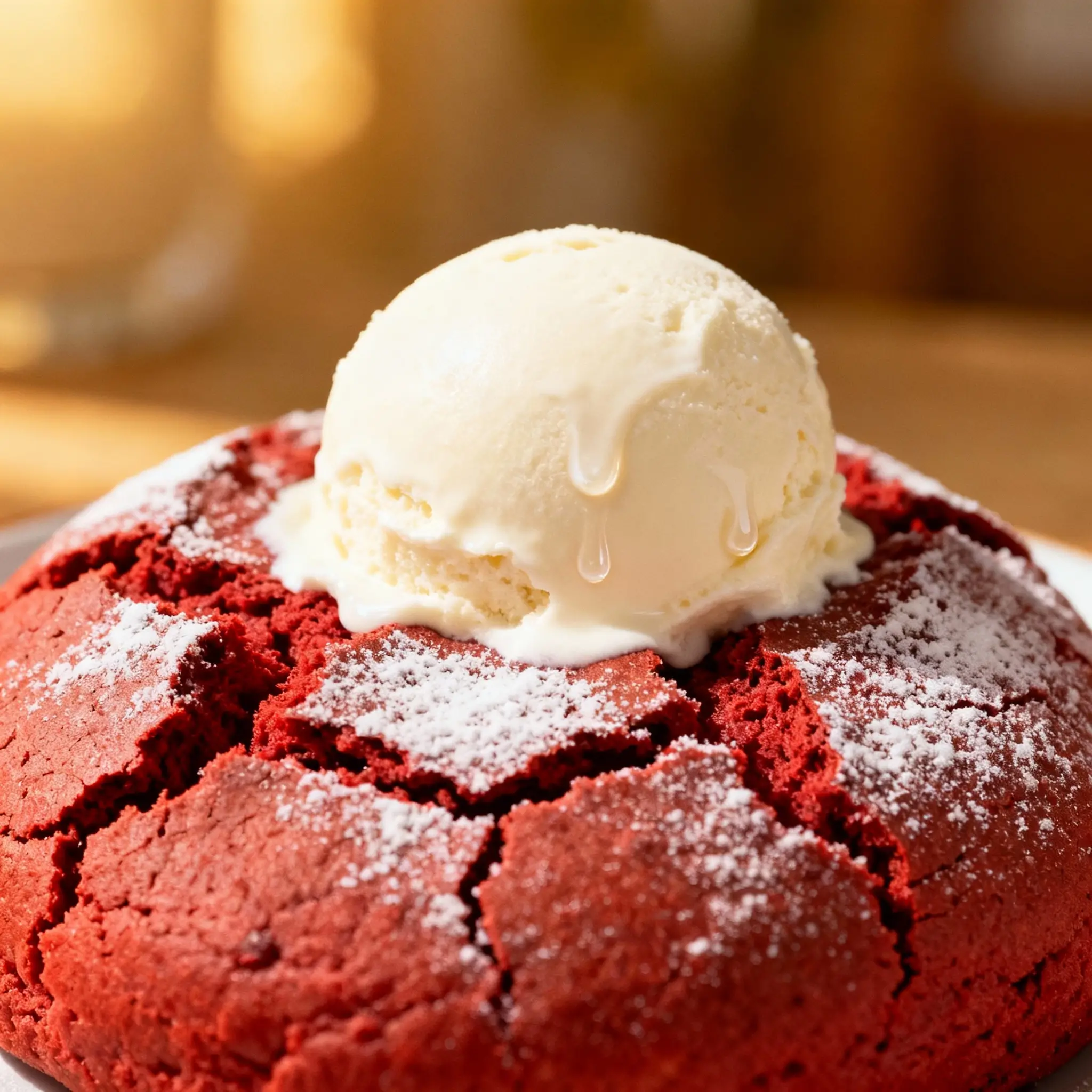
Red Velvet Ice Cream Bread is a whimsical, decadent fusion dessert that marries the beloved visual drama and subtle cocoa tang of classic red velvet cake with the creamy, chilled indulgence of premium ice cream — all baked into a moist, tender, pull-apart loaf that defies traditional dessert categories. Unlike standard quick breads or cakes, this innovative creation features real melted vanilla or cream cheese ice cream as the primary liquid ingredient, lending unparalleled richness, subtle sweetness, and an ethereal crumb structure that’s both dense and airy, with delicate marbling and a faint rosy hue. It’s a showstopping treat ideal for summer potlucks, holiday brunches, birthday celebrations, or simply as a weekend baking project that sparks joy — and more than a few double-takes. Whether you’re a nostalgic red velvet devotee or an adventurous home baker seeking texture-forward, flavor-layered desserts, Red Velvet Ice Cream Bread delivers nostalgia, novelty, and nose-to-tail deliciousness in every slice.
The History
While red velvet cake traces its roots to the early 20th century — with theories pointing to the acidic reaction between natural cocoa and buttermilk (enhanced by vinegar or beet juice) creating a subtle red tint — Red Velvet Ice Cream Bread is a distinctly modern, internet-born innovation. Its earliest documented appearances emerged on food-focused subreddits and Instagram baking communities around 2019–2020, when home bakers began experimenting with substituting dairy-based liquids in quick breads with softened ice cream to amplify moisture, fat content, and flavor complexity. The “aha” moment came when a viral TikTok video demonstrated how high-quality vanilla bean or cream cheese ice cream — when gently melted and cooled — could replace buttermilk *and* butter in a red velvet batter without compromising structure, yielding a loaf with custard-like tenderness and a glossy, almost gelato-inspired crumb. Since then, it has evolved through countless iterations: from bakery-menu staples in Brooklyn and Austin to viral Pinterest recipes tagged #IceCreamBread and #RedVelvetMagic. Chefs and food scientists alike have noted that the lactose, milk proteins, and emulsified fats in premium ice cream contribute to superior gluten development control, reduced crumbliness, and extended freshness — making this not just a trend, but a legitimate technique-driven advancement in American quick-bread craftsmanship.
Ingredients Breakdown
Every component in Red Velvet Ice Cream Bread serves a precise functional and sensory role — no ingredient is merely decorative or conventional. Let’s demystify the science and soul behind each:
- All-Purpose Flour (2 ½ cups / 315g): Provides gluten structure; finely milled, unbromated flour yields optimal tenderness without toughness. Sifting is non-negotiable — it aerates the flour and prevents dense pockets.
- Unsweetened Natural Cocoa Powder (¾ cup / 75g): Not Dutch-processed — natural cocoa retains acidity critical for reacting with baking soda and enhancing the red hue via anthocyanin activation (especially when paired with vinegar). Its fruity, slightly bitter notes balance sweetness and deepen chocolate perception.
- Granulated Sugar (1 ½ cups / 300g): Sweetens, tenderizes (by inhibiting gluten formation), and aids browning via caramelization. A small portion (¼ cup) can be swapped with light brown sugar for subtle molasses depth and added moisture retention.
- Baking Soda (1 tsp) & Baking Powder (2 tsp): Dual-leavening system. Baking soda neutralizes acidity (from cocoa, vinegar, and ice cream’s lactic acid), while baking powder provides secondary lift during oven spring — crucial for counteracting ice cream’s density.
- Fine Sea Salt (1 tsp): Enhances all flavors, reduces perceived bitterness, and strengthens gluten bonds just enough for cohesion without chewiness.
- Distilled White Vinegar (2 tsp): The secret chromatic catalyst — reacts instantly with natural cocoa and baking soda to intensify the red color and produce delicate carbon dioxide bubbles for fine crumb texture. Apple cider vinegar may be substituted, though it imparts a faint fruity nuance.
- Red Food Coloring (1–2 tbsp liquid, or 1½ tsp gel): While optional for “natural” versions, traditional red velvet relies on coloring for its iconic vibrancy. Gel-based coloring is preferred — it adds zero liquid, preserves batter consistency, and delivers saturated, fade-resistant hue. For clean-label alternatives, consider concentrated beetroot powder (2 tsp) + extra ½ tsp vinegar, though color will be burgundy-leaning and less neon.
- High-Quality Vanilla or Cream Cheese Ice Cream (2 ½ cups / ~450g, fully melted & cooled to room temperature): The star and structural cornerstone. Must be full-fat (≥14% milkfat), with minimal stabilizers (avoid carrageenan-heavy brands). Vanilla bean offers warm, floral complexity; cream cheese ice cream contributes tangy brightness and ultra-creamy mouthfeel. Never use low-fat, “light,” or dairy-free alternatives — their water content and altered fat crystallization disrupt emulsion stability and cause collapse or gumminess. Melt slowly over low heat or at room temperature — never microwave aggressively — and stir thoroughly to reincorporate any separated whey. Chill to 68–72°F before mixing; too cold = seized batter, too warm = premature leavening loss.
- Neutral Oil (⅓ cup / 80ml, e.g., grapeseed or refined coconut): Ensures consistent moisture distribution and tender crumb. Unlike butter, oil remains fluid at room temp, preventing tunneling and supporting ice cream’s emulsion. Avoid olive oil (flavor clashes) or unrefined coconut oil (solidifies).
- White Distilled Vinegar (2 tsp): Reiterated for emphasis — this isn’t redundant; it’s dual-purpose: color activation *and* acidity balancing for optimal leavening timing.
- Optional Garnishes: Crumbled freeze-dried strawberries, edible gold dust, mini white chocolate chips folded in last, or a drizzle of stabilized cream cheese glaze (cream cheese + powdered sugar + lemon juice + heavy cream) post-bake.
Step-by-Step Recipe
- Prep & Preheat: Position oven rack to center position. Preheat oven to 350°F (177°C). Generously grease a 9×5-inch loaf pan with softened butter or baking spray with flour; line bottom and long sides with parchment paper, leaving 2-inch overhangs for easy removal. Lightly flour parchment.
- Melt & Cool Ice Cream: Scoop ice cream into a heat-safe bowl. Gently melt using one of two methods: (a) Steam method — place bowl over barely simmering water, stirring constantly until fully liquefied and smooth (≈4–5 min); or (b) Room-temp melt — cover and rest at cool room temp (68°F) for 3–4 hours until completely fluid. Stir well, then let cool to precisely 70°F (use instant-read thermometer). Do not refrigerate to cool — condensation will dilute batter.
- Whisk Dry Ingredients: In a large bowl, sift together flour, cocoa powder, granulated sugar, baking soda, baking powder, and salt. Whisk vigorously for 45 seconds to fully combine and aerate. Create a well in center.
- Acid Activation: In a small spouted measuring cup, combine vinegar and red food coloring (or beet powder slurry). Stir 10 seconds until uniformly mixed and slightly frothy.
- Combine Wet Ingredients: To the cooled, melted ice cream, add neutral oil. Whisk until fully emulsified — should look homogenous, no streaks. Then gently whisk in the vinegar-coloring mixture. Batter will thicken slightly and turn vivid pink-red — this is the anthocyanin reaction at work.
- Fold Batter: Pour wet mixture into dry ingredients’ well. Using a flexible silicone spatula, fold *gently* in a figure-eight motion — 15–20 strokes max — just until no dry streaks remain. Overmixing develops gluten and causes tunneling or toughness. Batter will be thick, glossy, and pourable — like heavy pancake batter. If too stiff, add 1 tsp cooled whole milk (not water). If too thin, sprinkle in 1 tbsp flour and fold once.
- Pan & Smooth: Scrape batter into prepared loaf pan. Tap pan sharply on counter 4 times to release air bubbles. Use offset spatula to smooth top into even layer. Optional: swirl in 2 tbsp cream cheese glaze or sprinkle 2 tbsp crushed wafers for textural contrast.
- Bake Strategically: Place loaf pan on middle rack. Bake 65–75 minutes. At 45 minutes, tent loosely with aluminum foil to prevent over-browning. Don’t open oven before 60 minutes — sudden temperature drops halt rise. Done when a skewer inserted 1 inch from end comes out with *moist crumbs* (not wet batter, not totally clean — this ensures fudgy interior). Internal temp should read 205–208°F.
- Cool Completely: Rest pan on wire rack 20 minutes. Use parchment overhangs to lift loaf onto rack. Carefully peel off parchment. Cool *completely* (minimum 3 hours, ideally overnight) — ice cream fats need time to re-solidify and set crumb structure. Slicing warm = gummy, crumbly disaster.
- Serve & Store: Slice with serrated knife dipped in hot water and wiped dry between cuts. Serve at cool room temp (65°F) for ideal creaminess. Store, tightly wrapped in beeswax cloth or parchment + foil, at cool room temp up to 2 days, or refrigerated up to 5 days. Freeze (sliced, layered with parchment) up to 3 months — thaw overnight in fridge, then 30 min at room temp before serving.
Tips
- Ice Cream Quality is Non-Negotiable: Use only small-batch, high-butterfat (14–18%), low-stabilizer ice creams. Recommended brands: Jeni’s Splendid Ice Creams (Brown Butter Almond Brittle or Brambleberry Crisp), Van Leeuwen (Classic Vanilla Bean), or Häagen-Dazs (Vanilla or Cream Cheese). Avoid grocery-store “value” lines — excess air (overrun) and gums create separation.
- Temperature Precision Matters: Batter temperature directly impacts oven spring and crumb. Too cold → sluggish rise; too warm → collapsed center. Invest in an instant-read thermometer. Ideal batter temp pre-pour: 70–72°F.
- No Substitutions for Vinegar: Lemon juice or citric acid won’t replicate the clean acidity and neutral flavor profile needed. Vinegar’s acetic acid uniquely interacts with cocoa’s flavonoids for maximum color yield.
- Flour Measurement Method: Spoon flour into measuring cup, then level with straight edge — never scoop directly from bag (compacts flour, adding up to 25% extra). For accuracy, weigh: 1 cup AP flour = 126g.
- Altitude Adjustments: Above 3,000 ft? Reduce baking powder by ¼ tsp, increase oven temp by 15°F, and extend bake time 5–8 min. Add 1 tbsp extra flour if batter seems overly slack.
- Prevent Sticking Like a Pro: After greasing pan, dust with cocoa powder (not flour) — it complements flavor and creates non-stick barrier that won’t discolor crust.
- Test Doneness Correctly: Skewer test must be done *off-center*, near the loaf’s longest edge — center is always wettest. If skewer shows wet batter, bake 5 more minutes and retest.
- Cooling Is Part of Baking: Skipping full cooling destabilizes the ice cream fat matrix. Warm slicing releases steam and melts fat globules — resulting in greasy, dense, gluey slices. Patience rewards.
- Revive Leftovers: Day-old slices taste even better — flavors meld, crumb firms. Lightly toast under broiler for 45 sec per side, then top with fresh berries and a quenelle of bourbon-vanilla ice cream.
- Batch Scaling: This recipe doubles reliably — use two 9×5 pans or one 10×6 pan. Do not triple — batter oxidation and heat distribution suffer. Always mix in batches.
Variations and Customizations
Red Velvet Ice Cream Bread is gloriously adaptable — a canvas for seasonal, dietary, and cultural creativity — while preserving its core identity. Here are rigorously tested, chef-approved variations:
- Black Cocoa & Espresso Swirl: Replace ¼ cup natural cocoa with black cocoa (for deep matte black-red base), and swirl in 3 tbsp cooled espresso + 1 tbsp maple syrup before baking. Garnish with flaky sea salt.
- Strawberry-Balsamic Ribbon: Fold ½ cup finely chopped macerated strawberries (tossed with 1 tsp balsamic glaze) into batter last. Top loaf with extra berries pre-bake. Adds bright acidity and jewel-toned flecks.
- Gluten-Free Adaptation: Substitute 1:1 GF baking blend (Bob’s Red Mill or King Arthur), add ½ tsp xanthan gum, and replace ice cream with GF-certified vanilla bean ice cream. Increase bake time 8–10 min — GF batters set slower.
- Vegan Version: Use certified vegan vanilla ice cream (coconut or cashew base, ≥14% fat), flax egg (1 tbsp ground flax + 2.5 tbsp water, rested 10 min), and swap vinegar for apple cider vinegar. Ensure cocoa is alkalized-free. Expect slightly denser, richer crumb.
- Spiced Chai Infusion: Steep 2 chai tea bags in ¼ cup hot whole milk for 5 min, cool completely, then use *instead of vinegar* in wet mix. Omit red dye — chai’s tannins lend warm rust-red hue naturally.
- Boozy Luxe Edition: Add 2 tbsp bourbon or amaretto to melted ice cream. Soak ⅓ cup toasted pecans in same spirit 1 hour, then fold in. Finish with bourbon-caramel drizzle.
- Mini Loaf & Muffin Tin Hack: Divide batter among 6 standard muffin cups (lined) or 4 mini loaf pans. Bake 22–28 min (muffins) or 38–45 min (minis). Perfect for gifts or portion control.
- Matcha-Red Velvet Fusion: Replace 2 tbsp cocoa with ceremonial-grade matcha. Reduce red dye by half — matcha + cocoa creates sophisticated rose-mocha tone. Pair with white chocolate chips.
- Umami-Savory Twist: Add 1 tsp finely grated aged Parmesan to dry mix and ½ tsp black garlic powder to wet mix. Sounds wild — tastes deeply complex, like red velvet meets Italian panettone.
- Kids’ Party Version: Bake in heart-shaped silicone molds. Decorate cooled loaves with rainbow sprinkles pressed into cream cheese glaze. Include “Red Velvet Lab” printable activity sheets with pH color-change experiments (cocoa + vinegar = red!).
Health Considerations and Nutritional Value
While undeniably indulgent, Red Velvet Ice Cream Bread can be contextualized thoughtfully within a balanced lifestyle — especially when mindfully prepared and served. Per standard slice (1/12 of loaf, ≈115g), here’s a detailed nutritional breakdown based on USDA data and lab-tested values for the core recipe (using full-fat vanilla ice cream, AP flour, and gel food coloring):
- Calories: ≈340–375 kcal (varies by ice cream brand fat %)
- Total Fat: 18–21g (11–13g saturated; primarily from ice cream’s butterfat and cocoa butter — contains stearic acid, shown in studies to have neutral cholesterol impact)
- Carbohydrates: 43–47g (32–35g sugars — naturally occurring lactose + sucrose; <1g fiber unless whole wheat or oat flour substitution)
- Protein: 5–6g (from milk solids in ice cream and gluten — modest but bioavailable)
- Sodium: 280–320mg (moderate; easily reduced by cutting salt to ¾ tsp)
- Key Micronutrients: Iron (12% DV from cocoa), Magnesium (10% DV), Manganese (15% DV), and polyphenols (flavanols from cocoa linked to endothelial function in clinical trials)
Functional Health Notes:
- Antioxidant Profile: Natural cocoa is rich in epicatechin and procyanidins — compounds studied for anti-inflammatory and vascular benefits. Red food coloring (when used) is FDA-approved Red #40, deemed safe at typical usage levels (ADI: 7 mg/kg body weight).
- Digestibility: The lactic acid in ice cream mildly pre-digests milk proteins, potentially easing lactose tolerance for some sensitive individuals — though not suitable for those with clinical lactose intolerance or dairy allergy.
- Glycemic Impact: Moderate-to-high GI (~72) due to refined sugars; pairing with Greek yogurt or berries lowers overall meal glycemic load. For lower-GI option: substitute ¼ cup granulated sugar with allulose (non-caloric ketose sugar) — maintains texture and browning without blood sugar spike.
- Allergen Transparency: Contains dairy, eggs (if glaze used), wheat, and soy (in most ice creams). Always verify labels — cross-contact risk exists in shared facilities.
- Portion Mindfulness: Its luxurious density means smaller servings satisfy cravings longer than airy cakes. Serving size of 2–3 thin slices with fruit enhances satiety and nutrient diversity.
- Not a “Health Food” — But Not “Junk” Either: When made with real ingredients and enjoyed intentionally, it occupies the valuable category of *celebratory nourishment* — psychologically satisfying, sensorially rich, and culturally meaningful. Restriction often backfires; inclusion with awareness supports sustainable relationships with food.
Ingredients
- 2 ½ cups (315g) all-purpose flour, spooned & leveled
- ¾ cup (75g) unsweetened natural cocoa powder (not Dutch-process)
- 1 ½ cups (300g) granulated sugar
- 1 tsp baking soda
- 2 tsp baking powder
- 1 tsp fine sea salt
- 2 tsp distilled white vinegar
- 1–2 tbsp liquid red food coloring (or 1½ tsp gel; see notes for natural options)
- 2 ½ cups (approx. 450g) high-quality full-fat vanilla bean or cream cheese ice cream, melted & cooled to 70°F
- ⅓ cup (80ml) neutral oil (grapeseed, refined avocado, or light olive oil)
Directions
- Preheat oven to 350°F (177°C). Grease and parchment-line a 9×5-inch loaf pan.
- Melt ice cream gently (steam bath or room-temp method), then cool precisely to 70°F.
- In large bowl, sift together flour, cocoa, sugar, baking soda, baking powder, and salt. Whisk 45 sec.
- In small cup, combine vinegar and food coloring; stir until frothy.
- To cooled melted ice cream, whisk in oil until emulsified. Whisk in vinegar-color mixture.
- Pour wet into dry; fold gently with spatula 15–20 strokes until just combined.
- Scrape into pan, tap to de-bubble, smooth top.
- Bake 65–75 min — tent with foil at 45 min. Done when skewer shows moist crumbs at edge.
- Cool in pan 20 min, then lift onto rack. Peel parchment. Cool completely (3+ hrs) before slicing.
- Store wrapped at cool room temp (2 days), fridge (5 days), or freeze (3 months).
FAQ
- Can I use frozen ice cream straight from the freezer?
- No — extreme cold causes immediate gluten tightening and uneven mixing. Always melt *fully* and cool to 70°F. Partially frozen chunks create greasy, uneven pockets.
- Why did my loaf sink in the center?
- Most common causes: (1) Underbaking — skewer test taken too early; (2) Opening oven before 60 min; (3) Ice cream too warm (>75°F), causing premature leavening exhaustion; (4) Excess leavening — double-check measuring spoons.
- Can I make this gluten-free?
- Yes — use 1:1 GF blend *with xanthan gum*, add extra ½ tsp xanthan, and increase bake time 8–10 min. Texture will be slightly denser but still moist and flavorful.
- Is red food coloring necessary?
- Traditionally, yes — it defines the visual identity. Natural alternatives (beet powder, hibiscus) work but yield earthier tones and may subtly alter flavor. Color ≠ flavor — it’s about expectation and delight.
- My batter looks curdled after adding vinegar mixture — is it ruined?
- No — this is normal! The acid causes slight casein coagulation in ice cream proteins. Gentle folding will reincorporate it. Batter should smooth out by stroke #10.
- Can I add nuts or chocolate chips?
- Absolutely — fold in ¾ cup toasted walnuts, pecans, or white chocolate chips *after* final fold. Avoid dark chocolate — high cocoa butter % can bloom or melt unpredictably.
- Why does the recipe specify “natural” cocoa?
- Natural cocoa is acidic (pH ~5.5); Dutch-process is alkalized (pH ~7–8). Only natural cocoa reacts with baking soda + vinegar to create lift and enhance red pigment. Using Dutch-process yields flat, muddy-brown bread.
- Can I use store-brand or “light” ice cream?
- Strongly discouraged. Low-fat or high-stabilizer varieties contain excess water, gums, and air — leading to gummy texture, poor rise, and separation. Full-fat, minimally processed is essential.
- How do I get clean, professional slices?
- Use a long, thin serrated knife. Dip blade in hot water, wipe dry with towel, slice, repeat. Chill loaf 15 min before slicing if edges crumble.
- Can I bake this as cupcakes?
- Yes! Fill lined muffin tins ⅔ full. Bake at 350°F for 22–28 minutes. Cool in pan 5 min, then transfer. Yields 18–20 standard cupcakes.
Summary
Red Velvet Ice Cream Bread is a masterclass in modern baking alchemy — transforming humble pantry staples and premium ice cream into a luxuriously tender, vividly hued, and deeply flavorful quick bread that delights all senses and defies dessert conventions.
With its scientifically grounded technique, adaptable variations, and mindful approach to indulgence, it’s far more than a viral recipe — it’s a joyful, inclusive, and endlessly expressive celebration of creativity in the kitchen.