Introduction
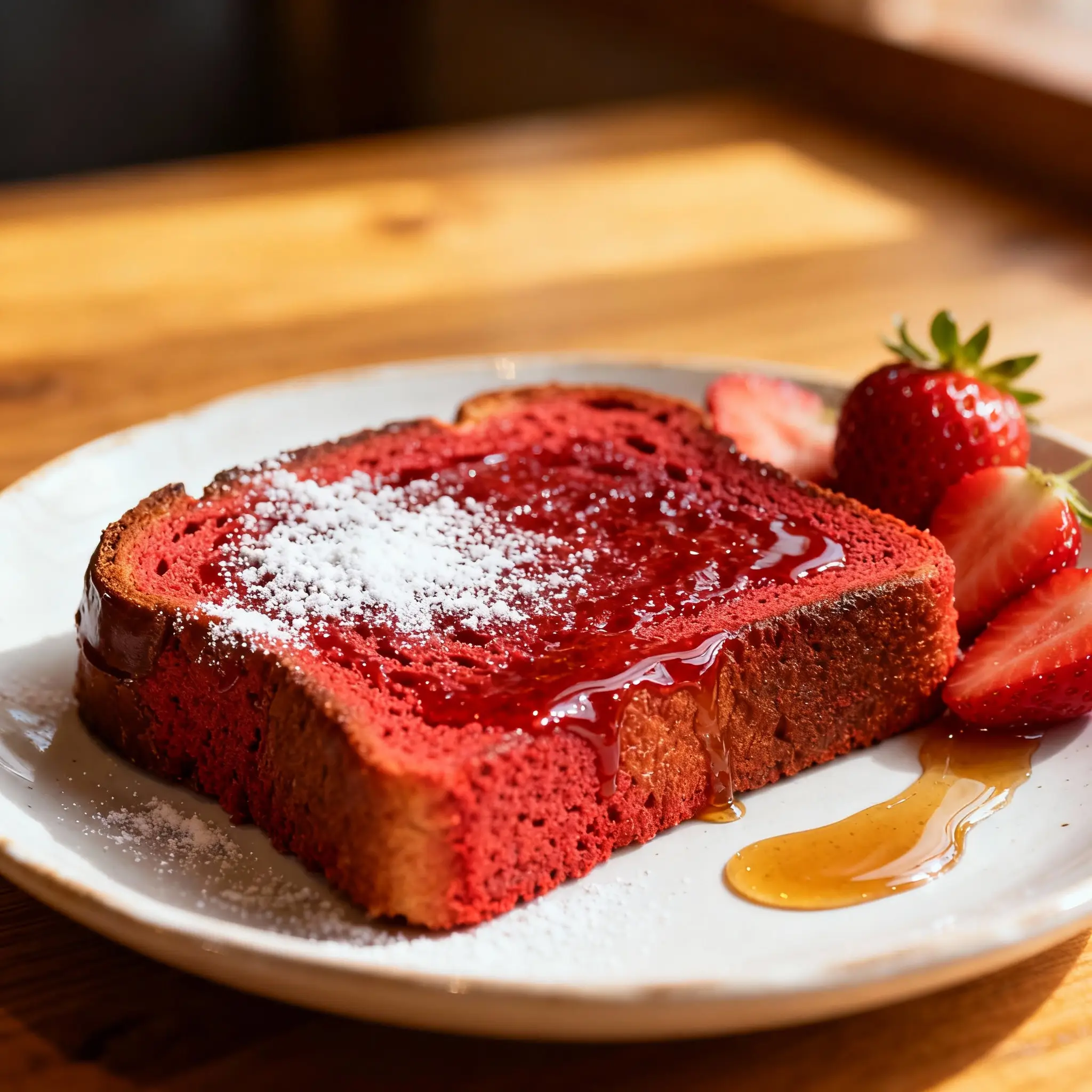
Red Velvet French Toast is a decadent, visually stunning, and irresistibly indulgent twist on the classic breakfast favorite—elevated with the signature crimson hue, subtle cocoa depth, and tangy cream cheese essence that define authentic red velvet. More than just a colorful gimmick, this version thoughtfully integrates the iconic flavor profile of red velvet cake into a luxuriously thick, custard-soaked brioche or challah slice, finished with velvety cream cheese glaze, crumbled red velvet crumbs, and a whisper of vanilla bean. Whether served at a festive holiday brunch, a romantic Valentine’s Day breakfast-in-bed, or as a showstopping centerpiece for Sunday morning gatherings, Red Velvet French Toast delivers nostalgia, elegance, and comfort in every bite—transforming an everyday staple into a celebration-worthy culinary experience.
The History
The origins of Red Velvet French Toast are delightfully modern and rooted in culinary innovation rather than tradition. While French toast itself dates back to medieval Europe—where resourceful cooks revived stale bread by soaking it in spiced milk or wine—the red velvet variation emerged organically in the early 2010s as part of the broader “gourmet breakfast” movement sweeping American food blogs, upscale diners, and social media platforms like Pinterest and Instagram. Chefs and home bakers began experimenting with infusing classic breakfast dishes with beloved dessert flavors, and red velvet—already a cultural phenomenon thanks to its association with Southern bakeries, wedding cakes, and pop-culture moments (like the iconic red velvet cupcake craze)—was a natural candidate. Early iterations appeared in boutique cafes in cities like Austin, Nashville, and Brooklyn, where chefs substituted traditional cinnamon-vanilla custard with a cocoa-infused, buttermilk-enriched batter tinted with natural beet powder or high-quality red food gel. Over time, the dish evolved to include structural enhancements—such as overnight custard marination, pan-toasting before griddling for optimal crust development, and layered glazes—to ensure it held up to both aesthetic scrutiny and flavor expectations. Though not tied to any single inventor, Red Velvet French Toast stands as a delicious testament to how regional dessert traditions can creatively reinterpret centuries-old techniques for contemporary palates and visual storytelling.
Ingredients Breakdown
Every element of Red Velvet French Toast plays a precise role—not only in achieving the signature color and taste but also in balancing texture, richness, acidity, and mouthfeel. Below is a meticulous breakdown of each component and why it matters:
- Bread: High-quality, day-old brioche or egg-rich challah is non-negotiable. Its tender crumb, buttery sweetness, and sturdy-yet-absorbent structure prevent mushiness during prolonged custard immersion while providing a golden, caramelized crust when cooked. Slightly stale bread (12–24 hours old) enhances absorption without disintegration.
- Buttermilk: Adds gentle acidity that tenderizes gluten, brightens cocoa notes, and activates natural red pigments in cocoa—especially when paired with vinegar or citric acid. It also contributes to the creamy, slightly tangy undertone reminiscent of classic red velvet cake.
- Unsweetened Cocoa Powder (Dutch-processed preferred): Provides deep chocolate nuance without bitterness. Dutch-processed cocoa has a neutral pH, which helps stabilize the vibrant red hue (alkaline cocoa can dull or turn brownish-red). Natural cocoa may be used but requires careful pH balancing.
- Red Food Coloring: High-pigment, oil-based or gel-based red food coloring (e.g., AmeriColor Super Red or Chefmaster Red Velvet) ensures intense, fade-resistant color without diluting the custard. Liquid food dye is discouraged—it introduces excess water, leading to soggy toast and muted color.
- White Vinegar or Cream of Tartar: Acts as a mild acidulant to enhance anthocyanin-based red tones in cocoa and react subtly with baking soda (if included), contributing to lift and tenderness in the custard matrix—even without leavening, this acidity sharpens flavor contrast.
- Cream Cheese (full-fat, room temperature): Used in both the custard (for richness and subtle tang) and the glaze (for luxurious silkiness), it bridges dessert and breakfast sensibilities. Low-moisture, high-fat cream cheese yields the smoothest texture and strongest flavor impact.
- Vanilla Bean Paste (not extract): Offers concentrated, speckled vanilla aroma and complexity—far superior to alcohol-based extracts when heat is involved. The tiny black seeds add visual charm and aromatic depth.
- Eggs & Egg Yolks: Whole eggs provide structure; extra yolks lend unctuousness, emulsification, and golden richness. Some elite versions use a 3:1 yolk-to-white ratio for maximum silkiness.
- Granulated Sugar + Brown Sugar (light or dark): Granulated sugar dissolves cleanly into custard; brown sugar adds molasses warmth and moisture retention—critical for preventing dry edges.
- Salted Butter (for cooking and finishing): Clarified butter or high-butterfat European-style butter prevents burning and imparts nutty, caramelized notes. A final brush of melted browned butter post-cooking adds aroma and sheen.
- Pinch of Fine Sea Salt: Not merely for seasoning—it heightens all other flavors, balances sweetness, and mitigates perceived chalkiness from cocoa.
Step-by-Step Recipe
- Prepare the Bread: Slice brioche or challah into 1-inch-thick, even rectangles (approx. 4 × 3 inches). Arrange on a wire rack over parchment-lined sheet pans. Let air-dry uncovered at room temperature for 8–12 hours—or refrigerate uncovered overnight (up to 16 hours) for ideal moisture reduction and surface drying. This step is critical for custard absorption without collapse.
- Make the Red Velvet Custard Base: In a large stainless-steel mixing bowl, whisk together 2 cups whole buttermilk, ¾ cup heavy cream, 5 large eggs, 3 large egg yolks, ½ cup granulated sugar, ¼ cup light brown sugar, 3 tbsp Dutch-processed cocoa powder, 1½ tsp pure vanilla bean paste (including seeds), 1 tsp white vinegar, ½ tsp fine sea salt, and 1½ tsp high-intensity red gel food coloring. Whisk vigorously for 90 seconds until completely homogenized and aerated—no streaks, no foam, no sediment. Strain through a fine-mesh chinois into a shallow, wide-bottomed ceramic or glass dish (e.g., 9×13-inch baking dish) to remove any undissolved cocoa or egg bits.
- Infuse & Marinate: Gently place bread slices into the strained custard, pressing down lightly with a silicone spatula to submerge fully. Flip after 45 seconds. Cover tightly with plastic wrap and refrigerate for minimum 4 hours—but ideally 8–12 hours (overnight). For ultra-luxury texture, rotate slices gently halfway through chilling to ensure even saturation.
- Preheat & Prep Cooking Surface: At least 30 minutes before cooking, preheat a heavy-bottomed cast-iron or nonstick griddle to 325°F (use an infrared thermometer for accuracy). Meanwhile, melt 4 tbsp unsalted butter in a small saucepan over medium-low heat until golden brown and nutty (about 4–5 minutes); set aside to cool slightly.
- Griddle the Toast: Remove one slice at a time from custard (let excess drip for 3 seconds—do not shake or press). Place gently onto hot griddle. Cook undisturbed for 3 minutes 15 seconds, until deep golden-brown with visible lacy edges. Flip using a thin, flexible offset spatula—press lightly to ensure full contact. Cook second side for 2 minutes 45 seconds. Total cook time: ~6 minutes per slice. Adjust heat as needed to maintain steady sizzle without smoking.
- Finish & Rest: Transfer cooked slices to a wire rack set over a sheet pan. Immediately brush tops with warm browned butter (½ tsp per slice). Let rest 90 seconds—this allows residual steam to escape, locking in custard tenderness while crisping the exterior further.
- Prepare Cream Cheese Glaze: While toast rests, whisk together 8 oz full-fat cream cheese (softened), 1¼ cups confectioners’ sugar (sifted), 2 tbsp whole milk, 1 tsp vanilla bean paste, ¼ tsp salt, and ½ tsp red gel food coloring until glossy and lump-free (use hand mixer on low for 60 seconds). Adjust thickness with milk (1 tsp at a time) if too stiff.
- Assemble & Garnish: Plate warm toast. Drizzle generously with cream cheese glaze using a spoon or piping bag with a #4 round tip. Sprinkle with crushed red velvet cake crumbs (homemade preferred), fresh raspberries or pomegranate arils for acidity and jewel-toned contrast, and a dusting of freeze-dried raspberry powder or edible gold flakes for luxury. Serve immediately.
Tips
- Temperature Control Is Everything: Never exceed 330°F on your griddle—higher heat causes rapid surface drying before interior custard sets, resulting in rubbery centers or burnt edges. Use an infrared thermometer daily; analog dials are notoriously inaccurate.
- Straining Is Non-Negotiable: Even “instant” cocoa can contain micro-grits that create gritty texture or scorch spots. A double-strain (first through chinois, then through cheesecloth) yields ethereal smoothness.
- Don’t Skip the Brown Butter Finish: That ½ tsp brush adds Maillard complexity, gloss, and aroma impossible to replicate with plain butter—plus it seals moisture beneath the crust.
- Glaze Timing Matters: Apply glaze within 90 seconds of plating while toast is still >140°F. Too hot, and glaze melts off; too cool, and it won’t adhere properly or achieve that signature sheen.
- Use Real Vanilla Bean Paste: Extract evaporates under heat; imitation vanillin tastes medicinal. Paste retains volatile compounds and offers visual authenticity with real bean specks.
- Stale ≠ Moldy: Bread should feel firm and slightly dry—not rock-hard or showing green fuzz. If unsure, bake slices at 300°F for 8 minutes before soaking to gently dehydrate without hardening.
- Acid Balance Check: If your red hue appears dull or purple-tinged, add ¼ tsp more white vinegar to remaining custard and stir well—it resets the pH for optimal red pigment expression.
- Leftover Custard? Freeze in ice cube trays (1 tbsp per cube), then transfer to zip-top bags. Thaw overnight in fridge and use within 3 days for pancakes, waffles, or mini quiches.
Variations and Customizations
Red Velvet French Toast is remarkably adaptable—whether accommodating dietary needs, seasonal ingredients, or creative flair. Here are rigorously tested variations, each preserving the core red velvet identity while offering distinct experiences:
- Vegan Red Velvet French Toast: Substitute brioche with vegan brioche (made with aquafaba and coconut oil), custard with 1½ cups unsweetened oat milk + ½ cup silken tofu (blended smooth) + 3 tbsp cocoa + 2 tbsp apple cider vinegar + 1½ tsp red gel + ⅓ cup coconut sugar + 1 tsp vanilla bean paste + ½ tsp salt. Cook in refined coconut oil. Glaze: blend ½ cup soaked cashews + ¼ cup maple syrup + 2 tbsp lemon juice + 1 tsp red gel + pinch salt until silky.
- Gluten-Free Version: Use certified GF brioche (like Schar or Canyon Bakehouse), increase custard soak time to 14 hours (GF bread absorbs slower), and add 1 tsp xanthan gum to custard for binding. Glaze remains unchanged if using GF confectioners’ sugar.
- Protein-Packed Breakfast Style: Add 2 scoops unflavored collagen peptides or whey isolate to custard—no flavor impact, added satiety. Top with Greek yogurt “clouds” instead of glaze and toasted pecans.
- Alcohol-Infused (Adult Brunch): Replace ¼ cup buttermilk with chilled bourbon or Chambord (raspberry liqueur). Reduce vinegar to ½ tsp. Glaze: add 1 tsp bourbon to cream cheese mixture.
- Seasonal Fruit Infusions: In autumn: fold roasted pear compote and candied walnuts into glaze. Winter: swirl in orange marmalade and top with blood orange supremes. Spring: add lavender honey to glaze and garnish with violet sugar. Summer: macerate strawberries with balsamic and black pepper; layer beneath glaze.
- Miniature “Bite-Sized” Version: Cut bread into 1.5-inch squares, soak 2 hours, cook on mini griddle or electric pancake maker. Skewer 3 pieces per bamboo pick; drizzle with glaze and dip in crushed freeze-dried raspberries—ideal for bridal showers or cocktail brunches.
- Deconstructed “Red Velvet Parfait”: Layer crumbled red velvet French toast, cream cheese mousse, raspberry coulis, and whipped crème fraîche in a glass. Garnish with edible flowers—breakfast elegance in spoonable form.
Health Considerations and Nutritional Value
While inherently indulgent, Red Velvet French Toast can be mindfully enjoyed with transparency about its nutritional composition and thoughtful modifications. A standard serving (2 slices, ~180g each, with glaze and garnish) contains approximately:
- Calories: 720–780 kcal (primarily from complex carbs, dairy fat, and natural sugars)
- Total Fat: 42–46g (24–27g saturated; largely from brioche butterfat, cream, and cream cheese)
- Carbohydrates: 78–84g (42–46g sugars—of which ~22g are added via glaze and custard sugars)
- Protein: 18–21g (from eggs, dairy, and bread protein)
- Fiber: 3–4g (mainly from cocoa and whole-grain optional bread substitutions)
- Sodium: 520–580mg (within FDA Daily Value guidelines of 2,300mg)
Key Health Notes:
- Cocoa Benefits: Rich in flavanols linked to improved endothelial function and antioxidant activity—choose minimally processed, pesticide-tested cocoa for maximal benefit.
- Buttermilk Advantage: Naturally lower in lactose and higher in probiotics (if cultured) than regular milk—may improve digestibility for some lactose-sensitive individuals.
- Food Coloring Safety: Gel-based red dyes used in professional kitchens (e.g., FD&C Red No. 40) are FDA-approved and pose no known risk at culinary usage levels (<0.01% of total weight). For families preferring natural options, beetroot powder (1 tbsp per cup custard) yields softer pink-red tones and adds trace folate and nitrates.
- Mindful Modifications: Reduce added sugar by 25% in custard and glaze without sacrificing structure; swap half the cream for evaporated milk to retain richness with less fat; use grass-fed butter and pasture-raised eggs for enhanced omega-3 and vitamin K2 profiles.
- Portion Awareness: Serve alongside fiber- and phytonutrient-dense sides—steamed asparagus with lemon zest, roasted cherry tomatoes, or a mixed greens salad with apple cider vinaigrette—to balance glycemic load and enhance micronutrient diversity.
Ingredients
- 8 thick slices (1-inch) high-quality brioche or challah bread (day-old preferred)
- 2 cups whole buttermilk (cultured, not acidified)
- ¾ cup heavy cream (36–40% fat)
- 5 large eggs
- 3 large egg yolks
- ½ cup granulated sugar
- ¼ cup light brown sugar, packed
- 3 tablespoons Dutch-processed unsweetened cocoa powder
- 1½ teaspoons pure vanilla bean paste (with seeds)
- 1 teaspoon white vinegar
- ½ teaspoon fine sea salt
- 1½ teaspoons high-intensity red gel food coloring (e.g., AmeriColor Super Red)
- 4 tablespoons unsalted butter, for browning
- 8 ounces full-fat brick-style cream cheese, room temperature
- 1¼ cups sifted confectioners’ sugar
- 2 tablespoons whole milk (plus more as needed)
- ¼ teaspoon fine sea salt (for glaze)
- Garnishes: crushed red velvet cake crumbs, fresh raspberries or pomegranate arils, freeze-dried raspberry powder, edible gold flakes (optional)
Directions
- Arrange bread slices on a wire rack over parchment-lined sheet pans. Let air-dry uncovered at room temperature for 8–12 hours (or refrigerate uncovered overnight).
- In a large bowl, vigorously whisk buttermilk, heavy cream, eggs, egg yolks, granulated sugar, brown sugar, cocoa powder, vanilla bean paste, vinegar, salt, and red gel food coloring until completely smooth and uniform (~90 seconds).
- Strain mixture through a fine-mesh chinois into a 9×13-inch ceramic dish. Discard any residue.
- Submerge bread slices one at a time, gently pressing to saturate. Flip after 45 seconds. Cover dish tightly with plastic wrap and refrigerate 8–12 hours.
- Preheat cast-iron or nonstick griddle to 325°F (use infrared thermometer). Melt butter in small saucepan over medium-low heat until golden brown and fragrant (~4–5 min); set aside to cool slightly.
- Remove bread from fridge. Lift each slice, let excess custard drip for exactly 3 seconds (no shaking). Place on hot griddle.
- Cook first side 3 minutes 15 seconds undisturbed, until deeply golden with lacy edges. Flip carefully with offset spatula; cook second side 2 minutes 45 seconds.
- Transfer to wire rack. Brush tops immediately with ½ tsp warm browned butter per slice. Rest 90 seconds.
- While resting, make glaze: beat cream cheese, confectioners’ sugar, milk, vanilla, salt, and ½ tsp red gel until glossy and lump-free (60 sec on low with hand mixer).
- Plate warm toast. Generously drizzle with glaze. Top with red velvet crumbs, berries, and optional garnishes. Serve immediately.
FAQ
- Can I use regular milk instead of buttermilk?
- No—substituting regular milk eliminates the essential acidity required for proper red pigment development, cocoa solubilization, and tenderizing action. If buttermilk is unavailable, make a quick substitute: add 1 tbsp white vinegar or lemon juice to 1 cup whole milk; let sit 10 minutes until curdled. Do not use skim or low-fat milk—they lack the fat needed to carry flavor and create richness.
- Why does my red color look brown or purple?
- This signals pH imbalance. Cocoa’s anthocyanins shift from red (acidic) to purple (neutral) to brown (alkaline). Ensure you’re using white vinegar (not apple cider, which is less acidic) and Dutch-processed cocoa (pH ~7). Avoid baking soda unless specifically formulated for red velvet systems—its alkalinity will mute red tones.
- Can I freeze leftover cooked French toast?
- Yes—with caveats. Cool completely, layer between parchment paper in airtight container, freeze up to 1 month. To reheat: thaw overnight in fridge, then crisp in 350°F toaster oven for 6–8 minutes. Glaze must be applied fresh after reheating.
- Is there a way to reduce the sugar without ruining texture?
- Absolutely. Reduce granulated sugar in custard to ⅓ cup and confectioners’ sugar in glaze to 1 cup. Compensate with 1 tsp maple syrup in glaze for moisture and depth. Texture remains intact due to egg/cream fat content—not sugar-dependent.
- What’s the best bread if I can’t find brioche?
- Challah is the top alternative—nearly identical fat and egg content. Second choice: Hawaiian sweet rolls (slightly denser but pleasantly soft). Avoid baguettes, sourdough, or whole wheat—they lack the buttery tenderness needed for proper custard integration.
- Can I make this ahead for a crowd?
- Yes—prepare custard and soak bread up to 12 hours ahead. Store covered in fridge. Cook to order for peak texture. For 10+ servings, use two griddles or a flat-top range; stagger soaking so batches finish simultaneously.
- Why do you strain the custard?
- Even premium cocoa contains microscopic particles that don’t fully dissolve. Unstrained, these settle into the bread’s crevices and scorch on the griddle—causing bitter, gritty patches. Straining guarantees seamless infusion and flawless browning.
- Can I use liquid food coloring?
- Technically yes—but strongly discouraged. Liquid dye adds significant water volume, diluting flavor, weakening custard viscosity, and causing uneven color dispersion. Gel or oil-based dyes deliver maximum pigment with zero moisture interference.
Summary
Red Velvet French Toast is a masterclass in elevated breakfast craftsmanship—where the nostalgic allure of red velvet cake meets the soul-warming tradition of French toast through precision hydration, pH-balanced color science, and multi-layered textural contrast.
With its velvety cocoa-buttermilk custard, golden-brown brioche crust, luxuriously tangy cream cheese glaze, and artful garnishes, it transforms morning routines into memorable, multisensory celebrations—proving that decadence and detail belong on the breakfast table.