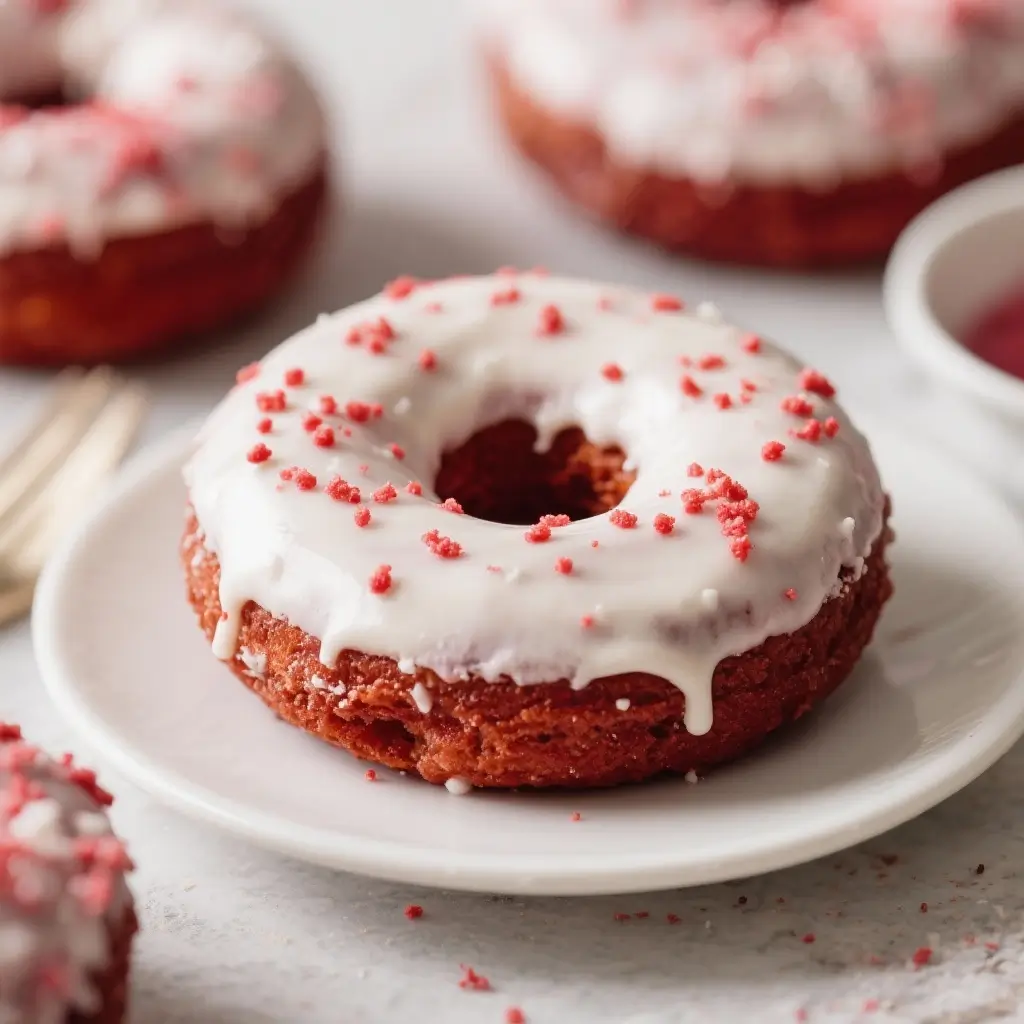
Red Velvet Donuts: A Decadent Delight for Every Occasion
Indulge in the luxurious blend of rich cocoa, tangy buttermilk, and vibrant red hues with these heavenly Red Velvet Donuts. Soft, fluffy, and perfectly balanced between sweet and slightly tart, these donuts offer a bakery-quality experience from the comfort of your kitchen. Whether you’re hosting a brunch, celebrating a special occasion, or simply craving something delicious, red velvet donuts are an elegant treat that never fails to impress.
The History of Red Velvet Donuts
The story of red velvet begins long before donuts became a popular dessert item. Originating in the early 20th century, red velvet cake gained prominence in the southern United States, particularly during the 1920s. The original color came not from artificial dyes, but from a natural chemical reaction between cocoa powder and acidic ingredients like buttermilk and vinegar. This reaction preserved the red anthocyanin pigments found in cocoa, giving the cake its signature reddish hue.
The term “red velvet” was popularized by the Waldorf-Astoria Hotel in New York City, where a version of the cake became a house specialty. Over time, as food coloring became more accessible, bakers began using red dye to enhance the color, creating the deep crimson look we now associate with red velvet desserts.
While red velvet cake remained the star for decades, creative bakers eventually began experimenting with other forms—cupcakes, cookies, cheesecakes, and yes—donuts. Red velvet donuts emerged as a modern twist on the classic flavor, combining the moist texture of traditional red velvet with the light, airy crumb of a yeast or cake donut. Today, they are a beloved variation found in artisanal bakeries and home kitchens alike, especially around holidays like Valentine’s Day and Christmas.
Ingredients Breakdown: What Makes These Donuts Special?
The magic of red velvet donuts lies in the careful balance of ingredients that create their unique flavor, color, and texture. Let’s break down each component:
- All-Purpose Flour: Provides structure and support, ensuring the donuts hold their shape while remaining tender.
- Cocoa Powder (Unsweetened): Adds a subtle chocolate flavor without overpowering the delicate sweetness. It also contributes to the characteristic red tone when combined with acid.
- Baking Powder & Baking Soda: Work together as leavening agents. Baking powder provides lift, while baking soda reacts with acidic ingredients (like buttermilk and vinegar) to create softness and fluffiness.
- Salt: Enhances flavor and balances sweetness.
- Granulated Sugar: Sweetens the batter and helps create a golden crust when fried or baked.
- Eggs: Bind the ingredients together, add richness, and contribute to the donut’s structure and moisture.
- Buttermilk: The key to tenderness and tang. Its acidity activates the baking soda and enhances the red color naturally.
- Vanilla Extract: Adds depth and warmth to the overall flavor profile.
- Red Food Coloring (Liquid or Gel): Gives the donuts their iconic vibrant red shade. Gel coloring is preferred for a more intense hue without altering the batter consistency.
- Unsalted Butter (Melted): Adds richness and moisture. Using unsalted allows better control over salt levels.
- Vegetable Oil (for frying): Used if making traditional fried donuts. Choose a neutral oil with a high smoke point for best results.
- Cream Cheese Frosting (for topping): Combines cream cheese, butter, powdered sugar, vanilla, and a pinch of salt for a tangy-sweet finish that complements the red velvet base perfectly.
Step-by-Step Recipe: How to Make Perfect Red Velvet Donuts at Home
Making red velvet donuts may sound intimidating, but with the right instructions, it’s surprisingly simple. You can choose to bake them for a healthier option or fry them for that classic donut shop texture. Below is a detailed guide for baked red velvet donuts—easier, less messy, and just as delicious.
Ingredients
For the Donuts:
- 1 ½ cups (190g) all-purpose flour
- 2 tablespoons (10g) unsweetened cocoa powder
- 1 teaspoon baking powder
- ½ teaspoon baking soda
- ¼ teaspoon salt
- ¾ cup (150g) granulated sugar
- 1 large egg, room temperature
- ½ cup (120ml) buttermilk, room temperature
- 2 tablespoons (30ml) vegetable oil or melted unsalted butter
- 1 teaspoon vanilla extract
- 1–2 teaspoons red food coloring (gel recommended)
- 1 tablespoon white vinegar or apple cider vinegar
For the Cream Cheese Frosting:
- 4 oz (115g) cream cheese, softened
- ¼ cup (60g) unsalted butter, softened
- 1 ½ cups (180g) powdered sugar, sifted
- 1 teaspoon vanilla extract
- Pinch of salt
- 1–2 tablespoons milk or heavy cream (as needed for consistency)
Optional Toppings:
- Crushed pecans
- White chocolate drizzle
- Red sprinkles
- Chopped strawberries
Directions
- Preheat Oven and Prepare Pan: Preheat your oven to 350°F (175°C). Lightly grease a donut pan with non-stick spray or brush with melted butter. Set aside.
- Mix Dry Ingredients: In a medium bowl, whisk together the flour, cocoa powder, baking powder, baking soda, salt, and granulated sugar until well combined.
- Combine Wet Ingredients: In a separate large bowl, whisk the egg until smooth. Add the buttermilk, melted butter (or oil), vanilla extract, vinegar, and red food coloring. Whisk until fully blended and uniformly colored.
- Combine Wet and Dry Mixtures: Gradually add the dry ingredients to the wet mixture, stirring gently with a spatula or wooden spoon until just combined. Do not overmix—this ensures tender donuts.
- Fill Donut Pan: Spoon the batter into a piping bag or zip-top bag with the corner snipped off. Carefully pipe the batter into each donut mold, filling about ¾ full to allow room for rising.
- Bake: Place the pan in the preheated oven and bake for 10–12 minutes, or until a toothpick inserted into the side of a donut comes out clean.
- Cool: Remove the pan from the oven and let the donuts cool for 5 minutes. Then, gently transfer them to a wire rack to cool completely before frosting.
- Prepare Frosting: While the donuts cool, make the cream cheese frosting. In a medium bowl, beat the softened cream cheese and butter together until smooth and creamy. Gradually add the sifted powdered sugar, mixing on low speed to avoid a mess. Stir in the vanilla and salt. If the frosting is too thick, add milk or cream one teaspoon at a time until desired consistency is reached.
- Frost the Donuts: Once the donuts are completely cool, dip the top of each donut into the cream cheese frosting. Allow excess to drip off. For extra flair, drizzle with melted white chocolate or sprinkle with chopped nuts or red sprinkles.
- Serve or Store: Serve immediately, or store in an airtight container in the refrigerator for up to 3 days. Bring to room temperature before serving for best texture.
Tips for Making the Best Red Velvet Donuts
- Use Room Temperature Ingredients: Cold eggs or buttermilk can cause the batter to curdle and affect texture. Let them sit out for 30 minutes before use.
- Don’t Overmix: Overmixing develops gluten, leading to tough donuts. Mix until just combined—small lumps are okay.
- Gel Food Coloring is Best: It provides a vivid red without adding extra liquid, which could throw off the batter’s consistency.
- Check Oven Temperature: Use an oven thermometer to ensure accuracy. Too hot, and the donuts will brown too quickly; too cool, and they won’t rise properly.
- Grease the Pan Well: Even non-stick pans benefit from a light coating of butter or spray to prevent sticking.
- Cool Completely Before Frosting: Warm donuts will melt the frosting and make it runny.
- Frosting Consistency: For a smooth glaze, thin the frosting slightly with milk. For a thicker coat, keep it stiffer.
- Make Ahead: Bake the donuts a day ahead, store unfrosted in an airtight container, and frost just before serving.
Variations and Customizations
These red velvet donuts are highly adaptable—perfect for tailoring to your taste or dietary needs. Try these fun variations:
- Fried Red Velvet Donuts: Roll the chilled dough out, cut into rings with a donut cutter, and deep-fry in 350°F oil until golden. Drain on paper towels, then frost.
- Gluten-Free Version: Substitute all-purpose flour with a 1:1 gluten-free flour blend. Ensure other ingredients (like baking powder) are certified GF.
- Dairy-Free Option: Use almond or oat milk mixed with lemon juice instead of buttermilk, dairy-free butter, and vegan cream cheese for the frosting.
- Mini Donut Bites: Use a mini donut pan for bite-sized treats perfect for parties.
- Chocolate-Dipped: After frosting, dip half of each donut in melted dark or white chocolate for added decadence.
- Strawberry-Filled: Inject a small amount of strawberry jam into the center using a piping tip before frosting.
- Spiced Red Velvet: Add a pinch of cinnamon or nutmeg to the batter for a warm, autumnal twist.
- Low-Sugar Version: Replace granulated sugar with coconut sugar and use a sugar substitute in the frosting (like erythritol-based powdered sugar).
Health Considerations and Nutritional Value
While red velvet donuts are undeniably indulgent, understanding their nutritional content can help you enjoy them mindfully.
Nutritional Breakdown (per donut, approximately):
- Calories: ~280–320 kcal
- Total Fat: 12–15g (including 6g saturated fat)
- Carbohydrates: 45–50g (including 25–30g sugar)
- Protein: 4–5g
- Fiber: 1–2g
- Sodium: ~200–250mg
Health Notes:
- High in Added Sugars: Both the donut and frosting contain significant sugar. Enjoy in moderation, especially for those managing blood sugar levels.
- Refined Carbohydrates: White flour spikes insulin levels. Consider substituting part of the flour with whole wheat pastry flour for added fiber.
- Cream Cheese Frosting: High in saturated fat and calories. Reduce portion size or use a lighter frosting alternative (e.g., Greek yogurt + honey).
- Food Coloring: Artificial dyes (especially red #40) are controversial. Opt for natural red coloring made from beet juice or pomegranate if preferred.
- Baked vs. Fried: Baked donuts have fewer calories and less fat than fried versions—making them a slightly healthier choice.
For a more nutritious version, consider making protein-packed donuts using almond flour, egg whites, and natural sweeteners—but note that texture and flavor will differ from traditional recipes.
Frequently Asked Questions (FAQ)
Can I make red velvet donuts without a donut pan?
Yes! Use a muffin tin and shape the batter around a shot glass in the center, or roll out the dough and cut circles with cookie cutters if making fried donuts.
Why are my donuts dry?
Overbaking or overmixing the batter can lead to dryness. Stick to the recommended baking time and mix gently.
Can I freeze red velvet donuts?
Absolutely. Freeze unfrosted donuts in an airtight container for up to 2 months. Thaw at room temperature and frost before serving.
Can I use cake flour instead of all-purpose?
Yes. Cake flour will yield a more tender crumb, but reduce the amount slightly (use 1 ⅓ cups cake flour instead of 1 ½ cups AP flour).
Why isn’t my batter red enough?
Natural cocoa reactions produce a faint red tint. For a bold color, increase the gel food coloring to 1–2 teaspoons.
Can I make these vegan?
Yes. Use a flax egg (1 tbsp ground flax + 3 tbsp water), plant-based milk + vinegar for buttermilk, vegan butter, and vegan cream cheese.
How do I store leftover donuts?
Store frosted donuts in the refrigerator for up to 3 days. Unfrosted ones can be kept at room temperature in an airtight container for 2 days.
Can I bake these in a convection oven?
Yes, but reduce the temperature by 25°F and check for doneness a few minutes earlier.
Summary
Red velvet donuts combine the beloved flavor of red velvet cake with the delightful texture of homemade donuts, topped with luscious cream cheese frosting for a match made in dessert heaven. Easy to customize and perfect for any celebration, these treats bring elegance and joy to every bite.