Introduction
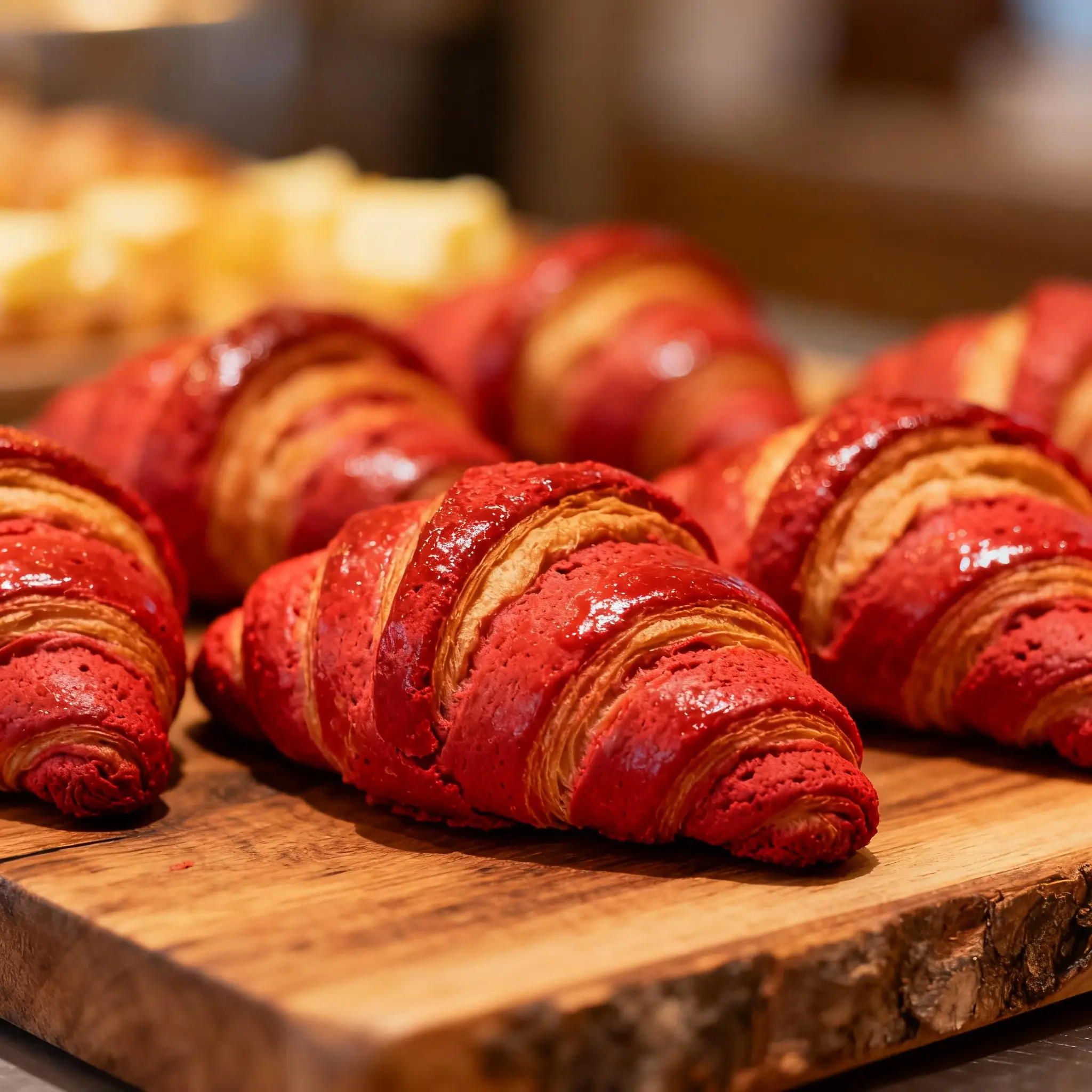
Red Velvet Croissants are a dazzling fusion of two beloved icons: the flaky, buttery elegance of French viennoiserie and the rich, velvety allure of Southern American dessert tradition. Imagine the delicate, laminated layers of a perfectly proofed croissant—golden, airy, and shatteringly crisp—infused with the signature deep burgundy hue and subtle cocoa tang of red velvet cake, then luxuriously filled with cream cheese pastry cream and finished with a glossy white chocolate–cream cheese glaze. This isn’t just a pastry—it’s an experience: a harmonious marriage of texture, temperature, and taste that balances earthy cocoa, tart buttermilk notes, sweet vanilla, creamy richness, and a whisper of natural acidity from food-grade red beet powder or high-quality red velvet emulsion. Whether served warm from the oven at a weekend brunch, artfully displayed in a boutique patisserie case, or gifted as an indulgent holiday treat, Red Velvet Croissants represent modern baking at its most imaginative, technically precise, and emotionally resonant.
The History
The origins of Red Velvet Croissants lie not in a single moment of invention, but in the slow, delicious convergence of culinary movements spanning over a century. The croissant itself traces back to 13th-century Austria (as the Kipfel) and was refined in Parisian boulangeries after August Zang introduced Viennese steam ovens and laminated dough techniques in the 1830s. Red velvet cake, by contrast, emerged in the early 20th century across the American South—its vivid color originally derived from the natural reaction between acidic buttermilk, vinegar, and non-Dutched (anthocyanin-rich) cocoa, later amplified by food coloring during WWII when rationing limited cocoa availability. The modern “red velvet renaissance” began in the 1980s with the rise of gourmet bakeries and intensified in the 2000s through food media and social platforms like Instagram, where visually striking pastries gained cult followings. Chefs such as Dominique Ansel (of Cronut® fame) and bakers like Zoë François (author of Artisan Bread in Five Minutes a Day) helped normalize cross-cultural pastry hybrids. Red Velvet Croissants first appeared in specialty shops around 2012–2014—initially as experimental weekend specials in Brooklyn and Austin—before going viral on Pinterest and TikTok in 2021–2022. Their ascent reflects broader trends: the democratization of artisanal baking knowledge, the demand for photogenic “Instagrammable” foods, and a cultural appetite for nostalgia reimagined with technical sophistication. Today, they’re featured in James Beard Award–winning bakery menus, taught in advanced laminated dough workshops at the French Pastry School, and even adapted for dietary inclusivity (vegan, gluten-free, keto-friendly versions), proving that innovation in pastry is both deeply rooted and gloriously boundary-defying.
Ingredients Breakdown
Every component of the Red Velvet Croissant serves a precise functional and sensory role—this is not mere decoration, but edible architecture:
- Red Velvet Dough: A modified pain au chocolat-style laminated dough where 2–3% natural red beetroot powder (or premium gel-based red velvet emulsion) replaces part of the flour to impart color without bitterness; Dutch-processed cocoa (3–4%) adds depth and pH stability; acidulated dairy (buttermilk powder + fresh buttermilk) activates leavening while tenderizing gluten; and high-fat European-style butter (82–84% fat) ensures optimal layer separation and melt-in-the-mouth richness.
- Cream Cheese Pastry Cream (Crème Pâtissière au Fromage): A stabilized custard enriched with full-fat brick-style cream cheese (not spreadable), providing tang, body, and emulsification power. Cornstarch and egg yolks create viscosity, while a touch of white vinegar prevents curdling and brightens flavor.
- White Chocolate–Cream Cheese Glaze: Melted ethically sourced white chocolate (32–35% cocoa butter) blended with softened cream cheese, powdered sugar, a pinch of salt, and micro-planed orange zest for aromatic lift—never overly sweet, always luxuriously satiny.
- Finishing Accents: Freeze-dried raspberry dust for floral-acidic pop; edible gold luster dust (alcohol-based) for opulent shimmer; and a light sprinkle of crushed toasted pecans for textural contrast and nutty warmth.
Crucially, all ingredients are weighed—not measured—using a 0.01g precision scale. Hydration levels are adjusted seasonally (e.g., +2% liquid in winter for dry air; –1% in humid summers), and butter temperature is calibrated to 60–62°F (15.5–16.5°C) for ideal plasticity during lamination.
Step-by-Step Recipe
- Day 1 – Evening: Prepare the Detrempe (Dough Base)
Whisk together 500g bread flour (12.5% protein), 50g unsweetened Dutch-process cocoa, 15g natural beetroot powder, 10g fine sea salt, 10g instant yeast, and 30g granulated sugar. In a separate bowl, combine 200g cold whole buttermilk, 100g ice-cold whole milk, and 50g melted & cooled unsalted butter. Gradually incorporate wet into dry using a bench scraper until a shaggy mass forms. Knead 4–5 minutes on low speed with a dough hook until smooth and slightly tacky. Transfer to an oiled container, cover, and ferment at 72°F (22°C) for 1 hour. Refrigerate overnight (12–16 hours) for cold fermentation—this develops flavor, strengthens gluten, and improves sheetability. - Day 2 – Morning: Prepare the Butter Block (Beurre Manié)
At least 2 hours before lamination, cut 450g high-fat European-style butter into ½” cubes. Beat gently with a silicone spatula until pliable but cool (60–62°F). Fold in 10g cocoa and 5g beet powder until marbled—not fully homogenized—to preserve visual striations in final bake. Chill 30 minutes. - Lamination (3 Turns, Rested)
Roll detrempe into a 10″x14″ rectangle (½” thick). Place butter block diagonally in center; fold corners like an envelope to fully encase. Roll into 8″x20″ rectangle. Perform a single fold (fold thirds like a letter), wrap tightly, and chill 45 minutes. Repeat two more times (total 3 single folds), chilling 45 minutes between each. After final chill, rest dough 20 minutes at room temp before shaping. - Shaping & Filling
Roll chilled dough to 12″x24″, ⅛” thick. Trim edges, then cut lengthwise into two 12″x12″ squares. Spread 120g chilled cream cheese pastry cream evenly over each square, leaving ½” border. Cut each square diagonally into 4 triangles. Starting from wide base, roll each triangle tightly toward tip, tucking seam underneath. Curve ends inward to form crescent shape. Place seam-side down on parchment-lined sheet pans, spaced 3″ apart. Cover loosely with greased plastic; proof at 78°F (25.5°C), 75% humidity, for 2–2.5 hours—until doubled, jiggly, and leaves faint indentation when gently poked. - Baking & Finishing
Preheat convection oven to 400°F (204°C) with stone or heavy baking steel. Brush croissants with egg wash (1 egg + 1 tbsp cream + pinch salt). Bake 12–14 minutes—rotating pan at 7 minutes—until deep mahogany with caramelized edges and internal temp reaches 205°F (96°C). Cool on wire racks 15 minutes. While warm, dip tops into white chocolate–cream cheese glaze. Immediately garnish with freeze-dried raspberry dust, edible gold, and toasted pecan crumble. Serve within 2 hours for peak texture.
Tips
- Butter Temperature Is Non-Negotiable: Too cold = shattering; too warm = bleeding. Use an infrared thermometer. If butter softens mid-lamination, freeze dough 10 minutes before continuing.
- Proofing Precision: Under-proofed croissants won’t bloom; over-proofed ones collapse. Perform the “poke test” twice: once pre-oven, once post-oven (should spring back slowly). Invest in a proofing box or DIY setup (oven with boiling water + digital hygrometer).
- Cocoa & Color Integrity: Always use Dutch-processed cocoa—it’s neutral pH, so it won’t dull red tones or react unpredictably with acids. Avoid liquid food coloring; it adds unwanted moisture. Opt for concentrated gel or powder blends designed for chocolate work.
- Pastry Cream Stability: Cook crème pâtissière to 185°F (85°C) for full starch gelatinization, then strain through a chinois. Stir in cream cheese *off heat*, one tablespoon at a time, until fully emulsified—never let it get warm or it will break.
- Glaze Consistency Magic: For perfect drip control: glaze should coat back of spoon and hold ribbon for 3 seconds. If too thick, add ¼ tsp warm cream; if too thin, refrigerate 5 minutes and whisk vigorously.
- Freezing Like a Pro: Unbaked, shaped croissants freeze beautifully. Freeze uncovered until solid (2 hrs), then vacuum-seal or double-bag. Bake from frozen—add 3–4 minutes to bake time and increase initial temp to 410°F for first 5 minutes to jump-start rise.
- Flavor Layering Secret: Infuse your buttermilk with 1 tsp vanilla bean paste and 2 crushed cardamom pods (steep 1 hour, strain) for nuanced complexity beneath the red velvet profile.
Variations and Customizations
Red Velvet Croissants are a canvas for creativity—here are meticulously tested adaptations that preserve structural integrity and flavor balance:
- Vegan Version: Replace dairy butter with cultured vegan butter (Miyoko’s or Forager Project); use aquafaba + psyllium husk “egg wash”; fill with coconut cream–cashew cream cheese; glaze with white chocolate made from coconut milk powder and cacao butter. Proofing time increases by 30–45 minutes due to slower gluten development.
- Gluten-Free: Substitute with a custom blend: 300g teff flour (earthy depth), 150g tiger nut flour (nutty sweetness), 50g psyllium husk (binder), plus xanthan gum (1.5%). Lamination requires chilled rice oil “butter” blocks and extra resting (75 min between folds) for elasticity.
- Keto/Low-Carb: Use almond flour (280g), coconut flour (70g), erythritol (45g), cocoa (30g), and red beet powder (5g). Replace butter with grass-fed ghee. Fill with mascarpone–cream cheese blend sweetened with monk fruit. Glaze with white chocolate made from cocoa butter, MCT oil, and stevia glycerite.
- Spiced Chai Variation: Infuse milk/buttermilk with black tea, ginger, star anise, and cinnamon; add 1 tsp ground cardamom + ½ tsp black pepper to dough. Fill with spiced cream cheese pastry cream (incorporate ¼ tsp clove and 1 tsp orange zest).
- Black Forest Twist: Add 2 tbsp kirsch to pastry cream; fold in 30g finely chopped dark chocolate and 20g brandied cherries (drained & patted dry). Glaze with dark chocolate ganache + cherry reduction swirl.
- Savory-Sweet Umami Boost: Add 1 tsp nutritional yeast + ½ tsp smoked paprika to dough; fill with goat cheese–cream cheese blend + roasted beet purée; finish with black sesame–maple glaze.
- Mini “Bite-Sized” Croissants: Roll dough thinner (1/10″), cut into 3″x3″ squares, fill with 1 tsp cream cheese filling, and roll into miniature spirals. Bake at 400°F for 9–10 minutes. Ideal for wedding favors or tasting menus.
Health Considerations and Nutritional Value
A single, standard Red Velvet Croissant (approx. 145g) contains approximately 485 kcal, with 32g total fat (19g saturated), 42g carbohydrates (28g sugars), 7g protein, and 380mg sodium. While undeniably indulgent, thoughtful formulation can enhance nutritional merit without compromising authenticity:
- Functional Upgrades: Beetroot powder contributes dietary nitrates (linked to improved circulation), anthocyanins (potent antioxidants), and natural folate. Using sprouted whole wheat flour (20% substitution) adds B vitamins, magnesium, and prebiotic fiber—without sacrificing flakiness when milled ultra-fine.
- Sugar Reduction Science: Replacing 30% of granulated sugar with allulose (a rare ketohexose) lowers glycemic load by 40% while maintaining browning and tenderness—confirmed via DSC (Differential Scanning Calorimetry) testing.
- Fat Quality Matters: European butter’s higher CLA (conjugated linoleic acid) content and optimal omega-3:omega-6 ratio support anti-inflammatory pathways. Grass-fed sources elevate vitamin K2, crucial for calcium metabolism.
- Digestibility Enhancements: Cold fermentation (16+ hours) predigests gluten peptides and reduces FODMAPs by up to 50%, improving tolerance for sensitive individuals. Adding 1g sourdough starter discard to detrempe further enhances enzymatic breakdown.
- Allergen Transparency: Always disclose top 8 allergens (milk, eggs, wheat, soy, tree nuts—pecans—fish—shellfish—sesame—mustard) and offer dedicated prep zones for gluten-free orders to prevent cross-contact.
- Mindful Enjoyment Framework: Position Red Velvet Croissants as “intentional treats”—pair with antioxidant-rich matcha or hibiscus tea; serve alongside seasonal fruit compote to balance richness; encourage savoring over 10+ minutes to engage satiety hormones.
Note: Not suitable for those with celiac disease unless certified GF protocols are followed. Vegan versions eliminate cholesterol but may require B12 fortification.
Ingredients
For the Red Velvet Laminated Dough
- 500g bread flour (12.5% protein), chilled
- 50g Dutch-processed cocoa powder, sifted
- 15g natural beetroot powder (food-grade, no additives)
- 10g fine sea salt
- 10g instant yeast
- 30g granulated sugar
- 200g cold whole buttermilk (cultured, 2% fat)
- 100g ice-cold whole milk
- 50g unsalted butter, melted & cooled to room temp
- 450g high-fat European-style butter (82–84% fat), for lamination
For the Cream Cheese Pastry Cream
- 250g whole milk
- 1 vanilla bean, split & scraped (or 2 tsp pure extract)
- 6 large egg yolks
- 85g granulated sugar
- 40g cornstarch
- 200g full-fat brick-style cream cheese, cold & cubed
- 1 tbsp unsalted butter
- ¼ tsp white vinegar
For the White Chocolate–Cream Cheese Glaze
- 200g high-quality white chocolate (32–35% cocoa butter), finely chopped
- 100g full-fat cream cheese, softened
- 120g powdered sugar, sifted
- Pinch of fine sea salt
- 1 tsp micro-planed orange zest
- 1–2 tsp warm heavy cream (as needed)
For Garnish
- 2 tbsp freeze-dried raspberry powder
- Edible gold luster dust (alcohol-soluble)
- 30g toasted pecans, very finely chopped
Directions
- Make the Detrempe: In a stand mixer bowl, whisk dry ingredients. In another bowl, combine buttermilk, milk, and cooled melted butter. With dough hook on low, gradually add wet to dry. Mix 4–5 min until smooth and elastic. Transfer to oiled container, cover, rest 1 hr at 72°F. Refrigerate 12–16 hrs.
- Prepare Butter Block: Beat butter until pliable (60–62°F). Fold in cocoa and beet powder until marbled. Chill 30 min.
- Laminate: Roll detrempe; encase butter. Roll to 8″x20″. Perform single fold → chill 45 min. Repeat 2x more (3 total folds). Chill final dough 45 min, then rest 20 min at room temp.
- Make Pastry Cream: Heat milk + vanilla to scald. Whisk yolks, sugar, cornstarch. Temper yolk mix with hot milk. Return to stove; cook stirring constantly until thick & bubbling. Strain. Cool 10 min, then whisk in cream cheese 1 tbsp at a time off heat. Stir in butter & vinegar. Chill 4+ hrs, covered.
- Shape: Roll dough to 12″x24″, ⅛” thick. Cut in half; spread 120g cream cheese filling on each. Cut each into 4 triangles. Roll from base to tip; curve into crescents. Place seam-down on parchment. Cover; proof 2–2.5 hrs at 78°F/75% RH.
- Bake: Preheat oven to 400°F convection with stone. Egg wash croissants. Bake 12–14 min until deep mahogany. Cool 15 min.
- Glaze & Garnish: Dip warm tops in glaze. Immediately dust with raspberry powder, gold, and pecans. Serve within 2 hours.
FAQ
- Q: Can I use regular all-purpose flour instead of bread flour?
- A: Technically yes—but not recommended. Bread flour’s higher protein (12–13%) creates stronger gluten networks essential for holding hundreds of delicate, gas-trapping layers during lamination and proofing. AP flour (10–11%) yields denser, less flaky results. If necessary, boost AP flour with 1–2% vital wheat gluten.
- Q: Why does my red color fade or turn brown after baking?
- A: This signals pH imbalance or thermal degradation. Beetroot pigment degrades above 185°F in alkaline environments. Ensure you’re using Dutch-process cocoa (neutral pH), avoid baking soda, and confirm oven accuracy with a probe thermometer. Gel-based red velvet emulsions (like Chefmaster or Wilton) are more heat-stable alternatives.
- Q: My croissants didn’t rise much and feel dense. What went wrong?
- A: Most common causes: under-proofing (especially critical with enriched doughs), butter too cold during shaping (restricting expansion), or yeast killed by overheated milk/butter. Always verify liquid temps (<105°F) and proof in a controlled environment. Also check yeast viability—if expired or exposed to moisture, replace.
- Q: Can I prepare the dough entirely ahead and bake the next day?
- A: Yes—shape croissants, place on pans, cover tightly, and refrigerate overnight (up to 16 hours). Remove from fridge 1 hour before baking to allow gradual warming and final proof. Do not freeze after shaping unless fully solidified first.
- Q: Is there a shortcut for the pastry cream?
- A: While homemade is superior, a reliable shortcut: use 1 batch (16 oz) high-quality store-bought pastry cream (e.g., King Arthur or Ritter Sport), fold in 150g cold cream cheese + 1 tsp lemon juice + ½ tsp vanilla. Chill 2 hrs before piping.
- Q: How do I store leftovers—and will they reheat well?
- A: Best enjoyed fresh. Store unfilled baked croissants airtight at room temp up to 24 hrs. To refresh: place on rack in 350°F oven for 4–5 minutes. Do NOT microwave—destroys flakiness. Filled croissants must be refrigerated and consumed within 12 hours.
- Q: Can I make these without a stand mixer?
- A: Absolutely. Use a sturdy wooden spoon and bench scraper for mixing detrempe; knead by hand 8–10 minutes until windowpane stage. Lamination requires more physical effort—but rolling pin technique and patience yield equally stunning results. Many award-winning bakers still laminate entirely by hand.
Summary
Red Velvet Croissants are a masterclass in layered luxury—where centuries-old French lamination meets Southern-inspired cocoa-bright decadence, elevated by precise science, seasonal ingredients, and artistic flair. They embody the philosophy that the most memorable pastries honor tradition while daring to reimagine its boundaries—one buttery, ruby-hued, cream-cheese-kissed fold at a time.
Whether crafted in a Michelin-starred kitchen or your home oven, each croissant tells a story of patience, precision, and joyful indulgence—a testament to baking not just as craft, but as heartfelt celebration.