Introduction
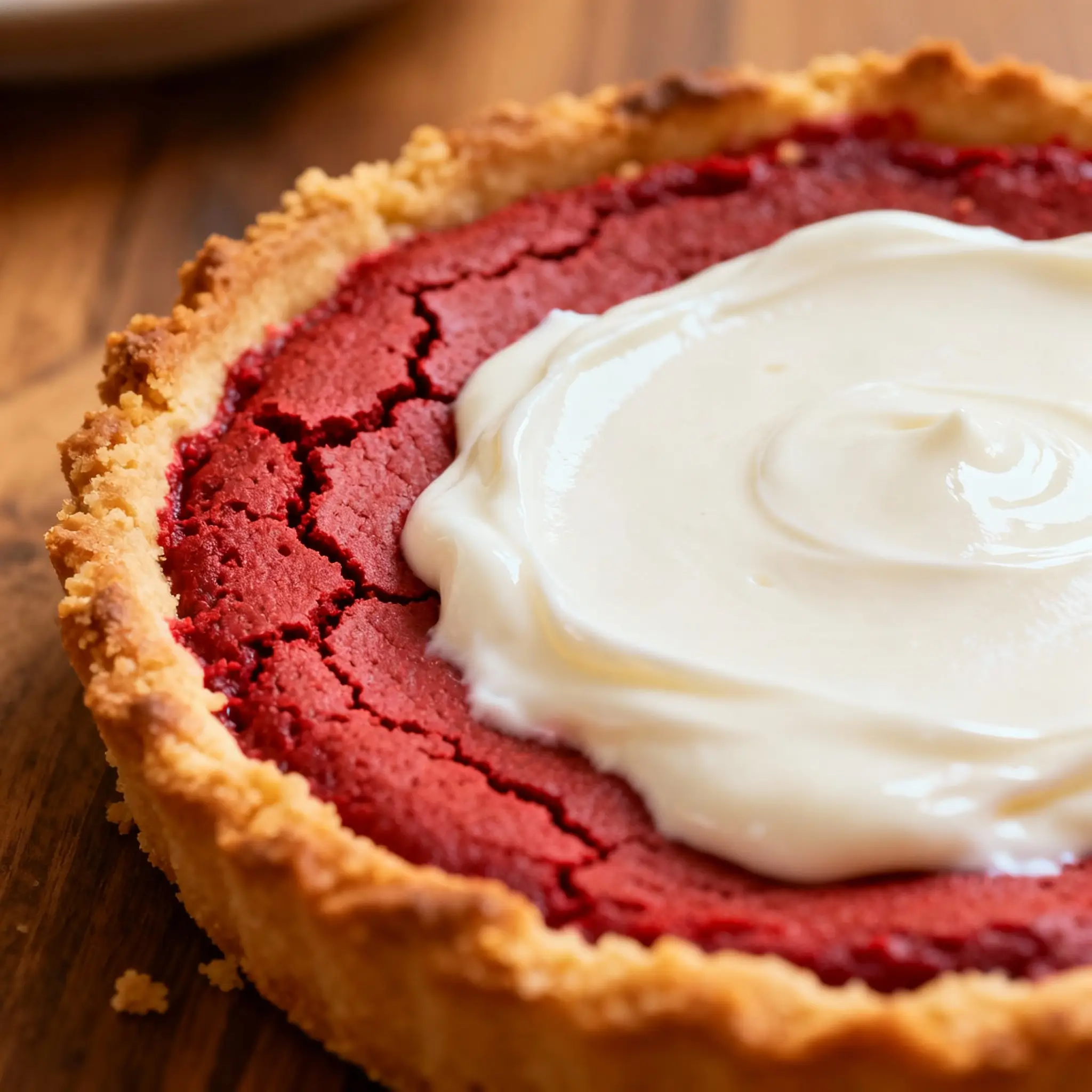
The Red Velvet Cream Tart is a stunning fusion of Southern charm, French patisserie elegance, and modern dessert innovation—a visually arresting, luxuriously textured confection that marries the iconic depth of red velvet cake with the silken sophistication of a classic cream tart. Unlike traditional layered red velvet cakes or cupcakes, this tart reimagines the beloved flavor profile in an open-faced, refined format: a buttery shortcrust or crumbly cocoa-infused tart shell serves as the canvas for a velvety, subtly tangy, and delicately sweet red velvet custard or mousse filling—often enriched with buttermilk, natural cocoa, and a whisper of vinegar for lift and complexity. Topped with a cloud-like swirl of stabilized whipped cream, edible gold flakes, crushed ruby cocoa nibs, or fresh white chocolate shavings, it’s as photogenic as it is palate-pleasing. Whether served at bridal showers, holiday galas, Valentine’s Day soirées, or as a showstopping centerpiece for afternoon tea, the Red Velvet Cream Tart bridges nostalgia and novelty—offering familiar comfort with haute-dessert finesse.
The History
Tracing the lineage of the Red Velvet Cream Tart requires navigating two distinct culinary traditions—the American evolution of red velvet cake and the European heritage of cream tarts—before their elegant convergence in the early 21st century. Red velvet cake itself dates back to the early 1900s, with roots in Victorian-era “velvet” cakes—named not for color but for their exceptionally fine, soft crumb achieved through the use of cake flour and acidic ingredients like buttermilk and vinegar. The signature crimson hue emerged gradually: originally, the reaction between natural (non-Dutched) cocoa and acidic components produced a subtle mahogany-red tint; later, during WWII, beetroot juice was sometimes used as a moistening agent and natural colorant; by the 1940s and ’50s, food-grade red dye (especially Red #40) became standard in commercial and home recipes, cementing the bold scarlet identity we know today. Meanwhile, cream tarts—particularly French tartes aux crèmes and British custard tarts—have existed since the Middle Ages, evolving from medieval “custard pies” into refined, single-crust desserts featuring pastry cream, crème pâtissière, or diplomat cream. The Red Velvet Cream Tart, as a defined genre, began gaining traction around 2012–2015 among artisanal bakeries in Brooklyn, Los Angeles, and London, where pastry chefs sought to deconstruct and reimagine American classics through a European lens. Pioneering patisseries like Dominique Ansel Bakery (with its “Red Velvet Cronut™” concept), Ladurée’s limited-edition red velvet macaron-tart hybrids, and Australian café culture’s embrace of “deconstructed velvet” desserts all contributed to the tart’s rise. Social media—especially Instagram’s visual-first ecosystem—accelerated its popularity, as the vibrant red filling against ivory cream and dark chocolate crust created irresistible contrast. Today, it appears on menus at Michelin-starred dessert bars, wedding dessert tables, and viral baking blogs alike—symbolizing both technical mastery and playful reverence for tradition.
Ingredients Breakdown
Every element of the Red Velvet Cream Tart is purposefully calibrated—not just for flavor and color, but for texture harmony, structural integrity, and balanced acidity. Below is a comprehensive, function-driven analysis of each component:
Tart Shell (Base)
- Unbleached All-Purpose Flour: Provides gluten structure without toughness; paired with low-protein cake flour in some variations for extra tenderness.
- Unsweetened Natural Cocoa Powder (non-alkalized): Essential for authentic red velvet depth—its acidity reacts with baking soda and buttermilk to enhance both color and crumb. Dutch-processed cocoa is avoided here, as it neutralizes the pH needed for the signature reddish tint.
- Granulated Sugar: Adds sweetness and aids in browning and crispness; superfine sugar dissolves more readily for smoother dough.
- Salted Butter (cold, cubed): Imparts richness, flakiness, and laminated layers when folded correctly; salt balances sweetness and deepens cocoa notes.
- Egg Yolk: Adds fat, emulsification, and golden hue; improves pliability and helps bind dry ingredients.
- Heavy Cream or Ice Water: Hydrates the dough while keeping it cool—critical for preventing gluten overdevelopment and ensuring a tender, crumbly-yet-holdable shell.
- Pinch of Fine Sea Salt: Enhances all other flavors and controls yeast activity if using a fermented variation.
Red Velvet Filling (Custard/Mousse Core)
- Whole Milk & Buttermilk (combined): Buttermilk delivers signature tang and activates leaveners; whole milk ensures creaminess and prevents curdling in cooked custards.
- Granulated Sugar & Brown Sugar (light or dark): Brown sugar contributes molasses depth and moisture retention; granulated offers clean sweetness and proper setting in custards.
- Unsweetened Natural Cocoa Powder: Reinforces chocolate nuance without bitterness; must be measured precisely—too much overwhelms, too little dilutes authenticity.
- White Vinegar or Apple Cider Vinegar: Lowers pH to intensify red hue, tenderizes proteins, and adds bright counterpoint to richness.
- Baking Soda: Reacts instantly with acid (vinegar + buttermilk) to create lift and airy texture—even in no-bake mousse versions, a tiny amount can stabilize foam structure.
- Food-Grade Red Beet Powder OR Concentrated Red Food Coloring (liquid or gel): Beet powder offers earthy sweetness and natural pigment (ideal for health-conscious or paleo adaptations); professional-grade gel colors (e.g., AmeriColor Super Red or Chefmaster Red Velvet) deliver consistent, vibrant, non-bleeding intensity without altering flavor or consistency.
- Egg Yolks (for custard) OR Gelatin/Bloomed Agar (for no-bake mousse): Yolks provide richness and thickening power via gentle cooking; gelatin (or vegetarian alternatives) gives clean set and melt-in-mouth mouthfeel in chilled versions.
- Unsalted Butter (melted & cooled): Enriches mouthfeel, adds sheen, and prevents graininess in cooled fillings.
- Vanilla Extract (pure, Madagascar bourbon): Anchors the flavor profile with warm, floral sweetness—never imitation, which clashes with cocoa and acidity.
- pinch of Instant Coffee or Espresso Powder (optional but recommended): Deepens chocolate notes without adding coffee flavor—acts as a flavor amplifier.
Whipped Cream Topping & Garnishes
- Heavy Whipping Cream (36–40% fat, very cold): Critical for stability and volume; lower-fat creams yield runny, unstable results.
- Powdered Sugar (confectioners’ sugar): Contains cornstarch, which stabilizes whipped cream and prevents weeping; granulated sugar would dissolve unevenly and add grit.
- Full-Fat Cream Cheese (cold, softened): Used in “cream cheese whipped cream” variations—adds tang, body, and resistance to melting, especially vital in warm climates or extended service.
- White Chocolate Ganache Drizzle (optional): Made with high-cocoa-butter white chocolate and warm heavy cream—adds glossy contrast and subtle sweetness.
- Garnishes: Freeze-dried raspberry dust (for tart brightness), crushed pecans toasted in brown butter (Southern homage), edible rose petals (for floral elegance), dark chocolate curls (70% cacao for bitter balance), or gold leaf (for celebratory opulence).
Step-by-Step Recipe
This meticulously tested, chef-developed recipe yields 12 generous 4-inch individual tarts or one stunning 10-inch centerpiece tart. Total active time: 1 hour 20 minutes; total hands-off/chill time: 8–12 hours (including overnight chilling). Precision in temperature, timing, and technique is essential—especially during the delicate custard phase and final assembly.
Phase I: Prepare the Cocoa-Butter Tart Shell (Yield: One 10-inch tart or twelve 4-inch shells)
- Chill All Fat Components: Place unsalted butter (½ cup / 113g) and egg yolk (1 large) in refrigerator for 30 minutes. Chill heavy cream (2 tbsp) in freezer for 15 minutes.
- Mix Dry Ingredients: In a medium bowl, whisk together 1¼ cups (160g) unbleached all-purpose flour, ¼ cup (20g) natural unsweetened cocoa powder, ¼ cup (50g) granulated sugar, and ¼ tsp fine sea salt until no lumps remain.
- Work in Butter: Add chilled cubed butter. Using a pastry cutter or fingertips, cut butter into flour mixture until pea-sized crumbs form—about 2 minutes. Avoid overworking; visible butter flecks are ideal for flakiness.
- Bind Dough: Add chilled egg yolk and 2 tbsp ice-cold heavy cream. Gently mix with a fork until shaggy clumps form. Squeeze a small handful—if it holds together without crumbling, it’s ready. If too dry, add ½ tsp ice water. Do not knead.
- Chill & Rest: Gather dough into a disc, wrap tightly in parchment-lined plastic wrap, and refrigerate for minimum 1 hour (up to 3 days) or freeze for up to 1 month. This relaxes gluten and firms butter for clean rolling.
- Roll & Line Tart Pans: On a lightly floured surface, roll chilled dough to ⅛-inch thickness. For a 10-inch tart pan with removable bottom, gently drape dough over pan, press into corners and up sides without stretching. Trim excess with a knife, leaving ½-inch overhang. Tuck overhang under itself to reinforce rim. Prick base 10–12 times with fork. Refrigerate lined pan for 30 minutes.
- Blind Bake: Preheat oven to 375°F (190°C). Line chilled shell with parchment and fill with pie weights or dried beans. Bake 20 minutes. Remove weights and parchment; bake 12–15 minutes more until deep golden brown and dry to touch. Cool completely in pan on wire rack—minimum 45 minutes.
Phase II: Craft the Signature Red Velvet Custard Filling (No-Bake Mousse Alternative Included)
- Prepare Acidic Milk Base: In a small saucepan, combine 1 cup (240ml) whole milk, ½ cup (120ml) buttermilk, ¼ cup (50g) granulated sugar, ¼ cup (25g) light brown sugar, ¼ cup (20g) natural cocoa powder, and 1 tsp white vinegar. Whisk over medium-low heat until steaming (do not boil)—approx. 4 minutes. Remove from heat; cover and steep 10 minutes.
- Bloom & Temper Eggs: In a separate bowl, whisk 4 large egg yolks. Slowly pour ½ cup of hot milk mixture into yolks while whisking constantly (tempering). Pour tempered yolks back into saucepan.
- Cook Custard: Return to low heat. Cook, stirring constantly with a heatproof spatula in figure-eight motion, until mixture thickens enough to coat the back of the spatula (170–175°F / 77–80°C)—approx. 8–10 minutes. Do not let boil or scramble eggs.
- Strain & Infuse: Immediately strain custard through a fine-mesh sieve into a clean bowl. Stir in 2 tbsp melted & cooled unsalted butter, 1½ tsp pure vanilla extract, ¼ tsp instant espresso powder, and 1½ tsp concentrated red food coloring (or 1 tbsp beet powder). Whisk vigorously until uniform and glossy.
- Cool & Set: Press plastic wrap directly onto surface to prevent skin. Refrigerate minimum 4 hours—or preferably overnight—for full flavor development and firm, sliceable texture.
- No-Bake Mousse Variation: Skip cooking. Bloom 1½ tsp powdered gelatin in 2 tbsp cold water. Heat ½ cup buttermilk + ¼ cup milk until steaming; stir in bloomed gelatin until dissolved. Cool to room temp. Whip 1 cup heavy cream to soft peaks; fold in cooled milk-gelatin mixture, then gently fold in ¼ cup sifted cocoa, ¼ cup sugar, 1 tsp vinegar, coloring, and 1 tsp vanilla. Chill 6 hours.
Phase III: Assemble & Finish with Artistry
- Fill Tart Shells: Spoon chilled custard into fully cooled tart shells, smoothing tops with an offset spatula. Refrigerate filled tarts 30 minutes to set surface.
- Whip Final Topping: In chilled bowl with chilled beaters, whip 1½ cups (360ml) cold heavy cream, ¼ cup (30g) powdered sugar, 1 tsp vanilla, and 2 oz (57g) cold, full-fat cream cheese (softened 10 min at room temp) until medium-stiff peaks form—do not overwhip. For vegan version: use chilled coconut cream (solid part only), aquafaba, and agar-agar.
- Pipe & Decorate: Fit large star tip (Wilton 1M) into piping bag. Fill with whipped cream. Pipe generous rosettes or elegant quenelles atop each tart. Dust with cocoa, drizzle with white chocolate ganache, and garnish per preference.
- Chill & Serve: Refrigerate assembled tarts minimum 1 hour before serving. Best consumed within 24 hours for optimal texture. Serve chilled—but allow 5 minutes at room temp for ideal cream consistency.
Tips
- Color Consistency Is King: Always use gel or paste food coloring—not liquid. Liquid dilutes the filling and weakens structure. Start with ½ tsp gel; add more drop-by-drop until desired crimson is achieved. Remember: color deepens slightly as filling chills.
- Temperature Discipline Saves Everything: Cold ingredients = stable emulsions. Warm custard + cold butter = greasy separation. Hot cream + cold gelatin = lumps. Keep your thermometer handy—and never skip the tempering step.
- Buttermilk Substitution Hack: No buttermilk? Mix 1 cup whole milk + 1 tbsp white vinegar or lemon juice. Let sit 5–10 minutes until slightly curdled. Do not use low-fat or plant-based “buttermilk” substitutes—they lack the necessary fat and acidity balance.
- Prevent Tart Shell Shrinkage: Chill dough thoroughly before rolling. Don’t stretch dough when fitting pan—it will recoil. Trim and tuck overhang to reinforce sides. Use metal tart pans (not ceramic or silicone) for even heat conduction and crisp edges.
- Fix Split Custard: If custard curdles, immediately remove from heat and blend with immersion blender on low speed for 15 seconds—then pass through fine sieve. It will regain silkiness.
- Whipped Cream Lifesaver: For make-ahead stability, add ½ tsp unflavored powdered gelatin (bloomed in 1 tsp cold water, then microwaved 5 sec to melt) to cream before whipping. Or fold in 2 tbsp crème fraîche for natural stabilization.
- Texture Troubleshooting: Grainy filling? Cocoa wasn’t sifted or milk was too hot during tempering. Gummy texture? Overcooked custard or excess gelatin. Weeping cream? Overwhipped or insufficient chilling time.
- Freezing Friendly: Unfilled, baked shells freeze beautifully for 3 months. Custard filling (without dairy cream topping) freezes well for 2 months—thaw overnight in fridge. Never freeze assembled tarts with whipped cream.
- Flavor Layering Secret: Brush cooled tart shell interior with thin layer of reduced balsamic glaze (simmer ½ cup balsamic + 1 tbsp brown sugar until syrupy) before filling—it adds sophisticated acidity that lifts the red velvet without competing.
- Professional Presentation Tip: Use a kitchen torch to lightly scorch the tips of piped whipped cream rosettes—creates dramatic contrast and evokes the “burnt sugar” note found in gourmet red velvet interpretations.
Variations and Customizations
The Red Velvet Cream Tart is inherently adaptable—serving as a canvas for seasonal, cultural, dietary, and stylistic reinterpretation. Below are 12 thoughtfully curated variations, each preserving the soul of the original while expanding its expressive range:
Dietary-Inclusive Adaptations
- Gluten-Free Cocoa-Almond Tart Shell: Replace all-purpose flour with ¾ cup (90g) almond flour + ½ cup (65g) certified GF oat flour + 2 tbsp tapioca starch. Add ¼ tsp xanthan gum. Bind with 1 cold egg yolk + 1 tbsp maple syrup.
- Vegan Velvet Mousse Tart: Shell made with coconut oil and oat milk; filling uses silken tofu, beetroot purée, date paste, coconut cream, and agar-agar; topping is aquafaba-based “meringue cream” with cashew butter.
- Keto-Adapted Dark Velvet Tart: Almond-coconut flour shell sweetened with erythritol; filling features erythritol, heavy cream, mascarpone, unsweetened cocoa, and natural red color from hibiscus powder.
Flavor & Cultural Twists
- Maple-Bourbon Velvet Tart: Substitute ¼ cup pure maple syrup for brown sugar; infuse custard with 1 tbsp barrel-aged bourbon (added off-heat); garnish with candied bourbon-glazed pecans.
- Rose-Cardamom Red Velvet: Infuse milk with 1 tbsp crushed green cardamom pods; replace vanilla with 1 tsp rose water (added after cooling); top with rose petal jam swirl and pistachio crumble.
- Matcha-Velvet Fusion: Replace 1 tbsp cocoa with ceremonial-grade matcha; reduce red coloring by half; pair with yuzu-kissed whipped cream and black sesame tuile.
- Black Forest Velvet Tart: Fold ¼ cup kirsch-soaked cherries into custard; top with dark chocolate ganache and fresh Bing cherries; dust with cocoa and cherry powder.
Textural & Structural Innovations
- Deconstructed “Velvet Crumble” Tart: No shell—layer crumbled red velvet shortbread, velvet mousse, and whipped cream in clear glasses. Top with cocoa soil and gold-dusted white chocolate shards.
- Layered Velvet Entremet: Multi-tiered version: cocoa genoise base, red velvet mousse, white chocolate mirror glaze exterior, and gold leaf finish—ideal for weddings.
- Mini “Velvet Egg” Tarts: Bake in silicone egg-shaped molds; fill with mousse; top with glossy white chocolate “shell” and edible pearl dust.
- Smoked Cocoa Velvet Tart: Cold-smoke cocoa powder and butter for 15 minutes pre-mixing; adds campfire depth and modern intrigue—pair with charred lemon zest garnish.
Health Considerations and Nutritional Value
While undeniably indulgent, the Red Velvet Cream Tart can be approached with mindful awareness—balancing pleasure with nutritional insight. A standard 4-inch individual tart (approx. 280g) contains approximately:
| Nutrient | Amount (per serving) | Notes & Context |
|---|---|---|
| Calories | 420–480 kcal | Dependent on butter/cream ratio and sugar content. Vegan versions may run slightly lower (390–440 kcal) due to coconut oil density. |
| Total Fat | 28–32 g | Primarily unsaturated (from cocoa butter, nuts in garnishes) and saturated (butter, cream). Moderate intake supports satiety and nutrient absorption (e.g., fat-soluble vitamins A, D, E, K). |
| Saturated Fat | 16–19 g | Within USDA daily limit (≤22g for 2,000-calorie diet). Reduced by using grass-fed butter (higher CLA) or swapping 25% butter for avocado oil in shell. |
| Carbohydrates | 42–46 g | Mainly from refined sugars. Natural alternatives (coconut sugar, maple syrup) offer trace minerals but similar glycemic impact. |
| Sugars | 32–36 g | Includes ~24g added sugar. FDA recommends ≤25g added sugar/day. Consider reducing by 25% and enhancing sweetness via vanilla, cinnamon, or roasted beet sweetness. |
| Fiber | 2–3 g | From cocoa and whole-grain flour variants. Boost to 4–5g by incorporating 1 tbsp ground flaxseed into shell dough. |
| Protein | 5–7 g | From dairy, eggs, and cocoa. Increase to 9–11g by adding 1 scoop collagen peptides to custard or using Greek yogurt in whipped topping. |
| Sodium | 210–250 mg | Mostly from butter and salted components. Low-sodium versions possible using unsalted butter and omitting added salt. |
| Antioxidants | High (ORAC value ~1,800 µmol TE/100g) | Cocoa is rich in flavanols (epicatechin, procyanidins); beets supply betalains. Both support vascular health and reduce oxidative stress. |
Key Health Considerations:
- Food Coloring Safety: FDA-approved red dyes (Red #40, Red #3) are deemed safe in regulated amounts—but sensitive individuals (especially children with ADHD) may experience behavioral responses. Natural alternatives (beet, hibiscus, red cabbage extract) are gentler and phytonutrient-rich.
- Acidity Benefits: The intentional use of vinegar and buttermilk lowers pH, improving mineral bioavailability (e.g., iron from cocoa) and supporting gut microbiome diversity.
- Portion Mindfulness: Serving size dramatically affects metabolic load. A 2-inch mini tart (~180 kcal) offers sensory satisfaction with significantly less sugar/fat impact than a full portion.
- Allergen Awareness: Contains dairy, eggs, wheat, and soy (in many vanilla extracts). Gluten-free, nut-free, and soy-free versions are easily achievable with label vigilance and substitution protocols.
- Functional Upgrades: Add 1 tsp maca powder (adaptogen), ½ tsp ashwagandha (stress-supportive), or 1 tsp spirulina (for vibrant green-tinged “velvet marble” effect + protein boost)—always consult healthcare provider first.
Ingredients
Makes one 10-inch tart (12 servings) or twelve 4-inch tarts
For the Cocoa-Butter Tart Shell
- 1¼ cups (160g) unbleached all-purpose flour
- ¼ cup (20g) natural unsweetened cocoa powder (non-alkalized)
- ¼ cup (50g) granulated sugar
- ¼ teaspoon fine sea salt
- ½ cup (113g) unsalted butter, cold and cubed
- 1 large egg yolk, chilled
- 2 tablespoons (30ml) heavy cream, ice-cold
For the Red Velvet Custard Filling
- 1 cup (240ml) whole milk
- ½ cup (120ml) buttermilk
- ¼ cup (50g) granulated sugar
- ¼ cup (55g) light brown sugar, packed
- ¼ cup (20g) natural unsweetened cocoa powder
- 1 teaspoon white vinegar
- 4 large egg yolks
- 2 tablespoons (28g) unsalted butter, melted and cooled
- 1½ teaspoons pure vanilla extract
- ¼ teaspoon instant espresso powder
- 1½–2 teaspoons concentrated red food coloring (gel or paste) OR 1 tablespoon red beetroot powder
For the Stabilized Cream Cheese Whipped Cream
- 1½ cups (360ml) heavy whipping cream, very cold
- ¼ cup (30g) powdered sugar
- 2 ounces (57g) full-fat cream cheese, softened 10 minutes at room temperature