Introduction
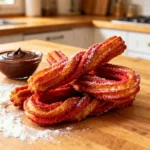
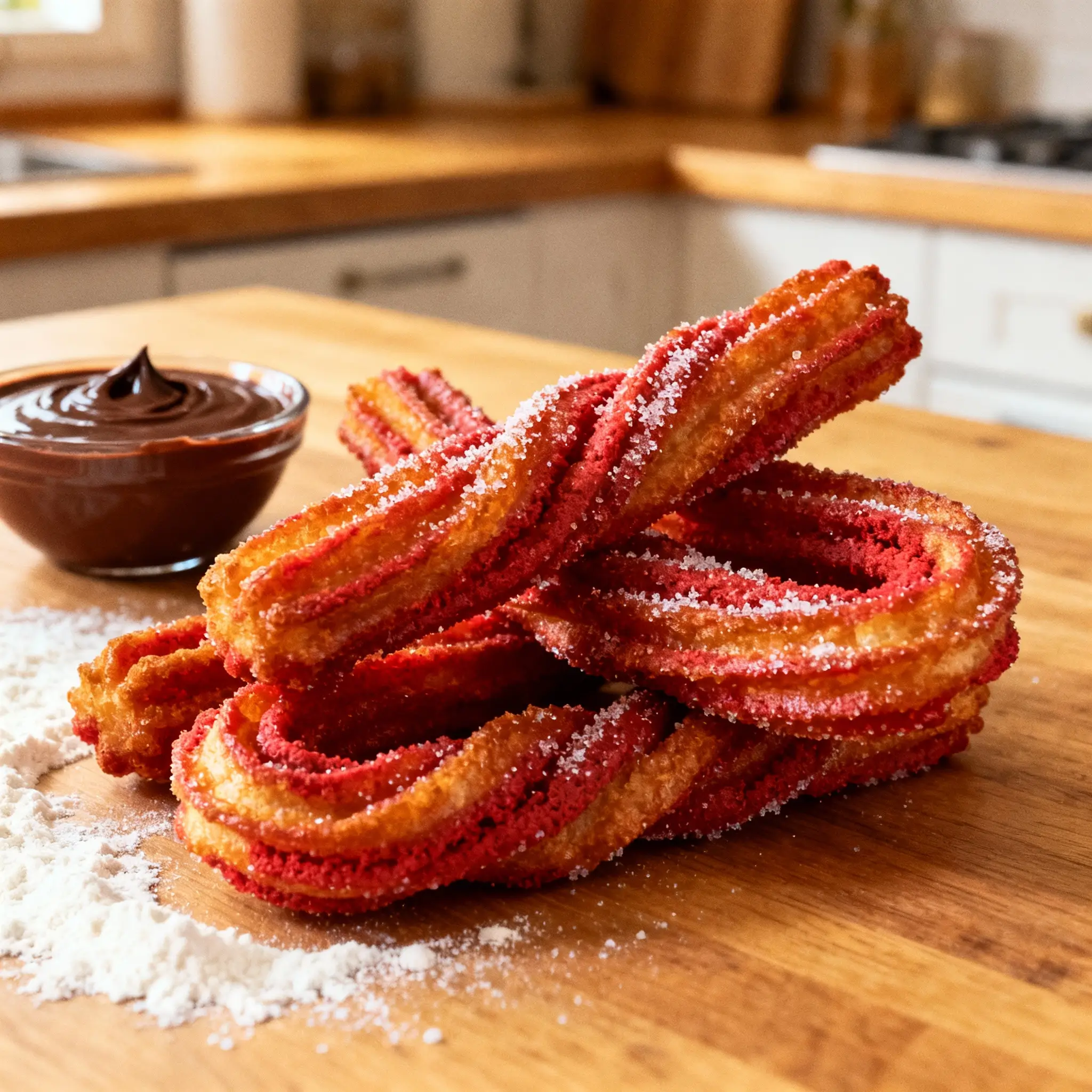
Red Velvet Churros are a dazzling fusion of two beloved American treats — the velvety richness of red velvet cake and the crispy, cinnamon-sugar allure of classic Spanish churros. Imagine biting into a golden-brown, ridged churro that’s tender on the inside, delightfully crisp on the outside, and infused with the signature cocoa-kissed, subtly tangy, and vividly crimson essence of red velvet — then generously rolled in buttery cinnamon sugar and finished with a luxurious drizzle of cream cheese glaze. These aren’t just churros; they’re edible celebrations — perfect for Valentine’s Day, birthdays, holiday brunches, or any moment that calls for whimsy, warmth, and a touch of theatrical flair. Whether you’re a seasoned fryer or a first-time churro maker, this recipe delivers restaurant-quality results with approachable technique and deeply nostalgic flavor.
The History
The story of Red Velvet Churros is one of joyful culinary evolution — a modern confluence of centuries-old traditions and 20th-century American innovation. Churros themselves trace their origins to Iberian shepherds in Spain and Portugal, who fried dough in portable cauldrons over open fires — a portable, shelf-stable source of energy. The treat traveled across the globe via colonization and migration, finding deep roots in Latin America (especially Mexico), the Philippines, and beyond. Meanwhile, red velvet cake emerged in the early 1900s in the American South, likely as a byproduct of natural cocoa reacting with acidic ingredients like buttermilk and vinegar — yielding a subtle mahogany hue that was later intensified with food coloring. By the mid-century, red velvet had become synonymous with elegance, romance, and Southern hospitality — famously popularized by the Waldorf Astoria Hotel and later by pop culture icons.
Red Velvet Churros, however, are a distinctly contemporary creation — born from the “dessert mashup” movement of the 2010s, amplified by social media food trends, bakery innovation, and the rise of gourmet food trucks. Early iterations appeared in boutique Los Angeles bakeries around 2013–2014, where chefs sought to reimagine churros beyond cinnamon-sugar or chocolate-dipped formats. The pairing proved serendipitous: the airy, slightly alkaline structure of red velvet batter complements the churro’s traditional choux-like base, while the cream cheese glaze mirrors the iconic frosting of red velvet cake. Today, Red Velvet Churros appear on menus from Brooklyn to Bangkok, featured in Food Network challenges, viral TikTok tutorials, and even upscale wedding dessert tables — a testament to how tradition and trend can swirl together in one delicious, crimson coil.
Ingredients Breakdown
Every element of Red Velvet Churros serves a precise functional and sensory purpose — no ingredient is arbitrary. Here’s why each matters:
- All-Purpose Flour: Provides gluten structure for chew and shape retention during frying. A moderate protein content (10–12%) ensures tenderness without toughness.
- Unsweetened Cocoa Powder (Dutch-processed preferred): Adds depth, subtle bitterness, and enhances the red hue when combined with acid and food coloring. Dutch-processed yields smoother, richer flavor and better color stability than natural cocoa.
- Granulated Sugar: Not only sweetens but also aids browning (Maillard reaction) and contributes to crispness in the crust.
- Baking Powder & Baking Soda: Dual leavening agents — baking powder provides consistent lift, while baking soda reacts instantly with acidic components (buttermilk, vinegar, cocoa) to create air pockets and intensify red pigmentation.
- Buttermilk: The star acidulant — tenderizes gluten, activates soda, adds tangy complexity, and helps develop the signature red velvet hue. Full-fat buttermilk yields superior richness and moisture.
- White Vinegar or Apple Cider Vinegar: Reinforces acidity for optimal color development and leavening synergy. Also helps preserve the vibrant red during high-heat frying.
- Red Food Coloring (gel-based preferred): Gel colors are highly concentrated, water-free, and won’t dilute batter consistency. Liquid coloring adds excess moisture and often yields a pinkish rather than true red. For authenticity, many chefs use a blend of “red velvet” gel + a touch of burgundy or carmine for depth.
- Eggs: Emulsifiers that bind fat and water, add structure, richness, and golden hue to the crumb. Room-temperature eggs incorporate more evenly.
- Unsalted Butter: Adds flavor, tenderness, and flakiness potential. Melted (not browned) for smooth incorporation and proper hydration balance.
- Salt: Balances sweetness, enhances all other flavors, and controls yeast activity if using optional fermented variations.
- Vegetable Oil or Peanut Oil (for frying): High smoke point (>400°F/204°C) is essential to maintain stable frying temperature without burning or off-flavors. Neutral taste preserves the delicate red velvet profile.
- For the Cinnamon-Sugar Coating: Granulated sugar, light brown sugar (for molasses depth), and Vietnamese or Ceylon cinnamon (higher oil content = more aromatic and less bitter than cassia).
- For the Cream Cheese Glaze: Full-fat brick-style cream cheese (never spreadable — too much stabilizers/water), powdered sugar (sifted to prevent lumps), pure vanilla extract, pinch of salt, and heavy cream or whole milk for adjustability.
Step-by-Step Recipe
- Prepare Your Fry Station: Set up a wire rack over parchment-lined baking sheets. Fill a heavy-bottomed Dutch oven or deep-fryer with 3–4 inches of neutral oil. Heat to 350–360°F (177–182°C), monitoring with a deep-fry thermometer. Keep temperature steady — fluctuations cause greasiness or uneven cooking.
- Make the Red Velvet Churro Batter: In a medium saucepan, combine water, butter, sugar, cocoa powder, salt, and ½ tsp vinegar. Bring to a full, rolling boil over medium heat — stirring constantly until butter melts and mixture is smooth. Remove from heat immediately.
- Add Flour: Dump in all the flour at once. Stir vigorously with a wooden spoon until a smooth, thick, non-sticky dough forms and pulls away from the pan sides, forming a film on the bottom (~1–2 minutes). This gelatinizes starches and builds structure.
- Cool Slightly: Transfer dough to a stand mixer bowl (or large mixing bowl). Let cool 2–3 minutes — hot dough will cook eggs. It should be warm, not steaming.
- Incorporate Eggs One at a Time: Using paddle attachment (or whisk), beat in eggs one at a time on medium speed, fully incorporating each before adding the next. Batter should become glossy, smooth, and pipeable — thick but falling in ribbons. If too stiff, add 1 tsp warm buttermilk; if too thin, refrigerate 10 minutes.
- Add Flavor & Color Base: Beat in buttermilk, remaining vinegar, vanilla, and red food coloring on low speed until fully emulsified and uniformly crimson — no streaks. Let batter rest 10 minutes to hydrate fully and relax gluten.
- Load the Piping Bag: Fit a large star tip (Wilton #8B or equivalent, ½” opening) into a heavy-duty piping bag. Spoon in batter, twist top tightly. Avoid overfilling — ~⅔ capacity prevents bursting.
- Fry with Precision: Holding bag vertically 1–2 inches above oil, pipe 5–6 inch lengths directly into hot oil — snip cleanly with kitchen shears. Fry 3–4 churros at a time (don’t overcrowd). Turn occasionally with long tongs for even browning. Cook 2–3 minutes until deep golden-red, puffed, and firm to gentle press.
- Drain & Coat Immediately: Lift churros with tongs or spider strainer onto wire rack for 10 seconds to shed excess oil. While still piping hot, roll generously in cinnamon-sugar mixture — the residual heat helps sugar adhere. Place on fresh parchment.
- Glaze & Serve: Once cooled slightly (2–3 minutes — warm but not hot), drizzle or dip tops in cream cheese glaze. Garnish with crushed freeze-dried strawberries, white chocolate curls, or edible gold dust. Serve within 30 minutes for peak texture.
Tips
- Temperature Is Everything: Maintain oil between 350–360°F. Too cool → greasy, pale, doughy centers. Too hot → burnt outsides, raw insides, color fading. Use a clip-on thermometer and adjust burner as needed.
- Gel Coloring Wins: Liquid food dye adds water, risking batter separation and inconsistent color. Start with 1 tsp red velvet gel, then add ¼ tsp increments until desired intensity. For pro-level depth, add ⅛ tsp burgundy gel after base color is achieved.
- Pipe Confidently: Don’t hesitate — steady pressure creates uniform ridges. Practice piping onto parchment first if nervous. Uneven lengths fry unevenly.
- Rest the Batter: Even 5 minutes allows starches to fully absorb liquid and improves puff and texture. Overnight refrigeration (covered) is possible — bring to room temp and stir well before piping.
- Butter Matters: Use European-style butter (82–84% fat) for richer flavor and better emulsion. Clarified butter may be substituted for higher smoke point, but loses dairy nuance.
- Don’t Skip the Vinegar: It’s not for tang — it’s for chemistry. Without it, the red pigment oxidizes to brown during frying. White vinegar is clearest; apple cider adds faint fruitiness.
- Glaze Timing: Apply glaze when churros are warm (110–120°F), not hot. Too hot → glaze melts off; too cool → glaze sets dull and doesn’t cling. A quick infrared thermometer helps.
- Freshness Factor: Best enjoyed within 30–45 minutes of frying. Re-crisping in a 400°F air fryer for 1–1.5 minutes revives texture — avoid microwave (makes them rubbery).
- Safety First: Never leave hot oil unattended. Keep a lid nearby to smother flames (never water!). Use long-handled tools and wear an apron.
- Batch Smart: Fry in small batches and keep finished churros warm on a wire rack in a 200°F oven — but never covered (traps steam and softens crust).
Variations and Customizations
Red Velvet Churros are a canvas — endlessly adaptable for dietary needs, seasonal themes, global inspirations, and playful experimentation:
- Vegan Version: Replace eggs with flax eggs (2 tbsp ground flax + 6 tbsp warm water, rested 10 min); swap butter for refined coconut oil; use plant-based buttermilk (1 cup unsweetened almond milk + 1 tbsp lemon juice); choose vegan-certified red gel; glaze with cashew cream cheese blend + maple syrup.
- Gluten-Free: Use a 1:1 GF flour blend containing xanthan gum (like King Arthur or Bob’s Red Mill). Add ¼ tsp additional xanthan gum to ensure elasticity. Increase buttermilk by 1 tbsp for hydration.
- Protein-Packed: Add 2 tbsp unflavored whey or collagen peptides to dry ingredients. Boost with 1 tbsp blackstrap molasses (adds iron + deepens red) and reduce sugar by 1 tbsp.
- Spiced Red Velvet: Infuse the butter-water mixture with 1 star anise, 3 cardamom pods, and 1 cinnamon stick — simmer 5 min, strain before proceeding. Finish with cardamom-cinnamon sugar.
- Black Forest Style: Fold ⅓ cup finely chopped dark chocolate and 2 tbsp cherry brandy into cooled batter. Top with chocolate-cherry glaze and dried tart cherries.
- Matcha-Red Fusion: Replace 1 tbsp cocoa with ceremonial-grade matcha. Reduce red coloring by half. Pair with yuzu-cream cheese glaze and black sesame crunch.
- Mini Bite-Sized: Use a smaller star tip (#4 or #5) and pipe 2-inch lengths. Fry 1–1.5 minutes. Perfect for parties and portion control.
- Stuffed Churros: Pipe batter into a piping bag fitted with a coupler and narrow tip. After piping first inch, insert ½ tsp cream cheese filling or ruby chocolate ganache, then continue piping to seal. Requires practice but delivers wow factor.
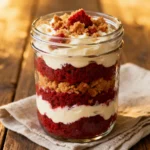
- Deconstructed “Churro Parfait”: Crumble cooled churros, layer with red velvet mousse, whipped cream, and berry coulis in glasses — ideal for no-fry service.
- Boozy Glaze Upgrade: Add 1 tsp bourbon, Kahlúa, or Chambord to cream cheese glaze for sophisticated depth.
Health Considerations and Nutritional Value
While Red Velvet Churros are undeniably indulgent, mindful preparation allows for balanced enjoyment without guilt. A standard 5-inch churro (without glaze) contains approximately 210–240 calories, 11–14g fat (3–4g saturated), 26–30g carbohydrates (14–16g sugars), and 3–4g protein. The cream cheese glaze adds ~60–80 calories, 4–6g fat, and 8–10g sugar per generous drizzle.
Nutritional Highlights:
- Antioxidants: Unsweetened cocoa powder contributes flavanols linked to cardiovascular support and improved blood flow.
- Calcium & Vitamin B12: Buttermilk and cream cheese supply bioavailable calcium and B12 — crucial for bone health and neurological function.
- Probiotics (if using live-culture buttermilk): Traditional cultured buttermilk offers gut-supportive Lactobacillus strains — though most commercial versions are acidified, not fermented.
Mindful Modifications:
- Oil Choice: Frying in high-oleic sunflower or avocado oil increases monounsaturated fats and reduces inflammatory omega-6 ratios.
- Sugar Reduction: Cut granulated sugar in batter by 25% — cocoa and glaze provide ample sweetness. Use coconut sugar in cinnamon coating for lower glycemic impact.
- Portion Awareness: Serve as part of a balanced meal — pair with Greek yogurt parfait or mixed berry salad to slow sugar absorption.
- Allergen Notes: Contains gluten, dairy, and eggs. Always disclose ingredients clearly for guests with sensitivities.
- Not a “health food” — but absolutely a joyful, intentional treat. Prioritize quality ingredients, savor slowly, and enjoy as part of a varied, pleasure-inclusive lifestyle.
Ingredients
For the Red Velvet Churro Batter:
- 1 cup (240ml) whole milk or buttermilk (room temperature)
- ½ cup (113g) unsalted butter, cubed
- ¼ cup (30g) unsweetened Dutch-processed cocoa powder
- ¾ cup (150g) granulated sugar
- ½ tsp fine sea salt
- 1 tsp baking powder
- ½ tsp baking soda
- 1 tbsp white vinegar or apple cider vinegar
- 1 tsp pure vanilla extract
- 2 large eggs (room temperature)
- 2 ½ cups (315g) all-purpose flour, spooned & leveled
- 2–3 tsp red velvet gel food coloring (or as needed for vibrant crimson)
For the Cinnamon-Sugar Coating:
- 1 cup (200g) granulated sugar
- ¼ cup (55g) light brown sugar, packed
- 2 tbsp (14g) ground cinnamon (preferably Vietnamese or Ceylon)
- ¼ tsp freshly grated nutmeg (optional, for warmth)
For the Cream Cheese Glaze:
- 4 oz (113g) full-fat brick cream cheese, softened
- 1 ½ cups (180g) powdered sugar, sifted
- 1 tsp pure vanilla extract
- Pinch of fine sea salt
- 2–3 tbsp heavy cream or whole milk (adjust for drizzle vs dip consistency)
For Frying:
- 4–6 cups neutral high-smoke-point oil (peanut, safflower, or high-oleic sunflower)
Directions
- Prep Fry Setup: Line two large baking sheets with parchment paper and place wire racks on top. Fill a heavy-bottomed 5–6 quart Dutch oven with 3–4 inches of frying oil. Clip a deep-fry thermometer to the side and heat oil over medium heat to 350–360°F (177–182°C). Maintain temperature throughout frying — adjust heat as needed.
- Make the Base Dough: In a medium saucepan, combine milk (or buttermilk), butter, cocoa powder, granulated sugar, and salt. Bring to a full, vigorous boil over medium heat, stirring constantly until butter is fully melted and mixture is smooth and homogeneous (~3–4 minutes). Remove from heat immediately.
- Incorporate Flour: Add all the flour at once. Stir vigorously with a heatproof wooden spoon until mixture forms a cohesive, shiny dough ball that pulls cleanly away from the pan and leaves a thin film on the bottom (~90 seconds). Do not undercook — this step is critical for structure.
- Cool Dough: Transfer hot dough to the bowl of a stand mixer fitted with the paddle attachment (or large mixing bowl for hand-mixing). Let cool for exactly 3 minutes — enough to prevent cooking eggs, but still warm enough for easy emulsification.
- Add Eggs Gradually: With mixer on medium-low, add eggs one at a time, beating for 30–45 seconds after each addition until fully absorbed and glossy. Batter will transform from matte to satiny and thicken slightly. Scrape bowl as needed. Final batter should be thick, pipeable, and fall in slow, continuous ribbons.
- Enrich & Color: Reduce speed to low. Add buttermilk (if not used earlier), vinegar, vanilla, and red gel food coloring. Mix just until fully combined and uniformly vibrant red — about 20 seconds. Overmixing at this stage can cause air loss. Cover bowl with damp towel and let rest 10 minutes.
- Prepare Coating & Glaze: While batter rests, whisk together all cinnamon-sugar ingredients in a wide, shallow dish. In another bowl, beat softened cream cheese with vanilla and salt until smooth. Gradually beat in powdered sugar, then add heavy cream 1 tsp at a time until glaze reaches thick but pourable consistency — like honey at room temperature. Refrigerate glaze until ready to use.
- Fill Piping Bag: Fit a large (½”) star tip into a heavy-duty disposable piping bag. Spoon in batter, twist top tightly, and hold upright to prevent leakage. Wipe tip clean before beginning.
- Fry with Confidence: Holding piping bag vertically 1–2 inches above oil surface, pipe 5–6 inch lengths directly into hot oil. Use kitchen shears to cut cleanly. Fry 3–4 churros per batch — never crowd. Cook 2 minutes 15 seconds, turning once halfway, until deeply golden-red and puffed. Internal temp should reach 205°F (96°C) when checked with instant-read thermometer.
- Drain, Coat & Glaze: Carefully lift churros with tongs or spider strainer. Hold briefly over oil to drain, then immediately roll in cinnamon-sugar until fully coated. Transfer to wire rack. After 2–3 minutes (when surface is warm but not hot), drizzle generously with cream cheese glaze. Optional: garnish with crushed freeze-dried raspberries or white chocolate shavings.
- Serve Immediately: Enjoy within 30–45 minutes for optimal contrast of crisp shell and tender, moist interior. Store unfried batter covered in fridge up to 24 hours — bring to room temp and stir before using.
FAQ
- Can I bake these instead of frying?
- Yes — with caveats. Pipe onto parchment-lined sheet pans, mist lightly with oil, and bake at 400°F (204°C) for 12–14 minutes, flipping halfway, until puffed and firm. Texture will be lighter, less shatteringly crisp, and color may dull slightly. Brush with melted butter and roll in cinnamon sugar post-bake.
- Why did my churros turn brown instead of red?
- Most commonly due to insufficient acidity (not enough vinegar/buttermilk), overheated oil (>370°F), or using liquid food coloring (dilutes pH). Ensure you use gel coloring, maintain proper fry temp, and verify your buttermilk is fresh and cultured.
- Can I make the batter ahead?
- Absolutely. Refrigerate covered for up to 24 hours. Stir well before piping — it may thicken slightly; loosen with ½ tsp warm buttermilk if needed. Do not freeze raw batter — eggs separate upon thawing.
- My batter is too runny — what went wrong?
- Likely causes: too much liquid added, undercooked initial dough (starches didn’t gel), or eggs were too cold. Chill batter 15 minutes, then stir in 1 tbsp flour. If still loose, refrigerate 30 minutes and re-evaluate consistency.
- What’s the best oil for frying?
- Peanut oil (smoke point 450°F) is traditional and neutral. Avocado oil (520°F) and high-oleic sunflower oil (450°F) are excellent heart-healthy alternatives. Avoid olive oil (low smoke point, strong flavor) or butter (burns).
- Can I air-fry them?
- Yes — with adjusted expectations. Spray piped churros generously with oil, air-fry at 375°F for 8–10 minutes, flipping halfway. They’ll be lighter, less caramelized, and less “churro-authentic,” but significantly lower in fat. Roll in cinnamon sugar immediately after.
- Why do you use both baking powder AND baking soda?
- Baking soda reacts instantly with acid (vinegar + buttermilk) for rapid lift and color enhancement. Baking powder provides secondary, heat-activated lift for structural integrity and consistent puff — especially important in a dense, cocoa-enriched batter.
- How do I store leftovers?
- Unfilled, unfrosted churros can be frozen in a single layer, then sealed in airtight bags for up to 2 weeks. Re-crisp in 400°F air fryer for 2–3 minutes. Glaze fresh before serving. Do not refrigerate glazed churros — condensation ruins texture.
- Are Red Velvet Churros safe for kids?
- Yes — but supervise closely near hot oil. For younger children, consider mini versions and omit alcohol in glaze. Always check for allergens (dairy, egg, gluten) if serving to groups.
- Can I use beetroot powder for natural red coloring?
- You can — but expect earthy undertones and less vibrant hue. Use 1 tbsp organic beetroot powder blended into buttermilk before adding. Color fades significantly with heat; best paired with a touch of red gel for reliability.
Summary
Red Velvet Churros are a masterful, modern marriage of Southern cake tradition and Spanish street-food artistry — delivering bold crimson color, tender-crisp texture, and layered flavor notes of cocoa, tangy buttermilk, warm cinnamon, and luxuriously creamy glaze.
With meticulous attention to batter chemistry, precise oil temperature, and thoughtful customization options, this recipe transforms a festive concept into an achievable, unforgettable dessert experience — whether served at a cozy family breakfast or a dazzling holiday dessert table.