Introduction
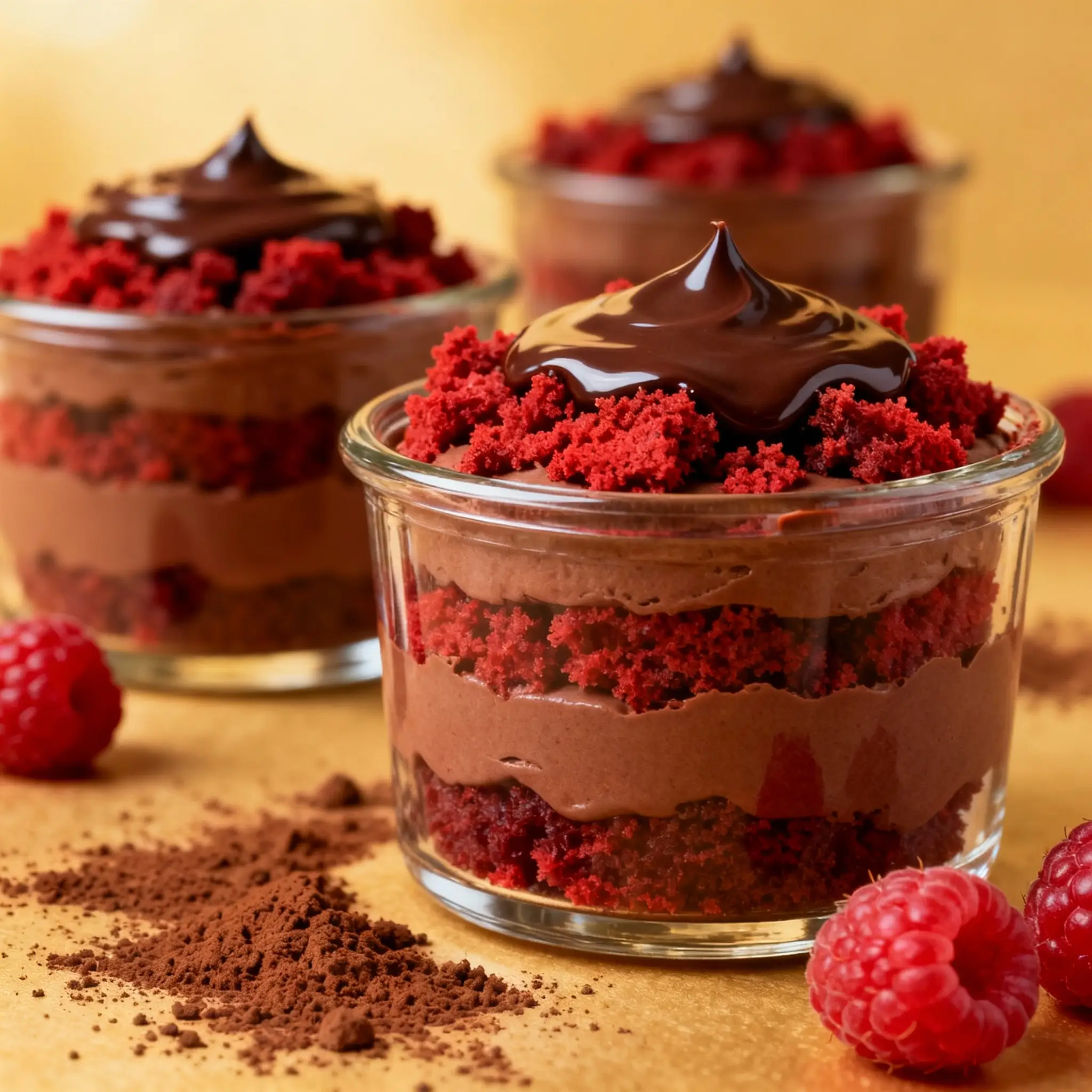
Red Velvet Chocolate Mousse Cups are an elegant, decadent, and visually stunning dessert that marries the iconic tangy-sweet allure of red velvet cake with the airy, velvety luxury of chocolate mousse. Perfect for special occasions—or simply as a luxurious weeknight treat—these individual servings combine rich cocoa notes, subtle buttermilk tang, natural (or food-grade) red hue, and a whisper of vanilla and vinegar to create a harmonious symphony of flavor and texture. Served chilled in elegant glassware or reusable silicone cups, they offer both visual drama and palate-pleasing sophistication—ideal for dinner parties, Valentine’s Day, holiday entertaining, bridal showers, or even as a gourmet gift. Unlike traditional layered red velvet cakes, these mousse cups eliminate baking entirely, relying instead on precise emulsification, gentle folding, and controlled chilling for flawless structure and melt-in-your-mouth indulgence.
The History
The origins of red velvet cake trace back to the early 20th century, with documented recipes appearing as early as the 1920s—though some culinary historians suggest roots may extend even further into Victorian-era “velvet cakes,” known for their fine crumb and smooth mouthfeel. The signature crimson color was originally a natural byproduct: anthocyanin pigments in non-Dutched (natural) cocoa reacted with acidic ingredients like buttermilk and vinegar, yielding a soft mahogany-red tint. With the rise of commercial red food coloring in the 1930s–40s—and especially after the Waldorf Astoria Hotel popularized its famed red velvet cake in the 1940s—the vibrant hue became synonymous with the dessert itself. As pastry innovation evolved, chefs began reimagining classic cakes in modern formats: parfaits, trifles, panna cottas, and mousses. Red Velvet Chocolate Mousse Cups emerged in the late 2000s and early 2010s as part of the “deconstructed dessert” movement—emphasizing clean presentation, textural contrast, and artisanal simplicity. Food bloggers, culinary schools, and high-end patisseries championed this no-bake interpretation, highlighting its versatility, make-ahead convenience, and Instagram-worthy aesthetic. Today, it stands as a beloved fusion dessert—honoring heritage while embracing contemporary technique and dietary flexibility.
Ingredients Breakdown
Every element in Red Velvet Chocolate Mousse Cups serves a precise functional and sensory role—no ingredient is arbitrary. Below is a meticulous breakdown of each component and why it matters:
- Unsweetened Natural Cocoa Powder (not Dutch-processed): Provides deep chocolate flavor and—critically—anthocyanins that react with acid to enhance the red hue. Dutch-processed cocoa is alkalized and neutralizes acidity, diminishing both color development and the signature tang.
- High-Quality White Vinegar or Apple Cider Vinegar: Acts as both a leavening catalyst (reacting with baking soda if used) and a pH modulator that intensifies red pigment expression. It also adds bright acidity that balances sweetness and prevents cloying richness.
- Full-Fat Buttermilk (cultured, not powdered reconstituted): Delivers lactic tang, tenderness, and moisture. Its acidity synergizes with vinegar and cocoa, while its fat content contributes to creamy mouthfeel and stabilizes the mousse’s air bubbles.
- Fine Granulated Sugar (preferably organic cane): Sweetens without grit; dissolves easily into warm mixtures. Offers better control over crystallization than raw or coconut sugar, critical for smooth mousse texture.
- Premium Food-Grade Red Coloring (liquid, gel, or natural beet/root powder): Gel colors yield the most vibrant, streak-free results with minimal liquid impact. Natural alternatives (like concentrated beet juice or freeze-dried red beet powder) provide earthy undertones and subtle sweetness—but require careful adjustment for color intensity and pH stability.
- Real Vanilla Extract (not imitation): Contains over 200 aromatic compounds that deepen complexity and round out cocoa’s bitterness. Madagascar Bourbon vanilla is preferred for its creamy, floral warmth.
- Unsalted Butter (European-style, 82–84% butterfat): Adds satiny richness, gloss, and structural integrity when melted and cooled. High-fat butter emulsifies more effectively into the mousse base, preventing graininess or separation.
- Heavy Whipping Cream (36–40% milk fat, ultra-cold): The backbone of aeration. Fat globules trap air during whipping, forming stable, billowy peaks. Lower-fat creams (e.g., half-and-half) will collapse; pasteurized-but-not-ultra-pasteurized cream whips best.
- Dark Chocolate (60–70% cacao, finely chopped): Adds depth, bitterness, and glossy sheen. Couverture chocolate is ideal for superior snap and melt. Avoid chocolate chips—they contain stabilizers that inhibit proper melting and emulsification.
- Pinch of Fine Sea Salt: Not just for seasoning—it heightens all other flavors, suppresses bitterness, and enhances perceived sweetness without adding saltiness.
- Optional Garnishes: Crumbled red velvet cake crumbs (baked & cooled), white chocolate curls, edible rose petals, gold leaf flakes, freeze-dried raspberries, or candied beets for visual contrast and textural intrigue.
Step-by-Step Recipe
- Prepare Your Workspace: Chill your mixing bowls, whisk attachments, and rubber spatula in the freezer for 15 minutes. Ensure your heavy cream, mixing bowl, and beaters are all cold—this maximizes volume and stability during whipping.
- Melt & Temper Chocolate: Finely chop dark chocolate and place in a heatproof bowl. Set over a saucepan of barely simmering water (double boiler), stirring constantly until fully melted and smooth (~45–55°C / 113–131°F). Remove from heat and stir in room-temperature unsalted butter until fully incorporated and glossy. Let cool to lukewarm (~30°C / 86°F)—too hot and it’ll scramble the eggs or melt the whipped cream; too cold and it’ll seize.
- Build the Red Velvet Base: In a separate medium bowl, whisk together natural cocoa powder, granulated sugar, red food coloring (start with ½ tsp gel or 1 tsp liquid; adjust gradually), vinegar, buttermilk, and vanilla extract until completely smooth and uniformly burgundy—no lumps or streaks. Let rest 2 minutes to allow color development and acid-cocoa reaction.
- Emulsify the Base into Chocolate: Slowly drizzle the red velvet mixture into the cooled chocolate-butter blend while whisking vigorously in a figure-eight motion. Continue until fully homogenous, thickened slightly, and glossy. This creates the foundational “ganache-mousse hybrid” base.
- Whip the Cream: In your chilled bowl, whip cold heavy cream on medium speed until soft peaks form (~2–3 minutes). Increase to medium-high and continue just until stiff, glossy peaks hold their shape when the whisk is lifted—but do not over-whip into butter. Over-whipped cream will cause graininess and poor folding.
- Fold with Precision: Add one-third of the whipped cream to the chocolate-red velvet base and gently fold using a large silicone spatula—cut down the center, sweep across the bottom, and lift up and over. Rotate the bowl a quarter-turn after each fold. Repeat twice more, incorporating remaining cream in two additions. Fold only until *just* combined—streaks are acceptable; over-folding deflates air and yields dense mousse.
- Portion & Chill: Spoon or pipe (using a large star tip) into 6–8 clean, dry 4-oz dessert glasses, mason jars, or reusable silicone mousse cups. Smooth tops with an offset spatula. Refrigerate uncovered for at least 4 hours—or preferably overnight (8–12 hours)—to fully set, deepen flavor, and allow textures to harmonize.
- Garnish & Serve: Just before serving, top each cup with desired garnishes. For optimal texture, let sit at cool room temperature for 5–7 minutes—not longer—to soften slightly without weeping.
Tips
- Color Consistency Is Key: If using natural beet powder, dissolve it in 1 tsp warm buttermilk first to avoid speckling. Test color in a spoonful of base before scaling up—pH shifts from added ingredients can mute or shift hues.
- Temperature Control Is Non-Negotiable: All dairy components must be cold; chocolate must be tepid—not warm, not cool. Use an instant-read thermometer for precision. A digital kitchen scale ensures gram-perfect ratios—especially vital for delicate emulsions.
- Acid Balance Matters: Too much vinegar = sharp, unpleasant bite. Too little = muted color and flat flavor. Always taste the base pre-folding—it should be pleasantly tangy, not sour.
- Folding Technique Prevents Deflation: Hold the spatula vertically, not horizontally. Cut straight down to the bottom, then sweep *along* the base—not up the sides—to preserve air pockets. Under-fold rather than over-fold.
- Chill Time Cannot Be Rushed: Even 30 minutes in the freezer is insufficient and risks ice crystals and uneven set. Refrigeration allows slow, even gelation via cocoa butter crystallization and protein network formation.
- Prevent Weeping: Avoid condensation by covering chilled cups loosely with parchment-lined lids or inverted saucers—not plastic wrap directly on surface, which traps moisture.
- Piping Perfection: Use a piping bag fitted with a ½-inch round or French star tip for clean, restaurant-quality swirls. Chill filled piping bag for 10 minutes beforehand to prevent melting.
- Make-Ahead Mastery: These mousse cups hold beautifully for up to 5 days refrigerated. Freeze unfilled cups for up to 3 weeks—thaw overnight in fridge before garnishing.
Variations and Customizations
This recipe is a canvas for creativity—adaptable to dietary needs, seasonal ingredients, global flavors, and occasion-specific flair:
- Vegan Version: Substitute coconut cream (refrigerated overnight, solid cream scooped) for heavy cream; use aquafaba (3 tbsp per ¼ cup cream) whipped to stiff peaks; replace butter with refined coconut oil; use plant-based buttermilk (soy milk + 1 tsp lemon juice); and choose vegan-certified cocoa and chocolate.
- Gluten-Free & Grain-Free: Naturally gluten-free—just verify all labels (e.g., cocoa, coloring, vanilla). For grain-free compliance, ensure vinegar is apple cider or white distilled (not malt).
- Low-Sugar/Keto Adaptation: Replace granulated sugar with erythritol-monk fruit blend (1:1 ratio); use unsweetened cocoa and sugar-free red gel; opt for 85%+ dark chocolate; boost richness with MCT oil (½ tsp per cup) for mouthfeel.
- Alcohol-Infused: Add 1 tbsp premium bourbon, Chambord, or Grand Marnier to the red velvet base before emulsifying. Reduce buttermilk by 1 tsp to maintain consistency.
- Spiced Elegance: Infuse the buttermilk with ½ cinnamon stick and 2 whole cloves (simmer 2 mins, cool, strain) or add ¼ tsp freshly grated nutmeg + pinch cardamom to dry ingredients.
- Layered Parfait Style: Alternate mousse with layers of crumbled gluten-free red velvet cake, raspberry coulis, or mascarpone whipped cream for textural dimension.
- Seasonal Twists: In spring—add 1 tsp dried lavender buds (infused in warm cream); summer—fold in crushed fresh strawberries or blackberries; fall—swirl in spiced caramel; winter—top with crushed peppermint bark and white chocolate shavings.
- Miniature Bite-Sized: Portion into 1-oz shot glasses or mini silicone molds for elegant cocktail party offerings—chill 3 hours minimum.
Health Considerations and Nutritional Value
While undeniably indulgent, Red Velvet Chocolate Mousse Cups can be mindfully composed to support balanced nutrition without sacrificing pleasure. A standard 4-oz serving (without garnish) contains approximately:
- Calories: 320–380 kcal (varies by cocoa %, cream fat %, sweetener)
- Fat: 24–28g (15–18g saturated; primarily from cocoa butter and dairy fat—rich in stearic acid, shown to have neutral cholesterol impact)
- Carbohydrates: 22–28g (18–24g sugars; naturally occurring lactose + added sweeteners)
- Protein: 4–6g (from dairy, cocoa, and buttermilk)
- Fiber: 2–3g (from natural cocoa—high in flavonoid-rich soluble fiber)
- Key Micronutrients: Iron (from cocoa), calcium (buttermilk), magnesium (cocoa), potassium (buttermilk), and antioxidants (anthocyanins from beet-based color, polyphenols from dark chocolate).
Functional Benefits: Dark chocolate (>60% cacao) is clinically associated with improved endothelial function, modest blood pressure reduction, and enhanced cognitive blood flow due to flavanols. Buttermilk provides probiotics (if live-culture) and bioavailable calcium. Natural red coloring from beets offers nitrates linked to improved exercise performance and vascular health.
Considerations: Those managing diabetes should monitor total carbohydrate load and consider low-glycemic sweeteners. Individuals with dairy sensitivities may opt for cultured coconut alternatives. While high in saturated fat, current research suggests dairy fat’s matrix effect (with calcium, vitamin K2, and fermentation metabolites) may confer different metabolic effects than isolated fats. Moderation remains essential—enjoy 1 serving as part of a varied, whole-food diet.
Ingredients
- ¾ cup (75g) unsweetened natural cocoa powder (NOT Dutch-processed)
- ¾ cup (150g) granulated cane sugar
- ¼ cup (60ml) full-fat cultured buttermilk, well-shaken
- 1½ tsp pure vanilla extract
- 1 tsp white vinegar or raw apple cider vinegar
- 1 tbsp premium red food coloring (gel recommended) or 2 tbsp concentrated beet juice / 1½ tsp freeze-dried beet powder
- 4 oz (113g) high-quality dark chocolate (60–70% cacao), finely chopped
- 4 tbsp (57g) unsalted European-style butter, cubed and at room temperature
- 1¼ cups (300ml) ultra-cold heavy whipping cream (36–40% fat)
- ¼ tsp fine sea salt
- For Garnish (optional): Crumbled red velvet cake, white chocolate curls, edible flowers, freeze-dried raspberries, gold dust
Directions
- Place mixing bowl and whisk attachment in freezer for 15 minutes. Chill heavy cream in refrigerator.
- In a small saucepan over low heat, melt chocolate and butter together, stirring constantly until smooth and glossy. Remove from heat and let cool to 30°C (86°F)—test with thermometer or wrist test (should feel barely warm).
- In a medium bowl, vigorously whisk cocoa, sugar, buttermilk, vinegar, vanilla, and red coloring until completely smooth, lump-free, and vividly red. Let stand 2 minutes.
- Slowly pour red velvet mixture into cooled chocolate-butter, whisking constantly in figure-eight motion until fully emulsified and thickened.
- In chilled bowl, whip cold heavy cream with salt on medium speed until soft peaks form (~2 min), then increase to medium-high until stiff, glossy peaks hold shape (~1–2 min more). Do NOT over-whip.
- Fold one-third of whipped cream into chocolate base until mostly combined. Gently fold in remaining cream in two additions until *just* swirled—no visible streaks needed; stop when uniform.
- Divide evenly among 6–8 (4-oz) glasses or silicone cups. Smooth tops. Refrigerate uncovered for minimum 4 hours, ideally overnight (8–12 hrs).
- Just before serving, garnish elegantly. Allow to temper 5–7 minutes at cool room temperature for optimal creaminess.
FAQ
- Can I use Dutch-processed cocoa?
- No—Dutch processing neutralizes cocoa’s acidity, preventing the chemical reaction needed for authentic red velvet color development and diminishing the characteristic tang. Natural cocoa is essential.
- Why did my mousse turn brown or dull pink?
- Likely causes: using Dutch cocoa, insufficient vinegar/buttermilk acidity, overmixing after adding coloring, exposure to alkaline ingredients (e.g., baking soda), or using low-quality coloring that fades. Always use gel-based red coloring and verify pH balance.
- My mousse is grainy—what went wrong?
- Graininess typically results from overheating the chocolate (causing cocoa butter to separate), adding cold cream to warm chocolate, or using low-fat or ultra-pasteurized dairy. Ensure precise temperature control and high-fat, fresh ingredients.
- Can I make this ahead for a party?
- Absolutely! These mousse cups improve with time. Prepare up to 5 days ahead and store covered in refrigerator. For events, pipe into cups 1 day prior and garnish same-day.
- Is there a way to stabilize the mousse for warmer climates?
- Yes—add ½ tsp unflavored powdered gelatin (bloomed in 1 tsp cold water, then microwaved 5 seconds until liquid) to the warm chocolate-butter mixture before adding the red velvet base. This adds subtle structure without altering flavor.
- Can I substitute coconut milk for cream?
- Full-fat canned coconut milk (chilled overnight, solid cream scooped) works well for vegan versions—but requires whipping aquafaba or xanthan gum (⅛ tsp) for stability. Avoid “light” coconut milk—it lacks sufficient fat for proper aeration.
- Why does my mousse weep or release liquid?
- Weeping usually occurs from over-chilling (freezer shock), condensation from improper covering, or using low-quality chocolate with excess emulsifiers. Always refrigerate—not freeze—and cover loosely with parchment.
- How do I achieve perfect piping swirls every time?
- Use a large star tip (Wilton 1M or Ateco 844), fill piping bag ⅔ full, twist top tightly, and pipe with steady downward pressure while slowly lifting upward. Chill filled bag 10 minutes before piping for sharper definition.
Summary
Red Velvet Chocolate Mousse Cups are a masterclass in modern dessert craftsmanship—blending nostalgic Americana with French-inspired mousse technique, natural color chemistry, and mindful ingredient synergy. They deliver show-stopping elegance, customizable nutrition, and foolproof make-ahead convenience—all without turning on your oven.
With precise attention to temperature, acidity, emulsification, and aeration, this recipe transforms humble pantry staples into a luxurious, velvety, crimson-hued experience that delights the eyes, nose, and palate in equal measure—proving that tradition and innovation can coexist, one exquisite cup at a time.