Introduction
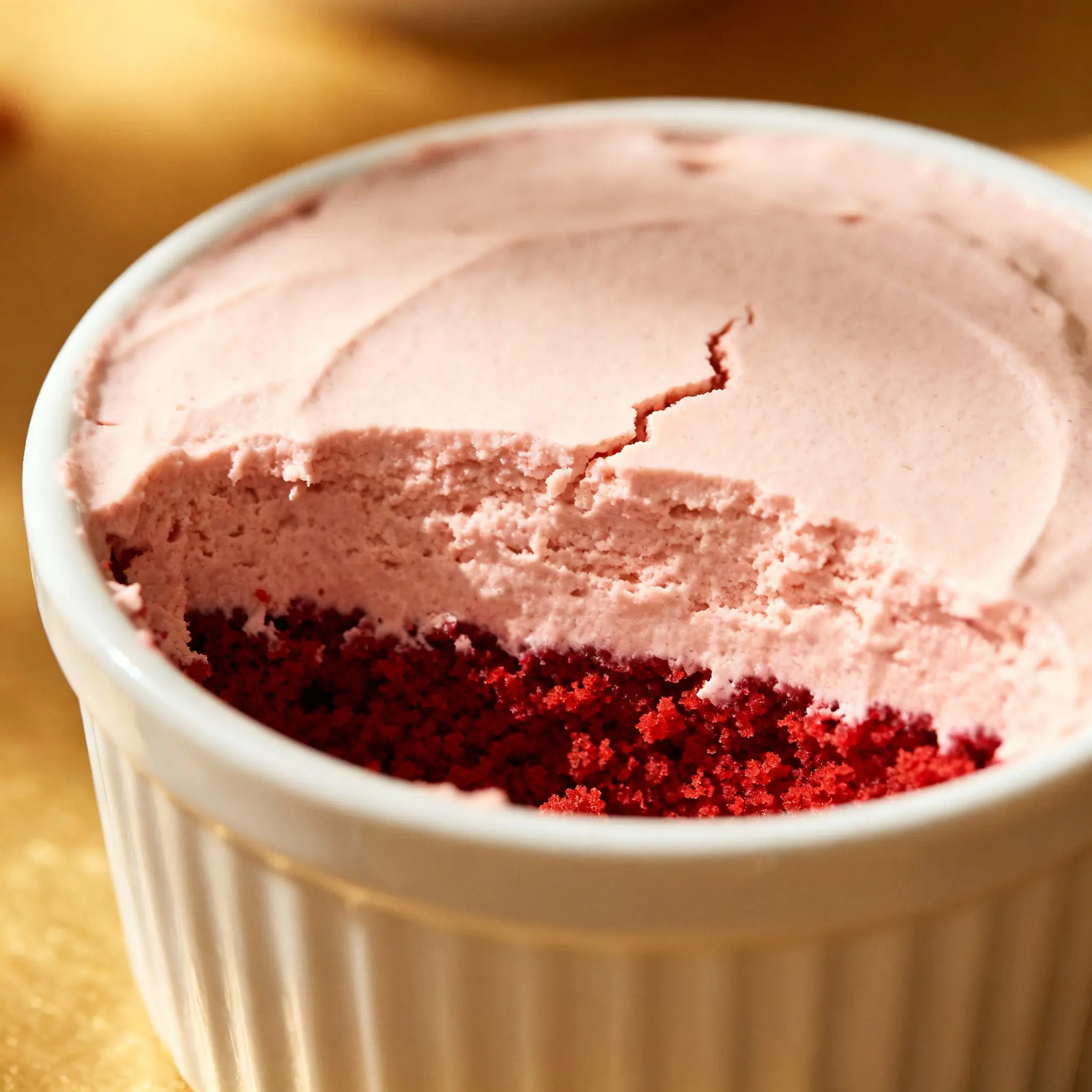
Red Velvet Cheesecake Mousse is a decadent, velvety-smooth dessert that masterfully bridges the iconic richness of red velvet cake with the creamy elegance of New York–style cheesecake—all suspended in a luxuriously airy, no-bake mousse format. Unlike traditional layered cakes or dense baked cheesecakes, this hybrid creation delivers an ethereal texture—light enough to melt on the tongue yet deeply indulgent in flavor, with layers of cocoa-infused tang, subtle buttermilk brightness, and rich cream cheese depth. It’s a showstopping centerpiece for holidays, anniversaries, bridal showers, or any occasion where elegance meets effortless sophistication—and it achieves all of this without requiring oven time, water baths, or complicated baking techniques. Whether served in individual coupe glasses, elegant mason jars, or as a stunning tiered dessert platter, Red Velvet Cheesecake Mousse promises visual drama (thanks to its signature crimson hue), textural contrast (from garnishes like crumbled red velvet cake or white chocolate curls), and an unforgettable balance of sweet, tart, earthy, and creamy notes.
The History
The origins of Red Velvet Cheesecake Mousse lie at the intersection of two beloved American dessert traditions: red velvet cake and cheesecake mousse—both of which evolved through decades of culinary innovation and cultural reinterpretation. Red velvet cake traces its roots to the early 20th century, gaining popularity during the Great Depression when home bakers used acidic ingredients like buttermilk and vinegar combined with natural cocoa (which contains anthocyanins) to produce a subtle reddish tint—a phenomenon amplified by the introduction of beet juice in Southern recipes and later intensified by synthetic red food coloring post-WWII. The cake achieved national stardom after being featured at New York’s Waldorf-Astoria Hotel in the 1940s (though this claim remains debated among food historians).
Cheesecake mousse, meanwhile, emerged from French-inspired modernist pastry techniques popularized in the 1970s and ’80s, where chefs began aerating full-fat cream cheese with whipped cream and gelatin to create lighter, more refined alternatives to dense, baked versions. The fusion into “Red Velvet Cheesecake Mousse” gained momentum in the late 2000s and early 2010s, propelled by food blogs, Pinterest aesthetics, and viral YouTube tutorials emphasizing photogenic, pastel-and-crimson desserts. Its rise coincided with the artisanal food movement’s emphasis on elevated comfort food—transforming nostalgic flavors into plated experiences worthy of fine-dining presentations. Today, it appears on menus at upscale bakeries from Brooklyn to Beverly Hills, and has become a staple in vegan and gluten-free adaptations—demonstrating its remarkable versatility and enduring cultural resonance.
Ingredients Breakdown
Every element in Red Velvet Cheesecake Mousse serves a precise functional and sensory purpose—no ingredient is merely decorative or conventional. Below is a meticulous breakdown of each component and why it matters:
- Full-Fat Cream Cheese (room temperature): The foundational base—provides structure, tang, richness, and fat-soluble mouthfeel. Low-fat or spreadable varieties lack sufficient protein and fat content, resulting in graininess or weeping. Must be fully softened (65–70°F) to ensure seamless emulsification.
- Granulated Sugar: Not just for sweetness—it stabilizes the cream cheese emulsion, lowers water activity to extend shelf life, and enhances perceived creaminess via osmotic balance. Confectioners’ sugar is avoided here because cornstarch can dull flavor and create chalkiness.
- Unsweetened Natural Cocoa Powder (not Dutch-processed): Essential for authentic red velvet flavor and pH interaction. Natural cocoa is acidic (pH ~5.5), reacting with vinegar and baking soda to deepen color and contribute to the signature “fudgy-but-bright” profile. Dutch-processed cocoa is alkalized and neutral, diminishing both color development and chemical leavening synergy.
- White Vinegar or Distilled Apple Cider Vinegar: Acts as both a flavor enhancer (bright acidity cuts through fat) and a reactive agent—activates baking soda for subtle lift and intensifies anthocyanin-based red hues in cocoa. Even in minute amounts (¼ tsp), it creates perceptible complexity.
- Red Food Coloring (gel-based preferred): While optional for purists, professional-grade gel colors (like Americolor Super Red or Chefmaster Ruby Red) deliver intense, consistent crimson without diluting texture or adding bitterness. Liquid dyes introduce excess water, risking separation and muted tones. For natural alternatives, beet powder (1 tsp) or pomegranate molasses reduction (1 tbsp) may be used—but expect maroon undertones and slightly altered acidity.
- Heavy Whipping Cream (36–40% fat, chilled): Provides volume, silkiness, and thermal stability. Cold cream whips to stiff peaks more reliably; high fat content ensures the mousse holds shape for 48+ hours under refrigeration. Ultra-pasteurized cream works but requires longer whipping time.
- Unflavored Gelatin (or agar-agar for vegan version): Critical for suspension and sliceability. Bloomed gelatin (½ tsp per cup of base) prevents syneresis (weeping), supports layering (e.g., beneath ganache or fruit coulis), and allows clean spoon separation. Agar must be boiled and cooled precisely—overheating destroys gelling power.
- High-Quality Vanilla Extract (preferably Madagascar Bourbon): Adds floral warmth and rounds out cocoa’s astringency. Imitation vanilla introduces harsh aldehydes that clash with cream cheese’s lactic notes.
- Pinch of Fine Sea Salt: A non-negotiable flavor amplifier—suppresses bitterness in cocoa, heightens sweetness perception, and balances acidity from vinegar and cream cheese.
- Optional Enhancers: A splash of buttermilk (1–2 tsp) adds nuanced tang and moisture; espresso powder (⅛ tsp) deepens cocoa notes without coffee flavor; and a drop of almond extract (⅛ tsp) subtly evokes classic red velvet pairings.
Step-by-Step Recipe
- Prepare the Gelatin Bloom: In a small heatproof bowl, sprinkle 1½ tsp unflavored gelatin over 1 tbsp cold whole milk or buttermilk. Let sit undisturbed for 5 minutes until it forms a firm, spongy “bloom.” Meanwhile, gently warm 2 tbsp heavy cream in a saucepan over low heat until steaming (do not boil). Pour warm cream over bloomed gelatin and whisk vigorously for 20 seconds until completely dissolved and glossy. Set aside to cool slightly—but do not refrigerate or let it set.
- Cream the Base: In the bowl of a stand mixer fitted with the paddle attachment (or large mixing bowl + hand mixer), beat 16 oz (2 standard blocks) full-fat cream cheese on medium-low speed for 2 minutes until completely smooth and free of lumps. Scrape down sides and bottom thoroughly. Add ¾ cup granulated sugar and continue beating 3 minutes until pale, fluffy, and slightly increased in volume. Add ¼ cup unsweetened natural cocoa powder, ½ tsp white vinegar, 1 tsp high-strength red gel food coloring, 1½ tsp pure vanilla extract, and ¼ tsp fine sea salt. Mix on low for 30 seconds to incorporate, then increase to medium for 1 minute until homogeneous and velvety. Scrape bowl again.
- Incorporate the Gelatin: With mixer on low, slowly drizzle the cooled gelatin mixture into the cream cheese base in a thin, steady stream. Continue mixing 1 minute until fully integrated—no streaks or cloudiness should remain. Overmixing at this stage may cause premature setting.
- Whip the Cream: In a separate, impeccably clean and cold stainless steel or glass bowl, combine 2 cups chilled heavy whipping cream and 2 tbsp powdered sugar. Whip on medium-high speed using a whisk attachment until soft peaks form (about 3–4 minutes). Do not overwhip—cream should hold shape but still flow gently off the whisk. For best results, chill the bowl and whisk for 10 minutes beforehand.
- Fold with Precision: Using a large silicone spatula, add one-third of the whipped cream to the cream cheese mixture and fold gently with 15–20 slow, sweeping motions—cutting down the center, scraping the bottom, and lifting up and over—to lighten the base. Repeat with second third, folding another 15 times. Add final third and fold just until no white streaks remain—typically 10–12 folds. Stop immediately when uniform pink-tinged ribbons form. Over-folding deflates air cells and yields dense, gummy mousse.
- Chill and Set: Immediately divide mousse among 8–10 (4-oz) serving vessels—wine glasses, martini coupes, or mini trifle bowls work beautifully. Smooth tops with an offset spatula. Cover loosely with plastic wrap (touching surface to prevent skin formation) and refrigerate for minimum 6 hours—but ideally 12–16 hours for full texture development and flavor melding. Do not freeze—ice crystals will rupture emulsion.
- Garnish & Serve: Just before serving, top each portion with one or more of the following: crumbled homemade red velvet cake, white chocolate shavings, edible gold leaf, fresh raspberries, candied pecans, or a delicate dusting of cocoa powder. For dramatic presentation, pipe a rosette of stabilized whipped cream around the rim.
Tips
- Temperature Is Everything: All dairy components—cream cheese, heavy cream, even mixing bowls—must be at their ideal temperatures. Room-temp cream cheese prevents lumps; chilled cream whips higher and holds longer. A 5°F deviation can compromise texture irreversibly.
- Color Consistency Hack: For perfectly even red distribution, add food coloring to the vinegar first, then stir into the cream cheese mixture. This prevents speckling and ensures molecular dispersion.
- No-Lump Guarantee: If your cream cheese resists smoothing, place the unwrapped block on a microwave-safe plate and heat at 50% power for 12 seconds—no more. Rotate and repeat once if needed. Never melt it.
- Acid Balance Adjustment: Taste the base before folding in cream. If too sharp, add ½ tsp more sugar. If too flat, add a single drop of vinegar—not more—then re-taste.
- Stabilized Whipped Cream Option: For make-ahead reliability or humid climates, stabilize whipped cream with ½ tsp clear piping gel or 1 tsp instant pudding mix (vanilla) whisked into sugar before adding to cream.
- Layering Like a Pro: To create stunning stratified desserts (e.g., mousse + raspberry coulis + cake crumb), partially set the mousse (refrigerate 45 minutes), then carefully spoon or pipe alternating layers. Chill 20 minutes between layers to prevent bleeding.
- Texture Rescue: If mousse separates or appears curdled after folding, immediately transfer to a blender or food processor and pulse 3–4 times on lowest setting—just until unified. Do not over-blend.
- Serving Temperature Sweet Spot: Remove from refrigerator 10 minutes before serving. Too cold = muted flavor and waxy mouthfeel; too warm = collapse and pooling.
- Clean Scoop Secret: Dip your serving spoon or ice cream scoop in hot water and dry thoroughly between portions for flawless, glossy servings.
- Storage Mastery: Store covered in refrigerator up to 5 days. Do not store near strong-smelling foods (onions, garlic)—cream cheese readily absorbs odors. Freeze only un-garnished mousse in airtight containers for up to 2 months; thaw overnight in fridge and re-whip topping before serving.
Variations and Customizations
This recipe is a canvas—not a constraint. Here are meticulously tested, chef-approved variations that preserve integrity while expanding creative possibility:
- Vegan Red Velvet Cheesecake Mousse: Substitute 16 oz silken tofu (blended until ultra-smooth) + ½ cup raw cashew butter + ⅓ cup maple syrup + 3 tbsp lemon juice + 2 tbsp apple cider vinegar + ¼ cup beetroot powder for color + 1½ tsp agar-agar (bloomed in 3 tbsp water, brought to full boil 1 minute, then cooled). Whip 1 cup chilled coconut cream (solid part only) separately and fold in gently. Sets firmer than dairy version—ideal for warm climates.
- Gluten-Free & Grain-Free: Ensure cocoa powder and food coloring are certified GF. Replace vinegar with ½ tsp citric acid for identical pH impact. Add 1 tbsp tiger nut flour for subtle nuttiness and improved binding—undetectable in flavor but critical for texture cohesion.
- Alcohol-Infused (Adult-Only): Fold in 2 tbsp high-quality bourbon, Chambord, or Grand Marnier after gelatin incorporation. Reduce sugar by 1 tbsp to accommodate sweetness of liqueurs. Rest 10 minutes before folding in whipped cream to allow alcohol to integrate.
- Black Cocoa Intensity: Replace half the natural cocoa (2 tbsp) with black cocoa (Dutch-processed, intensely dark) for a dramatic, almost charcoal-gray base with profound umami depth—perfect paired with salted caramel drizzle.
- Protein-Powered Version: Blend in 2 scoops unflavored whey or collagen peptides *after* gelatin incorporation and before whipping cream. Increases satiety without affecting texture—ideal for post-workout treats or health-conscious entertaining.
- Decadent Layered Trio: Prepare three mousse variants in same batch: classic red velvet, white chocolate–rose, and dark chocolate–espresso. Pipe concentric circles into glasses using three separate piping bags, then gently swirl with a toothpick for marble effect.
- Miniature Bites (Bite-Sized Luxury): Pipe into lined mini muffin tins, freeze 2 hours, then dip chilled mousse bites in tempered white or ruby chocolate. Sprinkle with crushed freeze-dried strawberries. Store frozen—serve straight from freezer for ice cream–like experience.
- Seasonal Fruit Integration: Swirl in 3 tbsp seasonal compote (blackberry in summer, spiced pear in fall, blood orange curd in winter) using a skewer—avoid over-mixing. Compote must be fully cooled and thickened with ½ tsp chia seeds to prevent weeping.
- Zero-Waste Innovation: Repurpose leftover red velvet cake scraps into “crust” by pulsing with 2 tbsp melted butter and 1 tsp brown sugar, then pressing into base of glasses before adding mousse. Adds structural interest and nostalgic crunch.
- Deconstructed Plating: Serve components separately on slate boards: quenelle of mousse, crumbled cake “soil,” dehydrated beet chips, micro mint, and piped white chocolate “veins.” Guests assemble their own—ideal for interactive dinner parties.
Health Considerations and Nutritional Value
While inherently indulgent, Red Velvet Cheesecake Mousse can be contextualized thoughtfully within balanced nutrition frameworks. Per standard 4-oz serving (approx. 120g), the classic version delivers approximately 320–360 calories, with 24–28g total fat (15–18g saturated), 26–30g carbohydrates (22–25g sugars), and 4–5g protein. Key nutritional insights include:
- Cream Cheese Benefits: Contains appreciable calcium (8% DV), vitamin A (10% DV), and conjugated linoleic acid (CLA)—a fatty acid studied for potential anti-inflammatory and metabolic support properties.
- Cocoa’s Antioxidant Power: Natural cocoa contributes flavanols linked to improved endothelial function and cognitive circulation—especially when minimally processed and unsweetened.
- Strategic Sugar Reduction: Up to 25% of granulated sugar may be replaced with erythritol or allulose without texture loss or cooling aftertaste—preserving volume and creaminess while lowering glycemic impact.
- Dairy Sensitivity Alternatives: Lactose-intolerant individuals often tolerate this mousse well—gelatin and extended chilling reduce lactose bioavailability, and the fermentation-like tang of cultured cream cheese further breaks down residual sugars.
- Portion Mindfulness: Its luxurious density promotes satiety faster than airy mousses—most find 3–4 oz deeply satisfying, naturally supporting caloric moderation.
- Notable Absences: Contains zero trans fats, zero artificial preservatives, zero hydrogenated oils, and—when made from scratch—zero high-fructose corn syrup or propylene glycol additives common in commercial dessert mixes.
- Functional Ingredient Upgrades: Adding 1 tbsp ground flaxseed (for omega-3s) or ½ tsp matcha powder (for L-theanine and catechins) integrates seamlessly and enhances nutritional density without compromising authenticity.
- Medical Considerations: Those managing hypertension should monitor sodium (naturally low at ~120mg/serving unless added salt is increased); those with GERD may prefer reduced vinegar (¼ tsp) or lemon juice substitution to lower acidity.
Ultimately, this dessert exemplifies the principle of “nutrient density within indulgence”—prioritizing whole-food fats, antioxidant-rich cocoa, and mindful sweeteners rather than empty-calorie substitutes. Enjoyed occasionally and intentionally, it nourishes both body and spirit.
Ingredients
- 16 oz (2 standard packages) full-fat brick-style cream cheese, room temperature
- ¾ cup granulated sugar
- ¼ cup unsweetened natural cocoa powder (non-alkalized)
- ½ tsp distilled white vinegar or raw apple cider vinegar
- 1 tsp high-concentration red gel food coloring (e.g., Americolor Super Red)
- 1½ tsp pure Madagascar bourbon vanilla extract
- ¼ tsp fine sea salt
- 1½ tsp unflavored powdered gelatin
- 1 tbsp cold whole milk or buttermilk (for blooming gelatin)
- 2 tbsp heavy whipping cream (for dissolving gelatin)
- 2 cups heavy whipping cream (36–40% fat), very cold
- 2 tbsp powdered sugar (for whipped cream)
- Optional garnishes: crumbled red velvet cake, white chocolate curls, fresh raspberries, edible flowers, gold dust
Directions
- In a small bowl, sprinkle gelatin over 1 tbsp cold milk. Let bloom 5 minutes until spongy.
- In a small saucepan, gently heat 2 tbsp heavy cream until steaming. Pour over bloomed gelatin; whisk 20 seconds until fully dissolved. Cool 5 minutes—do not refrigerate.
- In stand mixer bowl with paddle, beat cream cheese on medium-low 2 minutes until smooth. Scrape bowl.
- Add sugar; beat 3 minutes until light and fluffy. Scrape bowl.
- Add cocoa, vinegar, food coloring, vanilla, and salt. Mix low 30 sec, then medium 1 min until uniform.
- With mixer on low, slowly drizzle in cooled gelatin mixture. Mix 1 min until glossy and streak-free.
- In separate cold bowl, whip 2 cups cold heavy cream + 2 tbsp powdered sugar to soft peaks (~3–4 min).
- Fold ⅓ whipped cream into base to lighten. Repeat twice more, folding gently until fully incorporated and pink-ribbons form.
- Divide evenly among 8–10 chilled 4-oz glasses. Smooth tops. Cover loosely with plastic wrap touching surface.
- Refrigerate minimum 6 hours—preferably 12–16 hours—for optimal texture and flavor fusion.
- Garnish just before serving with preferred toppings. Serve chilled.
FAQ
- Can I use low-fat cream cheese?
- No—low-fat or Neufchâtel varieties contain added water, gums, and stabilizers that inhibit proper emulsification, leading to graininess, separation, or excessive weeping. Full-fat is non-negotiable for texture integrity.
- Why does my mousse look curdled after folding?
- This occurs when cream cheese is too cold or whipped cream is overbeaten. Rescue by pulsing mixture 3–4 times in blender on lowest setting—do not over-blend—or gently press through fine-mesh sieve.
- Can I make this ahead for a party?
- Absolutely—this mousse improves for up to 3 days refrigerated. Prepare 2 days ahead, keep covered, and garnish day-of for maximum freshness and visual impact.
- Is there a way to avoid artificial food coloring?
- Yes—substitute 1½ tsp concentrated beet powder or 1 tbsp reduced pomegranate molasses. Expect deeper burgundy tones and slightly brighter acidity; adjust sugar/vinegar to taste.
- My mousse didn’t set firmly—what went wrong?
- Most common causes: gelatin not fully dissolved (gritty residue), insufficient chilling time (<6 hours), or using expired gelatin. Also verify cream was cold enough—warm cream won’t hold air or support gel structure.
- Can I freeze Red Velvet Cheesecake Mousse?
- Yes—freeze un-garnished mousse in airtight containers up to 2 months. Thaw overnight in refrigerator. Re-whip topping before serving. Texture remains >90% identical to fresh.
- What’s the best substitute for heavy cream?
- None replicate texture exactly—but for emergency use: chilled coconut cream (solid part only) works well in vegan version. Avoid half-and-half, milk, or evaporated milk—they lack required fat content and will yield runny, unstable mousse.
- How do I prevent color bleeding when layering?
- Partially set each layer (45–60 min chill) before adding next. Use thicker components (e.g., seedless raspberry coulis reduced by half) and avoid stirring or pressing down when layering.
- Can I add cake pieces directly into the mousse?
- Yes—but only if cake is *completely dry and crumbled fine*. Moist cake introduces water, breaking emulsion. For moist texture, layer cake *under* or *on top* of mousse instead.
- Why does my mousse taste overly tangy?
- Excess vinegar or under-ripened cream cheese. Next time, reduce vinegar to ¼ tsp and ensure cream cheese is truly at room temperature (68–72°F) before starting.
Summary
Red Velvet Cheesecake Mousse is a masterclass in modern dessert engineering—melding the nostalgic allure of red velvet with the sophisticated silkiness of cheesecake mousse, all in a stunning, no-bake format that delivers restaurant-quality elegance with home-kitchen accessibility.
With its precisely balanced acidity, velvety cocoa depth, cloud-like texture, and customizable versatility—from vegan adaptations to boozy infusions—it transcends seasonal trends to become a timeless, cherished centerpiece for celebrations, quiet indulgences, and everything luminous in between.