Introduction
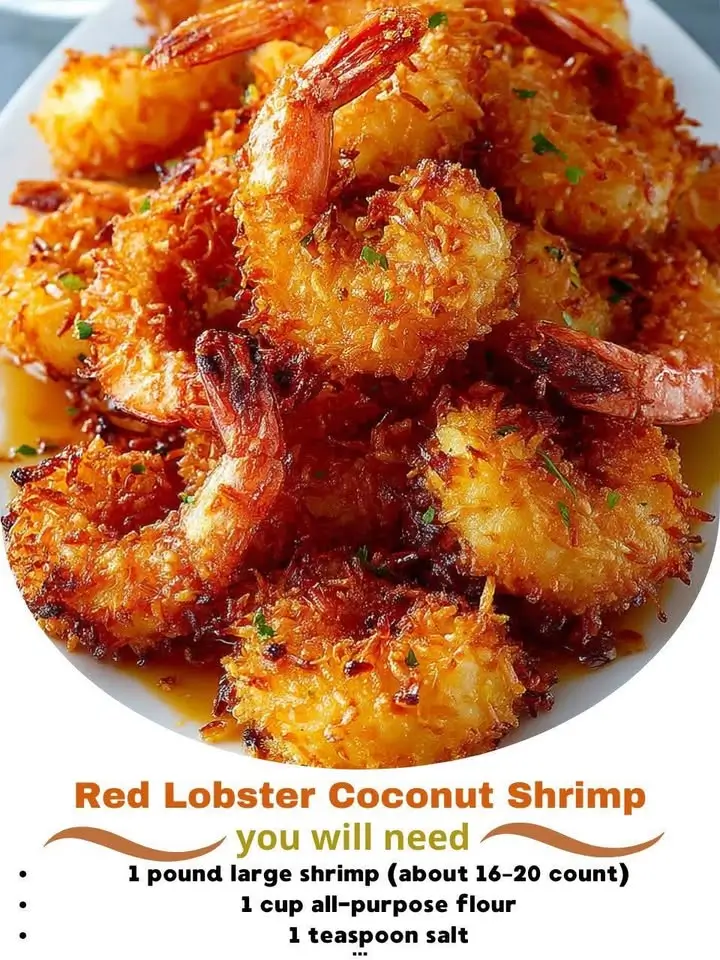
If you’ve ever dined at Red Lobster, chances are you’ve been tempted by one of their most iconic appetizers: Coconut Shrimp. This delectable dish features succulent shrimp coated in a crisp, golden-brown batter infused with sweet coconut flakes and served with a tangy, tropical dipping sauce. Loved for its perfect balance of crunch, sweetness, and savory flavor, Red Lobster’s Coconut Shrimp has become a fan favorite across the United States and beyond. Whether you’re a seafood lover or simply enjoy indulgent appetizers, this recipe brings the restaurant experience straight to your kitchen. In this comprehensive guide, we’ll dive deep into everything you need to know about recreating this beloved dish—from its history and ingredients to step-by-step cooking instructions, nutritional insights, variations, and expert tips.
The History
Red Lobster, founded in 1968 by Bill Darden in Lakeland, Florida, began as a single seafood restaurant with a mission to make high-quality seafood accessible and enjoyable for families. Over the decades, the chain grew rapidly, becoming a household name in American casual dining. While the exact origin year of their Coconut Shrimp is not publicly documented, it first appeared on menus in the late 1990s and quickly gained popularity due to its unique blend of Caribbean-inspired flavors and approachable appeal.
The dish was part of a broader trend in American cuisine that embraced tropical and island flavors—coconut, pineapple, mango, and citrus—especially during the 1990s and early 2000s. Red Lobster capitalized on this movement by offering dishes that felt exotic yet familiar. Coconut Shrimp stood out because it combined the elegance of gourmet seafood with the comfort of fried appetizers. It became a signature item, often mentioned in customer reviews and frequently featured in promotional campaigns. Though the chain has undergone menu changes and rebranding over the years, Coconut Shrimp remains a staple, a testament to its enduring appeal and deliciousness.
Ingredients Breakdown
To recreate the authentic taste of Red Lobster Coconut Shrimp at home, you’ll need a carefully curated list of ingredients that mirror the original’s texture and flavor profile. Each component plays a vital role in achieving the perfect balance between crunch, sweetness, and savory depth. Here’s a detailed breakdown:
- Large Shrimp (Peeled and Deveined): The star of the dish. Opt for jumbo or extra-large shrimp (21–25 count per pound) for optimal size and meatiness. Fresh or properly thawed frozen shrimp work well.
- All-Purpose Flour: Used for dredging the shrimp before breading. It helps the egg wash adhere and creates a smooth base layer for the coating.
- Sea Salt and Black Pepper: Essential seasonings that enhance the natural flavor of the shrimp without overpowering it.
- Eggs: Whisked to create an egg wash that binds the flour-coated shrimp to the coconut-crumb mixture.
- Panko Breadcrumbs: These Japanese-style breadcrumbs are lighter and crispier than regular breadcrumbs, giving the shrimp an airy, crunchy exterior.
- Sweetened Shredded Coconut: The defining ingredient. Sweetened coconut adds both texture and a distinct tropical flavor. Unsweetened can be used for a less sugary version, but sweetened is traditional.
- Garlic Powder and Onion Powder: Add subtle savory depth and complexity to the breading mixture.
- Paprika: Provides mild heat and a warm color to the crust, enhancing visual appeal.
- Vegetable Oil or Canola Oil: A neutral, high-smoke-point oil ideal for deep frying. It ensures even cooking without imparting additional flavor.
- Cornstarch (Optional): Sometimes added to the flour dredge to make the coating even crispier and help it stay intact during frying.
For the dipping sauce, typically a creamy, fruity glaze:
- Mayonnaise: Forms the creamy base of the sauce.
- Apricot Preserves or Jam: Gives the sauce its signature sweetness and fruity tang.
- Lime Juice: Adds brightness and cuts through the richness.
- Hot Sauce (like Tabasco): Introduces a gentle kick—adjustable to taste.
- Pinch of Garlic Powder: For depth.
Step-by-Step Recipe
Follow these detailed steps to recreate Red Lobster-style Coconut Shrimp in your own kitchen. With careful preparation and attention to detail, you can achieve a result that rivals the original.
- Prepare the Shrimp: Start by peeling and deveining the shrimp if not already done. Leave the tails on for presentation. Pat them dry thoroughly with paper towels—this is crucial for helping the coating stick. Season lightly with salt and pepper.
- Set Up Your Breading Station: You’ll need three shallow bowls:
- Bowl 1: All-purpose flour mixed with a pinch of salt, pepper, garlic powder, onion powder, and paprika.
- Bowl 2: Whisked eggs (about 2–3 eggs, depending on quantity).
- Bowl 3: A mixture of panko breadcrumbs and sweetened shredded coconut in a 2:1 ratio (e.g., 1 cup panko to ½ cup coconut). Add a pinch of garlic powder, onion powder, and paprika here too for extra flavor.
- Dredge the Shrimp: Working with one shrimp at a time, coat it in the seasoned flour, shaking off excess. Dip into the egg wash, allowing any excess to drip off. Finally, press gently into the coconut-panko mixture, ensuring full coverage. Place on a plate or wire rack.
- Chill the Breaded Shrimp (Optional but Recommended): Refrigerate for 15–30 minutes. This helps the coating set and reduces the chance of it falling off during frying.
- Heat the Oil: In a deep skillet, Dutch oven, or fryer, heat 1–2 inches of vegetable or canola oil to 350°F (175°C). Use a thermometer for accuracy—oil that’s too hot burns the coating; too cool makes it greasy.
- Fry the Shrimp: Carefully add 4–6 shrimp at a time (don’t overcrowd) and fry for 2–3 minutes, turning occasionally, until golden brown and crispy. The internal temperature of the shrimp should reach 145°F (63°C).
- Drain and Serve: Remove shrimp with tongs or a slotted spoon and place on a wire rack over paper towels to drain excess oil. This keeps them crisp.
- Make the Dipping Sauce: While the shrimp fry, mix ½ cup mayonnaise, ¼ cup apricot preserves, 1 tablespoon fresh lime juice, ½ teaspoon hot sauce, and a pinch of garlic powder. Stir until smooth. Chill until serving.
- Plate and Serve: Arrange the hot coconut shrimp on a platter with lemon wedges and a bowl of the dipping sauce. Garnish with chopped parsley or toasted coconut flakes for flair.
Tips
- Dry Shrimp is Key: Moisture prevents breading from sticking. Always pat shrimp very dry before seasoning and coating.
- Double Dredge for Extra Crunch: For an even thicker crust, repeat the egg and coconut-panko steps after the first coat.
- Maintain Oil Temperature: Use a deep-fry thermometer and adjust heat as needed. Replenish oil between batches if necessary.
- Avoid Overcrowding: Frying too many shrimp at once lowers the oil temperature and leads to soggy results.
- Baking Option: For a healthier version, preheat oven to 400°F (200°C), spray breaded shrimp with cooking spray, and bake on a parchment-lined tray for 15–18 minutes, flipping halfway.
- Air Fryer Method: Spray breaded shrimp with oil and cook at 390°F (199°C) for 8–10 minutes, shaking the basket halfway through.
- Use Real Apricot Jam: Avoid substitutes like orange marmalade for the sauce—real apricot preserves give the authentic tangy-sweet flavor.
- Serve Immediately: Coconut Shrimp is best enjoyed fresh and hot. If reheating, use an oven or air fryer to restore crispness.
Variations and Customizations
While the classic Red Lobster version is beloved, there are numerous ways to customize this dish to suit dietary needs, flavor preferences, or creative experimentation:
- Gluten-Free: Substitute all-purpose flour with gluten-free flour blend and use gluten-free panko breadcrumbs.
- Low-Sugar: Replace sweetened coconut with unsweetened, and use sugar-free apricot jam or substitute with mango puree in the sauce.
- Spicy Kick: Add cayenne pepper or crushed red pepper flakes to the breading, or increase the hot sauce in the dip.
- Tropical Twist: Mix in finely chopped macadamia nuts or crushed pineapple (drained well) into the breading for added texture and island flair.
- Panko Alternatives: Try crushed cornflakes, crushed crackers, or even crushed pretzels for a different crunch.
- Egg-Free: Use a milk or plant-based milk wash instead of eggs for those with allergies.
- Coconut Oil Fry: For stronger coconut flavor, use refined coconut oil for frying (it has a higher smoke point than virgin).
- Grilled Version: Skewer shrimp and grill briefly after coating (though crispiness will vary).
- Mini Appetizers: Use smaller shrimp or cut large ones in half for bite-sized party treats.
- Dipping Sauce Variations: Try honey mustard, sweet chili sauce, sriracha mayo, or passion fruit glaze for alternative dips.
Health Considerations and Nutritional Value
While undeniably delicious, Red Lobster Coconut Shrimp is considered an indulgent appetizer. Understanding its nutritional profile can help you enjoy it mindfully.
Nutritional Estimate (per 6 pieces, homemade):
- Calories: ~350–450 kcal
- Total Fat: 18–25g (mostly from frying and mayonnaise)
- Saturated Fat: 8–12g (from coconut, oil, egg yolks)
- Cholesterol: ~150mg (mainly from shrimp and eggs)
- Sodium: 600–900mg (from seasoning, shrimp, and sauce)
- Carbohydrates: 30–40g (primarily from breading and sugar in coconut)
- Sugars: 10–15g (from sweetened coconut and apricot jam)
- Protein: 18–22g (excellent source from shrimp)
Health Notes:
- Shrimp are low in fat and calories and high in protein, selenium, and omega-3 fatty acids—beneficial for heart and brain health.
- The primary concerns come from deep frying and added sugars. Frequent consumption may contribute to increased intake of saturated fats and sodium, which can impact cardiovascular health.
- Coconut contains medium-chain triglycerides (MCTs), which some studies suggest may have metabolic benefits, though this is offset when fried in large quantities of oil.
- To make a healthier version, consider baking or air frying, using unsweetened coconut, reducing sugar in the sauce, and serving with a side of fresh fruit or salad.
- Those with shellfish allergies should avoid this dish entirely. Also, check labels for gluten or egg allergens if modifying the recipe.
Ingredients
For the Coconut Shrimp:
- 1 pound large shrimp (peeled, deveined, tails on)
- 1 cup all-purpose flour
- 1 teaspoon garlic powder
- 1 teaspoon onion powder
- ½ teaspoon sea salt
- ¼ teaspoon black pepper
- ½ teaspoon paprika
- 2 large eggs
- 1 cup panko breadcrumbs
- ½ cup sweetened shredded coconut
- Vegetable or canola oil (for frying)
For the Dipping Sauce:
- ½ cup mayonnaise
- ¼ cup apricot preserves
- 1 tablespoon fresh lime juice
- ½ teaspoon hot sauce (adjust to taste)
- Pinch of garlic powder
Directions
- Pat shrimp dry with paper towels and season lightly with salt and pepper.
- In a shallow bowl, mix flour, garlic powder, onion powder, salt, pepper, and paprika.
- In a second bowl, whisk eggs until smooth.
- In a third bowl, combine panko breadcrumbs and shredded coconut. Add a pinch each of garlic powder, onion powder, and paprika.
- Dredge each shrimp: coat in flour mixture, shake off excess; dip in egg wash; then press into coconut-panko mix until fully coated.
- Place breaded shrimp on a plate or wire rack. Chill for 15–30 minutes (optional but recommended).
- Heat oil in a deep skillet or pot to 350°F (175°C).
- Fry shrimp in batches for 2–3 minutes until golden brown and cooked through. Do not overcrowd.
- Remove with tongs and drain on a wire rack or paper towels.
- In a small bowl, whisk together mayonnaise, apricot preserves, lime juice, hot sauce, and garlic powder.
- Serve shrimp hot with dipping sauce, lemon wedges, and optional garnishes.
FAQ
Can I use frozen shrimp?
Yes, but ensure they are fully thawed and patted very dry before breading. Frozen shrimp release more moisture, which can affect coating adhesion.
Why did my breading fall off?
Likely causes include wet shrimp, insufficient dredging, oil not hot enough, or overcrowding the pan. Chilling the breaded shrimp helps prevent this.
Can I bake these instead of frying?
Absolutely. Bake at 400°F (200°C) for 15–18 minutes, flipping halfway, and spray with oil for crispiness.
Is the coconut used sweetened or unsweetened?
Red Lobster uses sweetened coconut for that signature sweet crunch. However, unsweetened works if you prefer less sugar.
How long do leftovers last?
Store in an airtight container in the fridge for up to 3 days. Reheat in an oven or air fryer to maintain crispness—avoid microwaving.
Can I make this ahead of time?
You can bread the shrimp and refrigerate (uncooked) for up to 24 hours. Fry just before serving for best texture.
What can I serve with Coconut Shrimp?
Great pairings include tropical fruit salad, coconut rice, steamed vegetables, or a light arugula salad with citrus vinaigrette.
Are there vegetarian alternatives?
Yes! Try using king oyster mushrooms, tofu, or banana blossoms as shrimp substitutes. Adjust cooking times accordingly.
Summary
Red Lobster Coconut Shrimp is a beloved appetizer that combines juicy shrimp with a crispy, sweet coconut crust and a tangy apricot dipping sauce. Recreating it at home is simple with the right ingredients and technique.
Whether you’re hosting a dinner party or craving a taste of the coast, this copycat recipe delivers restaurant-quality flavor with room for customization, making it a versatile and crowd-pleasing favorite.