Introduction
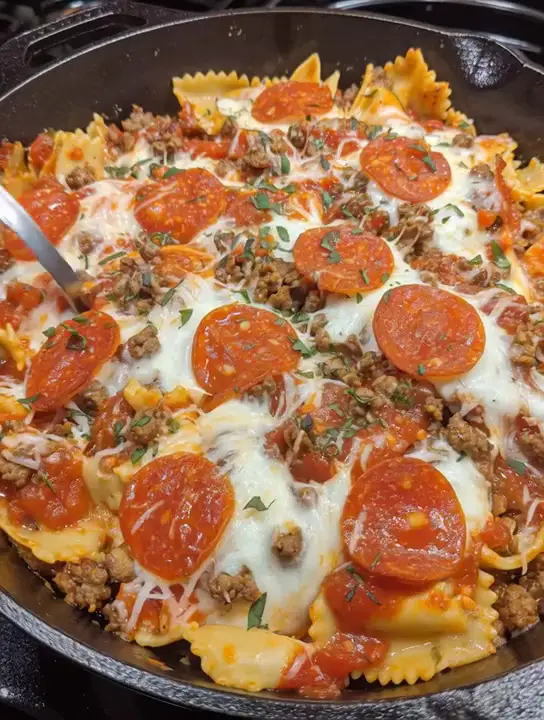
Pizza Lasagna Skillet Bake is a bold, innovative fusion dish that marries the beloved flavors of classic American pizza with the comforting, layered richness of Italian lasagna—all baked to golden perfection in a single, versatile skillet. This hearty, one-pan wonder eliminates traditional layering hassles while delivering maximum flavor, texture, and convenience. Whether you’re feeding a hungry family on a busy weeknight, hosting casual game-day guests, or simply craving something deeply satisfying yet surprisingly simple to prepare, this skillet bake delivers restaurant-quality satisfaction with home-kitchen ease. Its rustic charm, bubbling cheese crown, and savory aroma make it an instant crowd-pleaser—and a modern staple for anyone who loves bold Italian-American comfort food.
The History
While neither pizza nor lasagna has a singular “inventor,” their convergence into the Pizza Lasagna Skillet Bake is a distinctly 21st-century culinary evolution rooted in American home cooking ingenuity. Lasagna traces its origins to medieval Italy—early versions appeared in the 13th-century text Liber de Coquina, featuring sheets of dough layered with grated cheese and spices. Pizza, meanwhile, evolved from flatbreads in Naples, gaining global fame after Queen Margherita’s 1889 endorsement of the tomato-mozzarella-basil rendition symbolizing the Italian flag. Fast-forward to the post-WWII U.S., where canned tomatoes, shredded mozzarella, and dried oregano became pantry staples—and home cooks began experimenting with shortcuts. The “skillet bake” format gained traction in the 1970s–80s with the rise of cast-iron cookware popularity and one-dish meal trends (think: skillet cornbread, frittatas, and dump-and-bake casseroles). By the 2010s, food bloggers and viral recipe creators began mashing up iconic dishes—leading to the birth of “pizza lasagna”: a clever hybrid using no-boil noodles as structural scaffolding, pizza toppings as flavorful fillings, and marinara as both sauce and binder. The skillet variation emerged as a natural progression—leveraging even heat distribution, stovetop-to-oven versatility, and minimal cleanup—making it a hallmark of modern, time-conscious, flavor-forward cooking.
Ingredients Breakdown
Every element in this Pizza Lasagna Skillet Bake serves a precise purpose—from structure and moisture control to umami depth and textural contrast. Let’s explore each component in detail:
- No-Boil Lasagna Noodles: Thin, pre-cooked, and oven-ready, these noodles rehydrate and soften perfectly during baking without pre-boiling. Their neutral wheat base absorbs sauce while maintaining integrity—no mushiness, no breakage. Opt for whole-wheat or gluten-free varieties if dietary needs require; just verify they’re labeled “oven-ready.”
- High-Quality Marinara Sauce: Not just any jarred sauce will do. Seek low-sugar, slow-simmered options with San Marzano tomatoes, garlic, basil, and a touch of olive oil—or better yet, homemade. Avoid overly acidic or watery sauces; excess liquid can lead to sogginess. A rich, thick, herb-forward marinara binds layers and imparts authentic Italian soul.
- Fresh Mozzarella Cheese (Low-Moisture, Shredded): The gold standard for meltability and stretch. Low-moisture mozzarella offers superior browning and less pooling than fresh mozzarella balls. For optimal results, shred it yourself—pre-shredded contains anti-caking starches that hinder melting.
- Ricotta Cheese (Whole-Milk, Whipped): Adds creaminess, subtle sweetness, and protein-rich body. Whole-milk ricotta ensures richness without graininess. Whip it with a fork or immersion blender to aerate and smooth—then fold in egg, Parmesan, garlic powder, and fresh herbs for a luxuriously cohesive filling.
- Parmigiano-Reggiano (Freshly Grated): The umami anchor. Real Parmigiano-Reggiano (not “Parmesan-style”) contributes nutty, salty depth and helps brown the top layer beautifully. Pre-grated versions contain cellulose and lack the aromatic complexity essential for balance.
- Pizza Toppings (Customizable but Thoughtfully Chosen): Pepperoni (thin-sliced, high-quality), Italian sausage (mild or hot, crumbled and pre-browned), sliced mushrooms (cremini or baby bellas for earthiness), black olives (brine-cured for salt balance), red onion (thinly sliced, lightly sautéed to mellow sharpness), and fresh basil (added post-bake for brightness). Each topping is selected for complementary moisture levels, fat content, and flavor synergy—not just tradition.
- Aromatics & Seasonings: Garlic (freshly minced), dried oregano, crushed red pepper flakes (for gentle heat), onion powder, and freshly ground black pepper. These build foundational flavor beneath the cheese and toppings—never an afterthought.
- Olive Oil (Extra Virgin): Used for sautéing aromatics and brushing the skillet rim to prevent sticking and encourage caramelization. Its fruity, peppery notes elevate the entire dish.
- Fresh Herbs & Finishing Touches: Fresh basil ribbons, chopped parsley, flaky sea salt, and a drizzle of high-quality balsamic glaze or aged balsamic vinegar add aromatic lift, visual appeal, and acidity to cut through richness.
Step-by-Step Recipe
- Prep & Preheat: Position oven rack in the center position. Preheat oven to 375°F (190°C). Lightly grease a 12-inch oven-safe cast-iron skillet (or heavy-bottomed stainless steel or enameled Dutch oven) with 1 tsp extra virgin olive oil. Set aside.
- Sauté Aromatics: In a medium skillet over medium heat, warm 1 tbsp olive oil. Add 1 finely minced shallot and 3 cloves minced garlic; sauté 2–3 minutes until fragrant and translucent—but do not brown. Stir in 1 tsp dried oregano, ½ tsp onion powder, and ¼ tsp crushed red pepper flakes; toast 30 seconds. Remove from heat and cool slightly.
- Prepare Ricotta Mixture: In a large bowl, combine 15 oz whole-milk ricotta, 1 large egg, ½ cup freshly grated Parmigiano-Reggiano, 1 tsp kosher salt, ½ tsp black pepper, and the cooled garlic-shallot mixture. Whip vigorously with a whisk or hand mixer until light, airy, and completely smooth (about 2 minutes). Fold in ¼ cup chopped fresh basil. Refrigerate while assembling other components.
- Brown Protein Toppings (if using): In same skillet (wiped clean), brown ½ lb mild Italian sausage over medium-high heat, breaking into fine crumbles. Cook 6–8 minutes until no pink remains and edges are crisp. Drain excess fat thoroughly in a fine-mesh strainer—this prevents greasiness and promotes layer cohesion. Cool 5 minutes. Alternatively, pan-fry 1 cup sliced pepperoni until slightly curled and crisp at edges; drain on paper towels.
- Layer 1 – Sauce Base: Spread 1 cup marinara sauce evenly across the bottom of the prepared skillet—covering every inch to prevent noodle scorching.
- Layer 2 – Noodles: Arrange 4–5 no-boil lasagna noodles in a slightly overlapping single layer—breaking or trimming as needed to fit snugly within the skillet. Don’t worry about gaps—they’ll swell and seal during baking.
- Layer 3 – Ricotta Blend: Dollop half the ricotta mixture over noodles, then gently spread with an offset spatula into an even ¼-inch layer. Smooth carefully to avoid tearing noodles.
- Layer 4 – Cheese & Toppings: Sprinkle 1 cup shredded low-moisture mozzarella evenly over ricotta. Scatter half the cooked sausage (or pepperoni), ½ cup sliced cremini mushrooms (raw or quickly sautéed), ¼ cup sliced red onion, and 2 tbsp pitted kalamata olives.
- Layer 5 – Repeat: Spoon another 1 cup marinara over toppings. Top with remaining noodles (4–5), then remaining ricotta mixture, smoothed evenly. Layer with remaining 1 cup mozzarella, remaining toppings, and an additional ½ cup marinara swirled gently on top.
- Layer 6 – Final Cheese Crown: Sprinkle generously with ⅓ cup freshly grated Parmigiano-Reggiano and a final ¼ cup mozzarella for ultimate browning and blistering.
- Bake Covered: Cover skillet tightly with aluminum foil (tent slightly to prevent cheese sticking). Bake 40 minutes.
- Bake Uncovered: Carefully remove foil. Continue baking 20–25 minutes, until edges bubble vigorously, top is deeply golden with browned cheese spots, and center jiggles only slightly when gently shaken.
- Rest & Finish: Remove from oven and let rest uncovered for 20 full minutes—this allows layers to set, prevents sliding slices, and lets residual heat finish cooking the noodles. Just before serving, garnish with fresh basil ribbons, flaky sea salt, and a delicate drizzle of balsamic glaze.
Tips
- Skillet Selection Matters: Use a true oven-safe skillet—cast iron is ideal for even heating and excellent browning. Avoid skillets with plastic or silicone handles unless verified oven-safe to 400°F+. If unsure, wrap handle in double-layer foil.
- Noodle Fit is Flexible—But Intentional: No need for perfect alignment. Overlapping slightly encourages structural integrity. If noodles bow upward during layering, gently press down with fingertips—moisture from sauce will relax them.
- Moisture Management Is Key: Excess water = soggy lasagna. Always drain cooked meats thoroughly. Pat mushrooms dry before adding. If using fresh spinach, wilt, squeeze *aggressively*, and chop finely to eliminate hidden liquid.
- Ricotta Texture Transforms Everything: Whipping the ricotta with egg and Parmesan creates a velvety, custard-like layer that sets firmly—not runny, not grainy. Skipping the whip step leads to separation and uneven texture.
- Don’t Rush the Rest: Cutting too soon guarantees sloppy, sliding layers. That 20-minute rest allows starches to fully gelatinize and cheeses to reset. It’s non-negotiable for clean slices.
- Maximize Browning: For extra-crispy, blistered cheese, switch oven to broil for the final 2–3 minutes—watch constantly. Or place skillet under a preheated broiler for 60 seconds—rotate for even color.
- Stovetop Sear Option: For ultra-caramelized bottom crust, preheat empty skillet over medium heat 2 minutes before adding sauce. Then proceed with layering. The thermal shock enhances Maillard reaction on the base layer.
- Make-Ahead Friendly: Assemble up to 24 hours ahead—cover tightly and refrigerate. Add 5–10 minutes to covered bake time if going straight from fridge to oven.
- Freeze With Confidence: Fully baked and cooled skillet bake freezes beautifully for up to 3 months. Thaw overnight in fridge, then reheat covered at 350°F for 30 minutes, uncovered for 15 more.
- Leftover Magic: Cold slices reheat exceptionally well in a toaster oven or air fryer (375°F for 6–8 mins) for crispy edges and melty centers—far superior to microwave.
Variations and Customizations
This recipe is a canvas—not a cage. Here’s how to adapt it thoughtfully for every palate, season, and pantry:
- Vegetarian Delight: Skip meat entirely. Boost umami with roasted eggplant cubes, caramelized zucchini ribbons, sun-dried tomatoes (oil-packed, chopped), and white beans (cannellini, rinsed and mashed slightly for creaminess). Add 2 tbsp nutritional yeast to ricotta for cheesy depth.
- White Pizza Lasagna: Replace marinara with roasted garlic–infused béchamel (made with whole milk, butter, flour, roasted garlic purée, and nutmeg). Top with fontina, provolone, and sautéed leeks instead of mozzarella and pepperoni.
- Meat Lovers’ Triple Threat: Layer crumbled pancetta + spicy soppressata + grilled chicken breast strips. Finish with smoked Gouda shreds mixed into the final mozzarella-Parmesan blend.
- Buffalo Chicken Fusion: Swap marinara for 1 cup buffalo sauce thinned with ¼ cup ranch. Use shredded rotisserie chicken tossed in buffalo sauce. Top with blue cheese crumbles and celery ribbons (added post-bake).
- Breakfast Lasagna Skillet: Replace marinara with creamy herb-scrambled eggs. Layer with breakfast sausage, cheddar-jack blend, roasted potatoes, and chives. Bake at 350°F for 35 minutes total—no resting required.
- Gluten-Free Version: Use certified GF no-boil lasagna noodles (brown rice or quinoa-based). Ensure all sauces, cheeses, and toppings are GF-certified (some shredded cheeses contain gluten-derived anti-caking agents).
- Vegan Adaptation: Substitute no-boil GF noodles, cashew-based “ricotta” (blended raw cashews, lemon juice, nutritional yeast, garlic, miso paste), coconut-oil “mozzarella” shreds, and lentil-walnut “meat.” Use roasted tomato passata instead of marinara.
- Low-Carb/Keto Option: Replace noodles with thin, overlapping layers of roasted eggplant or zucchini planks (salted, drained, and patted dry). Reduce marinara by half and boost with pesto swirls and extra cheese volume.
- Seasonal Twists: Spring: Asparagus tips + peas + lemon zest in ricotta. Summer: Heirloom tomato slices + fresh oregano + burrata dollops (added last 5 minutes). Fall: Roasted butternut squash + sage-infused ricotta + crispy pancetta. Winter: Kale ribbons + toasted pine nuts + gorgonzola crumbles.
- Global Inspirations: Mexican: Swap marinara for enchilada sauce, use Oaxaca cheese, black beans, corn, jalapeños, and cilantro-lime ricotta. Mediterranean: Lemon-dill ricotta, feta, artichoke hearts, kalamata olives, and oregano. Indian: Tikka masala sauce base, paneer cubes, spiced ricotta with garam masala, and cilantro-mint garnish.
Health Considerations and Nutritional Value
A balanced, mindful approach transforms Pizza Lasagna Skillet Bake from indulgence into nourishment—without sacrificing joy. Per standard serving (1/8 of recipe, approx. 1.5 cups), here’s a realistic macro and micronutrient profile based on whole-food, minimally processed ingredients:
- Calories: ~420–480 kcal — moderate for a main dish, especially when paired with a vibrant green salad or roasted vegetables.
- Protein: 24–28g — primarily from ricotta, mozzarella, Parmesan, and lean meats. Supports muscle maintenance, satiety, and blood sugar stability.
- Carbohydrates: 32–38g — mostly complex carbs from whole-wheat noodles (if used) and naturally occurring sugars in tomatoes. Fiber ranges from 4g (regular noodles) to 6–8g (whole-grain or veggie-based versions).
- Fats: 20–24g — predominantly unsaturated from olive oil, cheese, and lean meats. Contains conjugated linoleic acid (CLA) from grass-fed dairy and beneficial omega-3s if using pasture-raised sausage.
- Vitamins & Minerals: Rich in calcium (45% DV), vitamin B12 (65% DV), zinc (30% DV), selenium (40% DV), lycopene (from cooked tomatoes), and vitamin K (from basil, oregano, and greens). Low in added sugars (<2g) when using clean marinara.
- Dietary Notes: Naturally low-FODMAP if made with lactose-free ricotta/mozzarella and garlic-infused oil (instead of fresh garlic). Easily adapted for dairy-free, gluten-free, or vegetarian diets—see Variations section. Sodium averages 680mg per serving (well within daily limits) when using low-sodium marinara and limiting added salt.
- Functional Benefits: The combination of fermented dairy (cheese), polyphenol-rich tomatoes, antioxidant herbs (oregano, basil), and heart-healthy olive oil supports gut microbiome diversity, vascular health, and chronic inflammation reduction. The high-protein, high-fiber nature promotes prolonged satiety—reducing between-meal snacking.
- Mindful Modifications: To lower saturated fat: substitute ½ cup part-skim ricotta, use turkey Italian sausage, and reduce mozzarella by ¼ cup. To increase fiber: add ½ cup cooked lentils to ricotta mix or top with steamed broccoli florets before final cheese layer. To boost veggies: spiralize zucchini into “noodle ribbons” and layer between traditional noodles for hidden nutrition.
Ingredients
- 1 (12-inch) oven-safe cast-iron skillet or heavy-bottomed Dutch oven
- 1 tbsp extra virgin olive oil, plus 1 tsp for greasing
- 1 small shallot, finely minced (about ¼ cup)
- 3 cloves garlic, finely minced
- 1 tsp dried oregano
- ½ tsp onion powder
- ¼ tsp crushed red pepper flakes
- 15 oz whole-milk ricotta cheese
- 1 large egg
- ¾ cup freshly grated Parmigiano-Reggiano, divided
- 1 tsp kosher salt, plus more to taste
- ½ tsp freshly ground black pepper
- ¼ cup fresh basil leaves, finely chopped, plus more for garnish
- ½ lb mild Italian sausage (or 1 cup pepperoni slices)
- 2 cups low-moisture mozzarella cheese, shredded (about 8 oz)
- 2 cups high-quality marinara sauce (low-sugar, no added oils)
- 8–10 no-boil lasagna noodles (about 8 oz box)
- ½ cup sliced cremini mushrooms
- ¼ cup thinly sliced red onion
- 2 tbsp pitted kalamata olives, halved
- Flaky sea salt and balsamic glaze, for finishing
Directions
- Preheat oven to 375°F (190°C). Lightly grease a 12-inch oven-safe skillet with 1 tsp olive oil.
- In a medium skillet over medium heat, warm 1 tbsp olive oil. Add shallot and garlic; sauté 2–3 minutes until soft and fragrant. Stir in oregano, onion powder, and red pepper flakes; toast 30 seconds. Remove from heat; cool 5 minutes.
- In a large bowl, combine ricotta, egg, ½ cup Parmigiano-Reggiano, kosher salt, black pepper, and cooled shallot-garlic mixture. Whip with a whisk or hand mixer until smooth and airy (~2 minutes). Fold in chopped basil. Refrigerate.
- In same skillet, brown sausage over medium-high heat, crumbling finely. Cook 6–8 minutes until fully cooked and crisp-edged. Drain *thoroughly* in a fine-mesh strainer. Cool 5 minutes.
- Spread 1 cup marinara evenly across bottom of prepared skillet.
- Arrange 4–5 no-boil noodles in a single overlapping layer over sauce.
- Dollop half ricotta mixture over noodles; spread gently into even layer.
- Sprinkle with 1 cup mozzarella, then scatter half sausage, mushrooms, red onion, and olives.
- Spoon another 1 cup marinara over toppings.
- Add remaining noodles, then remaining ricotta mixture, smoothed evenly.
- Top with remaining 1 cup mozzarella, remaining toppings, and final ½ cup marinara swirled gently.
- Sprinkle with remaining ¼ cup Parmigiano-Reggiano and extra ¼ cup mozzarella.
- Cover tightly with foil (tent to prevent cheese sticking). Bake 40 minutes.
- Remove foil. Bake uncovered 20–25 minutes until bubbling vigorously at edges and top is deep golden with blistered spots.
- Let rest uncovered for 20 minutes before slicing.
- Garnish with fresh basil, flaky salt, and balsamic glaze. Serve warm.
FAQ
- Can I use regular lasagna noodles instead of no-boil?
- Yes—but they must be fully boiled, drained, rinsed with cold water, and patted *very* dry first. Regular noodles release more starch and water, increasing risk of sogginess. No-boil noodles are strongly recommended for reliability and texture.
- Why does the recipe call for whipping the ricotta?
- Whipping incorporates air and emulsifies the egg and cheese, transforming ricotta from grainy and dense into a velvety, cohesive layer that bakes firm—not runny or separated. Skipping this step compromises structure and mouthfeel.
- My skillet bake came out watery. What went wrong?
- Most commonly: insufficient draining of meats or mushrooms, using watery marinara, or skipping the 20-minute rest. Also check if noodles were overlapped too loosely—gaps allow sauce pooling. Next time, blot toppings with paper towels before layering.
- Can I make this vegetarian without tofu or mock meats?
- Absolutely. Load up on roasted vegetables (eggplant, zucchini, bell peppers), lentils, white beans, artichokes, and extra cheese. Umami comes from sun-dried tomatoes, mushrooms, nutritional yeast, and aged Parmesan—even without meat.
- Is it safe to go straight from refrigerator to oven?
- Yes—but add 5–10 minutes to the covered bake time. A cold skillet requires longer thermal penetration to cook noodles through. Never place a chilled glass or ceramic dish directly into a hot oven—it may crack.
- What’s the best way to reheat leftovers?
- Individual slices reheat best in a toaster oven or air fryer at 375°F for 6–8 minutes—crisping edges while keeping centers molten. Microwave reheating works but yields softer texture; cover loosely and heat in 30-second bursts.
- Can I freeze this before baking?
- Yes! Assemble completely (unbaked), cover tightly with foil + plastic wrap, and freeze up to 3 months. Thaw overnight in fridge, then bake as directed—adding 10 minutes to covered time.
- What wine pairs well with Pizza Lasagna Skillet Bake?
- A medium-bodied, high-acid red like Chianti Classico or Barbera d’Asti cuts beautifully through richness. For white lovers, try an oak-aged Vermentino or dry Rosé with herbal notes. Non-alcoholic: sparkling water with lemon and rosemary.
- How do I prevent the noodles from sticking to the skillet?
- Grease generously—including the skillet’s upper rim—and ensure the first sauce layer fully coats the bottom. A thin brush of olive oil on exposed noodle edges before baking also helps. Cast iron’s natural non-stick properties shine here.
- Can I cook this entirely on the stovetop?
- Not recommended—the center won’t cook through without oven heat, and stovetop alone risks burning the bottom before noodles hydrate. However, you *can* sear the base on medium-low for 3 minutes before transferring to oven for enhanced crust.
Summary
Pizza Lasagna Skillet Bake is a revolutionary one-pan marvel that harmonizes the bold, crave-worthy essence of pizza with the comforting, layered depth of lasagna—baked to golden, bubbling perfection in a single versatile skillet. With smart ingredient choices, thoughtful layering, and mindful techniques, it delivers exceptional flavor, impressive nutrition, and effortless elegance—proving that convenience and culinary excellence don’t have to compromise.