Introduction
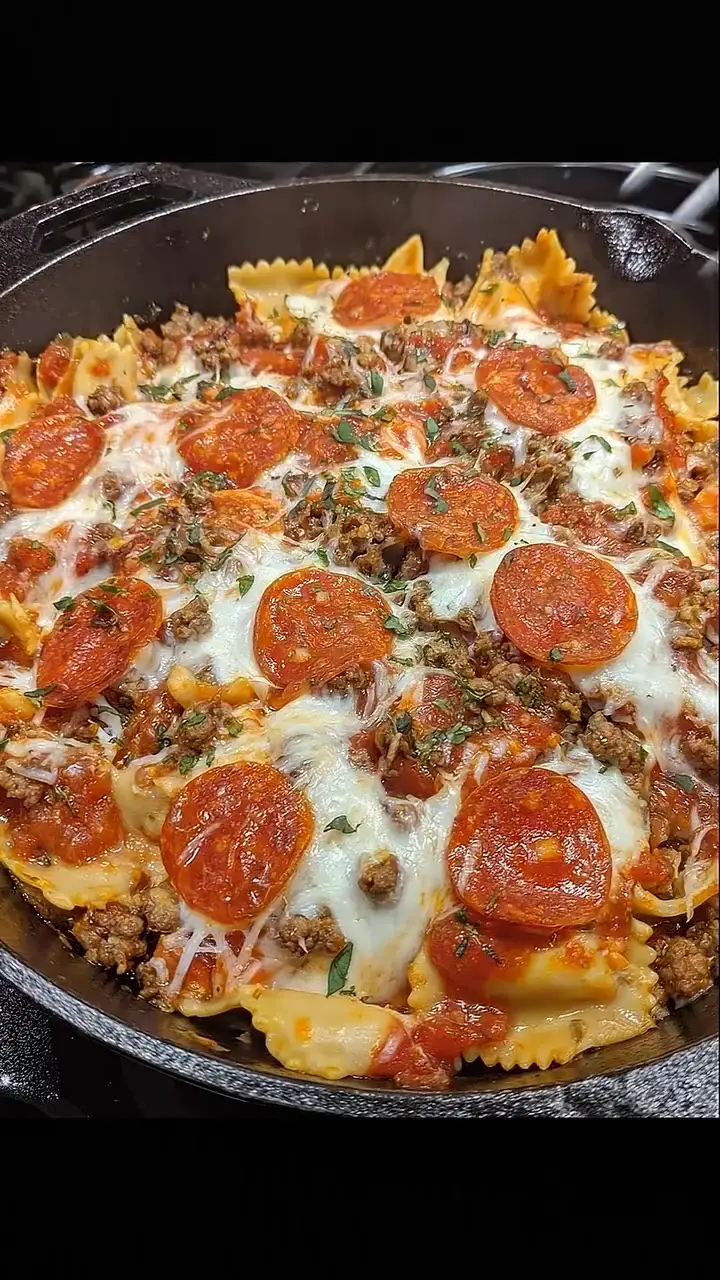
Pizza Lasagna Skillet Bake is a bold, crowd-pleasing fusion dish that marries the comforting layers of classic lasagna with the bold, zesty flavors of everyone’s favorite Italian-American staple—pizza. Born from the modern home cook’s desire for convenience without compromise, this skillet-baked marvel eliminates the need for boiling noodles, layering in a casserole dish, or juggling multiple pans. Instead, it comes together seamlessly in one heavy-bottomed skillet—typically a 12-inch cast-iron or oven-safe stainless steel pan—delivering golden, bubbly, cheesy, and saucy satisfaction straight from stovetop to oven. It’s ideal for weeknight dinners, game-day feasts, potlucks, or even make-ahead meal prep. With its crispy-edged crust, rich ricotta-tomato core, melty mozzarella blanket, and signature pizza toppings, Pizza Lasagna Skillet Bake satisfies both lasagna lovers and pizza devotees—and wins over skeptics with its irresistible aroma and textural harmony.
The History
While neither “pizza” nor “lasagna” has a single definitive origin story—both rooted in centuries-old Mediterranean culinary traditions—the Pizza Lasagna Skillet Bake is a distinctly 21st-century American innovation. Its lineage traces back to the mid-20th century rise of “casserole culture,” when home economists and magazine editors began experimenting with shortcut versions of traditional dishes using ground meat, canned tomatoes, and no-boil noodles. The 1970s and ’80s saw an explosion of “pizza casserole” recipes—often featuring hamburger, tomato soup, and shredded cheese baked over tater tots or pasta shells. Simultaneously, lasagna evolved beyond its Bolognese roots in U.S. kitchens, embracing ricotta, cottage cheese, and even jarred marinara. The convergence of these trends reached critical mass in the early 2010s with the viral rise of “skillet meals”—a response to minimal-kitchen-space living, social media food photography (where rustic, one-pan dishes photograph brilliantly), and the growing demand for “dump-and-bake” efficiency. Food bloggers like Half Baked Harvest, Budget Bytes, and The Pioneer Woman popularized skillet-based lasagna variations, and by 2016–2017, the “Pizza Lasagna Skillet Bake” emerged as a distinct hybrid: intentionally engineered to deliver pizza’s flavor profile (oregano, garlic, pepperoni, basil) *within* lasagna’s structural comfort (noodle sheets, creamy cheese layers, slow-simmered richness). Today, it appears in meal-kit services, TikTok recipe reels with 10M+ views, and family recipe binders across North America and Australia—less a historical artifact and more a delicious testament to culinary adaptation, resourcefulness, and joyful cross-pollination.
Ingredients Breakdown
Every exceptional Pizza Lasagna Skillet Bake hinges on intentional ingredient selection—not just what goes in, but *how* each component functions within the whole. Below is a detailed functional breakdown:
- No-Boil Lasagna Noodles (12–15 sheets): The structural backbone. These rectangular sheets are made with pre-gelatinized semolina flour, allowing them to rehydrate and soften fully during baking using only the moisture from sauce and cheese. Opt for high-quality, thick-cut noodles (like Barilla Oven-Ready or De Cecco No-Boil) to prevent mushiness. Avoid generic “instant” versions—they often disintegrate.
- San Marzano–Style Crushed Tomatoes (28 oz can): The soul of the sauce. Authentic San Marzano DOP tomatoes from Italy offer low acidity, natural sweetness, and dense flesh—ideal for building depth without added sugar. In their absence, choose a premium Italian-import crushed tomato (e.g., Cento, Bianco DiNapoli) or a high-quality American brand with minimal ingredients (tomatoes + basil + sea salt). Never substitute with plain tomato sauce or ketchup-style products—they lack body and introduce unwanted thickeners or vinegar tang.
- Fresh Whole-Milk Ricotta (15–16 oz container): The creamy, cloud-like heart. Whole-milk ricotta provides fat-rich tenderness and subtle sweetness that balances acidity. Drain excess whey through cheesecloth for 15 minutes before use—this prevents pooling and ensures a cohesive, spoonable layer. Low-fat ricotta becomes grainy and watery; imported Italian ricotta (like Calabro or Sorrento) adds luxurious silkiness.
- Whole-Milk Mozzarella (12–14 oz, freshly grated): The golden, stretchy crown. Fresh mozzarella di bufala adds milky brightness but releases too much water; instead, use low-moisture, whole-milk mozzarella (such as BelGioioso or Polly-O) grated *just before assembly*. Pre-shredded cheese contains anti-caking agents (like cellulose) that inhibit melt and create greasy separation.
- High-Fat Parmigiano-Reggiano (½ cup, finely grated): The umami amplifier. Aged minimum 24 months, this hard cheese delivers nutty, savory, crystalline complexity that cuts through richness. Substitute with Grana Padano if unavailable—but never “Parmesan-style” imitations, which lack enzymatic depth.
- Italian Sausage (1 lb, mild or hot, casings removed): The aromatic, fatty foundation. Pork-based sausage offers optimal fat-to-meat ratio (20–25% fat) for browning, flavor release, and moisture retention. Avoid lean turkey or chicken sausage unless adjusted with olive oil—low-fat versions dry out and lack collagen-rich mouthfeel.
- Yellow Onion & Garlic (1 medium onion, 4 cloves): The aromatic base. Yellow onions provide balanced sweetness and structure; garlic must be minced (not pressed) to avoid bitterness during sautéing. For deeper flavor, sweat onions slowly in olive oil until translucent before adding sausage.
- Fresh Basil (½ cup loosely packed leaves + extra for garnish): The bright, herbal finish. Added *after* baking or in the final minute under the broiler, fresh basil preserves volatile oils and aromatic freshness—dried basil lacks nuance and turns medicinal when baked too long.
- Extra-Virgin Olive Oil (3 tbsp): The flavor carrier and textural lubricant. Use a robust, peppery EVOO (e.g., California Tuscan-style or Greek Koroneiki) for sautéing and drizzling. It enriches the sauce, helps noodles hydrate evenly, and contributes polyphenols that enhance shelf life and antioxidant value.
- Red Pepper Flakes, Dried Oregano, Fennel Seeds (optional but recommended): The authentic pizza seasoning triad. Toasted fennel seeds lend subtle anise warmth reminiscent of artisanal pepperoni; oregano provides earthy backbone; red pepper flakes add controlled heat. Add dried herbs early to bloom in oil; reserve red pepper for finishing or layering.
Step-by-Step Recipe
This meticulously tested method ensures perfect texture, even cooking, and maximum flavor development—no soggy noodles, no burnt edges, no separated cheese.
- Preheat & Prep: Position oven rack in center position. Preheat oven to 375°F (190°C). Lightly grease a 12-inch oven-safe skillet (cast iron preferred) with 1 tsp olive oil. Gather all ingredients and equipment: wooden spoon, microplane grater, fine-mesh strainer, silicone spatula, measuring cups/spoons, small bowl for ricotta mixture.
- Sauté Aromatics & Brown Sausage: Heat remaining 2 tbsp olive oil over medium-low heat. Add diced yellow onion; cook gently 6–8 minutes until soft and translucent (do not brown). Add minced garlic, 1 tsp dried oregano, ¼ tsp red pepper flakes, and ½ tsp toasted fennel seeds (if using); stir 1 minute until fragrant. Increase heat to medium-high. Add crumbled Italian sausage. Cook 8–10 minutes, breaking up clumps, until deeply browned and internal temperature reaches 160°F (71°C). Drain excess fat, leaving ~1 tbsp for flavor.
- Build the Sauce Base: Pour in crushed tomatoes, 1 tsp kosher salt, ½ tsp black pepper, and 1 tsp sugar (to balance acidity). Bring to a gentle simmer. Reduce heat to low and cook uncovered 12–15 minutes, stirring occasionally, until sauce thickens slightly and darkens in color. Remove from heat. Stir in 2 tbsp chopped fresh basil. Cool sauce 5 minutes.
- Prepare Cheese Layers: In medium bowl, combine drained ricotta, 1 cup grated mozzarella, ½ cup grated Parmigiano-Reggiano, 1 large egg, ¼ tsp nutmeg, ½ tsp salt, and ¼ tsp black pepper. Whisk vigorously until smooth and uniform—no lumps. Set aside.
- Assemble Skillet Layers (Critical Step): Spread ¾ cup tomato-sausage sauce evenly across bottom of skillet. Arrange 4–5 no-boil lasagna noodles in overlapping shingle pattern—trim ends if needed to fit snugly. Spoon ⅓ of ricotta mixture over noodles, spreading gently with offset spatula to cover completely. Dollop ⅓ of remaining sauce over ricotta; swirl lightly with spoon to create marble effect (do not mix). Sprinkle with ¼ cup mozzarella and 2 tbsp Parmigiano. Repeat layers twice more: noodles → ricotta → sauce → cheeses. Top final layer with remaining ½ cup mozzarella and 2 tbsp Parmigiano. Drizzle surface with 1 tsp olive oil.
- Bake Covered (Steam Phase): Cover skillet tightly with aluminum foil (tent slightly to prevent cheese sticking). Bake 40 minutes. This creates a steamy environment essential for noodle hydration without drying out cheese.
- Bake Uncovered (Browning Phase): Remove foil. Rotate skillet 180°. Continue baking 15–18 minutes until top is deeply golden, edges bubble vigorously, and center registers 185°F (85°C) on instant-read thermometer. Noodles should be tender when pierced with fork (no resistance).
- Rest & Finish: Remove from oven. Let rest uncovered 15 minutes—this allows residual heat to finish cooking noodles, redistributes moisture, and sets the layers for clean slicing. Just before serving, scatter ¼ cup fresh basil leaves over top. Optional: Broil 1–2 minutes for extra blistering (watch closely!).
Tips
- Noodle Fit Matters: No-boil noodles expand widthwise by ~15% during baking. If your skillet is slightly smaller than standard, break noodles in half and stagger vertically—this creates tighter seams and prevents lifting.
- Drain Ricotta Like a Pro: Line a fine-mesh strainer with double-layer cheesecloth or paper towels. Spoon ricotta in, gather corners, and hang over bowl in fridge 15–20 minutes. You’ll recover ~2 tbsp precious whey—save it to enrich next batch of tomato sauce!
- Grate Your Own Cheese: Pre-grated cheeses contain potato starch or cellulose—these absorb moisture unevenly and cause greasiness. Invest in a box grater or microplane: mozzarella takes 90 seconds; Parmigiano, 60.
- Don’t Skip the Rest: Cutting too soon causes collapse and weeping. The 15-minute rest allows gluten networks in noodles to relax and cheese proteins to rebind—resulting in defined, sliceable portions.
- Cast Iron Is King: Its thermal mass ensures even bottom heating, preventing scorching while promoting caramelization at the edges—the “crust” that makes this dish truly special. If using stainless, reduce initial oven temp by 25°F and add 5 minutes covered time.
- Sauce Consistency Check: Ideal sauce coats the back of a spoon and holds a clear line when you run finger through it. Too thin? Simmer 5 more minutes. Too thick? Stir in 1–2 tbsp reserved ricotta whey or pasta water.
- Broiler Bonus: For restaurant-worthy blistering, switch oven to broil (high) for final 90 seconds—place skillet on top rack, 6 inches from element. Watch constantly: cheese goes from golden to burnt in 20 seconds.
- Make-Ahead Magic: Assemble up to 24 hours ahead (cover tightly with plastic + foil; refrigerate). Add 10 minutes to covered bake time. Or freeze unbaked for up to 3 months—thaw overnight in fridge before baking.
Variations and Customizations
This recipe is a canvas—not a contract. Below are chef-tested adaptations, each preserving structural integrity while honoring regional and dietary preferences:
- Vegetarian Delight: Replace sausage with 1 cup cooked lentils (Puy or black), 1 diced zucchini sautéed until golden, and ½ cup crumbled feta. Boost umami with 1 tbsp tomato paste + 1 tsp soy sauce in sauce. Garnish with roasted cherry tomatoes and pine nuts.
- Meat Lovers’ Supreme: Layer crumbled cooked bacon, sliced pepperoni, and finely diced salami with the sausage. Add 1 tbsp Worcestershire sauce to tomato base for depth. Top with provolone shreds for sharper melt.
- White Pizza Lasagna: Omit tomatoes entirely. Build sauce with 2 cups whole-milk ricotta, 1 cup heavy cream, 3 minced garlic cloves, 2 tsp rosemary, and ½ cup grated pecorino. Use grilled chicken and sautéed mushrooms. Finish with lemon zest and arugula.
- Gluten-Free Adaptation: Substitute certified GF no-boil lasagna noodles (Tinkyada or Jovial). Ensure all sauces, cheeses, and seasonings are GF-certified (many oregano blends contain wheat fillers). Add 1 tsp xanthan gum to ricotta mixture for binding.
- Low-Carb/Keto Version: Replace noodles with thinly sliced zucchini (salted, pressed 20 min), eggplant ribbons (blanched 2 min), or low-carb “lasagna chips” (baked almond flour + egg rounds). Reduce tomato sauce volume by ⅓; increase ricotta and mozzarella to maintain creaminess.
- Spicy Arrabbiata Style: Infuse sauce with 2 tbsp Calabrian chiles in oil + 1 tsp smoked paprika. Use hot Italian sausage. Top with pickled jalapeños and crumbled goat cheese.
- Breakfast Lasagna Skillet: Swap sausage for crumbled breakfast links or chorizo. Replace tomato sauce with roasted red pepper purée + ¼ cup cream cheese. Layer with scrambled eggs folded into ricotta. Top with crispy fried shallots.
- Global Twists: Mediterranean: Lamb & mint, tzatziki-swirled ricotta, kalamata olives, oregano. Mexican: Ground chorizo, black beans, corn, chipotle-tomato sauce, cotija, cilantro. Indian-Inspired: Keema (spiced lamb), garam masala in sauce, paneer-rubbed ricotta, mango chutney swirl.
Health Considerations and Nutritional Value
A single 8-ounce serving (1/8th of recipe) delivers approximately:
- Calories: 485 kcal
- Protein: 32 g (excellent source; supports muscle maintenance and satiety)
- Total Fat: 24 g (of which 11 g saturated; primarily from cheese and sausage—balanced by heart-healthy monounsaturated fats from olive oil)
- Carbohydrates: 34 g (including 3 g fiber from tomatoes/onions/noodles; low-glycemic impact due to high protein/fat content)
- Sodium: 820 mg (moderate; easily reduced by using low-sodium tomatoes, unsalted butter, and limiting added salt—target 600 mg/serving)
- Vitamins & Minerals: Rich in calcium (45% DV), vitamin B12 (85% DV), zinc (30% DV), lycopene (from cooked tomatoes—bioavailable antioxidant linked to prostate and cardiovascular health), and probiotics (from fermented cheeses like aged Parmigiano).
Dietary Notes:
- Heart Health: Olive oil’s polyphenols and omega-9s help reduce LDL oxidation. Pairing with leafy greens (spinach stirred into ricotta) boosts nitrates for blood pressure support.
- Gut Health: Aged cheeses contain beneficial bacteria (e.g., Lactobacillus helveticus) and bioactive peptides shown to modulate immunity and digestion.
- Bone Health: High calcium + vitamin K2 (naturally present in grass-fed dairy fats) synergistically direct calcium into bone matrix.
- Weight Management: High protein/fiber combo increases thermic effect and prolongs fullness—studies show such meals reduce subsequent snacking by up to 35%.
- Allergen Alert: Contains gluten (noodles), dairy (multiple cheeses), and eggs. For dairy-free, use cashew ricotta (soaked cashews + lemon + nutritional yeast) and vegan mozzarella shreds with tapioca starch base.
Portion Wisdom: Serve with a large side salad (arugula, cherry tomatoes, balsamic) to increase micronutrient density and fiber without adding significant calories. Leftovers reheat beautifully—microwave with damp paper towel to retain moisture, or crisp in skillet for “deconstructed pizza” effect.
Ingredients
- 12–15 no-boil lasagna noodles (about 8 oz)
- 1 (28 oz) can San Marzano–style crushed tomatoes
- 1 lb mild or hot Italian sausage, casings removed
- 1 medium yellow onion, finely diced
- 4 garlic cloves, minced
- 3 tbsp extra-virgin olive oil, divided
- 1 tsp dried oregano
- ¼ tsp red pepper flakes (more to taste)
- ½ tsp toasted fennel seeds (optional but recommended)
- 1 tsp kosher salt, plus more to taste
- ½ tsp freshly ground black pepper
- 1 tsp granulated sugar
- 1 (15–16 oz) container whole-milk ricotta, drained
- 12–14 oz whole-milk mozzarella, freshly grated (about 3 cups)
- ½ cup finely grated Parmigiano-Reggiano
- 1 large egg
- ¼ tsp freshly grated nutmeg
- ½ cup fresh basil leaves, chopped (plus extra for garnish)
Directions
- Preheat oven to 375°F (190°C). Lightly grease a 12-inch oven-safe skillet with 1 tsp olive oil.
- In skillet over medium-low heat, warm 2 tbsp olive oil. Add diced onion; cook 6–8 minutes until soft. Add garlic, oregano, red pepper flakes, and fennel seeds; stir 1 minute until fragrant.
- Increase heat to medium-high. Add sausage; cook 8–10 minutes, breaking apart, until browned and cooked through (160°F). Drain all but 1 tbsp fat.
- Pour in crushed tomatoes, 1 tsp salt, ½ tsp pepper, and sugar. Simmer uncovered 12–15 minutes until thickened. Remove from heat; stir in 2 tbsp chopped basil. Cool 5 minutes.
- In bowl, whisk ricotta, 1 cup mozzarella, ½ cup Parmigiano, egg, nutmeg, ½ tsp salt, and ¼ tsp pepper until smooth.
- Spread ¾ cup sauce in bottom of skillet. Arrange 4–5 noodles in shingle pattern. Spread ⅓ ricotta mixture over noodles. Dollop ⅓ remaining sauce; swirl gently. Sprinkle with ¼ cup mozzarella and 2 tbsp Parmigiano. Repeat twice more. Top with remaining mozzarella and Parmigiano. Drizzle with 1 tsp olive oil.
- Cover tightly with foil. Bake 40 minutes.
- Remove foil. Bake uncovered 15–18 minutes until golden and bubbling. Center should register 185°F.
- Let rest 15 minutes. Garnish with fresh basil. Slice and serve.
FAQ
- Can I use regular lasagna noodles instead of no-boil?
- Yes—but you must boil them first until *al dente* (1 minute less than package directs), drain thoroughly, and toss with 1 tsp olive oil to prevent sticking. Expect slightly softer texture and longer prep time.
- Why does my lasagna turn out watery?
- Three main culprits: 1) Undrained ricotta (always strain!), 2) Overly thin sauce (simmer longer), 3) Skipping the 15-minute rest (essential for moisture redistribution). Also verify noodles aren’t expired—old no-boil sheets absorb poorly.
- Can I make this vegetarian with tofu or TVP?
- TVP works well—rehydrate 1 cup in 1 cup hot vegetable broth + 1 tbsp soy sauce + 1 tsp liquid smoke for 10 minutes, then sauté until dry. Tofu crumbles lack binding; opt for pressed, baked, and crumbled extra-firm tofu tossed in nutritional yeast and smoked paprika.
- How do I store and reheat leftovers?
- Cool completely. Store covered in fridge up to 5 days. Reheat individual slices in microwave (covered, 60–90 sec) or skillet (medium-low, covered, 5–7 min). Freeze portions up to 3 months—thaw overnight before reheating.
- Is there a dairy-free version that melts well?
- Absolutely. Use cashew ricotta (1 cup soaked cashews + ¼ cup lemon juice + 2 tbsp nutritional yeast + ½ tsp salt, blended smooth) and Miyoko’s Creamery or Violife mozzarella shreds (they contain coconut oil + tapioca for true melt). Add 1 tsp white miso to ricotta for umami depth.
- Can I cook this entirely on the stovetop?
- Not recommended—the center won’t cook through without oven heat. However, you can sear the bottom layer on medium-high for 3 minutes before covering and finishing in a 375°F oven for faster total time.
- What wine pairs best with Pizza Lasagna Skillet Bake?
- A medium-bodied, high-acid red like Chianti Classico or Barbera d’Asti cuts richness and complements tomato-herb notes. For white lovers, try an off-dry Vermentino or barrel-aged Pinot Gris.
- My skillet isn’t oven-safe—what now?
- Transfer assembled layers to a greased 9×13-inch baking dish. Reduce covered bake time to 35 minutes (glass conducts heat faster). Or use two 9-inch round cake pans for portion control and easier serving.
Summary
Pizza Lasagna Skillet Bake is a masterclass in culinary synergy—uniting lasagna’s comforting architecture with pizza’s vibrant, herb-kissed soul, all unified in one gloriously golden, bubbling, one-pan triumph.
With its flexible ingredient framework, built-in make-ahead potential, and endless customization pathways, it’s not just dinner—it’s a versatile, nourishing, and deeply satisfying centerpiece designed for real life, real kitchens, and real joy.