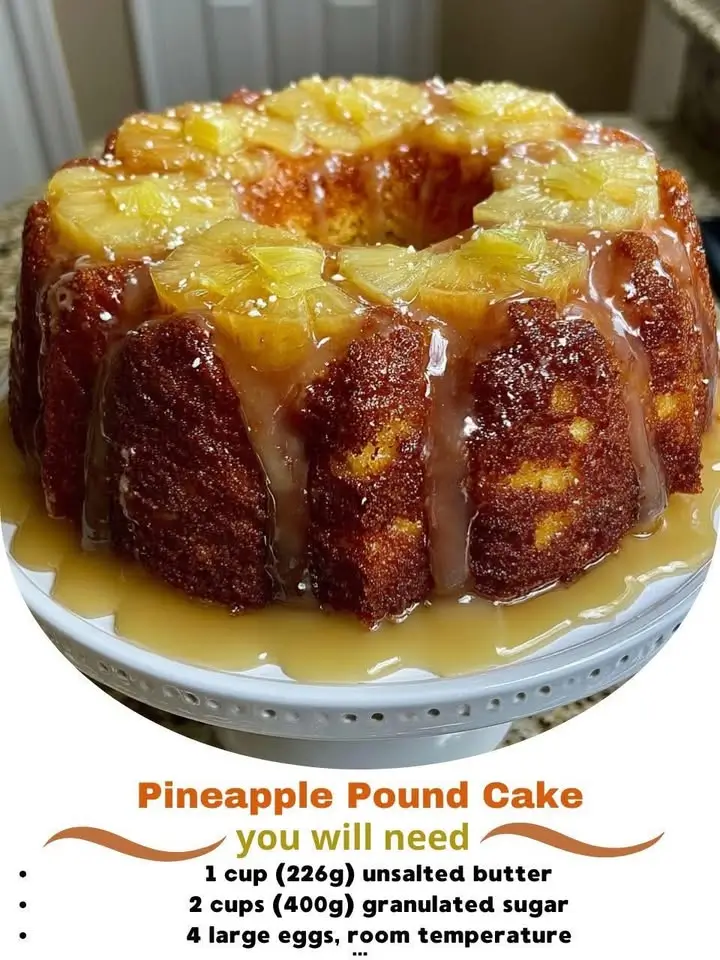
Introduction
Pineapple pound cake is a beloved dessert that marries the rich, buttery texture of traditional pound cake with the tropical sweetness and tang of pineapple. This moist, tender cake is perfect for afternoon tea, holiday gatherings, birthday celebrations, or as a delightful treat to enjoy with a cup of coffee. With its golden crumb, subtle fruitiness, and often a hint of glaze or frosting, pineapple pound cake stands out as a comforting yet exotic twist on a classic favorite. Whether you’re an experienced baker or just starting out in the kitchen, this recipe is both approachable and rewarding—offering a delicious balance of simplicity and indulgence.
The History
The origins of pound cake trace back to Northern Europe in the late 17th century. The name “pound cake” comes from its original recipe, which called for one pound each of flour, sugar, butter, and eggs—simple, easy-to-remember proportions that made it accessible before standardized measurements were common. As baking techniques evolved, so did the recipe, allowing for variations in leavening agents, flavorings, and add-ins like fruits and nuts.
Pineapple, native to South America but popularized globally through European trade routes, became a symbol of hospitality and luxury. By the early 20th century, canned pineapple made its way into American kitchens thanks to Hawaiian producers like James Dole. It wasn’t long before bakers began incorporating this sweet-tart fruit into cakes, quick breads, and desserts. The fusion of pineapple with pound cake likely emerged in the mid-20th century, particularly in Southern U.S. and Hawaiian cuisines, where tropical flavors blended seamlessly with traditional baking styles. Today, pineapple pound cake is cherished not only for its taste but also for its nostalgic charm and versatility across cultures.
Ingredients Breakdown
Understanding each ingredient in a pineapple pound cake helps ensure optimal results and allows for informed substitutions when needed:
- Butter (unsalted): Provides richness and contributes to the dense yet tender crumb. Room temperature butter ensures proper creaming with sugar, leading to a light texture.
- Granulated Sugar: Sweetens the cake and aids in creaming to incorporate air, enhancing volume and softness.
- Eggs (large, room temperature): Bind ingredients together, contribute moisture, and help with leavening. Beating them in gradually prevents curdling.
- All-Purpose Flour: Forms the structural base of the cake. Sifted for even distribution and to prevent lumps.
- Baking Powder: A leavening agent that helps the cake rise slightly more than traditional pound cakes, ensuring a softer interior.
- Salt: Enhances flavor and balances the sweetness.
- Vanilla Extract: Adds depth and warmth to the overall flavor profile.
- Canned Pineapple (crushed, drained): The star ingredient! Adds natural sweetness, moisture, and a tropical flair. Draining well prevents excess liquid from affecting the batter consistency.
- Pineapple Juice: Often reserved from the can, it can be used in the batter or glaze for intensified flavor.
- Sour Cream or Yogurt (optional): Increases moisture and tenderness while adding a slight tang that complements the pineapple.
- Glaze (powdered sugar + pineapple juice): Optional topping that adds shine, sweetness, and visual appeal.
Step-by-Step Recipe
- Preheat oven to 325°F (165°C). Grease and flour a 9×5-inch loaf pan or Bundt pan thoroughly, or line with parchment paper for easy removal.
- Cream butter and sugar: In a large mixing bowl, beat softened unsalted butter and granulated sugar together using a hand mixer or stand mixer on medium-high speed until pale, fluffy, and well combined—about 4–5 minutes.
- Add eggs one at a time: Beat in each egg individually, mixing well after each addition. Scrape down the sides of the bowl as needed. Add vanilla extract and mix until incorporated.
- Mix dry ingredients: In a separate bowl, whisk together all-purpose flour, baking powder, and salt until evenly distributed.
- Incorporate dry ingredients: Gradually add the dry mixture to the butter mixture in three parts, alternating with sour cream or yogurt (if using), beginning and ending with the flour. Mix on low speed just until combined—do not overmix.
- Fold in pineapple: Gently stir in the drained crushed pineapple by hand using a spatula until evenly dispersed throughout the batter.
- Transfer to pan: Pour the thick batter into the prepared loaf or Bundt pan, spreading evenly with a spatula. Tap the pan gently on the counter to release air bubbles.
- Bake: Place in the preheated oven and bake for 60–75 minutes (for loaf) or 50–65 minutes (for Bundt), or until a wooden skewer inserted into the center comes out clean or with a few moist crumbs.
- Cool: Let the cake cool in the pan for 15 minutes, then turn it out onto a wire rack to cool completely before glazing.
- Prepare glaze: Whisk together powdered sugar and pineapple juice (start with 1 tablespoon juice and add more for desired consistency) until smooth. Drizzle over cooled cake.
- Serve: Slice and serve at room temperature. Store leftovers covered at room temperature or wrap for longer storage.
Tips
- Room temperature ingredients: Ensure butter, eggs, and dairy are at room temperature to create a smooth, emulsified batter and avoid curdling.
- Don’t skip draining the pineapple: Excess moisture can make the cake soggy. Press crushed pineapple between paper towels to remove extra juice.
- Avoid overmixing: Once flour is added, mix only until combined. Overmixing develops gluten, resulting in a tough cake.
- Use a toothpick test: Check doneness near the end of baking. If the toothpick has wet batter, continue baking; if clean or with dry crumbs, it’s done.
- Cool properly: Allowing the cake to cool slightly in the pan helps set structure, but removing it too late can cause condensation and sticking.
- Enhance flavor: Add a pinch of nutmeg or cinnamon for warmth, or a splash of rum or coconut extract for complexity.
- Even baking: For uniform browning, rotate the pan halfway through baking, especially if your oven has hot spots.
- Storage tip: Wrap tightly in plastic wrap or store in an airtight container to maintain moisture for several days.
Variations and Customizations
- Coconut Pineapple Pound Cake: Add ½ cup shredded sweetened coconut to the batter and use coconut milk instead of sour cream for a tropical twist.
- Pineapple-Walnut Pound Cake: Fold in ¾ cup chopped toasted walnuts for added crunch and nutty flavor.
- Marbled Cream Cheese Swirl: Mix softened cream cheese with sugar and vanilla, then swirl into the batter before baking for a creamy surprise.
- Lemon-Pineapple Pound Cake: Add 1–2 tablespoons lemon zest and replace some pineapple juice with fresh lemon juice in the glaze for a citrus kick.
- Spiced Pineapple Cake: Incorporate ½ teaspoon ground cinnamon, ¼ teaspoon nutmeg, and a pinch of cloves for a warm, autumnal version.
- Mini Loaves or Muffins: Divide the batter into greased mini loaf pans or muffin tins and reduce baking time to 30–40 minutes.
- Almond Flavor: Substitute vanilla extract with almond extract (use sparingly—½ tsp) or add sliced almonds on top before baking.
- Fresh Pineapple Option: While canned works best due to consistent moisture content, fresh pineapple can be used if finely diced, lightly sautéed to reduce water content, and well-drained.
- Gluten-Free Version: Replace all-purpose flour with a high-quality gluten-free flour blend designed for baking. Add ½ teaspoon xanthan gum if not included in the mix.
- Vegan Adaptation: Use plant-based butter, flax eggs (1 tbsp ground flax + 3 tbsp water per egg), non-dairy yogurt, and vegan sugar. Ensure pineapple is vegan-certified.
Health Considerations and Nutritional Value
Pineapple pound cake is a decadent dessert and should be enjoyed in moderation as part of a balanced diet. However, there are ways to make it slightly healthier without sacrificing flavor:
- Natural Sweetness: Pineapple contains natural sugars and enzymes like bromelain, which may aid digestion and have anti-inflammatory properties.
- Reduced Sugar Options: You can reduce granulated sugar by up to 25% or use coconut sugar for a lower glycemic index. Alternatively, use a sugar substitute suitable for baking (e.g., erythritol blend).
- Lower-Fat Versions: Replace half the butter with unsweetened applesauce or mashed banana, though this may alter texture slightly.
- Whole Grain Flour: Substitute up to half the all-purpose flour with whole wheat pastry flour for added fiber.
- Portion Control: Cut small slices and pair with fresh fruit or Greek yogurt to balance richness.
Estimated Nutritional Value (per slice, based on 12 servings):
- Calories: ~380–420
- Total Fat: 20–24g
- Saturated Fat: 12–14g
- Cholesterol: 85–95mg
- Sodium: 200–250mg
- Total Carbohydrates: 45–50g
- Dietary Fiber: 1–2g
- Sugars: 30–35g
- Protein: 5–6g
Note: Values vary based on specific ingredients and portion size. Adding nuts, glaze, or alternative ingredients will affect nutrition.
Ingredients
- 1 cup (2 sticks / 226g) unsalted butter, softened
- 1 ½ cups (300g) granulated sugar
- 4 large eggs, room temperature
- 2 ½ cups (315g) all-purpose flour
- 1 ½ teaspoons baking powder
- ½ teaspoon salt
- 2 teaspoons pure vanilla extract
- 1 cup (about 245g) crushed canned pineapple, well-drained
- ½ cup (120g) sour cream or plain yogurt (optional, for moisture)
- 1 cup (120g) powdered sugar (for glaze)
- 2–3 tablespoons pineapple juice (from the can, for glaze)
Directions
- Preheat oven to 325°F (165°C). Grease and flour a 9×5-inch loaf pan or 10-cup Bundt pan. Set aside.
- In a large bowl, cream together softened butter and granulated sugar using an electric mixer on medium speed for 4–5 minutes until light and fluffy.
- Add eggs one at a time, beating well after each addition. Mix in vanilla extract.
- In another bowl, whisk together flour, baking powder, and salt.
- Gradually add the dry ingredients to the butter mixture in three additions, alternating with sour cream (or yogurt), starting and ending with dry ingredients. Mix on low speed until just combined.
- Fold in the drained crushed pineapple by hand until evenly distributed.
- Pour batter into the prepared pan and smooth the top with a spatula. Tap pan gently on counter to release air bubbles.
- Bake for 60–75 minutes (loaf) or 50–65 minutes (Bundt), or until a toothpick inserted into the center comes out clean.
- Let cake cool in pan for 15 minutes, then transfer to a wire rack to cool completely.
- While cooling, prepare the glaze: whisk powdered sugar with 2 tablespoons pineapple juice. Add more juice ½ teaspoon at a time until desired consistency is reached.
- Drizzle glaze over cooled cake. Allow it to set for 15–20 minutes before slicing.
- Serve and enjoy!
FAQ
Can I use fresh pineapple instead of canned?
Yes, but fresh pineapple has higher moisture content. Dice it finely, pat dry with paper towels, and consider sautéing briefly to evaporate excess water before folding into the batter.
Why is my pineapple pound cake dense?
Overmixing the batter or using cold ingredients can lead to a denser texture. Also, skipping leavening agents like baking powder may result in less rise.
How long does pineapple pound cake last?
Stored in an airtight container at room temperature, it stays fresh for 3–4 days. Refrigerate for up to 1 week, or freeze for up to 3 months.
Can I freeze pineapple pound cake?
Absolutely! Wrap the cooled, unglazed cake tightly in plastic wrap and aluminum foil, then freeze. Thaw overnight at room temperature before glazing and serving.
Can I make this cake ahead of time?
Yes, this cake actually improves in flavor after a day as the pineapple infuses the crumb. Bake it 1–2 days in advance and store covered at room temperature.
What pan should I use—loaf or Bundt?
Both work well. A loaf pan yields thicker slices and longer bake time; a Bundt pan offers elegant presentation and even cooking. Adjust baking time accordingly.
Why did my cake sink in the middle?
Possible causes include underbaking, opening the oven door too early, too much moisture from undrained pineapple, or expired leavening agents.
Can I omit the glaze?
Yes, the cake is delicious without it. For a lighter option, dust with powdered sugar or serve plain.
Summary (in two lines)
Pineapple pound cake blends the timeless richness of buttery pound cake with the juicy sweetness of pineapple for a moist, flavorful dessert perfect any time of year. Easy to customize and ideal for sharing, it’s a tropical twist on a classic that never goes out of style.