Introduction
The Perfect Prime Rib Roast is more than just a dish—it’s a culinary milestone, a centerpiece of celebration, and the ultimate expression of meat mastery. Revered for its rich marbling, buttery tenderness, and deeply savory flavor, prime rib stands apart from other roasts not only in prestige but in its unique anatomical origin (the beef rib primal, specifically ribs 6 through 12) and its unparalleled ability to deliver succulent, medium-rare perfection from edge to center. Whether served at holiday feasts, milestone birthdays, or intimate gourmet dinners, a flawlessly executed prime rib roast commands attention—not with complexity, but with reverence for quality ingredients, precise temperature control, and patient, intentional technique. This guide is meticulously crafted to demystify every facet of the process, transforming what many perceive as an intimidating undertaking into a repeatable, reliable, and deeply rewarding experience—ensuring your roast isn’t just good, but *perfect*.
The History
Prime rib’s origins trace back centuries to the traditions of English aristocracy and butchery craftsmanship. In 18th- and 19th-century Britain, the “rib roast” was reserved for nobility and high-status banquets due to its exceptional tenderness and scarcity—only the most marbled, well-aged sections of the forequarter were selected and roasted over open hearths or in coal-fired ovens. The term “prime” entered common usage in the United States following the establishment of the USDA meat grading system in 1927, where “Prime” became the highest designation—awarded to beef with abundant intramuscular fat (marbling), youthful age, and superior texture. By the mid-20th century, prime rib gained iconic status in American steakhouses, particularly after Chicago’s famed Gene & Georgetti popularized the “standing rib roast” cooked low-and-slow and carved tableside in the 1940s. Its popularity surged further during the post-war economic boom, symbolizing abundance and refinement. Today, prime rib remains deeply embedded in cultural rituals—from Christmas Eve suppers and New Year’s Eve galas to wedding rehearsal dinners—and continues to evolve with modern techniques like sous-vide pre-cooking, reverse searing, and precision thermal monitoring—all while honoring its timeless roots in simplicity, quality, and respect for the animal.
Ingredients Breakdown
Every element in a perfect prime rib roast serves a distinct, non-negotiable purpose—no ingredient is filler; each contributes structurally, chemically, or sensorially to the final result.
- Beef Rib Roast (Bone-In or Boneless): The foundation. A 3- to 5-rib standing rib roast (approx. 8–14 lbs) is ideal for even heat distribution and natural insulation from the bones. Bone-in roasts consistently yield juicier, more flavorful meat due to marrow fat basting and radiant heat conduction from the bones. Look for USDA Prime grade for maximum marbling, or Certified Angus Beef® Choice for outstanding value and performance. The meat should display creamy-white, finely dispersed fat flecks throughout deep red muscle, with firm, springy texture and a clean, sweet aroma—never sour or ammoniac.
- Kosher Salt (Diamond Crystal preferred): Not merely for seasoning—salt initiates crucial biochemical reactions. Applied generously 12–48 hours before roasting (dry-brining), it draws out moisture, then reabsorbs it along with dissolved salt, enhancing water retention, improving protein solubility, and promoting uniform seasoning deep into the meat. Diamond Crystal’s hollow crystals adhere better and dissolve more evenly than fine table salt.
- Freshly Ground Black Pepper (coarse grind): Adds aromatic pungency and subtle heat. Grinding whole peppercorns just before application preserves volatile oils (like limonene and pinene) that would otherwise oxidize and turn bitter if pre-ground.
- High-Smoke-Point Fat (Ghee, Rendered Beef Tallow, or Clarified Butter): Essential for achieving a crisp, deeply caramelized crust without burning. Unlike olive oil (smoke point ~375°F) or unclarified butter (~300°F), ghee (485°F) and tallow (420°F) remain stable at the high-heat sear phase (450–500°F), enabling Maillard reaction without acrid smoke or off-flavors.
- Fresh Rosemary & Thyme (whole sprigs, stems intact): Their woody stems release aromatic terpenes (e.g., camphor, thujone) slowly during roasting, infusing the fat cap and surface without overwhelming bitterness. Avoid dried herbs—they burn easily and lack volatile complexity.
- Garlic (unpeeled, smashed cloves): Roasting unpeeled garlic mellows its sharpness into sweet, nutty umami. The skin protects against scorching while allowing gradual flavor diffusion into surrounding fat and jus.
- Yellow Onion (quartered, skin on): Provides natural sweetness and sulfur compounds that enhance browning and contribute depth to the pan drippings—later transformed into a velvety au jus. Leaving the skin on prevents excessive browning and adds subtle earthiness.
- Beef Stock or Bone Broth (low-sodium, preferably homemade): Used sparingly (¼ cup) in the roasting pan to create steam during initial cooking, moderating surface drying and aiding fond development. Avoid canned broth with MSG or excessive sodium, which can make the jus overly salty or metallic.
Optional—but highly recommended—for finishing: flaky sea salt (Maldon or Fleur de Sel) applied immediately post-carving to elevate surface salinity and textural contrast.
Step-by-Step Recipe
- Pre-Roast Preparation (48–12 Hours Ahead): Remove roast from refrigerator. Pat *extremely* dry with paper towels—moisture is the enemy of crust. Using a sharp boning knife, carefully trim excess surface fat to a uniform ¼-inch thickness (leave the fat cap intact; do not remove it). Generously season all surfaces—including sides and ends—with kosher salt (1 tsp per pound) and coarse black pepper. Place uncovered on a wire rack set over a baking sheet and refrigerate, unwrapped, for minimum 12 hours (optimal: 24–48 hrs). This dry-brine period allows salt penetration, surface desiccation (critical for crust formation), and enzymatic tenderization.
- Temperature Equilibration (2–3 Hours Before Roasting): Remove roast from fridge. Let sit at cool room temperature (65–68°F) for 2–3 hours. Internal temp should rise to 55–60°F. This ensures even cooking—preventing gray bands and temperature gradients. Insert a leave-in probe thermometer into the thickest part of the meat, avoiding bone or large fat seams.
- Oven Setup & Preheating: Position oven rack in lowest third. Place a heavy-duty stainless steel or cast iron roasting pan (not nonstick) on the rack. Preheat oven to 225°F (for true low-and-slow) OR use the reverse-sear method: preheat to 150°F for ultra-slow roast, then finish at 500°F. Calibrate your oven with an independent oven thermometer—many run 25–50°F hot or cold.
- Roasting (Low-and-Slow Phase): Place roast bone-side down in cold roasting pan. Scatter onion quarters (skin on), smashed garlic cloves, rosemary, and thyme around the roast—not under it. Pour ¼ cup low-sodium beef stock into pan. Insert thermometer. Roast undisturbed until internal temperature reaches 115°F for rare, 120°F for medium-rare, or 125°F for medium (expect ~15–20 minutes per pound at 225°F; monitor closely past 100°F, as rate accelerates). Do *not* cover, baste, or open oven unnecessarily—each peek drops temp by 25°F and extends cook time.
- Resting (Mandatory & Non-Negotiable): When target temp is reached, turn off oven. Carefully remove roast using heavy oven mitts. Transfer to a wire rack set over a tray (to prevent steaming). Tent *very loosely* with foil—just enough to retain heat, *not* seal. Rest for *minimum 45 minutes*, ideally 60–90 minutes. During rest, residual heat carries the center to final temp (carrying over +5–7°F), juices redistribute from muscle fibers outward, and connective tissues fully relax. Cutting too soon releases up to 40% of precious juices.
- High-Heat Sear (Reverse-Sear Finish): While resting, increase oven temp to 500°F (or use broiler on high). Once at temp, place roast back in oven—fat-cap side up—for exactly 6–9 minutes, rotating once halfway, until deep mahogany crust forms and surface sizzles audibly. Alternatively, sear in a smoking-hot cast iron skillet with ghee for 2 min per side. This step develops complex Maillard compounds without overcooking the interior.
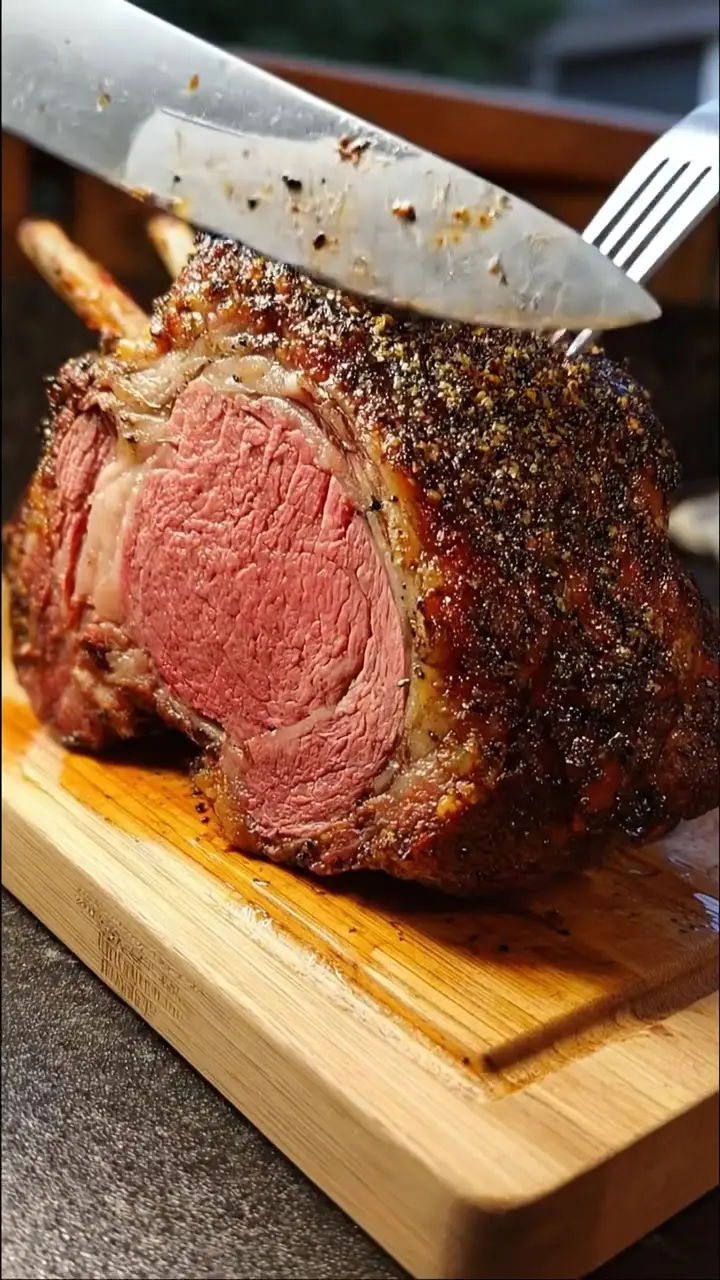
- Final Rest & Carving: Remove roast. Rest again, uncovered, for 10 minutes. This final rest stabilizes surface moisture and sets the crust. Using a long, thin, razor-sharp carving knife (e.g., Dexter-Russell or Wüsthof Grand Prix II), slice *against the grain*, perpendicular to the rib bones, into ½-inch thick slices. Start at the small end (most tender) and work toward the larger end. Serve immediately.
Tips
- Thermometer Discipline Is Everything: Analog dial thermometers are inaccurate and slow. Invest in a professional-grade instant-read (Thermapen ONE) and a reliable leave-in probe (Weber iGrill 3 or Meater+). Calibrate before *every* use in ice water (32°F) and boiling water (212°F at sea level).
- Bone-In > Boneless—Always: Bones act as natural insulators and radiant heaters. Boneless roasts dry out faster and lack the structural integrity for clean slicing. If purchasing boneless, ask your butcher to tie it *with the rib bones laid alongside* (a “bone-in style” presentation) for enhanced flavor and moisture.
- Trim Fat Strategically: Never remove the fat cap—it self-bastes and crisps gloriously. But trim loose, flabby edges that won’t render. Excess external fat can pool, steam the surface, and inhibit crust. Aim for ¼ inch—uniform and smooth.
- Room Temp ≠ Warm Room: “Room temperature” means 65–68°F—not a 75°F kitchen in summer. Use a digital thermometer to verify ambient air temp. On hot days, use an AC-cooled room or rest on a marble slab in a cool pantry.
- Resist the Urge to Baste: Basting cools the surface, delays crust formation, and introduces water vapor that steams rather than sears. The roast’s own rendered fat is the perfect basting agent—let it do its job.
- Carve With Precision: Slice only when ready to serve. Each slice exposed to air begins losing heat and moisture. Use a cutting board with juice grooves and keep a warm serving platter nearby. Arrange slices slightly overlapping to retain heat.
- Save Every Bit of Fond: After roasting, deglaze the pan with ½ cup dry red wine (Cabernet Sauvignon) or sherry vinegar, scraping vigorously with a wooden spoon. Simmer 3–4 minutes, then whisk in 1 tbsp cold unsalted butter for shine and body. Strain and serve au jus in a heated pitcher.
- Leftovers Are Gold: Refrigerate within 2 hours. Store sliced or whole in airtight container with a thin layer of au jus. Use within 4 days. Transform into hash (diced with potatoes and onions), French dip sandwiches (thin-sliced, au jus-dipped), or beef Wellington “remix” (wrap in puff pastry with mushroom duxelles).
Variations and Customizations
While tradition reigns supreme, thoughtful variations can honor regional influences, dietary preferences, or creative flair—without compromising integrity.
- Herb-Crusted Prime Rib: After dry-brining, press a paste of Dijon mustard, minced garlic, chopped fresh rosemary, thyme, parsley, and lemon zest onto the fat cap before roasting. Adds bright acidity and textural contrast.
- Coffee-Ancho Rubbed Roast: Blend 2 tbsp finely ground dark roast coffee, 1 tbsp ancho chile powder, 1 tsp smoked paprika, 1 tsp brown sugar, and ½ tsp cinnamon. Apply lightly over salt/pepper crust. Imparts deep, smoky-sweet complexity—ideal for bold palates.
- Asian-Inspired Glaze Finish: During last 10 minutes of sear, brush fat cap with a reduction of ¼ cup tamari, 2 tbsp mirin, 1 tbsp grated ginger, 1 tsp toasted sesame oil, and 1 tsp honey. Caramelize under broiler for glossy, umami-rich finish.
- Horseradish-Crème Fraîche Crust: After searing, spread a thin layer of prepared horseradish mixed with crème fraîche over the top. Return to 400°F oven for 3 minutes—creates a piquant, cooling counterpoint to rich beef.
- Wine-Braised Prime Rib (For Tenderizing Older Cuts): For grass-fed or leaner roasts, submerge ⅓ of roast in 2 cups full-bodied red wine (Zinfandel or Syrah), 1 cup beef stock, and aromatics. Braise covered at 325°F for 2 hours, then proceed with dry-roast and sear. Enhances tenderness without sacrificing flavor.
- Smoked Prime Rib (Pellet Grill Method): Smoke at 225°F over oak or hickory until 110°F internal, then finish with 500°F oven sear. Adds subtle wood nuance—best for outdoor entertaining or competition-style preparation.
- Keto/Low-Carb Adaptation: Omit sugar-based glazes. Serve with roasted cauliflower “potatoes,” garlic sautéed spinach, and a red wine reduction thickened with xanthan gum instead of flour.
- Gluten-Free Assurance: Verify all stock, mustard, and soy alternatives are certified GF. Use tamari instead of soy sauce; ensure spice blends contain no wheat fillers.
Health Considerations and Nutritional Value
A 4-ounce serving of USDA Prime rib roast (trimmed, cooked to medium-rare) delivers approximately 320 calories, 26g high-quality complete protein (containing all 9 essential amino acids), 22g total fat (9g saturated), 90mg cholesterol, and zero carbohydrates. It is exceptionally rich in bioavailable nutrients:
- Heme Iron (3.5 mg/serving): Critical for oxygen transport and cognitive function—absorbed 3x more efficiently than non-heme iron from plants.
- Vitamin B12 (2.8 mcg): Supports nerve health and red blood cell formation—120% DV per serving.
- Zinc (7.2 mg): Vital for immune response, wound healing, and DNA synthesis.
- Selenium (32 mcg): A potent antioxidant supporting thyroid hormone metabolism.
- Conjugated Linoleic Acid (CLA): Naturally occurring in grass-finished beef fat—studied for potential anti-inflammatory and metabolic benefits.
Considerations: While nutrient-dense, prime rib is calorically concentrated and high in saturated fat. Those managing cardiovascular health or LDL cholesterol should limit intake to ≤1 serving (4 oz) weekly and pair with high-fiber vegetables (broccoli, Brussels sprouts) and polyphenol-rich accompaniments (red wine reduction, berry compote) to modulate lipid absorption. Opt for grass-finished beef when possible—it contains higher omega-3s (ALA), lower overall fat, and elevated antioxidants like vitamin E. For sodium-conscious individuals, skip added salt during prep and rely solely on finishing sea salt—reducing sodium by ~300mg per serving. Always consult a registered dietitian for personalized guidance, especially with conditions like hypertension, kidney disease, or gout.
Ingredients
- 1 (8–12 lb) USDA Prime or Choice standing rib roast, 3–5 ribs, bone-in, fat cap trimmed to ¼-inch thickness
- 2 tbsp Diamond Crystal kosher salt (or 1 tbsp Morton’s—adjust for density)
- 2 tsp freshly ground black pepper (coarse grind)
- 3 tbsp clarified butter (ghee) or rendered beef tallow
- 4–6 fresh rosemary sprigs (6–8 inches long, woody stems intact)
- 6–8 fresh thyme sprigs
- 1 large yellow onion, quartered, skin left on
- 6–8 garlic cloves, unpeeled and gently smashed
- ¼ cup low-sodium, preservative-free beef stock or bone broth
- Flaky sea salt (Maldon or Fleur de Sel), for finishing
Directions
- Dry-Brine: At least 12 hours (up to 48) before cooking, pat roast completely dry. Rub evenly with kosher salt and pepper. Place on wire rack over baking sheet, uncovered, in refrigerator.
- Bring to Temperature: Remove roast from fridge 2–3 hours before roasting. Insert leave-in probe thermometer into center of largest muscle mass, avoiding bone. Target 55–60°F internal before oven entry.
- Preheat Oven & Pan: Set oven to 225°F. Place empty heavy roasting pan on lowest oven rack. Preheat 30 minutes.
- Roast Low-and-Slow: Place roast bone-side down in preheated pan. Scatter onion, garlic, rosemary, and thyme around (not under) roast. Pour stock into pan. Insert thermometer. Close oven. Roast until internal temp reaches 115°F (rare), 120°F (medium-rare), or 125°F (medium). Monitor closely past 100°F.
- Rest Thoroughly: Remove roast. Transfer to wire rack. Tent *loosely* with foil. Rest 45–90 minutes.
- Finish with High Heat: Increase oven to 500°F. Once stabilized, return roast fat-cap up for 6–9 minutes until deep brown and sizzling. Optional: sear in cast iron skillet with ghee.
- Final Rest & Carve: Rest uncovered 10 minutes. Slice against grain, ½-inch thick, with sharp carving knife. Season each plate with flaky sea salt. Serve immediately with warm au jus.
FAQ
- Q: Can I cook prime rib from frozen?
- A: Not recommended. Uneven thawing causes moisture loss, uneven cooking, and potential food safety risk. Thaw in refrigerator 3–4 days ahead (allow 24 hours per 5 lbs). Never thaw at room temperature or in warm water.
- Q: Why is my prime rib chewy?
- A: Most commonly due to overcooking (especially past 135°F internal), slicing with the grain instead of against it, or skipping the mandatory rest. Less common: using a non-prime cut with insufficient marbling or inadequate dry-brining.
- Q: Can I use a convection oven?
- A: Yes—but reduce temperature by 25°F and check 10–15 minutes earlier. Convection accelerates surface drying and can cause premature crust formation before interior cooks. Use convection only for the final sear phase.
- Q: How do I know when it’s done without a thermometer?
- A: You don’t—reliably. The “finger test” (comparing meat firmness to hand palm) is subjective and inaccurate across roast sizes, fat levels, and personal perception. A calibrated thermometer is the *only* trustworthy method. Skipping it risks $150+ of premium beef.
- Q: What’s the difference between prime rib and ribeye roast?
- A: “Prime rib” refers to the *cut* (standing rib roast) and often implies USDA Prime grade. “Ribeye roast” is typically boneless and may be cut from the same primal—but lacks the bone’s flavor and moisture benefits. All prime rib is rib roast; not all rib roast is prime grade.
- Q: Can I prepare the au jus ahead of time?
- A: Absolutely. Deglaze pan post-roast, strain, skim fat, and refrigerate up to 3 days or freeze 3 months. Reheat gently and finish with cold butter for emulsification and sheen.
- Q: My roast has a “bloodline” or dark band near the bone—is it unsafe?
- A: No. This is the natural “dark cutting” phenomenon—caused by pH shift in stressed cattle pre-slaughter. It’s safe, flavorful, and tender. Simply trim if appearance concerns you.
- Q: Should I cover the roast while resting?
- A: Loosely tented with foil is acceptable to retain warmth—but never sealed tightly, which traps steam and softens the crust. Better yet: rest uncovered on a wire rack in a draft-free spot.
- Q: How much prime rib per person?
- A: Allow 1–1.5 rib bones per person (approx. 12–20 oz raw weight). A 3-rib roast serves 3–4; 4-rib serves 4–6; 5-rib serves 6–8. Remember: shrinkage is ~25%.
- Q: Can I use this method for a smaller 2-rib roast?
- A: Yes—but reduce low-temp roasting time significantly (start checking at 45 mins). Smaller roasts heat faster and carry over more aggressively. Use thermometer religiously.
Summary
The Perfect Prime Rib Roast is achieved not through luck, but through disciplined execution: dry-brining for depth and crust readiness, precise low-and-slow roasting guided by a calibrated thermometer, a mandatory extended rest for juiciness, and a blistering high-heat finish for irreplaceable caramelization.
It honors the integrity of extraordinary beef—requiring patience, respect for temperature science, and minimal intervention—so that every slice delivers buttery tenderness, profound umami, and the quiet confidence of culinary mastery.