Introduction
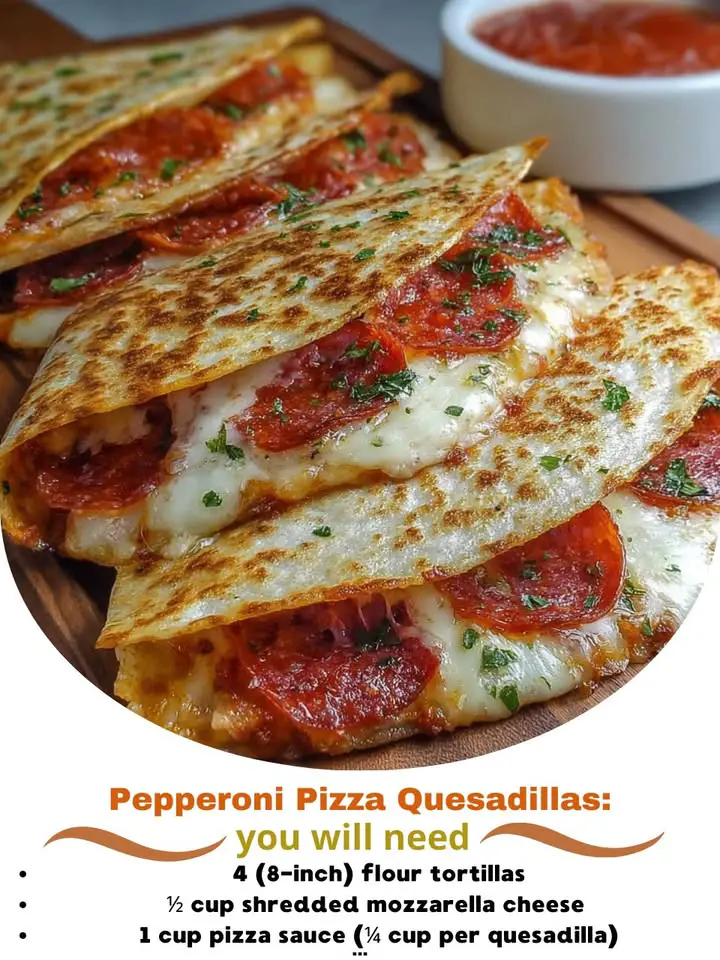
Pepperoni Pizza Quesadillas are the ultimate fusion food — a playful, satisfying mashup of two beloved American comfort classics: New York–style pepperoni pizza and the warm, cheesy embrace of a Tex-Mex quesadilla. Imagine crispy, golden tortillas folded around molten mozzarella, savory pepperoni slices, zesty tomato sauce, and just the right hint of oregano and garlic — all cooked to gooey perfection on a skillet or griddle. This clever hybrid isn’t just a fun kitchen experiment; it’s a practical solution for busy weeknights, picky eaters, meal-prep enthusiasts, and anyone craving bold flavor without the fuss of dough rising, oven preheating, or pizza stone logistics. Whether served as an after-school snack, game-day appetizer, lunchbox surprise, or even a deconstructed “pizza night” alternative, Pepperoni Pizza Quesadillas deliver maximum satisfaction with minimal effort — and they’re endlessly adaptable to dietary preferences and pantry constraints.
The History
While neither pizza nor quesadillas originated in the United States, their convergence into the Pepperoni Pizza Quesadilla is a quintessentially modern American culinary evolution — born from cultural cross-pollination, convenience-driven innovation, and Gen Z/TikTok-era food creativity. Pizza arrived in the U.S. via Italian immigrants in the late 19th century, gaining national traction after World War II when returning GIs brought home a taste for Neapolitan-style pies. Pepperoni — a distinctly American sausage invented in the early 1900s (likely by Italian-American salumerias adapting spicy salami traditions) — became synonymous with U.S. pizza by the 1950s. Meanwhile, the quesadilla traces back to colonial-era Mexico, where Spanish settlers introduced wheat flour tortillas and dairy cheese to indigenous corn-based cooking traditions. The grilled, folded cheese-tortilla format gained widespread popularity in the U.S. during the 1970s–80s alongside the rise of Tex-Mex cuisine.
The specific fusion of pizza and quesadilla appears to have emerged organically in home kitchens across the Southwest and Midwest in the early 2000s — often shared through parenting blogs and church cookbook swaps as a “kid-friendly pizza hack.” However, it exploded into mainstream food consciousness around 2018–2020, fueled by viral Instagram reels and Pinterest pins showcasing golden-brown, sauce-swirled, pepperoni-studded folds sizzling in butter. Food scientists at major grocery chains even began developing “pizza quesadilla kits” featuring pre-shredded “pizza blend” cheese and portioned marinara cups — a testament to its cultural staying power. Today, it’s no longer just a novelty; it’s a recognized menu item at college dining halls, food trucks, and even upscale casual restaurants reimagining handheld comfort food with artisanal twists.
Ingredients Breakdown
Every great Pepperoni Pizza Quesadilla starts with intentionality — not just throwing ingredients together, but understanding how each component contributes to texture, flavor balance, and structural integrity. Below is a detailed functional breakdown of the core ingredients:
- Flour Tortillas (8–10 inch): The foundational canvas. Medium-thickness (not ultra-thin “street taco” style, nor overly thick “burrito” grade) provides ideal pliability for folding and crispness for browning. Look for tortillas with simple ingredients — enriched wheat flour, water, vegetable oil, and salt — avoiding excessive gums or preservatives that can hinder browning or create chewiness.
- Mozzarella Cheese (low-moisture, part-skim or whole-milk): The melty heart of the quesadilla. Low-moisture mozzarella melts smoothly without excessive greasiness and develops delicate stretch and subtle browning. Fresh mozzarella is too wet and will steam rather than crisp — reserve it for caprese salads, not quesadillas.
- Pepperoni Slices: Choose small, thin, cup-and-char style pepperoni for optimal texture contrast — the curled edges crisp up beautifully, adding crunch and intensified umami. Avoid thick-sliced deli pepperoni, which stays rubbery and overwhelms the cheese. For authenticity, seek out natural-casing pepperoni or brands like Hormel Natural Choice or Boar’s Head Mild Pepperoni.
- Tomato Sauce (Pizza-Style): Not ketchup or pasta sauce — this should be a balanced, lightly seasoned, low-sugar marinara or dedicated pizza sauce. Simmered tomatoes with garlic, oregano, basil, olive oil, and a pinch of red pepper flake provide acidity to cut richness and herbal depth. Canned San Marzano–style sauces (e.g., Rao’s, Victoria) work exceptionally well when time is short.
- Grated Parmesan or Romano Cheese: Adds salty, nutty complexity and umami punch that elevates the entire profile. A light dusting over the cheese layer before folding enhances browning and adds a subtle crusty finish.
- Garlic Powder & Dried Oregano: These dried herbs are non-negotiable for pizza authenticity. Garlic powder offers consistent, roasted savoriness (fresh garlic burns easily in high-heat cooking), while oregano delivers that unmistakable Mediterranean earthiness. Optional additions include a whisper of crushed red pepper flakes for heat or onion powder for sweetness.
- Unsalted Butter or Clarified Butter (Ghee): The superior fat for stovetop cooking — butter lends rich, caramelized notes and promotes even, golden browning. Clarified butter raises the smoke point, reducing burn risk. Olive oil works but lacks the same depth; avoid vegetable or canola oils unless strictly avoiding dairy.
- Optional Enhancements: Fresh basil (added post-cooking), a drizzle of high-quality extra virgin olive oil, a sprinkle of flaky sea salt, or a finishing brush of garlic-infused butter all add restaurant-quality polish.
Step-by-Step Recipe
Follow these precise, chef-tested steps for foolproof, consistently delicious Pepperoni Pizza Quesadillas — each stage designed to maximize flavor development, texture contrast, and structural stability:
- Prep Your Station: Grate mozzarella (do not use pre-shredded — anti-caking agents inhibit melt). Slice pepperoni into quarters if using large rounds, or leave cup-and-char style whole. Warm tomato sauce slightly (30 seconds in microwave) so it spreads easily without chilling the cheese. Mince fresh garlic if using (though powder is recommended for reliability).
- Assemble the First Tortilla: Lay one tortilla flat on a clean, dry surface. Spread 1½ tablespoons of warm tomato sauce in an even, thin layer, leaving a ½-inch border. Sprinkle with ¼ teaspoon garlic powder, ¼ teaspoon dried oregano, and a pinch of red pepper flakes (if using). Distribute ¾ cup shredded mozzarella evenly over sauce. Scatter 12–15 pepperoni slices across the cheese. Finish with 1 tablespoon grated Parmesan and a light grind of black pepper.
- Seal the Fold: Carefully place a second tortilla directly on top. Press down gently with fingertips to adhere — do not press hard enough to squeeze out cheese, but enough to create cohesion. Let rest 1 minute — this allows slight moisture migration and helps prevent sliding during cooking.
- Heat the Skillet: Place a heavy-bottomed 10- or 12-inch stainless steel or cast-iron skillet over medium-low heat (325°F surface temp). Add 1 tablespoon unsalted butter and swirl until melted and foaming subsides — you want shimmering, not browning butter.
- First-Side Cook: Gently slide the assembled quesadilla into the skillet. Press lightly with a spatula to ensure full contact. Cook undisturbed for 3–4 minutes, rotating ¼ turn every 60 seconds for even browning. The underside should develop deep golden-brown, lacy, slightly blistered spots — not pale or uniformly brown.
- Flip with Confidence: Slide spatula fully underneath, lift slightly, and confidently flip in one motion. Immediately press down with the spatula for 10 seconds to reseal. Reduce heat to medium-low if butter begins to darken.
- Second-Side Cook: Cook another 2.5–3.5 minutes, again rotating every 60 seconds. Peek at the edge: cheese should be fully molten, bubbling gently beneath the tortilla, and the top crust deeply bronzed. Avoid overcooking — the goal is crisp exterior + flowing interior, not leathery tortillas.
- Rest & Slice: Transfer to a wire rack (not paper towels — they trap steam and soften the crust). Rest for 90 seconds — critical for cheese setting and clean slicing. Cut into 6 equal wedges using a sharp chef’s knife or pizza cutter. Serve immediately while piping hot and maximally gooey.
Tips
- Temperature Control Is Everything: Too hot = burnt tortilla, unmelted cheese center. Too cool = greasy, limp, pale disc. Use an infrared thermometer to verify skillet surface temp hovers between 325–350°F. When in doubt, start lower — you can always increase heat.
- The “No Steam” Rule: Never cover the quesadilla while cooking — trapped steam softens the tortilla and prevents crisping. If your kitchen is humid or your stove runs hot, crack a window or turn on the vent fan.
- Cheese Prep Matters: Shred mozzarella yourself from a block — pre-shredded contains cellulose and potato starch that creates clumping and inhibits smooth melt. For best results, chill the block for 20 minutes before grating.
- Sauce Placement Strategy: Always apply sauce to the *bottom* tortilla only — never both sides. Double-saucing causes sogginess, delamination, and uneven browning. Keep sauce layer thin — excess liquid migrates into cheese and steams instead of baking.
- Pepperoni Placement Logic: Scatter pepperoni *over* the cheese, not under it. This ensures direct contact with heat for curling and crisping, while the cheese seals them in and prevents sliding.
- Butter Basting Boost: During the last 60 seconds of cooking, brush the top tortilla with a final ½ tsp melted garlic butter — it deepens color, adds aroma, and creates a glossy, restaurant-worthy finish.
- Stack Smart for Batch Cooking: To keep multiple quesadillas warm without sacrificing crispness, place them on a wire rack set over a baking sheet in a 200°F oven — never stack them directly or wrap in foil.
- Crisp-Reheat Hack: Leftovers reheat best in a dry skillet over medium heat (no butter needed) for 60–90 seconds per side — microwaving guarantees rubbery disappointment.
Variations and Customizations
The beauty of Pepperoni Pizza Quesadillas lies in their incredible versatility — a blank canvas ready for global inspiration, dietary adaptation, and personal flair. Here’s how to make them your own:
Dietary Adaptations
- Gluten-Free: Use certified GF flour tortillas (Canyon Bakehouse or Siete Almond Flour are top-rated for structure and browning). Ensure all sauces and cheeses are GF-certified (some marinara brands contain wheat-based thickeners).
- Dairy-Free/Vegan: Swap mozzarella for Miyoko’s Liquid Mozzarella or Violife Just Like Mozzarella shreds; use vegan butter and nutritional yeast instead of Parmesan; choose plant-based pepperoni (Lightlife or Yves). Note: Melting behavior differs — cook slower and press more firmly.
- Low-Carb/Keto: Substitute large, sturdy low-carb tortillas (Mission Carb Balance or Mama Lupe’s) or go tortilla-free with a “pizza crust” made from almond flour, egg, and cream cheese pressed thin and pan-fried first.
- High-Protein Boost: Add 2 tbsp crumbled cooked Italian sausage, finely diced grilled chicken breast, or a thin layer of ricotta mixed with egg white before folding.
Flavor & Texture Twists
- White Pizza Style: Omit tomato sauce entirely. Use garlic-infused olive oil + roasted garlic paste as the base, add mozzarella, pepperoni, fresh spinach, and a shower of goat cheese crumbles.
- Spicy Diablo: Stir 1 tsp chipotle purée into the tomato sauce. Add pickled jalapeño rings and crumbled cotija cheese with the pepperoni. Finish with lime crema.
- Gourmet Truffle: Replace 1 tbsp mozzarella with grated truffle-infused fontina. Drizzle finished quesadilla with white truffle oil and microgreens.
- Breakfast Pizza Quesadilla: Swap tomato sauce for creamy hollandaise or sriracha-mayo. Layer with scrambled eggs, pepperoni, cheddar, and crispy bacon bits.
- Vegetarian “Pepperoni” Version: Use mushroom-based “pepperoni” (Upton’s Naturals or homemade marinated shiitakes), add roasted red peppers and artichoke hearts, and finish with basil pesto swirl.
Global Fusion Editions
- Mediterranean: Replace tomato sauce with sun-dried tomato paste + lemon zest. Use feta + provolone blend, Kalamata olives, and oregano. Top with tzatziki.
- Korean BBQ Pizza: Swap sauce for gochujang-ketchup blend. Use pepperoni + bulgogi beef strips, mozzarella + Monterey Jack, and garnish with kimchi slaw and sesame seeds.
- Indian Masala: Base with tandoori-spiced yogurt sauce. Fill with paneer cubes, spiced potato, cilantro-mint chutney swirl, and pepperoni for umami contrast.
Health Considerations and Nutritional Value
A single standard Pepperoni Pizza Quesadilla (made with two 8-inch flour tortillas, 1.5 oz mozzarella, 1 oz pepperoni, 2 tbsp tomato sauce, and 1 tsp butter) clocks in at approximately 520–580 calories, with 28–32g protein, 26–30g total fat (11–13g saturated), 42–48g carbohydrates, and 5–7g fiber. While indulgent, it’s nutritionally dense compared to many fast-food alternatives — especially when thoughtfully composed.
Key Nutrient Highlights:
- Calcium & Vitamin D: Mozzarella provides ~25% of daily calcium needs; fortified cheeses may offer vitamin D support for bone health.
- High-Quality Protein: Pepperoni and cheese deliver complete amino acid profiles, supporting muscle maintenance and satiety — crucial for balanced blood sugar response.
- Lycopene Power: Tomato sauce is rich in lycopene — a potent antioxidant linked to reduced inflammation and cardiovascular protection — especially bioavailable when cooked with healthy fats like olive oil or butter.
- B-Vitamins & Zinc: Whole-wheat or sprouted grain tortillas boost B vitamins (B1, B3, B6) and zinc, supporting energy metabolism and immune function.
Smart Swaps for Enhanced Wellness:
- Reduce Sodium: Choose low-sodium pepperoni (Applegate or Boar’s Head offers options) and no-salt-added tomato sauce. Skip added table salt — rely on herbs and aged cheeses for flavor.
- Boost Fiber: Use 100% whole-wheat, oat, or lentil flour tortillas (adds 3–5g fiber per serving) or add 1 tbsp ground flaxseed to the cheese layer.
- Heart-Healthy Fats: Replace half the butter with avocado oil or use ghee (clarified butter) — both offer higher smoke points and beneficial fatty acid ratios.
- Add Veggies: Incorporate finely shredded zucchini (squeezed dry), baby spinach, or roasted cauliflower rice into the filling — adds volume, nutrients, and moisture control without compromising flavor.
Portion Mindfulness: Serve with a vibrant side salad (mixed greens, cherry tomatoes, cucumber, lemon vinaigrette) to increase micronutrient density and promote fullness with fewer calories. For children or weight-management goals, consider making “mini” versions using 6-inch tortillas — yields 4 smaller, shareable portions per recipe batch.
Ingredients
- 2 (8-inch) medium-thickness flour tortillas (preferably stone-ground or whole-wheat)
- 1 ½ tablespoons authentic pizza-style tomato sauce (low-sugar, no added preservatives)
- ¾ cup low-moisture part-skim mozzarella cheese, freshly shredded
- 12–15 small cup-and-char style pepperoni slices (approx. 1 oz)
- 1 tablespoon grated Parmesan or Pecorino Romano cheese
- ¼ teaspoon garlic powder
- ¼ teaspoon dried oregano
- Pinch of crushed red pepper flakes (optional)
- Freshly ground black pepper, to taste
- 1 tablespoon unsalted butter (or clarified butter/ghee)
- Optional finishing touches: fresh basil ribbons, flaky sea salt, extra virgin olive oil drizzle
Directions
- Shred mozzarella cheese from a cold block using a box grater. Set aside.
- In a small bowl, combine tomato sauce, garlic powder, oregano, red pepper flakes (if using), and a few grinds of black pepper. Stir well.
- Place one tortilla on a clean, dry work surface. Spread sauce mixture evenly over surface, leaving a ½-inch border.
- Sprinkle shredded mozzarella evenly over sauce. Distribute pepperoni slices across cheese layer. Top with grated Parmesan.
- Carefully place second tortilla on top. Press gently with fingertips to seal. Let rest 60 seconds.
- Heat a 10-inch heavy-bottomed skillet over medium-low heat (325°F). Add butter and swirl until melted and shimmering.
- Slide assembled quesadilla into skillet. Press lightly with spatula. Cook undisturbed for 3 minutes, rotating ¼ turn every 60 seconds.
- Flip confidently using a wide spatula. Press down for 10 seconds. Cook 3 more minutes, rotating as before, until deeply golden and cheese is fully melted.
- Transfer to a wire rack. Rest for 90 seconds. Cut into 6 equal wedges with a sharp knife or pizza cutter.
- Serve immediately, garnished with fresh basil, flaky salt, and a drizzle of olive oil if desired.
FAQ
- Can I make these ahead of time?
- Yes — assemble uncooked quesadillas up to 24 hours ahead and refrigerate between parchment-lined plates. Bring to room temperature 15 minutes before cooking. Fully cooked quesadillas freeze well for up to 2 months: cool completely, wrap individually in parchment + foil, and reheat in skillet or air fryer (375°F for 4–5 mins).
- Why does my quesadilla fall apart when I flip it?
- Most commonly due to insufficient sealing time (let rest 60–90 sec before cooking) or too much sauce/cheese causing slippage. Also ensure skillet is properly preheated — cold pans cause sticking and tearing.
- Can I use corn tortillas?
- Technically yes, but not recommended. Corn tortillas lack gluten elasticity and become brittle when filled and folded. They crack, leak cheese, and won’t achieve the same golden crispness. Stick with flour for structural integrity.
- My cheese isn’t melting — what’s wrong?
- Three likely culprits: 1) Using pre-shredded cheese with anti-caking agents, 2) Sauce is too cold (chills cheese layer), or 3) Heat is too low — cheese needs sustained, gentle heat to emulsify. Always shred fresh and warm sauce slightly.
- What’s the best way to reheat leftovers?
- A dry nonstick skillet over medium heat for 60–90 seconds per side restores crispness perfectly. Air fryer at 350°F for 3–4 minutes also works. Avoid microwaves — they create rubbery textures and soggy tortillas.
- Can I bake these instead of stovetop?
- You can — preheat oven to 400°F, place assembled quesadillas on parchment-lined baking sheets, brush tops with butter, and bake 10–12 minutes, flipping halfway. But stovetop delivers superior browning, control, and speed — especially for small batches.
- Are there healthier cheese alternatives?
- Absolutely. Try part-skim ricotta blended with mozzarella for creaminess and less fat, or smoked Gouda for intense flavor with smaller portions. Reduced-fat mozzarella works but may yield drier texture — compensate with 1 tsp cream or Greek yogurt mixed into cheese.
- How do I prevent pepperoni from sliding out?
- Two tricks: 1) Place pepperoni *over* cheese (not under), and 2) Use smaller, thicker slices — they grip better than large, thin ones. A light press before cooking also helps lock them in.
- Can kids help make these?
- Yes! It’s a fantastic family cooking activity. Kids can safely spread sauce, sprinkle cheese, place pepperoni, and press tortillas together. Supervise flipping and stove use. Great for teaching measuring, sequencing, and food science (melting, browning, texture change).
- What dipping sauces pair best?
- Classic marinara for authenticity, garlic aioli for richness, ranch for crowd-pleasing familiarity, or a bright chimichurri for herbaceous contrast. Avoid overly sweet or thick sauces that overwhelm the delicate balance.
Summary
Pepperoni Pizza Quesadillas brilliantly unite the crave-worthy simplicity of pizza with the handheld convenience and comforting warmth of a perfectly grilled quesadilla — delivering crispy edges, molten cheese, savory pepperoni, and zesty tomato notes in every golden-brown bite. With smart ingredient choices, precise temperature control, and endless customization potential, this playful fusion dish satisfies cravings, simplifies weeknight cooking, and invites creativity across dietary lifestyles and global flavor palettes.