Introduction
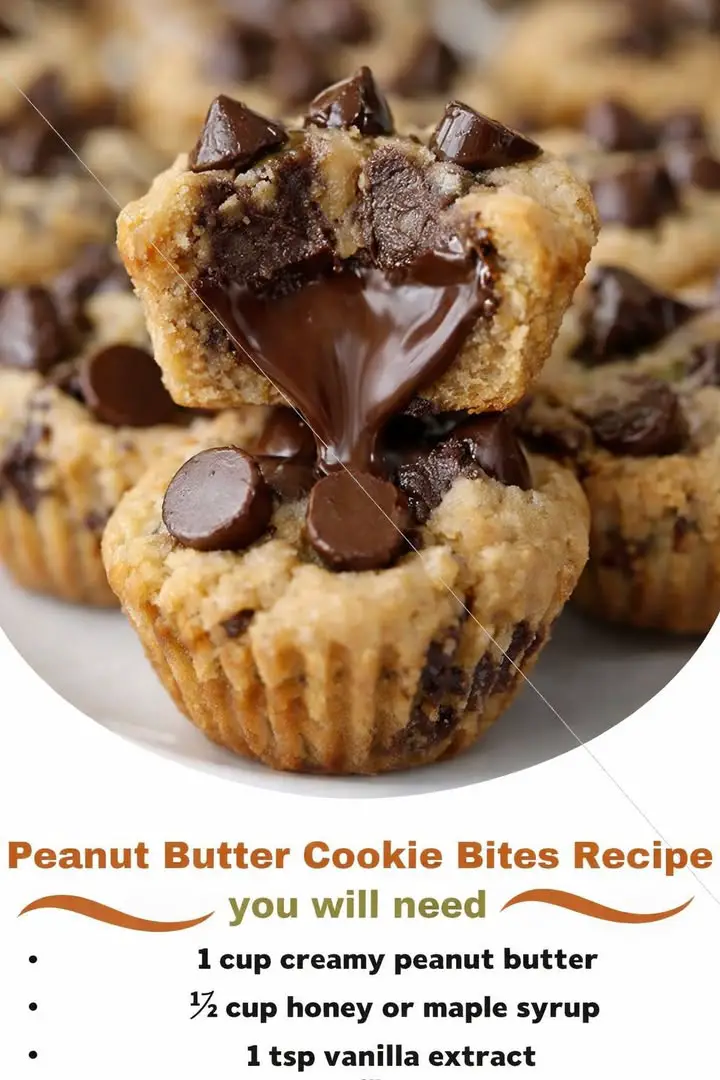
Welcome to the ultimate, no-compromise guide to crafting irresistibly soft, chewy, and deeply flavorful Peanut Butter Cookie Bites — bite-sized delights that pack all the nostalgic warmth of classic peanut butter cookies into perfectly portioned, melt-in-your-mouth morsels. Whether you’re prepping for a school bake sale, assembling an elegant dessert platter, meal-prepping grab-and-go snacks for busy weekdays, or simply indulging in a mindful, satisfying treat, these cookie bites deliver rich nutty aroma, tender crumb structure, and just the right balance of sweetness and salt — every single time. Unlike traditional drop cookies that can spread unpredictably or turn cakey, this meticulously refined recipe prioritizes texture control, flavor depth, and foolproof consistency — making it ideal for beginners and seasoned bakers alike. With optional add-ins, dietary adaptations, and science-backed techniques woven throughout, this isn’t just another cookie recipe — it’s your new kitchen cornerstone.
The History
The humble peanut butter cookie traces its roots back to the late 19th and early 20th centuries, emerging alongside the rise of commercial peanut butter production pioneered by figures like Dr. John Harvey Kellogg (who patented a process for grinding peanuts into paste in 1895) and later George Washington Carver, whose agricultural research elevated peanuts as a nutritious, soil-replenishing crop across the American South. Early versions appeared in community cookbooks and home economics manuals as economical, protein-rich treats during the Great Depression and WWII rationing eras — when butter, eggs, and sugar were scarce, but pantry staples like peanut butter, shortening, and brown sugar remained accessible. The iconic fork-crossed crisscross pattern? That wasn’t merely decorative — it served the vital functional purpose of flattening dense, stiff dough before baking, ensuring even heat penetration and consistent doneness. As American baking culture evolved, so did interpretations: from refrigerator slice-and-bake logs to gluten-free innovations and gourmet iterations featuring toasted nuts, sea salt finishes, and cold-pressed oils. The “cookie bite” format — smaller, uniform, and intentionally portion-controlled — gained momentum in the 2010s with the rise of health-conscious snacking, social media food aesthetics (think Instagrammable mini-desserts), and demand for freezer-friendly, individually wrapped treats in corporate cafés, daycare centers, and meal delivery services. Today, Peanut Butter Cookie Bites embody both heritage ingenuity and modern culinary intentionality — honoring tradition while embracing flexibility, nutrition awareness, and joyful precision.
Ingredients Breakdown
Every ingredient in this recipe has been selected not just for flavor, but for its precise functional role in texture development, moisture retention, leavening synergy, and shelf stability. Below is a granular, chef-level analysis:
- Natural Creamy Peanut Butter (1 cup / 250g): Must be stirred well — oil separation is normal and essential for richness. Avoid “no-stir” varieties with added hydrogenated oils or palm fruit oil, which inhibit proper spreading and create greasy, brittle cookies. Natural peanut butter contributes fat for tenderness, protein for structure, and deep roasted-nut complexity. Its water content (typically 1–2%) also subtly affects dough hydration — hence the importance of using room-temperature product.
- Unsalted Butter (½ cup / 113g), softened but cool (65–68°F): Provides superior flavor and emulsification versus margarine or shortening. Softened (not melted!) butter traps air during creaming, enabling gentle lift without excessive rise — critical for maintaining the signature dense-chewy bite. Salt content is controlled separately for precision.
- Granulated Sugar (⅔ cup / 135g): Adds crispness to the outer edge and aids in caramelization. Its fine crystals dissolve easily, contributing to smooth dough consistency and preventing graininess.
- Packed Light Brown Sugar (⅔ cup / 140g): Contains molasses (3–3.5%), which adds acidity to activate baking soda, enhances moisture retention via hygroscopic properties, deepens color through Maillard reactions, and imparts subtle caramel/toffee notes. Packing ensures density and repeatability.
- Large Egg (1, room temperature): Acts as binder, emulsifier, and moisture source. Room temperature prevents seizing when mixed with warm butter and ensures uniform incorporation. The yolk contributes richness and tenderness; the white adds slight structure.
- Pure Vanilla Extract (1½ tsp): Not imitation — real vanilla contains over 250 aromatic compounds that complement peanut’s earthy tones. Bourbon or Madagascar bean origin preferred for creamy, woody depth.
- All-Purpose Flour (1¾ cups / 210g), spooned & leveled: Provides gluten for cohesive structure without toughness. Spooning (not scooping) prevents compaction and over-measuring — a common cause of dry, crumbly cookies. We use standard AP flour (10–11.7% protein); bread flour would over-develop gluten; cake flour lacks sufficient strength.
- Baking Soda (1 tsp): A base activated by the acid in brown sugar and peanut butter’s natural pH (~5.2–5.8). Causes rapid CO₂ release during early oven spring, encouraging slight lift while preserving chew. *Not* baking powder — which contains acid and would result in bitter metallic notes and excessive puff.
- Fine Sea Salt (1 tsp): Enhances all other flavors, balances sweetness, and slightly inhibits gluten formation for tenderness. Fine grain ensures even dispersion — coarse flakes may leave salty pockets.
- Optional Add-Ins (see Variations): Chocolate chips (semi-sweet or dark, 60–70% cacao), roasted peanuts (unsalted, chopped), flaky sea salt (Maldon, for finishing), cinnamon, or espresso powder — each chosen for complementary chemistry and mouthfeel.
Note on substitutions: Coconut sugar may replace brown sugar (1:1 by weight only — volume differs), but yields drier, less chewy results due to lower moisture affinity. Maple syrup introduces excess liquid and requires flour adjustment (+1–2 tbsp). Vegan butter works with minor spread increase — chill dough 30 min longer. Almond butter creates distinct flavor but higher oil content — reduce added fat by 1 tbsp.
Step-by-Step Recipe
- Prep & Preheat: Position oven rack in center position. Line two large baking sheets with parchment paper (NOT wax paper or silicone mats — they inhibit bottom browning and promote spreading). Preheat oven to 350°F (175°C). Ensure all ingredients are at specified temperatures — this is non-negotiable for emulsion stability.
- Cream Butter & Sugars: In a large bowl of a stand mixer fitted with paddle attachment (or sturdy hand mixer), beat softened unsalted butter, granulated sugar, and packed brown sugar on medium speed for 2 minutes, scraping bowl halfway. Mixture should be pale, fluffy, and free of graininess — no visible sugar crystals. Over-creaming (>3 min) incorporates too much air, causing collapse; under-creaming leaves gritty texture.
- Incorporate Wet Ingredients: Add room-temperature egg and beat on medium-low for 45 seconds, just until fully emulsified (no streaks). Scrape bowl. Add vanilla and beat 10 seconds more. Then, add well-stirred natural peanut butter — pour slowly in a steady stream while mixer runs on low. Beat exactly 1 minute — dough will thicken, lighten slightly, and become cohesive. Do not overmix past this point.
- Dry Ingredients Assembly: In a separate medium bowl, whisk together flour, baking soda, and fine sea salt for 30 seconds — this aerates and evenly distributes leavener. Sift if flour appears lumpy (common in humid climates).
- Combine Dry & Wet: With mixer on low speed, gradually add dry ingredients in three equal additions, mixing only until no dry streaks remain after each (approx. 10–15 seconds per addition). Scrape bowl thoroughly between additions. Dough will be thick, slightly sticky, and pull away from sides — it should hold a soft peak when scooped. Overmixing develops gluten = tough cookies.
- Add Optional Mix-Ins (if using): Fold in chocolate chips, chopped peanuts, or spices by hand with a flexible spatula using 10–12 gentle turns. Stop immediately when evenly distributed — no swirling.
- Portion & Chill (Critical Step): Using a #60 cookie scoop (1 tbsp capacity) or a level tablespoon, portion dough into 1-inch balls. Place 2 inches apart on prepared sheets. Gently roll each ball between palms to smooth surface. Refrigerate uncovered for 30 minutes minimum (up to 72 hours). Chilling solidifies fats, prevents excessive spread, enhances flavor melding, and improves handling. *Do not skip.*
- Bake Strategically: Bake one sheet at a time in center rack for 10–11 minutes. Cookies are done when edges are set and lightly golden, centers appear *just* puffed and matte (not shiny or wet), and tops feel firm to light fingertip press — they will not look fully cooked. Rotating sheet ½ way through ensures even browning. Underbaking is intentional — carryover heat finishes them.
- Cool Completely: Remove sheet from oven. Let cookies rest on parchment on the hot baking sheet for 5 minutes — this sets structure without hardening. Then, carefully transfer with thin spatula to wire racks. Cool completely (20+ minutes) before storing — residual heat softens texture and causes condensation in containers.
- Storage Protocol: Store cooled cookie bites in airtight container with parchment layers at room temperature up to 5 days, refrigerated up to 10 days, or frozen up to 3 months. Thaw frozen at room temp 15 min — they taste freshly baked.
Tips
- Temperature is Everything: Butter at 65–68°F creams best. Too cold → breaks emulsion; too warm → greasy dough. If unsure, cut butter into ½-inch cubes and let sit 15 min at room temp. Use instant-read thermometer for accuracy.
- Stir That Peanut Butter! Natural PB separates — stir vigorously for 60 seconds until completely homogenous and glossy. Stirring mid-recipe (if oil pools) ensures even fat distribution.
- Weigh Your Flour: Volume measurements vary wildly — 1 cup AP flour ranges from 120–150g depending on scoop method. A digital scale ($15 investment) eliminates guesswork and guarantees repeatable results.
- No Overbaking Zone: Pull cookies at the *first sign* of golden edges and matte, puffed centers. They firm up dramatically during cooling. Baking 12+ minutes yields dry, crumbly results — even if they look perfect coming out.
- Chill Twice for Perfection: After portioning, chill dough balls 30 min. For ultra-soft centers, chill again for 15 min after initial bake-cool cycle — then re-bake 1–2 min at 325°F to refresh crispness without drying.
- Uniform Scooping = Uniform Baking: Use a spring-loaded #60 scoop. Level each portion with bench scraper. Irregular sizes bake unevenly — small ones burn; large ones stay raw inside.
- Rotate & Rotate Again: Ovens have hot spots. Rotate sheet ¼ turn at 5 min, then ½ turn at 8 min for consistent browning.
- Room-Temp Egg Hack: Submerge cold egg in warm (not hot) tap water for 5 min before use — prevents thermal shock to butter.
- Fix Sticky Dough: If dough remains tacky after chilling, dust hands lightly with flour or dip scoop in cool water before portioning — never add extra flour to bowl.
- Revive Stale Bites: Place in 300°F oven for 3–4 minutes — restores crisp edges and soft centers better than microwaving.
Variations and Customizations
This foundational recipe serves as a dynamic canvas — adaptable across dietary needs, flavor profiles, and occasions. All variations maintain structural integrity and chewy texture when executed with the core technique:
- Gluten-Free Peanut Butter Cookie Bites: Substitute 1:1 gluten-free all-purpose blend (Bob’s Red Mill or King Arthur recommended — contains xanthan gum). Add ¼ tsp additional xanthan gum if blend doesn’t include it. Increase chill time to 45 min — GF flours absorb slower.
- Vegan Version: Replace butter with ½ cup vegan butter (Miyoko’s or Earth Balance), egg with 3 tbsp aquafaba (chickpea brine) + 1 tsp apple cider vinegar, and ensure peanut butter is oil-only (no honey). Chill dough 45 min; bake 11–12 min.
- Protein-Powered: Add 2 scoops (60g) unflavored or vanilla whey/collagen peptides. Reduce flour by 2 tbsp to compensate. Increases chew and satiety — ideal for post-workout snacks.
- Flourless Keto-Friendly: Replace flour with 1 cup almond flour + ¼ cup coconut flour + 2 tbsp ground flaxseed. Reduce brown sugar to 3 tbsp erythritol/monk fruit blend. Bake 9–10 min — spreads more, so chill 45 min.
- Gourmet Flavor Infusions: Add 1 tsp finely grated orange zest (brightens nuttiness), ½ tsp ground cinnamon + ¼ tsp cardamom (warm spice complexity), or 1 tbsp instant espresso powder (enhances umami depth without coffee taste).
- Textural Twists: Fold in ½ cup roasted, salted peanuts (coarsely chopped) for crunch; ⅔ cup dark chocolate chunks (72%) for bitter contrast; or ¼ cup toasted coconut flakes for tropical nuance.
- Decorative Finishes: Press 1 whole roasted peanut into center of each ball pre-bake. Sprinkle with flaky sea salt *immediately* after removing from oven. Drizzle with melted dark chocolate + crushed pretzels post-cooling for sweet-salty-crunch.
- Holiday Editions: Add ¼ cup dried cranberries + 1 tsp orange extract (Thanksgiving); ⅓ cup white chocolate chips + 1 tsp peppermint extract (Christmas); or ½ cup chopped candied ginger + ½ tsp ground ginger (Winter Solstice).
- Savory-Sweet Fusion: Reduce brown sugar to ¼ cup, add 1 tsp smoked paprika + ½ tsp garlic powder + 2 tbsp grated aged cheddar. Bake 10 min — unexpected, addictive, and perfect with bourbon.
- Mini Sandwich Cookies: Bake as directed. Once fully cooled, pipe 1 tsp peanut butter frosting (peanut butter + powdered sugar + cream) between two bites. Roll edges in crushed peanuts.
Health Considerations and Nutritional Value
While inherently indulgent, these Peanut Butter Cookie Bites can be mindfully integrated into balanced eating patterns. Each standard 1-inch bite (recipe yields ~36) delivers approximately:
- Calories: 98 kcal — moderate for a dessert bite
- Total Fat: 6.2g (mostly unsaturated from peanuts and butter)
- Saturated Fat: 2.8g (within FDA daily limit of 20g)
- Carbohydrates: 9.5g (including 6.3g sugars — 4.1g naturally occurring from peanut butter/brown sugar)
- Dietary Fiber: 0.8g (boost to 1.5g with added flax or oat flour)
- Protein: 2.4g (peanut butter provides complete plant-based amino acid profile)
- Sodium: 82mg (controllable by reducing added salt to ¾ tsp)
- Key Micronutrients: Magnesium (12mg), Vitamin E (1.1mg), Niacin (2.3mg), and Resveratrol (trace, from peanut skins if using natural PB with sediment)
Functional Health Notes:
- Heart-Healthy Fats: Monounsaturated and polyunsaturated fats in peanuts support healthy cholesterol levels and vascular function when consumed in place of refined carbs.
- Blood Sugar Impact: Moderate glycemic load (GL ≈ 4 per bite) due to fiber and fat slowing glucose absorption — significantly lower than sugar-cookie equivalents (GL 12+). Pair with Greek yogurt for further stabilization.
- Allergen Awareness: Contains peanuts and dairy. For tree-nut allergies, ensure peanut butter is processed in dedicated facility (check labels). Substitutions like sunflower seed butter introduce different mineral profiles (higher vitamin E, selenium).
- Added Sugar Context: Total added sugar per bite: ~5.2g — aligns with WHO’s maximum recommendation of 25g/day when enjoying 4–5 bites. Natural alternatives (date paste, banana puree) increase moisture — require +1–2 tbsp flour.
- Digestive Notes: High-fat content may trigger reflux in sensitive individuals. Chilling dough improves digestibility by allowing enzymatic activity (from brown sugar’s molasses) to gently break down complex carbs.
- For Diabetics: Best enjoyed with protein/fat (e.g., apple slices + cheese) to blunt insulin response. Monitor portions strictly — 2–3 bites max per sitting.
- Pregnancy & Lactation: Excellent source of folate (from peanuts) and healthy fats crucial for fetal brain development. Ensure peanut butter is pasteurized if immune-compromised.
Remember: Nutrition is holistic. These bites contribute joy, comfort, and social connection — validated dimensions of wellness supported by psychoneuroimmunology research. Enjoy consciously, not restrictively.
Ingredients
- 1 cup (250g) well-stirred natural creamy peanut butter (oil-separated, no added sugars or palm oil)
- ½ cup (113g) unsalted butter, softened to 65–68°F
- ⅔ cup (135g) granulated sugar
- ⅔ cup (140g) packed light brown sugar
- 1 large egg, room temperature
- 1½ tsp pure vanilla extract
- 1¾ cups (210g) all-purpose flour, spooned and leveled
- 1 tsp baking soda
- 1 tsp fine sea salt
- (Optional) ½ cup (85g) semi-sweet chocolate chips, ¼ cup (35g) roasted unsalted peanuts, or flaky sea salt for finishing
Directions
- Preheat oven to 350°F (175°C). Line two large baking sheets with parchment paper.
- In a stand mixer with paddle attachment, beat softened butter, granulated sugar, and brown sugar on medium speed for 2 minutes until light and fluffy. Scrape bowl.
- Add egg and beat on medium-low 45 seconds until fully combined. Add vanilla and beat 10 seconds. With mixer on low, slowly drizzle in peanut butter and beat exactly 1 minute until smooth and cohesive.
- In separate bowl, whisk flour, baking soda, and salt for 30 seconds. Gradually add to wet ingredients in three parts, mixing on low just until no dry streaks remain after each addition (10–15 sec per). Scrape bowl thoroughly.
- Fold in optional mix-ins by hand with spatula (10–12 gentle turns).
- Portion dough into 1-inch balls using #60 scoop. Place 2 inches apart on prepared sheets. Roll gently to smooth. Refrigerate uncovered 30 minutes.
- Bake one sheet at a time in center rack for 10–11 minutes — until edges are set and golden, centers puffed and matte.
- Let cookies rest on hot sheet 5 minutes, then transfer to wire racks. Cool completely (20+ min) before storing.
- Store in airtight container at room temperature up to 5 days, refrigerated up to 10 days, or frozen up to 3 months.
FAQ
- Why do my cookie bites spread too much?
- Most commonly: butter too warm, insufficient chilling, or under-measured flour. Ensure butter is cool (65–68°F), chill dough balls 30+ min, and weigh flour. Also check baking soda freshness — expired leavener causes flat, greasy spread.
- Can I make dough ahead?
- Absolutely. Refrigerate portioned dough balls up to 72 hours. Freeze unbaked balls up to 3 months — bake frozen, adding 1–2 minutes to time. Dough improves flavor with overnight chill.
- Why are my bites dry or crumbly?
- Overbaking (even 30 seconds too long), overmixing after adding flour, or using “no-stir” peanut butter with stabilizers that inhibit moisture binding. Also verify brown sugar is packed — loose packing reduces moisture.
- Can I use crunchy peanut butter?
- Yes — but expect slightly more spread and textured bite. Stir thoroughly to distribute peanut pieces evenly. Reduce optional chopped peanuts by half to avoid overwhelming crunch.
- Are these suitable for freezing?
- Excellent freezer candidates! Freeze baked, cooled bites in single layer on tray, then transfer to freezer bag. Thaw at room temp 15 min — they retain full texture and aroma for up to 3 months.
- How do I get the perfect crisscross pattern?
- Traditional fork marks aren’t needed for bites — their small size bakes evenly without flattening. But if desired, gently press tines of fork dipped in flour into each ball *before* chilling. Don’t press deeply — just ⅛ inch.
- Can I double the batch?
- Yes, but mix in two separate batches for best results. Doubling increases friction heat during creaming, risking butter melt and inconsistent texture.
- What’s the best peanut butter brand for this recipe?
- Look for 2-ingredient labels: peanuts + salt only (e.g., Smucker’s Natural, Teddie, Crazy Richard’s). Avoid hydrogenated oils, added sugars, or palm fruit oil — they sabotage spread control and flavor purity.
- Why does the recipe use baking soda instead of baking powder?
- Baking soda reacts with acids (brown sugar molasses, peanut butter’s natural acidity) for clean, fast lift without bitter aftertaste. Baking powder’s double-acting nature creates unpredictable rise and metallic notes in high-fat doughs.
- My bites hardened overnight — what went wrong?
- They likely baked too long or were stored uncovered. Always cool completely before sealing in airtight container. For softer bites, add 1 tbsp corn syrup or honey to dough — increases hygroscopicity and shelf life.
Summary
These Peanut Butter Cookie Bites master the delicate alchemy of rich, roasted peanut flavor, tender-chewy texture, and perfectly balanced sweetness — achieved through precise ingredient selection, temperature control, strategic chilling, and intentional underbaking.
With endless customization paths — from gluten-free and vegan adaptations to gourmet infusions and health-conscious tweaks — they’re not just a recipe, but a versatile, joyful, and deeply satisfying expression of modern baking craftsmanship.